
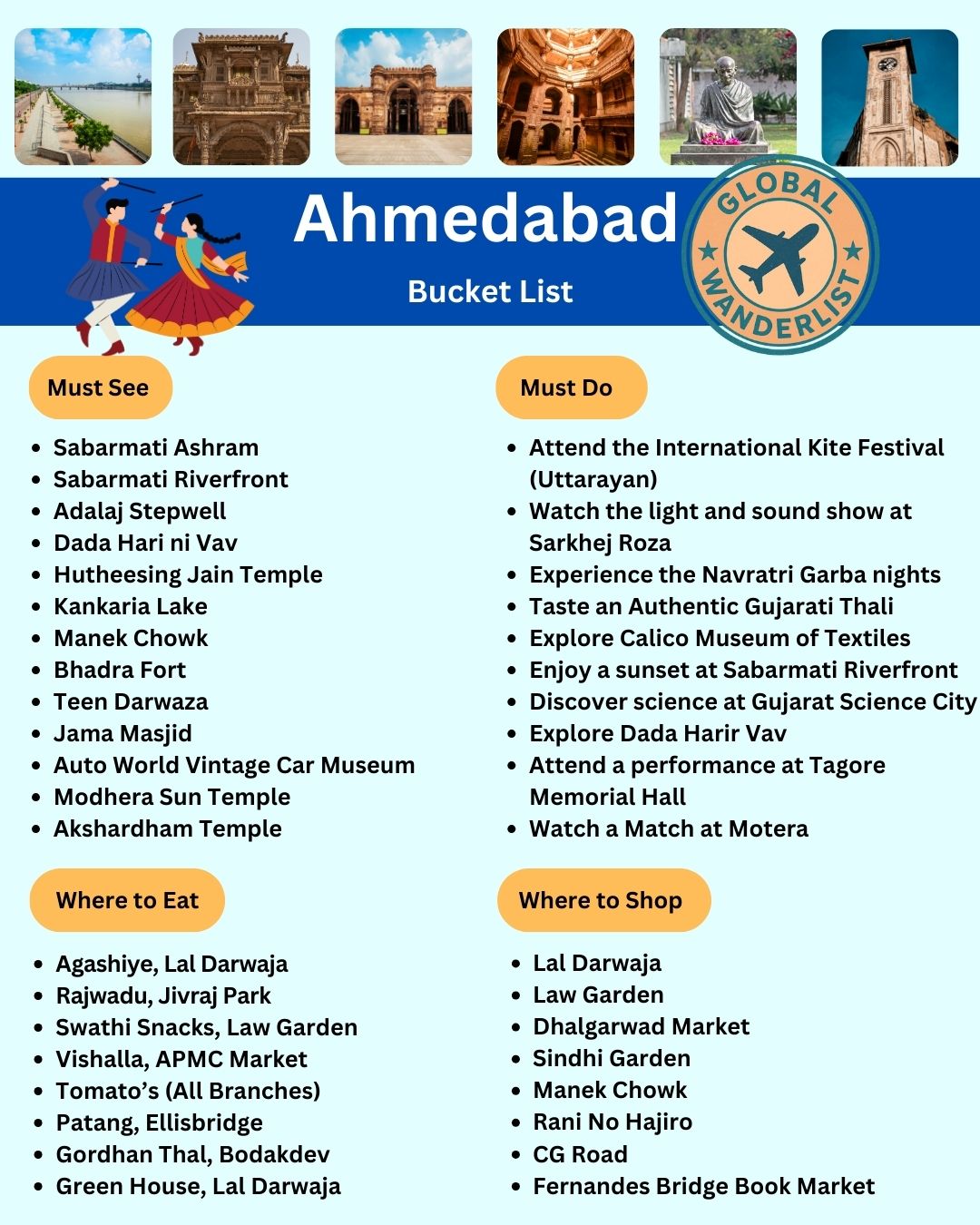
Ahmedabad was India’s first UNESCO World Heritage City, and it earns the title in every lane. Sultanate mosques, carved stepwells, Jain temples, and wooden pol houses sit beside a lively riverfront. Mahatma Gandhi’s ashram anchors the city’s story, while Gujarati food and festivals fill its calendar.
The pace is friendly, the vegetarian cooking is superb, and the culture feels lived in. This Ahmedabad bucket list covers the sights, experiences, flavors, and practical tips for a rewarding first visit.
Ahmedabad Bucket List at a Glance
| Category | Top Recommendation | Best Time | Recommended Duration |
|---|---|---|---|
| History | Sabarmati Ashram | October to March | 1 to 2 hours |
| Heritage | Adalaj Stepwell | October to March | 1 to 2 hours |
| Old City | Manek Chowk and a heritage walk | November to February | Half day |
| Day Trip | Modhera Sun Temple | October to February | Half to full day |
| Festivals | Navratri Garba nights | Late September to October | 1 to 3 evenings |
| Kite Festival | Uttarayan | January 14 to 15 | 1 to 2 days |
| Local Food | Gujarati thali at Agashiye | Year-round | 2 to 3 meals |
| Shopping | Law Garden night market | November to February | 2 to 3 hours |
| Overall Trip | Heritage, food, and festivals | October to March | 3 to 4 days |
Must-See Sights
Places You Shouldn’t Miss
- Sabarmati Ashram: Gandhi lived here from 1917 to 1930 and launched the Dandi March from its gates. His simple cottage and small museum feel intimate and moving. Plan about 90 minutes, and check access during ongoing redevelopment.
- Sabarmati Riverfront: This landscaped promenade stretches for miles along both banks of the river. Gardens, cycling paths, and the kite-inspired Atal pedestrian bridge make it a modern highlight. Visit in the evening when the air cools.
- Adalaj Stepwell: Queen Rudabai commissioned this five-story stepwell in 1498. Carved pillars and balconies mix Hindu and Islamic motifs. Go in late afternoon, when sunlight angles through the openings for dramatic photos.
- Dada Hari ni Vav: Built in 1499 in Asarwa, this stepwell honors a lady-in-waiting of Sultan Mahmud Begada. Intricate carvings and cool, shaded steps reward patient visitors. Allow 45 minutes, and wear shoes with good grip.
- Hutheesing Jain Temple: Completed in 1848, this white marble temple glows with detailed carvings. Its pillars, domes, and courtyard show master craftsmanship. Dress modestly, remove leather items, and expect photography limits.
- Kankaria Lake: Sultan Qutb-ud-Din built this 34-sided lake in 1451. Today it offers a toy train, walking promenade, and boating. The December Kankaria Carnival adds music and lights.
- Manek Chowk: By day, this old-city square trades in jewelry and textiles. After dark, it turns into one of India’s liveliest food markets. Go after 9:00 p.m. for sandwiches, ice cream, and street snacks.
- Bhadra Fort: Ahmed Shah founded the city in 1411 and built this fortified royal complex. The restored plaza now hosts shops, galleries, and the Bhadra Kali shrine. Visit in the morning for gentler light.
- Teen Darwaza: This triple-arched ceremonial gateway once led to the royal square. Its carved stonework frames busy street life below. Stop by for photos, especially around Uttarayan, when kite sellers crowd the area.
- Jama Masjid: Dating to 1424, this mosque rests on hundreds of pillars beneath rows of domes. Yellow sandstone and delicate lattice work create calm, patterned light. Dress modestly and remove shoes at the entrance.
- Auto World Vintage Car Museum: This private collection holds over 100 classic cars, including Rolls-Royce models. Displays suit car lovers and families alike. Plan about two hours, and confirm opening days before traveling.
- Modhera Sun Temple: About 62 miles from the city, this 11th-century Solanki temple honors the sun god. Carved pillars and a stepped tank, Surya Kund, impress visitors. Go in the late afternoon for softer light and cooler temperatures.
- Akshardham Temple: In nearby Gandhinagar, this pink sandstone complex opened in 1992. Exhibition halls and an evening water show draw crowds. Phones and cameras are not allowed inside, and weekly closing days apply.
Must-Do Experiences
Unforgettable Experiences
- Attend the International Kite Festival (Uttarayan): Every January 14 and 15, the sky above the city fills with thousands of kites. Rooftop parties serve undhiyu, sesame sweets, and chikki. Arrive early, and bring sunglasses and sunscreen.
- Watch the light play at Sarkhej Roza: This 15th-century tomb complex, about 4 miles from the old city, features graceful stone lattices. Le Corbusier admired its design. Visit near sunset, and ask locally about special evening events.
- Experience the Navratri Garba nights: Nine nights of dance fill the city each autumn. In 2026, Navratri runs from October 11 to 19, with large events at GMDC Ground. Buy passes early, and wear traditional attire.
- Taste an authentic Gujarati thali: This vegetarian platter balances sweet, salty, and spicy dishes with endless refills. Expect dal, kadhi, farsan, and seasonal curries. Come hungry, and pace yourself between courses.
- Explore the Calico Museum of Textiles: Founded in 1949, this museum holds centuries of Indian textiles in two sections. Visits are by guided tour only, so register in advance. Photography is not allowed, and children under 10 are not admitted.
- Enjoy a sunset at Sabarmati Riverfront: Golden light settles on the water as families gather along the promenade. Walk across the Atal Bridge for wide views. Arrive 30 minutes before sunset, and carry water.
- Discover science at Gujarat Science City: This large complex offers an IMAX theater, aquarium, robotics gallery, and outdoor exhibits. It suits families and curious adults. Plan four hours, and book tickets online if possible.
- Explore Dada Harir Vav: Return to this stepwell early in the morning, when light shafts glow on its carvings. Nearby Mata Bhavani’s stepwell adds an older, quieter counterpoint. Combine both for a compact heritage morning.
- Attend a performance at Tagore Memorial Hall: Architect Balkrishna Doshi designed this concrete theater in the 1960s. It hosts plays, music, and dance throughout the year. Check the schedule online, and book seats ahead.
- Watch a match at Motera: The Narendra Modi Stadium holds about 132,000 spectators, among the world’s largest cricket grounds. It hosted the 2023 World Cup final. Use the metro on match days, and carry sun protection.
Where to Eat
What to Eat
- Agashiye, Lal Darwaja: This rooftop restaurant at the House of MG serves a fixed Gujarati thali that changes daily. In winter, look for undhiyu, a mix of seasonal vegetables. Book ahead for evening seating.
- Rajwadu, Jivraj Park: A village-themed restaurant that recreates rural Gujarat with rustic decor. Thalis arrive on traditional plates with generous portions. Visit with a group for the full festive experience.
- Swati Snacks, Law Garden: This beloved spot serves light Gujarati snacks and street food. Try panki, a rice-flour crepe steamed in banana leaves. It is a favorite for a casual lunch.
- Vishalla, APMC Market: Designed like a traditional village, this restaurant serves thali with folk music and an on-site utensil museum. Seating is on the floor or low chairs. Reserve for weekend dinners.
- Tomato’s (all branches): This popular local chain offers Gujarati thalis, Punjabi dishes, and snacks. It is dependable for families and groups. Weekday lunch is the quietest time.
- Patang, Ellisbridge: This revolving restaurant sits about 221 feet above Nehru Bridge. It offers a vegetarian buffet and panoramic river views. Reserve a window seat and arrive before sunset.
- Gordhan Thal, Bodakdev: Named for a renowned caterer, this restaurant serves a big, traditional thali. Expect sweet dishes, farsan, and unlimited refills. Skip heavy snacks beforehand.
- Green House, Lal Darwaja: This garden restaurant in the House of MG offers a relaxed setting beside the old city. Indian and continental dishes suit a lighter meal. Visit in the evening when it feels magical.
Where to Shop
Best Places to Shop
- Lal Darwaja: This busy market near Bhadra is known for bandhani sarees, chaniya cholis, and affordable clothing. Street snacks add to the buzz. Visit on weekdays, and bargain politely.
- Law Garden: The night market here sells embroidered clothing, mirror-work, handicrafts, and accessories. Crowds peak during Navratri. Go in the evening, and compare prices before buying.
- Dhalgarwad Market: A popular old-city market for sarees and fabrics, especially during wedding season. Look for bandhani and patola styles. Arrive early, because lanes fill up quickly.
- Sindhi Market: This old Kalupur market is known for fabrics, bedsheets, dress materials, and footwear. Prices are modest, and bargaining is expected. Wear comfortable shoes and keep valuables secure.
- Manek Chowk: Jewelers and textile traders dominate the daytime, with food stalls arriving at night. Silver pieces and fabrics make good souvenirs. Visit twice if you can, once by day and once after dark.
- Rani No Hajiro: Surrounding the tombs of Ahmed Shah’s queens, this market is lined with bangles, jewelry, and block-printed fabrics. Colors and textures fill every stall. Photograph respectfully, and ask before shooting vendors.
- CG Road: This modern shopping street in Navrangpura has fashion stores, cafes, and showrooms. It is a good counterpoint to the old-city bazaars. Afternoons are calmer than weekends.
- Fernandes Bridge Book Market: Built in 1884, this bridge shelters a sunken street of new and used books. Textbooks, novels, and stationery are common finds. Browse patiently, and bargain gently.
Best Time to Visit Ahmedabad
Seasonal Highlights
- October to March: Dry, pleasant weather suits sightseeing and heritage walks. Winter days are comfortable, with temperatures often in the 70s Fahrenheit. This is the best window for stepwells and Modhera.
- Late September to October: Navratri turns the city into a nine-night dance floor. Hotels fill early, so book ahead. Evenings are warm, and venues run late.
- January: Uttarayan brings kite markets and rooftop celebrations on January 14 and 15. The Modhera Dance Festival often follows nearby. Roads can be busy, so allow extra travel time.
- April to September: Summer heat can exceed 105 degrees Fahrenheit, and monsoon brings humidity. Visit early in the morning or after sunset. Carry water and plan indoor stops at midday.
Travel Tips
Essential Travel Tips
- Getting around: Ahmedabad has a metro, a bus rapid transit system, ride-hailing apps, and auto-rickshaws. Use apps or meters to avoid overpaying. Allow extra time during festivals and peak traffic.
- Join a heritage walk: The city offers guided morning walks through the old pols, starting near the Swaminarayan Temple in Kalupur. Walks last about two hours. Wear comfortable shoes, and book ahead when possible.
- Know the alcohol rules: Gujarat enforces prohibition, so most restaurants do not serve alcohol. Visitors may apply for a temporary permit. Check current rules before traveling.
- Dress and etiquette: Cover shoulders and knees at temples and mosques. Remove shoes before entering, and avoid leather in Jain shrines. A polite greeting and a calm tone go far.
- Reservations and tickets: Book Calico Museum tours, Garba passes, and popular restaurants in advance. Akshardham and match tickets are better secured early. Confirm weekly closing days for museums and monuments.
- Heat and health: Drink bottled or filtered water, and use sunscreen. Rest during the hottest hours, especially from April to June. Choose busy food stalls for street snacks.
Build Your Own Ahmedabad Itinerary
Ahmedabad rewards curiosity, appetite, and comfortable shoes. Pair a stepwell morning with a thali lunch, then end the day in a night market. Pick favorites from this list, travel between October and March, and plan around a festival if you can.