
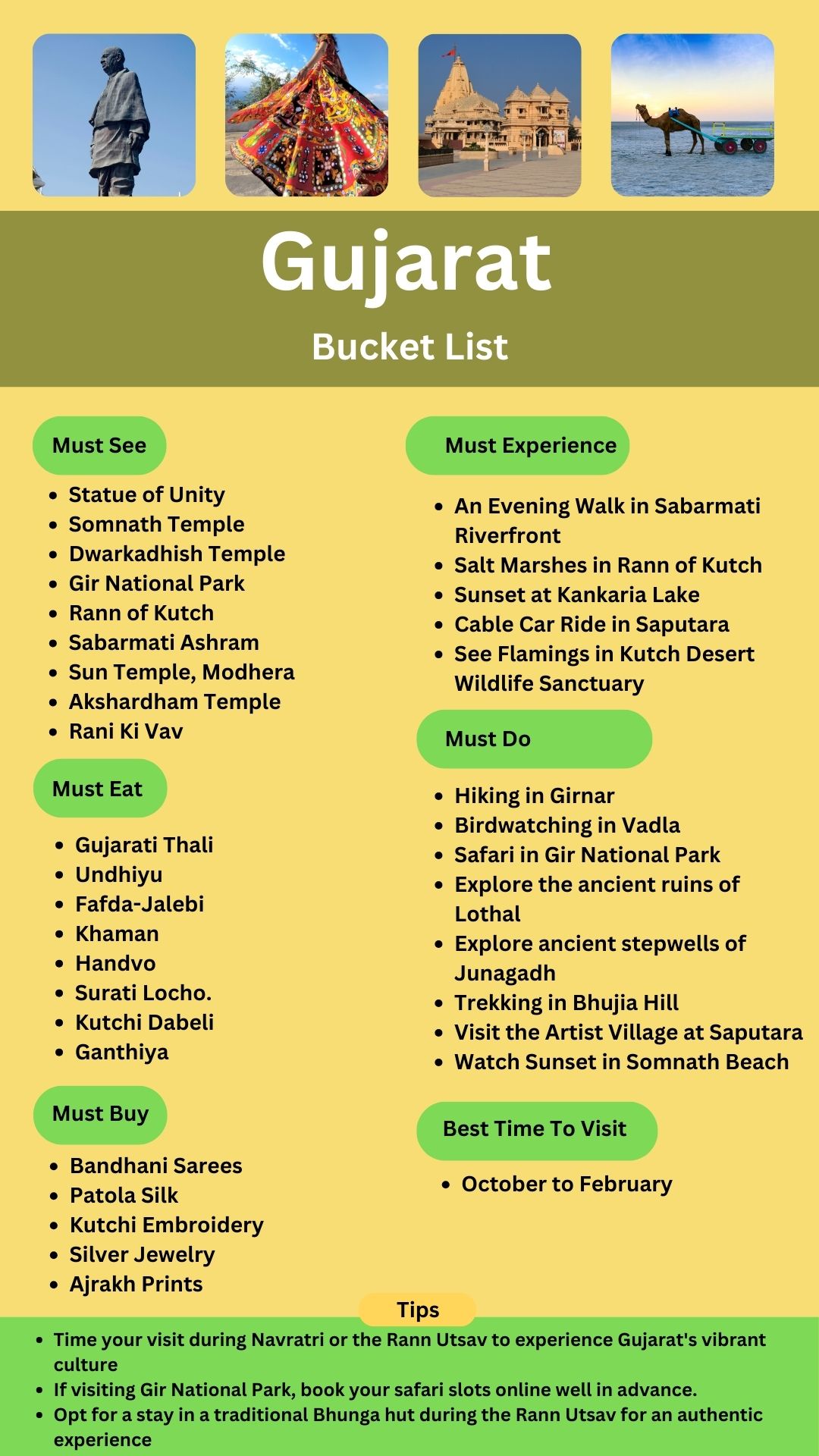
Gujarat is one of India’s most surprising travel states. Asiatic lions roam its forests, and a white salt desert glows under the full moon. Ancient temples rise beside the sea. Few places pack this much heritage, wildlife, and flavor into one trip.
This guide covers the top sights, experiences, adventures, foods, and souvenirs for first-time visitors. It also explains when to go and how to plan around major festivals. Use it as a checklist, then shape it around your own pace.
| Category | Top Recommendation | Best Time | Recommended Duration |
|---|---|---|---|
| Landmarks | Statue of Unity and Rani Ki Vav | October to February | 2 to 3 days |
| Wildlife | Jeep safari in Gir National Park | December to March | 2 days |
| Heritage | Somnath, Dwarka, and Modhera temples | October to February | 3 to 4 days |
| Festivals | Navratri garba or Rann Utsav | Navratri in autumn; Rann Utsav November to March | 3 days |
| Food | Gujarati thali and fafda-jalebi | Undhiyu in winter | Daily |
| Shopping | Bandhani, Ajrakh, and Kutchi embroidery | October to February | 1 to 2 days |
| Full Trip | Ahmedabad, Kutch, and Saurashtra | October to February | 10 days |
Must-See Attractions
Places You Shouldn’t Miss
- Statue of Unity: Rising 182 meters near Kevadia, this tribute to Sardar Vallabhbhai Patel is the world’s tallest statue. A lift carries visitors to a gallery with views of the Narmada River and Sardar Sarovar Dam. Book tickets online, allow half a day, and choose a clear winter morning.
- Somnath Temple: Revered as the first of India’s twelve Jyotirlinga shrines, Somnath stands on the Arabian Sea coast. Invaders destroyed it many times, and the present temple was completed in 1951 in Chaulukya style. Attend the dawn aarti, and allow about two hours.
- Dwarkadhish Temple: Also called Jagat Mandir, this temple in Dwarka honors Lord Krishna and anchors the Char Dham pilgrimage. Its tall carved spire flies a flag that is changed several times daily. Arrive early to avoid queues, then add Bet Dwarka by bridge or ferry.
- Gir National Park: Gir is the only place on Earth where Asiatic lions live in the wild. A 2025 census estimated 891 lions in Gujarat, up from 674 in 2020. Leopards, hyenas, and over 300 bird species share the dry deciduous forest.
- Rann of Kutch: Near Dhordo, the Great Rann stretches into a blinding white horizon of cracked salt. Under a full moon, the flats glow like snow. Entry needs an online permit, and November to February is the best window.
- Sabarmati Ashram: Mahatma Gandhi lived here from 1917 to 1930 and began the Dandi March from this spot. Simple cottages, a spinning wheel, and a small museum tell the story. Entry is typically free, so visit in the morning and allow two hours.
- Sun Temple, Modhera: Built in 1026 by the Solanki king Bhimdev I, this temple honors Surya, the sun god. Carved pillars and a stepped tank with 108 small shrines draw photographers. Arrive at sunrise, or time your trip for the January dance festival.
- Akshardham Temple: This Swaminarayan complex in Gandhinagar glows in pink sandstone and opened in 1992. Exhibitions and an evening water show add depth beyond the architecture. Security is strict and electronics are not allowed inside, so dress modestly and allow three hours.
- Rani Ki Vav: This 11th-century stepwell in Patan was built by Queen Udayamati in memory of her husband. UNESCO listed it in 2014, and its walls hold hundreds of carved sculptures. Go at opening for soft light, and pair it with Modhera, about an hour away.
Must Experience
Unforgettable Experiences
- An evening walk along Sabarmati Riverfront: Ahmedabad’s riverside promenade comes alive after sunset with lights, gardens, and families out for ice cream. Cross the Atal Pedestrian Bridge for the best skyline views. The walk is free and takes about two hours.
- Salt marshes of the Rann of Kutch: The Great Rann floods in the monsoon and dries into a salt crust by winter. Ride a camel cart across the flats, and stay until the sky turns pink. Dress warmly, because desert evenings turn cold.
- Sunset at Kankaria Lake: Sultan Qutbuddin built this circular lake in 1451, and it remains Ahmedabad’s favorite gathering spot. Arrive an hour before sunset for the promenade, food stalls, and lakeside views. The Kankaria Carnival in late December adds music and crowds.
- A cable car ride in Saputara: Saputara, in the Dang district, is Gujarat’s only hill station. The ropeway climbs to a hilltop viewpoint over the Sahyadri hills. Visit between August and January for green slopes and cooler air.
- Flamingos in Kutch Desert Wildlife Sanctuary: The sanctuary covers a large part of the Great Rann. Flamingos and other waterbirds gather in nearby wetlands during winter. Go at dawn with binoculars and a local guide who knows the best spots.
Must-Do Activities
Best Outdoor Adventures
- Hiking in Girnar: Near Junagadh, Girnar rises to about 1,100 meters and is crowned by Jain and Hindu shrines. Roughly 10,000 stone steps lead to the top. Start before dawn, carry water, and plan four to six hours, since moderate fitness is essential.
- Birdwatching in Vadla: Vadla Lake sits between Ahmedabad and Vadodara and suits self-guided birders. Migratory waterbirds arrive in winter. Visit between November and February, and bring binoculars for a calm morning session.
- Safari in Gir National Park: A guided jeep safari lasts about three hours and starts at dawn or late afternoon. Permits are sold online, and the park closes from June 16 to October 15. The fenced Devalia Safari Park is a backup, though it closes on Wednesdays.
- Exploring the ruins of Lothal: This Harappan port city dates to roughly 2400 BCE and shows an ancient dockyard and brick streets. A small museum displays beads, seals, and tools. It lies about 80 kilometers from Ahmedabad, so go in the morning before the heat.
- Stepwells of Junagadh: Adi Kadi Vav and Navghan Kuvo are ancient stepped wells carved into rock near Uparkot Fort. Navghan Kuvo’s spiral staircase is the highlight. Wear sturdy shoes, since steps can be slippery, and allow two hours.
- Trekking Bhujia Hill: This hill overlooks Bhuj and carries old fort walls and the Smritivan earthquake memorial. The climb is short and suits most fitness levels. Go at sunrise for cool air and wide views of Kutch.
- The Artist Village at Saputara: Here, tribal artists from the Dang region show bamboo crafts, paintings, and pottery. Buy directly from the makers and watch demonstrations. Pair it with the cable car for an easy half day.
- Sunset at Somnath Beach: The beach lies beside Somnath Temple, so the shrine glows against the evening sky. Strong currents make swimming unsafe. Arrive an hour early to find a spot and capture the silhouette.
Must Eat
What to Eat
- Gujarati thali: This platter offers dal, seasonal vegetables, kadhi, farsan, rotli, rice, and sweets, refilled until you say stop. Flavors lean gently sweet. Traditional thali restaurants in Ahmedabad and Rajkot serve the best versions, especially at lunch.
- Undhiyu: This winter classic slow-cooks surti papdi, purple yam, and raw banana with fenugreek dumplings. Surat is its home, and the dish peaks around Uttarayan in mid-January. Sweet shops across Gujarat sell it by the kilo.
- Fafda-jalebi: Crisp gram flour fafda comes with tangy papaya chutney and hot, syrupy jalebi. It is a Sunday breakfast and a Dussehra tradition. Look for old-city shops in Ahmedabad, Rajkot, and Surat.
- Khaman: This soft, spongy steamed cake of gram flour is tempered with mustard seeds and green chilies. It is topped with coriander and sev. Farsan shops in Surat and Ahmedabad serve it fresh each morning.
- Handvo: Handvo is a savory baked cake of rice, lentils, bottle gourd, and sesame seeds. The crust turns golden and crisp. Home-style restaurants serve it as an evening snack with green chutney and tea.
- Surati locho: This Surat breakfast crumbles soft steamed gram flour batter and tops it with sev, onions, chutneys, and butter. It is tangy, spicy, and served hot. Street stalls in Surat do it best in the morning.
- Kutchi dabeli: A toasted bun holds spiced potato filling, pomegranate seeds, roasted peanuts, and sweet and spicy chutneys. It was born in Mandvi, Kutch, around the 1960s. Snack stalls in Bhuj and Mandvi serve the most authentic version.
- Ganthiya: This crunchy fried gram flour snack comes with papaya sambharo and fried green chilies. Bhavnagar is famous for it. Buy a bag by weight, since it travels well and stays fresh for days.
Must Buy
Souvenirs Worth Bringing Home
- Bandhani sarees: Artisans tie thousands of tiny knots by hand before dyeing the cloth, creating dotted patterns. Jamnagar, Bhuj, and Mandvi are leading centers. Check for hand-tied dots, since printed imitations are common.
- Patola silk: Patan patola is double ikat silk, where both warp and weft threads are dyed before weaving. One saree can take several months, so prices run high. Buy from certified workshops in Patan for authenticity.
- Kutchi embroidery: Mirror work and vivid threads decorate bags, cushion covers, and clothing. Village workshops and craft cooperatives around Bhuj sell directly. Ask which community stitched the piece, and fair prices help artisans.
- Silver jewelry: Chunky tribal silver pieces are a Kutch tradition, and Rajkot and Bhuj have good markets. Look for hallmarks and ask for the weight. Bargain lightly and compare shops.
- Ajrakh prints: Ajrakh cloth uses block printing in deep indigo and madder red, in geometric patterns. Ajrakhpur and Dhamadka, near Bhuj, are known for natural dyes. Ask to see the workshop, and choose cotton for easy wear.
Best Time to Visit
Seasonal Highlights
- October to February: This is the prime season, with warm days, cool nights, and open wildlife parks. Gir reopens on October 16 after the monsoon closure. December and January are busiest, so reserve ahead.
- Festival season: Navratri brings nine nights of garba and dandiya, and in 2026 it runs from October 11 to 19. Dates shift yearly, so confirm them. Rann Utsav runs from November 1, 2026 to March 7, 2027, with full moon nights drawing the biggest crowds.
- Summer and monsoon: March to June can be very hot, often above 100 degrees Fahrenheit. The monsoon turns Saputara green, but Gir closes and the Rann floods. Visit these months only for hill stations or festivals.
- A 10-day plan: Spend three days in Ahmedabad and northern heritage sites like Modhera and Patan. Spend three in Kutch for the Rann and Bhuj. Use four in Saurashtra for Junagadh, Gir, Somnath, and Dwarka.
Travel Tips
Essential Travel Tips
- Build your trip around a festival: Navratri and Rann Utsav showcase Gujarat at its liveliest. Book flights, rooms, and garba passes three to four months ahead. Wear comfortable traditional clothing for garba, and carry small bags.
- Book Gir safaris early: Safari permits are sold online through the official forest department portal, and booking opens three months ahead. Winter weekends sell out first. Carry a photo ID, and have Devalia as a backup plan.
- Stay in a Bhunga: Bhungas are round mud-walled huts with thatched roofs, kept cool in summer and warm in winter. Villages near Dhordo and Hodka offer them, and the Rann Utsav tent city is another option. Book early during peak season.
- Prepare for the Rann: Apply for the Rann entry permit through the official online portal before you travel. Desert nights can turn cold, so pack layers, sunscreen, and a scarf. Carry cash and water, since services are limited.
- Plan your transport: Ahmedabad is the main gateway, and trains and flights connect it to Bhuj, Rajkot, and Vadodara. Distances are long, so hiring a car with a driver saves time. State buses are cheap but slower.
- Respect local rules: Gujarat enforces alcohol prohibition, so check current permit rules before you travel. Pilgrim towns often serve only vegetarian food. Dress modestly at temples, and remove your shoes where asked.
Conclusion
Gujarat rewards travelers who mix wildlife, heritage, craft, and food. Pick favorites from each section and match them to the season. Then build your own itinerary and leave room for detours.