
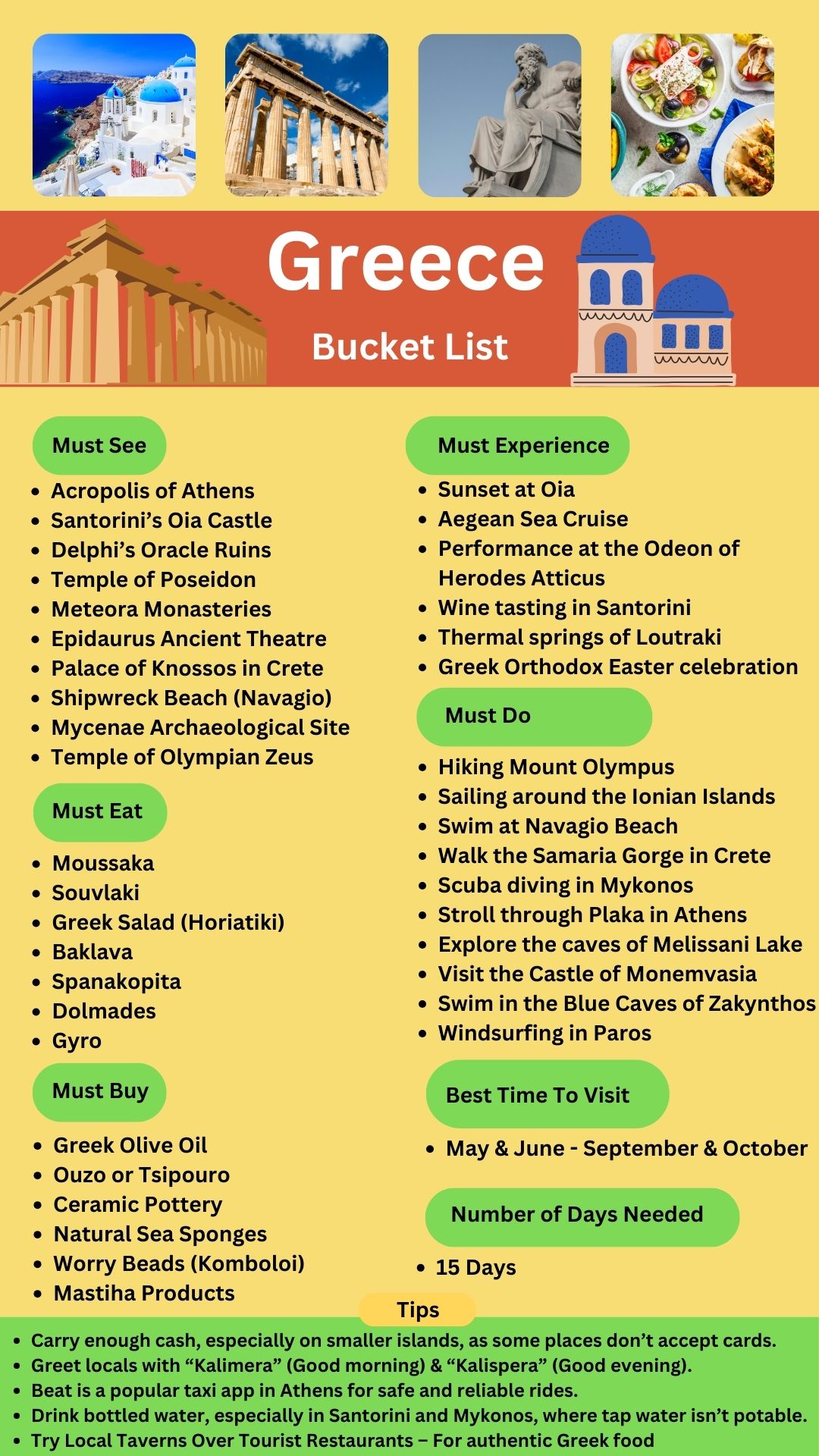
Greece earns its place on every serious traveler’s list through sheer historical and natural range. Ancient temples share the landscape with volcanic islands, turquoise coves, and mountain monasteries. Few countries pack this much mythology, scenery, and flavor into one relatively compact corner of the Mediterranean.
This is a destination built for curious travelers. History lovers can trace the roots of Western philosophy and democracy through ruins still standing after thousands of years. Island hoppers, hikers, and food lovers will all find plenty to fill a well-rounded itinerary.
Whether you have ten days or a full three weeks, Greece rewards a well-planned mix of ancient sites, islands, and local food. This bucket list breaks down everything essential, from must-see landmarks to practical travel tips worth building your trip around.
Trip Planning Overview
| Category | Top Recommendation | Best Time | Recommended Duration |
|---|---|---|---|
| Must-See Landmarks | Acropolis of Athens, Meteora Monasteries | Year-round | Half day to full day each |
| Experiences | Sunset at Oia, wine tasting in Santorini | May to October | 2-4 hours each |
| Outdoor Activities | Hiking Mount Olympus, Samaria Gorge | May to September | Half day to full day |
| Local Food | Moussaka, souvlaki, Greek salad | Year-round | Ongoing |
| Overall Trip | Full mainland and island combination | May to June, September to October | 15 days |
Must-See Landmarks and Ancient Sites
Greece’s landmarks span millennia of mythology, philosophy, and architectural achievement. These sites anchor most first-time itineraries for good reason. Each one tells a different chapter of the country’s ancient and geological story.
Places You Shouldn’t Miss
- The Acropolis of Athens crowns the capital with the Parthenon, the defining symbol of ancient Greek architecture. Built in the 5th century BC, it remains one of the most influential buildings in Western history. Visit early morning to avoid both heat and the heaviest crowds.
- Santorini’s Oia Castle offers the single most photographed sunset viewpoint in Greece, overlooking whitewashed houses and the caldera below. Arriving at least an hour before sunset is essential during peak summer months. The ruins themselves date back to the island’s Venetian occupation.
- Delphi’s Oracle Ruins held legendary status as the ancient world’s spiritual center, where pilgrims once consulted a priestess before major decisions. The site sits dramatically on the slopes of Mount Parnassus, about two and a half hours from Athens. Budget half a day, including the excellent on-site museum.
- The Temple of Poseidon perches on a dramatic clifftop at Cape Sounion, roughly an hour and a half from Athens. Sunset here delivers striking views over the Aegean Sea framed by ancient marble columns. This makes an easy half-day trip from the capital.
- The Meteora Monasteries rise atop towering sandstone pillars in central Greece, built by monks seeking isolation beginning in the 14th century. Six monasteries remain active today, though only a handful welcome visitors. A full day allows time to explore two or three without rushing.
- The Epidaurus Ancient Theatre showcases remarkable acoustic engineering, still used for live performances today. Built in the 4th century BC, it remains one of the best-preserved ancient theaters in Greece. Combine it with nearby Mycenae for a full day in the Peloponnese.
- The Palace of Knossos in Crete reveals the heart of the ancient Minoan civilization, considered Europe’s oldest advanced society. Restored sections give a vivid sense of the palace’s original scale and color. Budget about two hours to explore the site properly.
- Shipwreck Beach, also called Navagio, delivers one of the most iconic coastal views in the Mediterranean, framed by sheer white cliffs on Zakynthos. The beach is accessible only by boat, with tours departing regularly from the island’s main towns. Morning visits offer calmer water and better light.
- The Mycenae Archaeological Site preserves the legendary home of King Agamemnon, dating back over 3,000 years. The massive Lion Gate entrance remains one of the most recognizable images in Greek archaeology. This site pairs naturally with Epidaurus for a Peloponnese day trip.
- The Temple of Olympian Zeus once housed one of the largest temples in the ancient Greek world, with towering Corinthian columns still standing in central Athens. Construction spanned centuries before its completion under Roman rule. A quick 30 to 45 minute visit fits easily alongside other Athens sightseeing.
Must Experience
Certain moments in Greece go beyond typical sightseeing. These experiences connect travelers directly to the country’s landscape, mythology, and living traditions. Building even a few into your itinerary adds real depth to the trip.
Unforgettable Experiences
- Sunset at Oia remains Greece’s most famous evening ritual, drawing crowds to clifftop viewpoints every night in high season. Arrive well ahead of time to claim a good spot along the caldera rim. This works well as a relaxed way to end a day of island exploring.
- An Aegean Sea cruise offers a scenic way to hop between islands without dealing with ferry schedules. Multi-day options combine several Cycladic islands, while shorter trips focus on caldera views around Santorini. Book ahead during summer, since popular routes fill quickly.
- A performance at the Odeon of Herodes Atticus puts you inside a 2nd-century Roman theater still hosting concerts and shows beneath the Acropolis. The Athens and Epidaurus Festival runs performances here each summer. Check the schedule in advance, since shows sell out during peak season.
- Wine tasting in Santorini introduces Assyrtiko, the island’s distinctive volcanic white wine, grown in low, basket-shaped vines unique to the terrain. Several wineries offer tastings paired with caldera views. Plan a full afternoon if you want to visit more than one estate.
- The thermal springs of Loutraki offer a relaxing, lesser-known escape near Corinth, known for mineral-rich waters since ancient times. This makes a good addition for travelers seeking wellness alongside sightseeing. The springs sit within easy reach of Athens for a day trip.
- A Greek Orthodox Easter celebration ranks among the most important cultural experiences in the country, marked by candlelit midnight services and festive village meals. Timing your visit around this holiday, which follows a different calendar than Western Easter, offers a genuine glimpse into Greek tradition. Smaller villages often provide a more intimate experience than major cities.
Outdoor Activities
Greece’s varied terrain supports everything from mountain hikes to legendary sea caves. These activities suit travelers who want more than passive sightseeing. Most require moderate fitness, though a few reward existing outdoor experience.
Best Outdoor Adventures
- Hiking Mount Olympus takes you up the mythical home of the Greek gods, Greece’s tallest peak at just over 2,900 meters. Multi-day routes require a reasonable fitness level and proper mountain gear. Summer offers the safest and most accessible conditions for reaching the summit.
- Sailing around the Ionian Islands offers a relaxed way to explore Corfu, Kefalonia, and Zakynthos from the water. Charter options range from skippered day trips to full flotilla vacations. Late spring through early fall provides the calmest sailing conditions.
- Swimming at Navagio Beach lets you experience Zakynthos’s famous shipwreck cove firsthand, reachable only by boat. Morning departures typically offer calmer water and fewer crowds. The dramatic white cliffs surrounding the beach make it a must for photographers.
- Walking the Samaria Gorge in Crete covers one of Europe’s longest hikeable gorges, stretching about 16 kilometers toward the southern coast. The full hike takes five to seven hours and requires sturdy footwear and reasonable fitness. Spring and early fall offer the most comfortable hiking temperatures.
- Scuba diving in Mykonos reveals clear Aegean waters, underwater caves, and the occasional shipwreck site. Both beginner and certified diver options are widely available through local operators. Summer months offer the warmest water and best visibility.
- Strolling through Plaka in Athens means wandering the city’s oldest neighborhood, a maze of neoclassical streets beneath the Acropolis. Comfortable shoes matter here, given the uneven, sloped pavement throughout. Give yourself at least two hours to explore without rushing.
- Exploring the caves of Melissani Lake in Kefalonia reveals a partially collapsed cave system with strikingly blue, sunlit water. Small boat tours paddle visitors through the illuminated cavern. Midday visits offer the best light for the lake’s famous blue glow.
- Visiting the Castle of Monemvasia takes you to a fortified medieval town connected to the Peloponnese mainland by a narrow causeway. The climb up to the upper fortress rewards visitors with sweeping sea views. Budget two to three hours to properly explore both the lower and upper town.
- Swimming in the Blue Caves of Zakynthos reveals striking underwater light effects created by sunlight reflecting off the cave walls. Boat tours depart regularly from the island’s northern coast, typically combined with a Shipwreck Beach visit. Morning trips offer the calmest water and best lighting conditions.
- Windsurfing in Paros takes advantage of the island’s consistent Meltemi winds, making it one of the best windsurfing destinations in Greece. Rental equipment and lessons are widely available for beginners. Summer months bring the strongest and most reliable wind conditions.
Local Food
Greek cuisine leans on fresh vegetables, olive oil, and simply prepared meats and seafood. Regional specialties shift across the mainland and islands, giving food-focused travelers plenty to explore. Meals here tend to be generous, affordable, and built around quality local ingredients.
What to Eat
- Moussaka layers eggplant, spiced ground meat, and creamy bechamel sauce into one of Greece’s most iconic comfort dishes. Nearly every traditional taverna serves its own version, though quality varies significantly. Look for freshly made versions rather than pre-portioned, reheated plates.
- Souvlaki consists of grilled meat skewers, typically pork or chicken, served with pita, tomato, onion, and tzatziki. Street stands throughout Athens and beyond serve some of the best, quick versions of this classic. It works well as an affordable, satisfying lunch between sightseeing stops.
- Greek salad, or horiatiki, combines tomatoes, cucumber, onion, olives, and a thick slab of feta cheese, dressed simply in olive oil. This dish varies little from menu to menu, relying entirely on the quality of its fresh, local ingredients. Island tavernas near the coast often serve particularly good versions.
- Baklava layers phyllo pastry with chopped nuts and honey syrup, a dessert with roots across the wider Mediterranean and Middle East. Traditional bakeries throughout Greece offer their own regional variations. It pairs well with a strong Greek coffee to finish a meal.
- Spanakopita wraps spinach and feta cheese inside crisp, flaky phyllo pastry, sold both as a full pie and individual portions. Bakeries and street vendors make it an easy, portable snack while exploring. Look for versions made fresh that morning for the best texture.
- Dolmades feature grape leaves stuffed with rice, herbs, and sometimes ground meat, often served with a lemony sauce. This dish reflects the country’s long history of Ottoman and eastern Mediterranean culinary influence. Many tavernas offer both meat and vegetarian versions.
- Gyro wraps thinly sliced, spit-roasted meat into warm pita with tomato, onion, and tzatziki, similar to souvlaki but distinct in preparation. This remains one of Greece’s most popular and affordable street foods. Athens in particular has countless well-regarded gyro stands worth seeking out.
Must Buy Souvenirs
Shopping in Greece offers more than typical tourist trinkets. Many products here reflect centuries of agricultural and craft tradition, from olive groves to pottery workshops. These souvenirs make meaningful reminders of the trip long after you return home.
What to Buy
- Greek olive oil ranks among the best in the world, produced from groves that have supplied the Mediterranean diet for thousands of years. Buying directly from island producers often costs less than shopping at the airport. Look for early harvest or first cold-pressed labels for the highest quality.
- Ouzo or tsipouro, Greece’s traditional anise-flavored and grape-based spirits, make a distinctive edible souvenir. Regional producers throughout the mainland and islands offer their own variations in strength and flavor. Vacuum-sealed or well-packed bottles travel safely in checked luggage.
- Ceramic pottery reflects a craft tradition stretching back to ancient Greek amphorae and painted vases. Workshops on islands like Crete and Sifnos continue producing both traditional and modern designs. Prices vary widely based on size and craftsmanship.
- Natural sea sponges have been harvested in Greece for centuries, particularly around the island of Kalymnos. These make a practical, long-lasting souvenir tied to a genuine local industry. Quality sponges should feel soft yet durable when dry.
- Worry beads, or komboloi, are a traditional Greek accessory used for relaxation rather than religious practice. Shops throughout Athens and the islands sell versions ranging from simple wood to more elaborate amber and gemstone designs. They make a lightweight, culturally distinctive gift.
- Mastiha products, made from resin harvested on the island of Chios, appear in everything from liqueur to skincare and chewing gum. This resin has been prized since ancient times for its distinctive flavor and reported health benefits. Chios remains the best place to find the widest selection.
Best Time to Visit
Timing your trip well affects both comfort and crowd levels significantly. Greece’s climate runs hot and dry in summer, particularly across the islands, with milder conditions in spring and fall. Shoulder season generally offers the best overall balance for most travelers.
Seasonal Highlights
- May and June bring warm, comfortable temperatures and blooming landscapes without the peak summer crowds. This period works especially well for hiking, ancient site visits, and island exploring before the busiest tourist season begins. Water temperatures are pleasant enough for swimming by late May.
- September and October offer similarly comfortable weather, with the added bonus of thinner crowds and lower prices than midsummer. The Aegean stays warm enough for swimming well into October. This window often provides the best overall value on flights and island accommodations.
- Summer months, particularly July and August, bring the hottest temperatures and busiest crowds, especially on popular islands like Santorini and Mykonos. Booking accommodations and ferry tickets well in advance becomes essential during this period. The Meltemi winds can also disrupt ferry schedules in the Cyclades.
- Winter stays mild on the mainland by European standards, though many island hotels and restaurants close entirely during the off-season. This makes winter better suited to Athens, Thessaloniki, and mainland historic sites rather than island-focused itineraries. Meteora and Delphi remain accessible and less crowded during these months.
How Many Days Do You Need
A full trip covering Athens, a mainland historic site or two, and a proper island stretch realistically takes around fifteen days. This allows time for both major cities and slower island stops without constant rushing. Shorter trips work too, though they typically mean focusing on either the mainland or a smaller island cluster.
Ten days suits travelers focused on Athens plus two or three islands, such as Santorini and Mykonos or Paros and Naxos. Two weeks allows a more complete itinerary mixing mainland history with a longer island-hopping stretch. Adding Crete as its own dedicated leg generally requires four to five additional days given its size.
Travel Tips
A few practical details make navigating Greece noticeably smoother. These tips cover transportation, budgeting, and local customs worth knowing before you arrive. None require much effort, but all save time or money along the way.
Essential Travel Tips
- Carrying enough cash matters more on smaller islands than in Athens, since some tavernas, shops, and ferry kiosks do not accept cards. ATMs can be limited outside main towns, so plan ahead before heading to quieter destinations. A mix of cash and card generally covers most situations comfortably.
- Greeting locals with “Kalimera” for good morning and “Kalispera” for good evening goes a long way toward friendly interactions. Greeks generally appreciate visitors making even a small effort with basic phrases. This small gesture often leads to warmer service and better recommendations.
- Using the Beat taxi app in Athens offers a safe, reliable, and transparent way to book rides compared to hailing cabs on the street. The app operates similarly to other major ride-hailing services and works well for both short hops and airport transfers. It remains one of the more trusted options in the capital.
- Drinking bottled water is worth doing in Santorini and Mykonos, where tap water is not considered potable due to the islands’ limited freshwater resources. Most restaurants and hotels provide or sell bottled water without issue. This is less of a concern in Athens, where tap water is generally safe.
- Choosing local taverns over tourist-focused restaurants typically delivers more authentic Greek food at better prices. Restaurants with menus in multiple languages directly on the caldera or main square often charge a premium for the view rather than the food. Walking a few streets back frequently reveals better, more affordable options.
Final Thoughts
Greece offers enough variety to fill several return trips, from ancient oracles to volcanic islands and mountain hikes. Use this list as a starting point rather than a strict itinerary. Mix well-known landmarks with a few flexible days, and let the country’s history, food, and coastline shape a trip you will want to repeat.