
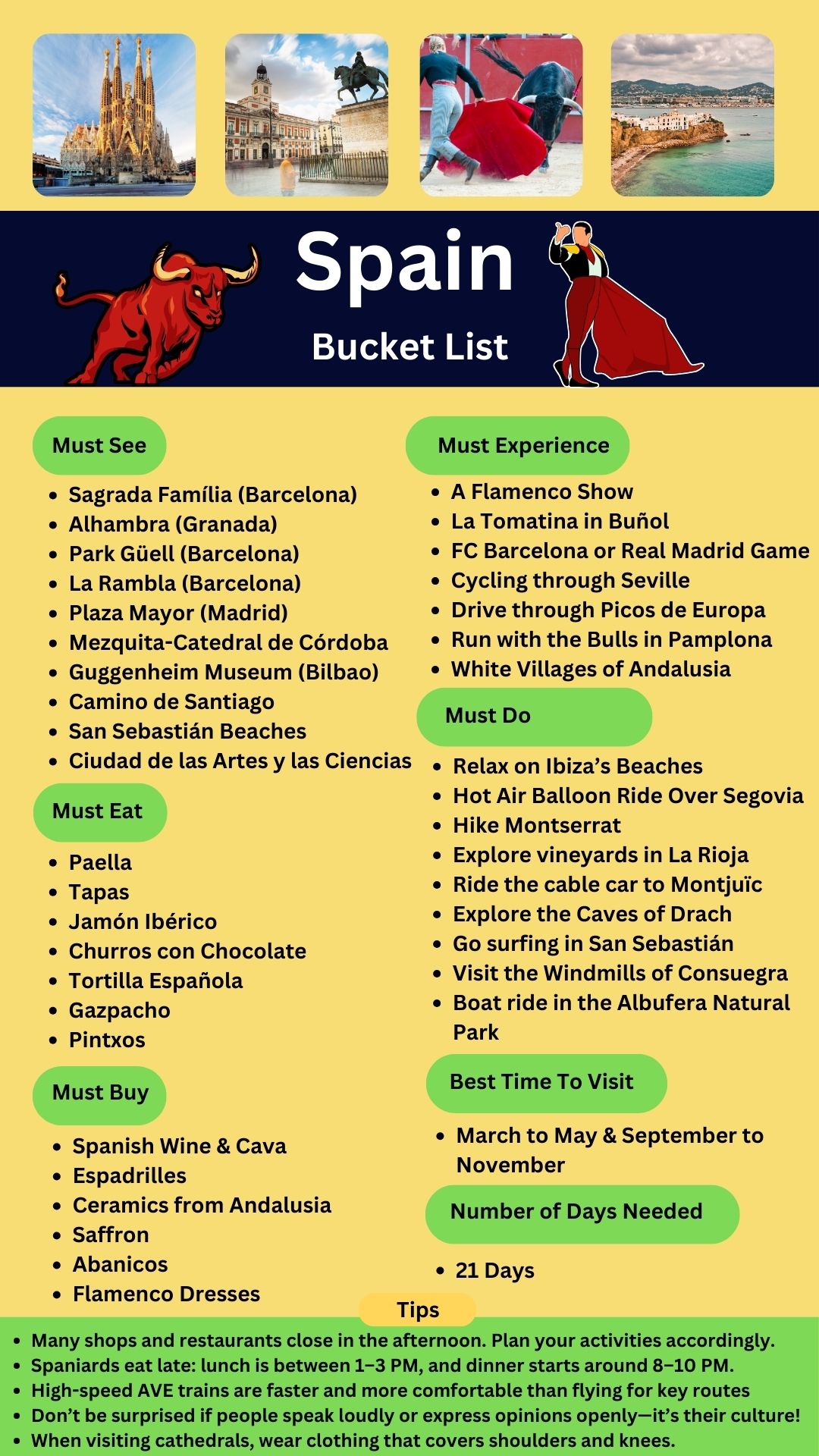
Spain moves at its own rhythm, and that is exactly what makes it so appealing. Gothic cathedrals sit near modern architecture, and long lunches stretch into lively evenings. Add in flamenco, tapas, and coastline that stretches from the Mediterranean to the Atlantic, and you have one of Europe’s most rewarding destinations.
This guide covers the top places to visit, food to try, experiences to book, and tips to help your trip run smoothly. Whether you have three weeks or a long weekend, use this as your planning foundation.
Architectural Icons and Historic Landmarks
Spain’s architecture spans centuries, from Moorish palaces to modernist masterpieces. Many of the country’s most famous landmarks sit within its biggest cities.
The Sagrada Família in Barcelona is Antoni Gaudí’s unfinished masterpiece. Construction began in 1882 and continues today. Its towering spires and colorful stained glass make it one of the most visited sites in Europe.
The Alhambra in Granada is a sprawling palace and fortress complex from the Moorish era. Intricate tile work and lush gardens define its interior courtyards. Tickets sell out quickly, so booking well in advance is essential.
Park Güell, another Gaudí creation in Barcelona, blends architecture with natural landscape. Mosaic covered structures and winding pathways spread across a hillside park. Sweeping views over the city reward visitors who climb to the top.
La Rambla in Barcelona is one of the city’s most famous pedestrian streets. Street performers, flower stalls, and cafes line the route. It connects Plaça Catalunya to the waterfront near the old port.
Plaza Mayor in Madrid serves as a historic central square surrounded by cafes and shops. Grand arcades line its perimeter, dating back to the 17th century. It remains a popular meeting point for both locals and visitors.
The Mezquita-Catedral de Córdoba combines a former mosque with a Catholic cathedral built inside it. Rows of red and white striped arches create one of the most distinctive interiors in Spain. Its layered history reflects centuries of religious and cultural change.
The Guggenheim Museum in Bilbao is known for its dramatic titanium exterior. This modern art museum helped transform Bilbao into a major cultural destination. Its rotating exhibitions draw art lovers from across the world.
The Camino de Santiago is a centuries old pilgrimage route ending in Santiago de Compostela. Walkers can choose from several paths of varying length. Many travelers complete just a portion rather than the full route.
San Sebastián Beaches offer some of northern Spain’s most scenic coastline. La Concha Beach sits right along the city’s elegant promenade. The Basque region’s food scene adds extra appeal to a beach visit here.
Ciudad de las Artes y las Ciencias in Valencia is a futuristic complex of museums and cultural spaces. Its striking white architecture contrasts sharply with Valencia’s older neighborhoods. An aquarium, science museum, and opera house all sit within the complex.
Insider Tips for Visiting Major Landmarks
- Book Sagrada Família tickets online well ahead of your visit. Time slots often sell out days or weeks in advance during peak season.
- Reserve Alhambra tickets as early as possible, ideally a month or more before your trip. Daily visitor numbers are strictly limited.
- Visit Park Güell early in the morning to avoid the largest crowds. Morning light also makes the mosaic tile work look more vivid.
- Wear clothing that covers shoulders and knees when visiting cathedrals like the Mezquita-Catedral. This dress code is enforced at most religious sites across Spain.
Cultural Experiences That Define Spanish Life
Spain’s culture reveals itself through festivals, sports, and everyday traditions. These experiences offer a deeper connection to the country beyond its landmarks.
A flamenco show captures one of Spain’s most iconic art forms. Passionate guitar playing, rhythmic clapping, and powerful dance define the performance. Andalusia, especially Seville, is considered the traditional home of flamenco.
La Tomatina in Buñol is a massive tomato throwing festival held each August. Thousands of participants pack the streets for an hour of playful chaos. It has become one of Spain’s most famous cultural spectacles.
Attending an FC Barcelona or Real Madrid game gives visitors a taste of Spain’s deep football culture. Match day energy inside either stadium is intense and unforgettable. Tickets can be pricier for major rivalry matches, so planning ahead helps.
Cycling through Seville is a relaxed way to see the city’s landmarks and river views. Dedicated bike lanes make it accessible even for casual riders. Many companies offer guided cycling tours through the historic center.
Driving through Picos de Europa reveals dramatic mountain scenery in northern Spain. Winding roads pass through small villages and national park terrain. It offers a striking contrast to Spain’s better known coastal regions.
Running with the bulls in Pamplona is one of Spain’s most famous and adrenaline filled traditions. It takes place each July during the San Fermín festival. This event carries significant risk, so participants should understand the dangers involved beforehand.
Exploring the white villages of Andalusia showcases a distinct regional architectural style. Towns like Ronda and Frigiliana feature whitewashed buildings against dramatic hillsides. A road trip connecting several villages makes for a memorable day or two.
Local Etiquette Around Cultural Experiences
- Book flamenco tickets at smaller, traditional venues rather than large tourist focused shows. Smaller settings often provide a more authentic, intimate performance.
- Respect the risks involved with running with the bulls in Pamplona, and only participate with full understanding of the event. Watching from a safe barrier is a common alternative for visitors.
- Dress modestly and behave respectfully when attending football matches, especially during high tension rivalry games. Local fans take match day traditions seriously.
- Plan Camino de Santiago routes with proper footwear and gear, even for shorter sections. Terrain can be more demanding than it first appears.
Adventure Activities and Outdoor Escapes
Spain offers plenty of ways to get outdoors, from coastal escapes to mountain hikes. These activities pair well with the country’s cultural highlights.
Relaxing on Ibiza’s beaches offers a different side of Spain beyond its famous nightlife. Calm coves and clear water line much of the island’s coastline. Quieter beaches on the northern side suit travelers seeking a more relaxed pace.
A hot air balloon ride over Segovia gives sweeping views of the region’s countryside and historic architecture. Flights typically launch early in the morning when winds are calmest. Segovia’s Roman aqueduct looks especially striking from above.
Hiking Montserrat combines mountain scenery with a historic monastery. Jagged rock formations rise dramatically above the surrounding valley. A cable car offers an easier alternative for those who prefer not to hike the full route.
Exploring vineyards in La Rioja introduces visitors to one of Spain’s most celebrated wine regions. Rolling hills of vines surround small towns throughout the area. Many wineries offer tastings paired with local Spanish cuisine.
Riding the cable car to Montjuïc in Barcelona offers panoramic views over the city and harbor. The hill also holds a fortress, gardens, and Olympic venues from the 1992 Games. It makes for an easy half day outing from the city center.
Exploring the Caves of Drach in Mallorca reveals an underground world of stalactites and an underwater lake. Guided tours often include a short boat ride across the lake. It is one of the island’s most popular natural attractions.
Surfing in San Sebastián takes advantage of the Basque coast’s reliable Atlantic swells. Surf schools here cater well to beginners. The city’s mix of surf culture and fine dining makes it a unique coastal stop.
Visiting the windmills of Consuegra evokes the landscape made famous by Don Quixote. Rows of white windmills sit atop a ridge overlooking the town. Sunset visits offer particularly striking photo opportunities.
A boat ride in Albufera Natural Park near Valencia offers a peaceful escape from the city. This wetland reserve is home to diverse birdlife and traditional rice paddies. Sunset boat tours are especially popular here.
Planning Tips for Adventure Activities
- Book hot air balloon rides in Segovia in advance, since flights depend heavily on weather. Morning slots offer the most reliable conditions.
- Choose a guided tour for the Caves of Drach if traveling with children or those uncomfortable in enclosed spaces. Guides help explain the cave’s formation and history.
- Reserve vineyard tours in La Rioja ahead of harvest season, when availability can be more limited. Fall visits often combine wine tasting with scenic countryside views.
- Check surf conditions in San Sebastián before booking lessons, since Atlantic swells vary by season. Local surf schools can recommend the best days for beginners.
A Food Lover’s Guide to Spanish Cuisine
Spanish food varies significantly by region, though several dishes have become nationally beloved staples.
Paella originated in Valencia and remains one of Spain’s most famous dishes. Traditional versions include rice, saffron, and a mix of meat or seafood. Cooking it properly takes time, so authentic paella is rarely a quick meal.
Tapas are small shared plates central to Spanish dining culture. Ordering several different tapas to share is the traditional way to enjoy a meal. Many bars specialize in just one or two standout tapas dishes.
Jamón ibérico is a cured ham considered one of Spain’s finest culinary products. It comes from a specific breed of pig raised largely on acorns. Thinly sliced portions are often served simply, letting the flavor speak for itself.
Churros con chocolate is a beloved Spanish treat, especially for breakfast or a late night snack. Fried dough strips get dipped into thick, warm chocolate sauce. Many cafes specialize almost entirely in this one dish.
Tortilla española is a thick omelet made with potatoes and onions. It appears on nearly every tapas menu across the country. Regional variations sometimes add ingredients like chorizo or peppers.
Gazpacho is a cold tomato based soup, especially popular during Spain’s hot summer months. It originated in Andalusia and is typically served chilled. Many versions include cucumber, garlic, and olive oil for added depth.
Pintxos are the Basque region’s version of tapas, often served on small skewers or bread. Bars in San Sebastián in particular are known for creative, high quality pintxos. Diners typically keep track of what they eat for the final bill.
Local Etiquette Around Food and Dining
- Adjust your meal timing to local hours, since lunch runs from about 1 to 3 p.m. and dinner starts around 8 to 10 p.m. Restaurants often stay closed between these windows.
- Order tapas gradually rather than all at once, allowing the meal to unfold naturally. This is the traditional pace for a tapas based dinner.
- Expect many shops and restaurants to close in the afternoon for a break. Planning activities around this schedule helps avoid frustration.
- Tip modestly at restaurants, since service charges are often already included. Rounding up the bill is common rather than a large percentage tip.
Souvenirs and Shopping Worth Your Suitcase Space
Shopping in Spain offers a mix of regional crafts and iconic Spanish products.
Spanish wine and cava make excellent gifts for wine lovers. Rioja reds and Catalan cava are among the most internationally recognized options. Buying directly from a bodega often means better pricing than retail shops.
Espadrilles are a classic Spanish footwear style, traditionally made with woven jute soles. They are lightweight and well suited for warm weather travel. Many regional shops offer handmade versions in a range of colors.
Ceramics from Andalusia showcase colorful, hand painted pottery traditions. Cities like Seville and Granada are known for their distinctive tile and ceramic work. Smaller workshops often sell pieces not available in larger retail stores.
Saffron is one of Spain’s most prized culinary exports. It takes an enormous number of hand harvested flowers to produce even a small amount. Buying it directly from a spice shop helps ensure quality and freshness.
Abanicos, or traditional Spanish fans, remain a popular souvenir, especially in Andalusia. They range from simple everyday designs to elaborately hand painted versions. Flamenco performances often prominently feature them as well.
Flamenco dresses are a striking, colorful souvenir tied to Spain’s flamenco culture. Ruffled skirts and bold patterns define the traditional style. Seville is considered one of the best places to shop for authentic versions.
Budget Tips for Shopping Smart
- Buy wine directly from smaller bodegas rather than tourist focused shops near major attractions. Prices are often lower and the selection more interesting.
- Compare prices at a few ceramic workshops before purchasing larger pieces. Handmade quality varies, and prices can differ significantly between shops.
- Purchase saffron in small quantities unless you cook with it often, since a little goes a long way. Fresher, smaller batches maintain better flavor.
- Look for espadrilles and fans at local markets instead of shops directly outside major landmarks. Prices near tourist sites tend to run higher.
When to Go and How Long to Stay
Timing your Spain trip well can make a significant difference in comfort, crowds, and overall experience.
The best time to visit is from March to May or September to November. These shoulder seasons offer mild temperatures and smaller crowds than peak summer. Coastal regions stay pleasant well into early autumn.
Most travelers need around 21 days to properly explore Spain’s major regions. This allows time for both major cities and smaller cultural stops. Shorter trips work well if focused on just one or two regions.
Seasonal Advice for First-Time Visitors
- Visit Andalusia in spring to avoid the intense summer heat common in cities like Seville and Córdoba. Temperatures can climb uncomfortably high by July and August.
- Plan a Pamplona trip specifically around the San Fermín festival dates in July if running with the bulls interests you. This event only happens once a year.
- Book high speed AVE train tickets early during peak travel months. Popular routes between major cities can sell out during busy periods.
- Pack layers for northern regions like San Sebastián, since coastal weather can be cooler and more unpredictable than the south.
Practical Tips Every Traveler Should Know
A few practical habits will make your Spain trip smoother from the moment you arrive.
High speed AVE trains are faster and more comfortable than flying for many key routes. They connect major cities like Madrid, Barcelona, and Seville efficiently. Booking in advance often secures better pricing than last minute tickets.
Many shops and restaurants close in the afternoon, so plan activities accordingly. This traditional break, sometimes called siesta, is still common outside major tourist areas. Museums and larger attractions typically stay open through the afternoon.
Don’t be surprised if people speak loudly or express opinions openly. This directness is simply part of Spanish culture rather than a sign of conflict. Adjusting your expectations helps you enjoy conversations and interactions more naturally.
Common Mistakes First-Timers Make
- Trying to eat dinner too early and finding restaurants still closed. Adjusting to the later Spanish dining schedule takes some planning ahead.
- Skipping advance tickets for major sites like the Alhambra and Sagrada Família. Walk up availability is often extremely limited or unavailable.
- Underestimating how spread out Spain’s regions are. Trains help significantly, but distances between cities are often longer than first time visitors expect.
- Forgetting appropriate dress codes when visiting cathedrals and religious sites. Carrying a scarf or light layer helps cover shoulders when needed.
Final Thoughts on Planning Your Spain Adventure
Spain rewards travelers who embrace its unhurried rhythm and rich regional diversity. Gothic cathedrals, sun soaked beaches, and lively tapas bars all sit within reach of a well connected train network. Few countries offer this much cultural depth alongside such vibrant daily life.
Whether you come for Gaudí’s architecture, a plate of paella in Valencia, or the energy of a flamenco show in Seville, Spain leaves a lasting impression. Start planning early, embrace the local schedule, and get ready for one of Europe’s most memorable trips.