
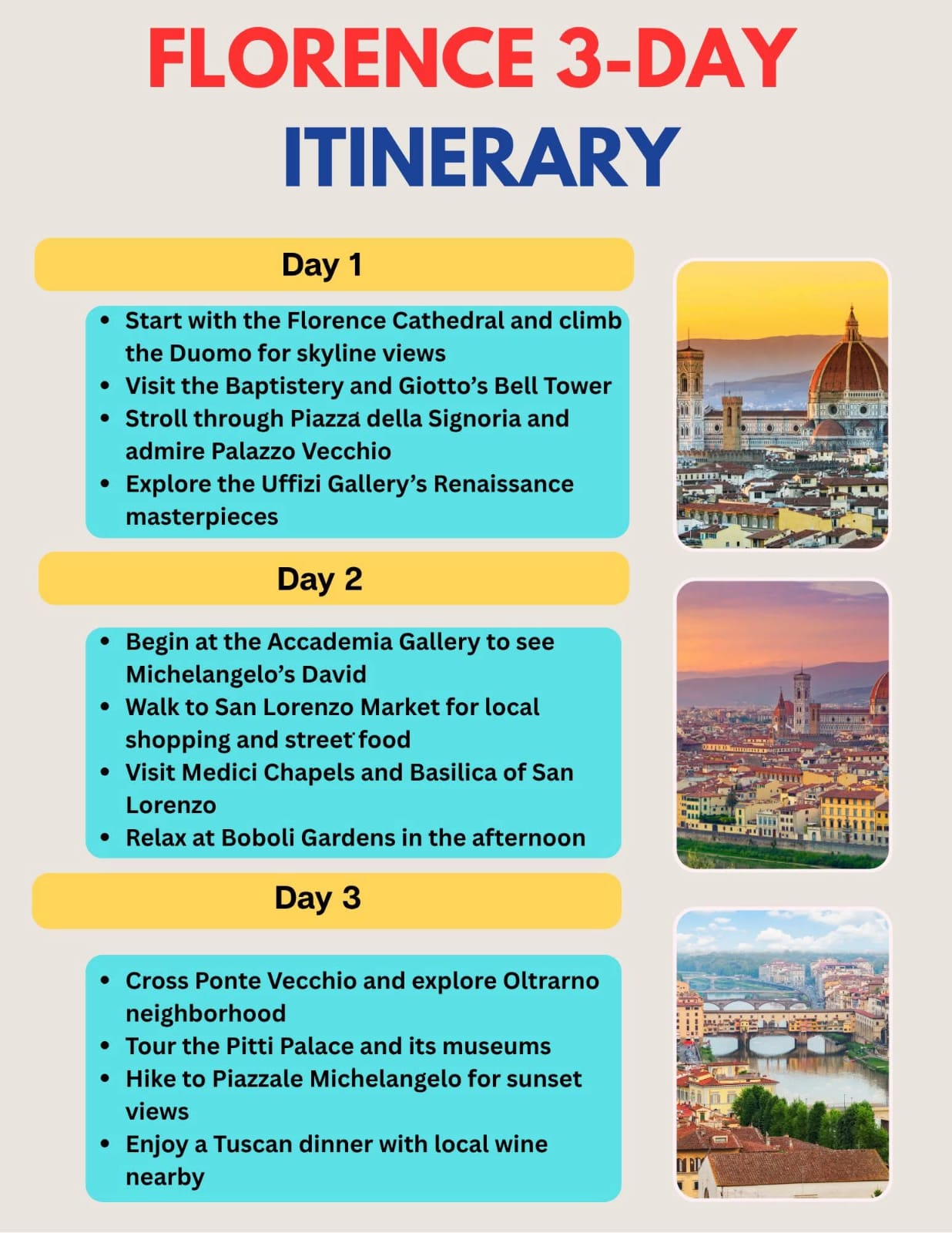
Florence packs an extraordinary concentration of Renaissance art and architecture into a compact, walkable center. Three days here allows time to see the major landmarks without rushing past what makes each one significant. Few cities reward slow, deliberate sightseeing quite like this one.
This itinerary suits art lovers, history enthusiasts, and first-time visitors wanting a thorough introduction to the city. It moves from the Duomo’s iconic skyline through the Accademia’s Renaissance masterpieces, closing with the Oltrarno’s quieter artisan streets. Nearly everything on this route is reachable on foot.
Below is a full day-by-day breakdown, along with where to stay and what to prioritize along the way.
Florence Itinerary Summary Table
| Stop | Recommended Stay | Main Highlights | Driving Time to Next Stop | Best For |
|---|---|---|---|---|
| Day 1: Duomo and Renaissance Landmarks | Near Piazza del Duomo | Florence Cathedral, Uffizi Gallery, Piazza della Signoria | Walkable, same city | First-time visitors |
| Day 2: David and San Lorenzo | Near San Lorenzo Market | Accademia Gallery, Medici Chapels, Boboli Gardens | Walkable, same city | Art and history lovers |
| Day 3: Oltrarno and Ponte Vecchio | Oltrarno neighborhood | Ponte Vecchio, Pitti Palace, Piazzale Michelangelo | N/A, departure day | Food lovers and wanderers |
Day 1: Duomo and Renaissance Landmarks
The first day covers Florence’s most iconic sights, anchored by the massive cathedral dominating the skyline. Morning crowds build quickly around the Duomo, so an early start makes a real difference. This day sets the stage for the Renaissance history covered throughout the rest of the trip.
Booking Duomo dome tickets in advance is essential, since same-day entry frequently sells out.
Things to Do on Day 1
- Florence Cathedral and the Duomo climb: Brunelleschi’s dome remains an engineering marvel, and climbing it rewards visitors with sweeping views over the terracotta rooftops. The climb involves several hundred narrow steps, so moderate fitness helps.
- The Baptistery: This octagonal building features famous bronze doors, including Ghiberti’s celebrated Gates of Paradise. Its mosaic-covered ceiling is worth a slower look once inside.
- Giotto’s Bell Tower: This freestanding tower offers an alternative climb to the dome, with excellent views of the cathedral itself included in the vantage point. Lines here are typically shorter than the dome.
- Piazza della Signoria: This open-air sculpture gallery sits beside the Uffizi, worth a slow walk to take in the surrounding statues and Palazzo Vecchio’s imposing facade. It’s a natural gathering point throughout the day.
- Palazzo Vecchio: This fortified palace has served as Florence’s town hall for centuries, with richly decorated interior rooms open to visitors. A shorter visit here pairs well with the piazza outside.
- Uffizi Gallery: Home to masterpieces by Botticelli and da Vinci, advance booking is essential to avoid long lines. Plan at least two hours for a proper visit.
Where to Stay on Day 1
- Hotel Savoy – Luxury
- Hotel Calimala – Mid-range
- Hotel Davanzati – Budget
Day 2: David and San Lorenzo
The second day shifts toward the Accademia Gallery and the San Lorenzo district, home to Florence’s central market and Medici family history. Arriving at the Accademia right at opening time significantly reduces wait times for Michelangelo’s David. This day balances major art with local food culture.
The San Lorenzo Market area gets noticeably busier by midday, so morning visits feel calmer.
Things to Do on Day 2
- Accademia Gallery: Michelangelo’s David draws crowds throughout the day, so booking timed entry ahead avoids long outdoor lines. The gallery’s other unfinished sculptures offer insight into the artist’s working process.
- San Lorenzo Market: This lively market offers leather goods, souvenirs, and local street food stalls. It’s a good stop for a casual lunch between morning and afternoon sightseeing.
- Medici Chapels: These chapels hold elaborate tombs designed by Michelangelo for the powerful Medici family. The Chapel of Princes’ marble interior is particularly striking.
- Basilica of San Lorenzo: This understated church, designed partly by Brunelleschi, holds significant Medici family history despite its unfinished facade. It sits just steps from the market.
- Boboli Gardens: These expansive Renaissance gardens behind the Pitti Palace offer a relaxed afternoon escape from the day’s earlier museum visits. Allow at least ninety minutes to explore the grounds properly.
Where to Stay on Day 2
- Golden Tower Hotel – Luxury
- Allegroitalia San Gallo Firenze – Mid-range
- B&B A Florence View – Budget
Day 3: Oltrarno and Ponte Vecchio
The final day crosses the Arno River into the Oltrarno, a quieter district known for artisan workshops and a more local pace. This neighborhood offers a genuine contrast to the busier historic core covered on the first two days. It’s a fitting, relaxed way to close out the trip.
Piazzale Michelangelo gets busy before sunset, so arriving thirty minutes early secures a good viewing spot.
Things to Do on Day 3
- Ponte Vecchio: This medieval bridge, lined with jewelry shops, spans the Arno at the heart of the city. Early morning offers the best light for photos before crowds gather.
- Oltrarno neighborhood: This artisan district holds workshops producing leather goods, furniture, and jewelry using centuries-old techniques. Wandering its streets rewards slow, unplanned exploration.
- Pitti Palace: This grand palace houses several museums, including collections of Renaissance paintings and royal apartments. Combined tickets with the Boboli Gardens offer good value if visiting both.
- Piazzale Michelangelo at sunset: This elevated viewpoint delivers the city’s best panoramic skyline view, framed by the Duomo and surrounding hills. The walk up takes about twenty minutes from the historic center.
- Tuscan dinner with local wine: The Oltrarno holds some of the city’s most authentic trattorias, serving classic Tuscan dishes paired with regional Chianti. Reservations are recommended at the more popular spots.
Where to Stay on Day 3
- Eleven Oltrarno – Luxury
- Hotel degli Orafi – Mid-range
- Hotel Silla – Budget
Practical Travel Advice
Florence’s historic center is fully walkable, so a car is unnecessary and often impractical given restricted traffic zones. April through June and September through October offer the most comfortable sightseeing weather, avoiding both winter chill and peak summer heat. Booking major attractions like the Uffizi, Accademia, and Duomo dome well in advance saves significant time, especially during summer months.
Comfortable walking shoes matter throughout this itinerary, given the amount of cobblestone streets and stair climbing involved. Church visits generally require covered shoulders, so pack accordingly. Staying near Piazza del Duomo, San Lorenzo, or the Oltrarno all offer easy walking access to different parts of this itinerary.
Final Thoughts
This three-day route balances Florence’s biggest Renaissance landmarks with slower, neighborhood-level exploration. Follow the themed days as outlined, or adjust the pace to match your own interests and energy levels. Either way, this itinerary offers a thorough, memorable introduction to one of the world’s great art cities.