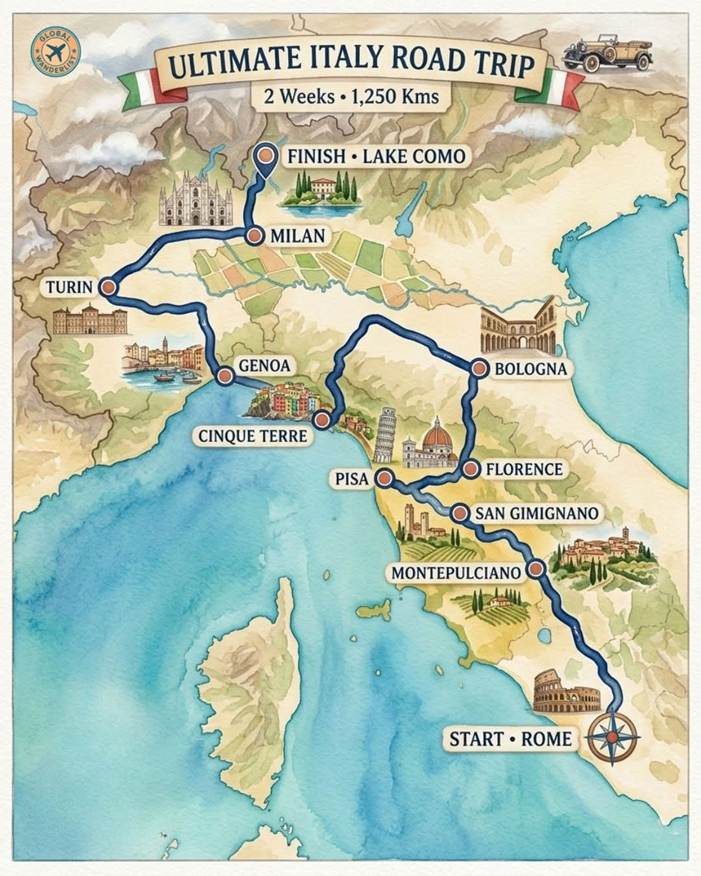
Two weeks, about 1,250 km, and eleven stops between the Colosseum and the far end of Lake Como. This Italy road trip idea covers the spine of Italy through Tuscan hill towns, over the Apennines to Bologna, down to Pisa, out to the Cinque Terre, along the Ligurian coast to Genoa, and north through Turin and Milan to the lakes.
Two things will cost you money if you get them wrong, and neither is the driving.
The first is the ZTL, Italy’s camera-enforced limited traffic zone. Drive into a historic centre and a fine of €80 to €300 arrives months later, plus an administration fee from your rental company. Each camera you pass is a separate fine.
The second is booking. Milan’s Last Supper releases tickets in three-month blocks and sells out in hours. The Colosseum’s underground tour releases seven days ahead and goes in minutes. Neither is something you sort out on the day.
Illustrated map of the 2-week Italy road trip route from Rome to Lake Como, via Tuscany, Bologna, Cinque Terre, Genoa, Turin, and Milan
Route overview
| Stop | Distance from previous | Drive time | Toll | Nights |
| Rome | — | — | — | 3 |
| Montepulciano | 185 km (115 mi) | 2h10–2h30 | ~€10.80, or free via the Cassia | 1 |
| San Gimignano | 105 km (65 mi) | 1h30–1h45 | Free | 1 |
| Florence | 60 km (37 mi) | 1h–1h15 | Free | 2 |
| Bologna | 105 km (65 mi) | 1h15–1h30 | €8.59 | 1 |
| Pisa | 148 km (92 mi) | 1h45–2h | €12.70 | 1 |
| Cinque Terre | 85 km (53 mi) | 1h–1h15 | €6.97 | 2 |
| Genoa | 108 km (67 mi) | 1h15–1h30 | €9.52 | 1 |
| Turin | 160 km (99 mi) | 1h50–2h10 | €15.50 | 1 |
| Milan | 148 km (92 mi) | 1h45–2h | €17.50 | 2 |
| Lake Como | 48 km (30 mi) | 50 min–1h | €3.79 | 2 |
Verified autostrada tolls from Florence north total €74.57. Budget about €85 for the full route if you take the A1 out of Rome, or roughly €75 if you take the toll-free Via Cassia instead. An SUV tall enough to count as Class B pays 10 to 20 percent more.
Stop 1: Rome
Stay: 3 nights · Book ahead: everything
Do not collect the rental car until the morning you leave. Rome is a ZTL, parking is expensive, and the city is better on foot and by metro.
- The Colosseum, Forum, and Palatine. Book only at ticketing.colosseo.it. CoopCulture is no longer the official seller, whatever the search results say. Standard tickets open 30 days out. The Arena Floor and Underground “Full Experience” releases just seven days ahead and sells out in minutes. Tickets are name-bound, so bring photo ID.
- The Vatican Museums and Sistine Chapel. Tickets open 60 days out. One to two weeks ahead is usually enough outside peak.
- The Borghese Gallery. Reservation is mandatory, in timed two-hour windows. There are no door sales.
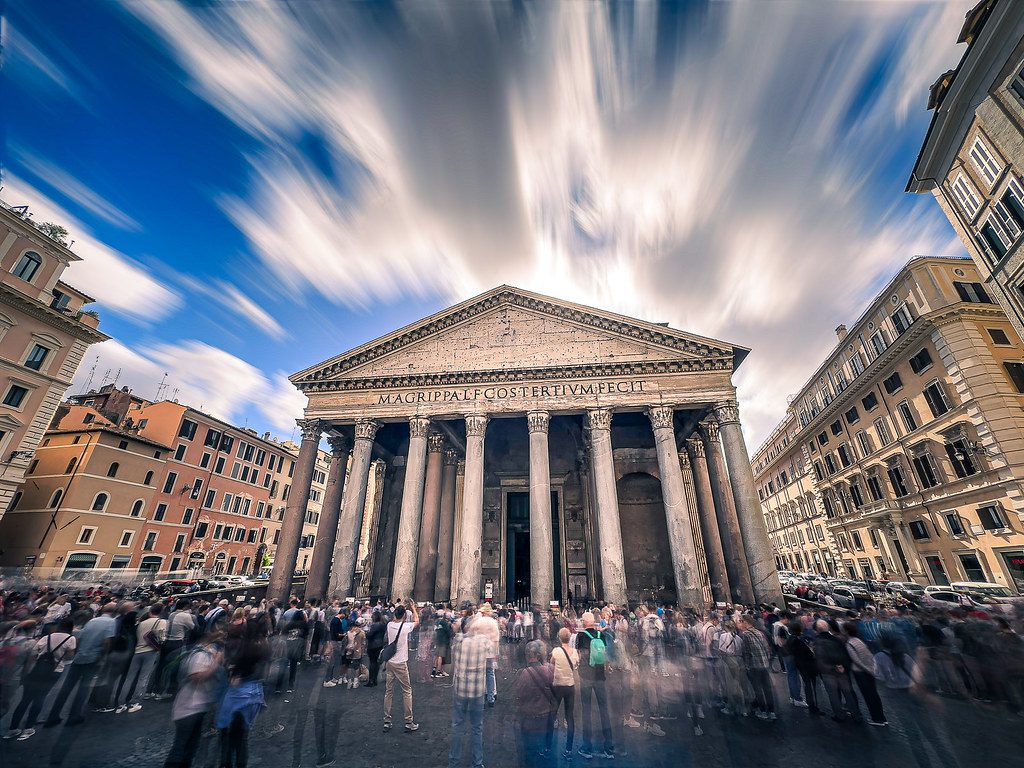
- The Pantheon, which now charges about €5 for a timed entry.
Parking when you leave: the SABA Villa Borghese garage sits outside the ZTL with 1,800 spaces, about €2 an hour.
Stop 2: Montepulciano
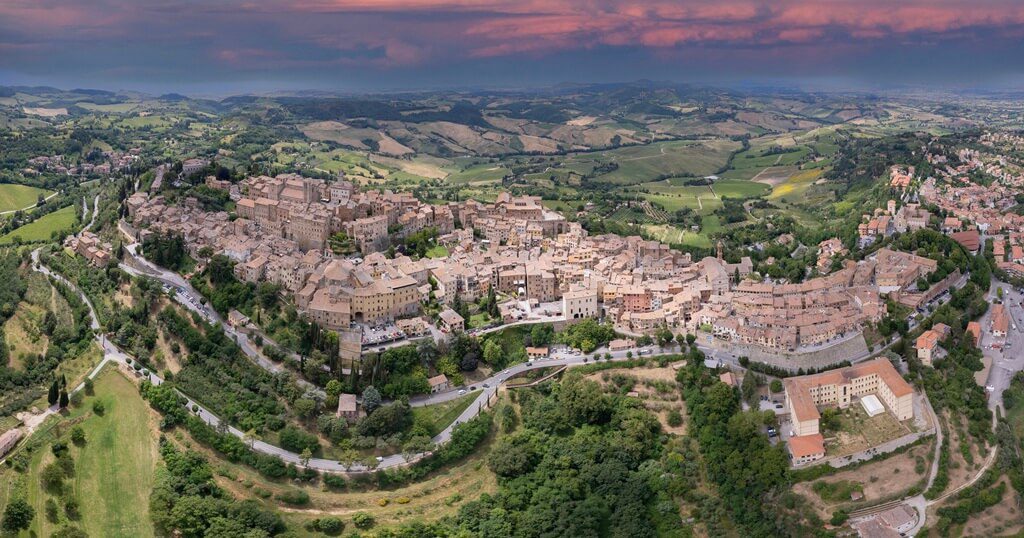
Drive from previous stop: 185 km (115 miles), about 2 hours 20 minutes · Stay: 1 night
Take the A1 and pay about €10.80, or take the SR2 Via Cassia, pay nothing, and add 30 km of considerably better scenery through the Val d’Orcia. On a road trip, take the Cassia.
- Piazza Grande, and the tower climb at the Palazzo Comunale.
- Vino Nobile tasting in the underground cellars. Contucci and De’ Ricci both cut down into the rock beneath the town.
- The Corso, walked slowly, uphill, which is the only way it goes.
Nothing here needs a timed ticket. Park outside the walls.
Stop 3: San Gimignano
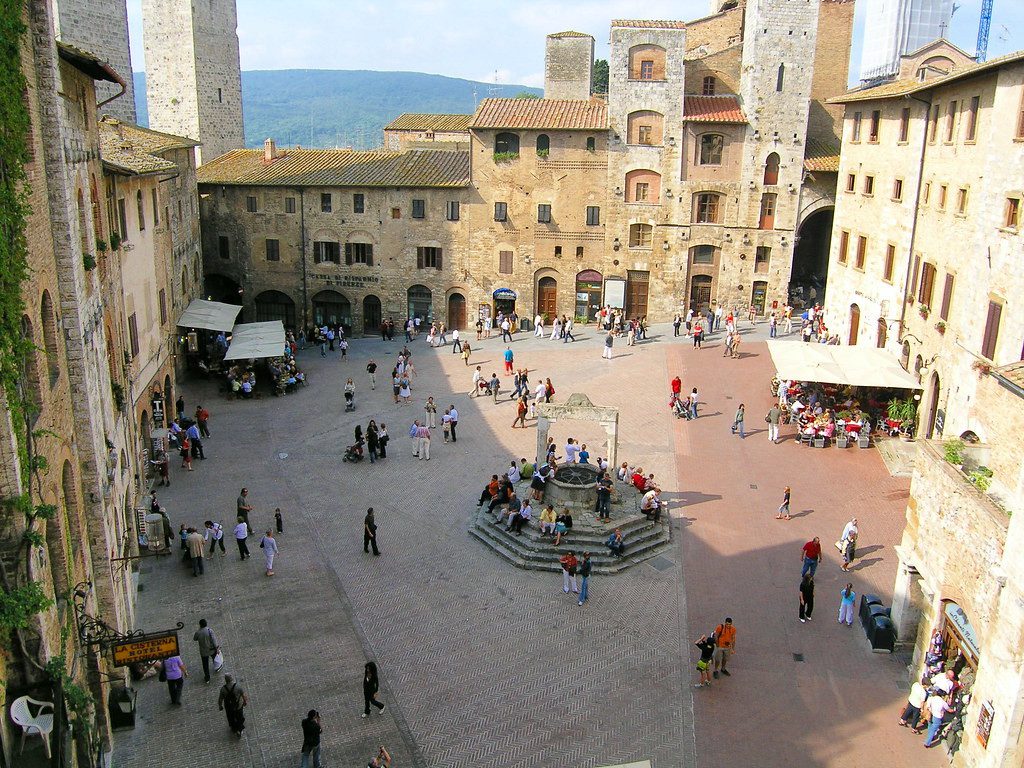
Drive from previous stop: 105 km (65 miles), about 1 hour 40 minutes · Stay: 1 night
Toll-free the whole way, on the Firenze–Siena superstrada.
- Climb Torre Grossa, the only one of the surviving towers you can go up, about €10 with the Museo Civico.
- Piazza della Cisterna, early, before the day-trip coaches.
- Gelateria Dondoli, whose owner has won the world championship. The queue is real and it moves.
Four numbered lots ring the walls. Parking is the only logistics here.
Stop 4: Florence
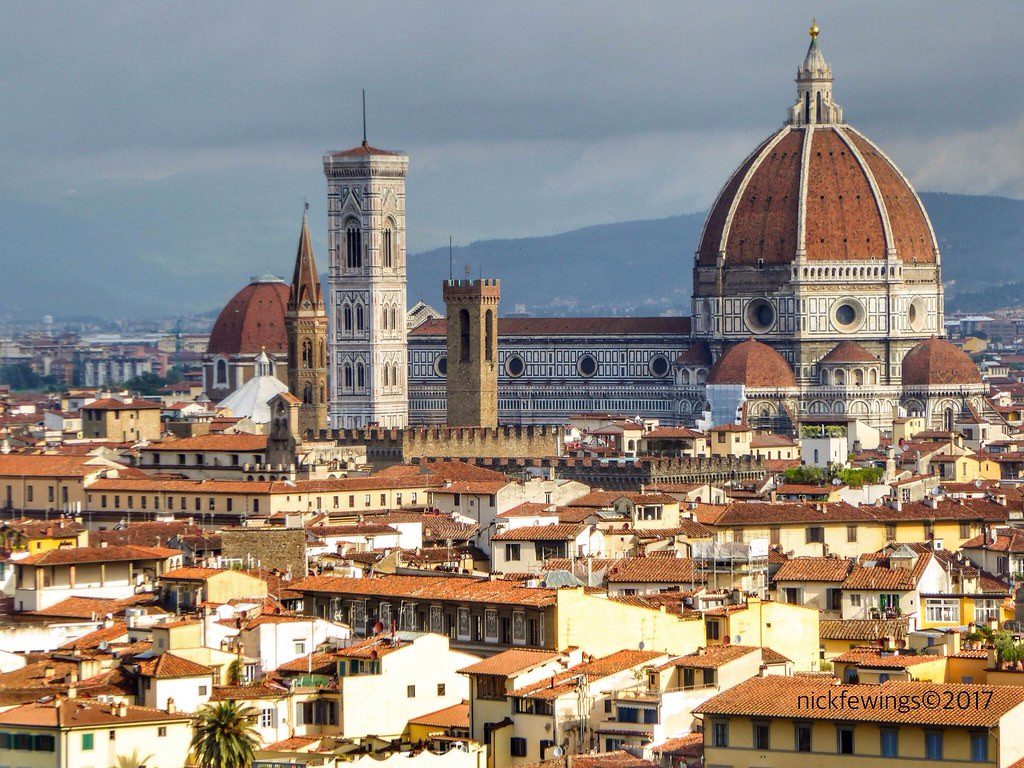
Drive from previous stop: 60 km (37 miles), about 1 hour · Stay: 2 nights · Book ahead: Uffizi, Accademia, Dome climb
Florence’s ZTL is effectively active around the clock. Here is the move that solves it entirely: park at Parcheggio Villa Costanza, which has its own exit off the A1, costs about €7 a day, and puts you on the T1 tram. It’s €1.70 and 22 minutes to Santa Maria Novella. You never touch the ZTL.
- The Uffizi. Book about a month ahead through tickets.uffizi.it. Walk-up waits run 60 to 90 minutes from April to October.
- The Accademia, for the David. Two to three weeks ahead in shoulder season, four to six in summer. The 8:15 slot fills first.
- The Dome climb, sold in the €30 Brunelleschi Pass. The time slot cannot be changed and sells out two to three weeks ahead.
- Piazzale Michelangelo at sunset, which is free and better than most things that are not.
Tuesday mornings are the quietest at the Uffizi.
Stop 5: Bologna
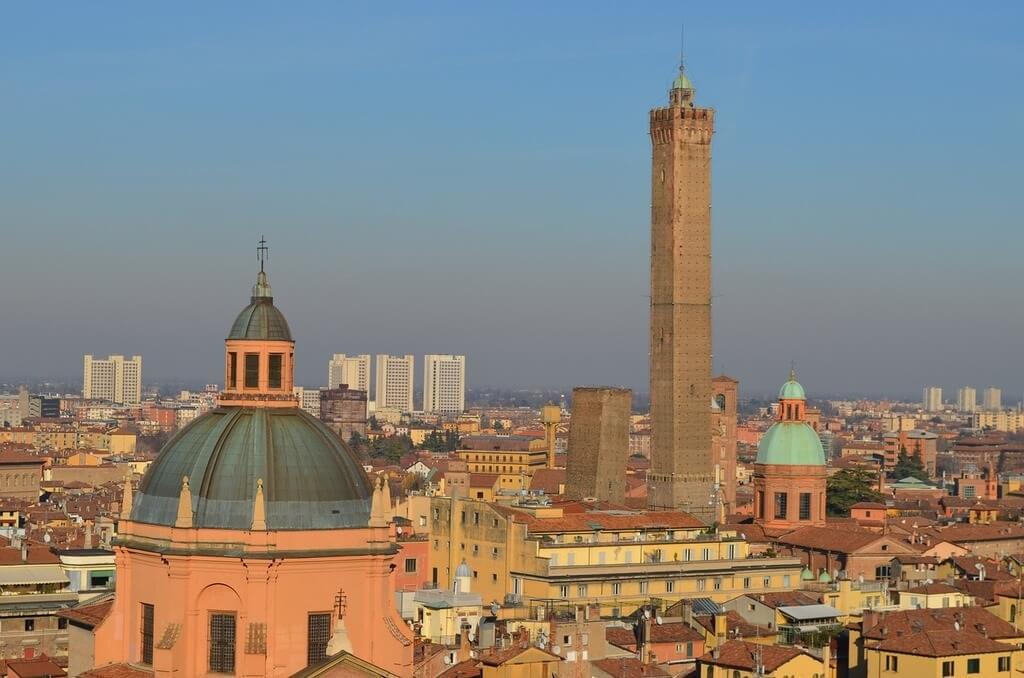
Drive from previous stop: 105 km (65 miles), about 1 hour 20 minutes · Toll: €8.59 · Stay: 1 night
The A1 crosses the Apennines through a long series of tunnels. It is a dull drive and a fast one.
- Piazza Maggiore, and the meridian line Cassini laid into the floor of San Petronio in 1655.
- The porticoes, 62 km of them across the city, UNESCO-listed. The walk up to San Luca runs 3.8 km under about 666 arches.
- The Quadrilatero, a knot of food lanes behind the main square, and the reason people call this city the stomach of Italy.
The Asinelli Tower is closed while the neighbouring Garisenda is stabilised, reportedly until around 2028. A great many blogs still list the climb. Go up the Clock Tower at Palazzo d’Accursio instead.
Park at Tanari, off the ring road, about €5 a day.
Stop 6: Pisa
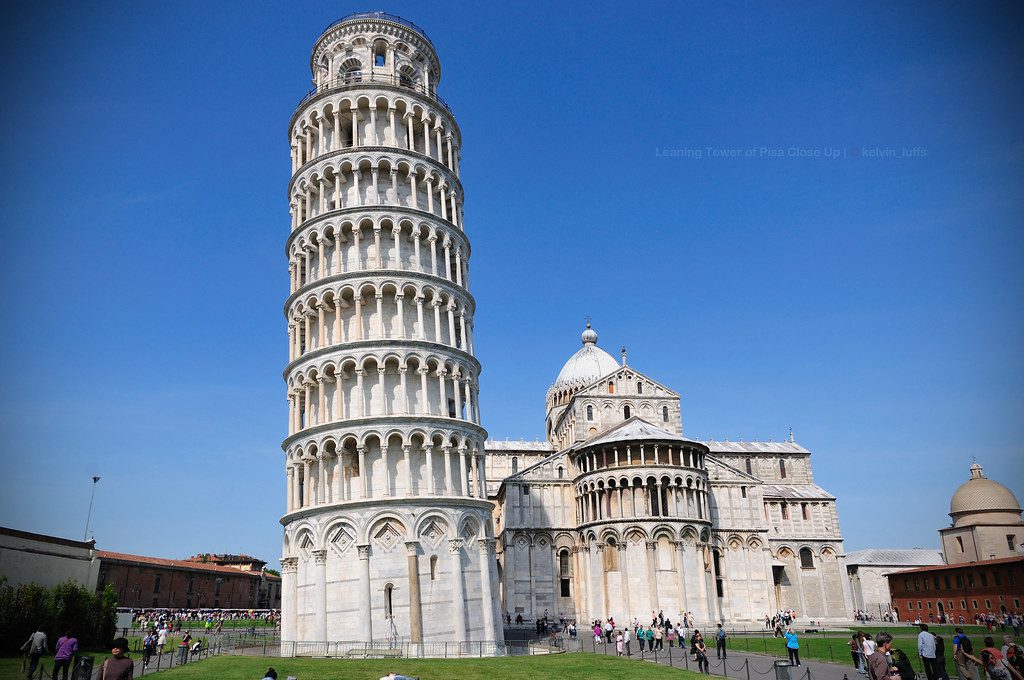
Drive from previous stop: 148 km (92 miles), about 1 hour 50 minutes · Toll: €12.70 · Stay: 1 night · Book ahead: the tower, up to 90 days
Pisa is worth an afternoon and not a day. Everyone knows this. Everyone goes anyway, and they are right to, because the Piazza dei Miracoli in low sun is genuinely one of the great squares in Europe.
- Climb the tower. Book at opapisa.it. Thirty people every 30 minutes, about €20, on sale 90 days ahead. No under-8s. Arrive late and you forfeit the slot.
- The Cathedral, Baptistery, and Camposanto, all of which most visitors walk straight past.
- Piazza dei Cavalieri, five minutes away and empty.
Parking: the Via Pietrasantina lot is free, about 2 km out, with a free shuttle every eight to ten minutes that drops you 200 m from the tower. The walled centre is a ZTL and entering costs €80 plus admin.
Stop 7: Cinque Terre
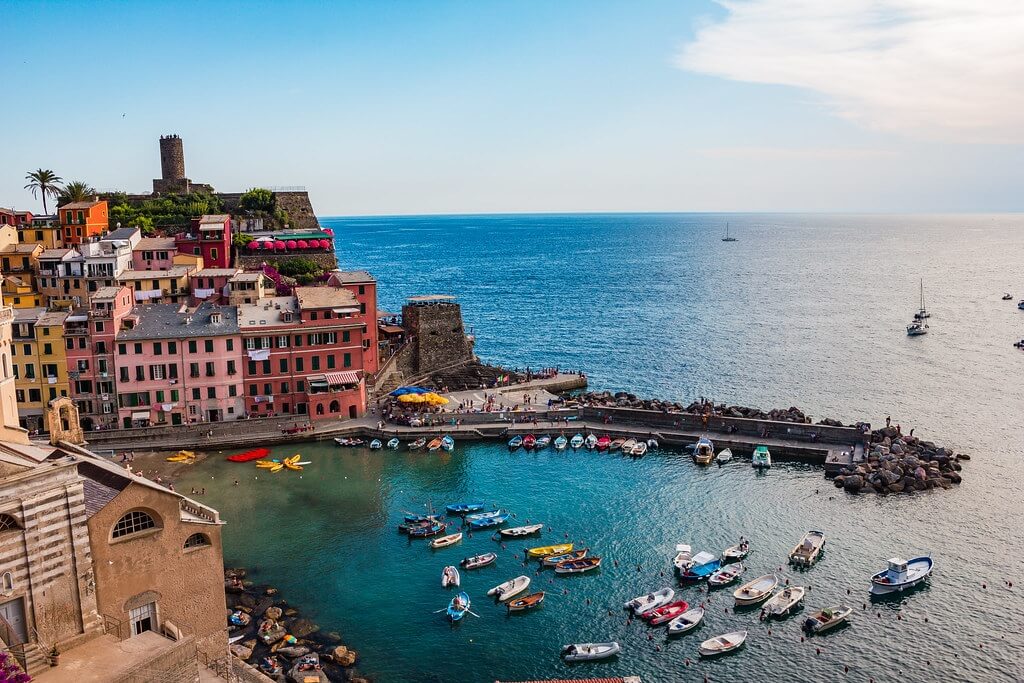
Drive from previous stop: 85 km (53 miles) to La Spezia, about 1 hour · Toll: €6.97 · Stay: 2 nights · Book ahead: Cinque Terre Card, Via dell’Amore slot
You cannot drive into the five villages. This is not “it’s difficult.” The roads are narrow, largely closed to non-residents, camera-enforced, and there is nowhere to put a car. Park at the ends and take the train.
- La Spezia, the southern gateway. Park Centro Stazione sits under La Spezia Centrale, open 24 hours, €1.50 an hour by day.
- Levanto, the northern gateway. About 500 spaces near the station, roughly €15 for 24 hours, and an easier town to drive into.
The Cinque Terre Express runs between La Spezia and Levanto, stopping at all five villages, about every 15 minutes in peak season. Adjacent villages are three or four minutes apart.
The Cinque Terre Card comes in two versions, and you want the Treno MS one, which adds unlimited train travel to the trail access. 2026 adult prices run from €22 for one day in low season to €35 in high season, and €49 to €81 for three days. Blogs still quoting a flat €17.30 a day are years out of date.
The Via dell’Amore reopened and now needs a timed reservation: 30-minute slots, 200 people, one-way from Riomaggiore to Manarola.
Day-trippers land around 10am and leave around 5pm. Hike before 8am or after 4pm. Counterintuitively, May, June, and September are the most crowded months, not August.
Stop 8: Genoa
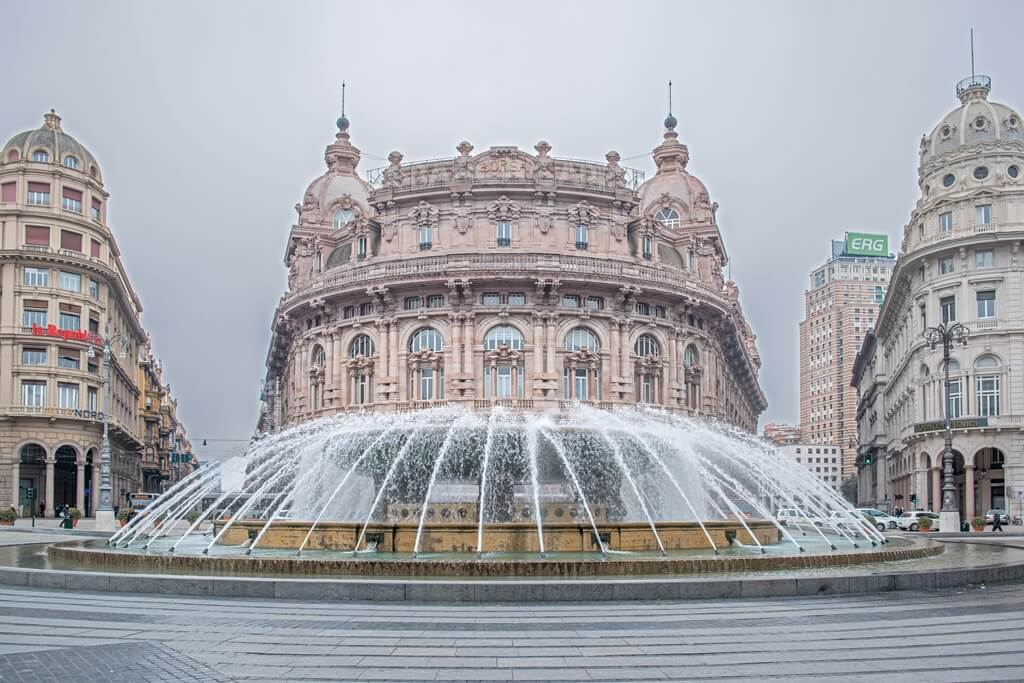
Drive from previous stop: 108 km (67 miles), about 1 hour 20 minutes · Toll: €9.52 · Stay: 1 night
The A12 along this coast is almost entirely tunnels and viaducts. Genoa itself is a working port city that most itineraries skip, which is exactly why it’s on this one.
- The Acquario di Genova, Italy’s largest. Book a timed slot for weekends and midsummer.
- Via Garibaldi and the Palazzi dei Rolli, a UNESCO-listed street of palaces that once housed visiting heads of state by lottery.
- The caruggi, the medieval alleys behind the port, which are dark, tight, and the best street food in Liguria.
- Boccadasse at sunset, a fishing cove swallowed by the city.
Stop 9: Turin
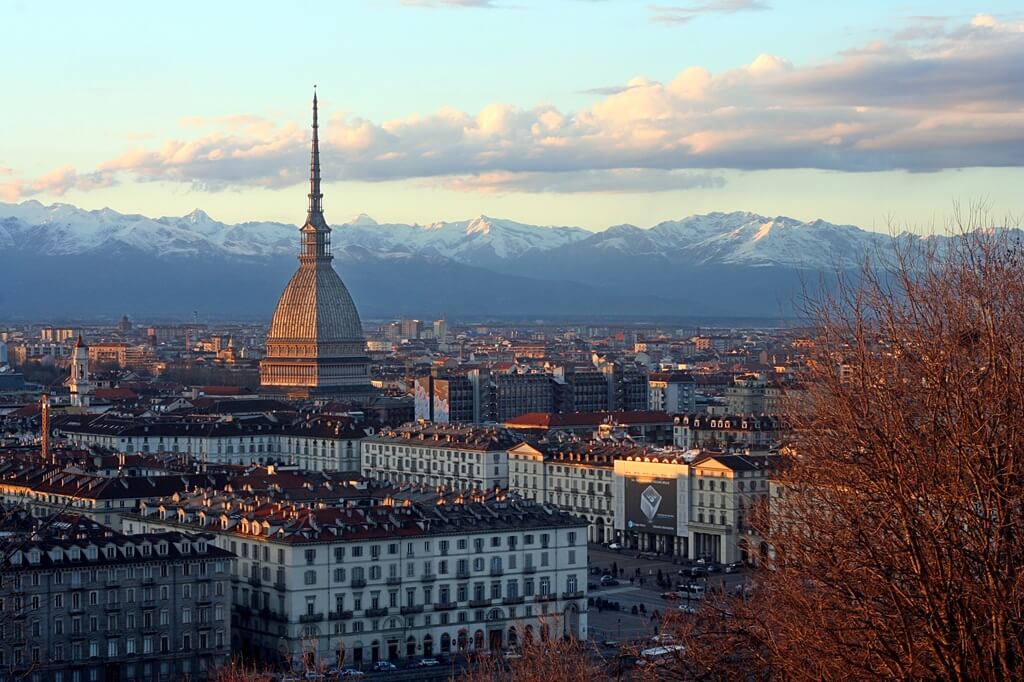
Drive from previous stop: 160 km (99 miles), about 2 hours · Toll: €15.50 · Stay: 1 night · Book ahead: Museo Egizio
Turin’s ZTL is unusually forgiving: weekdays only, excluding Saturday, and only from about 07:30 to 10:30.
- The Museo Egizio, the most important collection of Egyptian antiquities outside Cairo. Timed 30-minute entry slots, held even when the museum is quiet. Book a day ahead at minimum.
- The Mole Antonelliana and the National Cinema Museum inside it. Pre-buy the panoramic lift.
- Piazza San Carlo, and a bicerin in one of the cafés that has been serving it for two hundred years.
Park at Roma–San Carlo–Castello. The entrance from Piazza Carlo Felice is outside the ZTL.
Stop 10: Milan
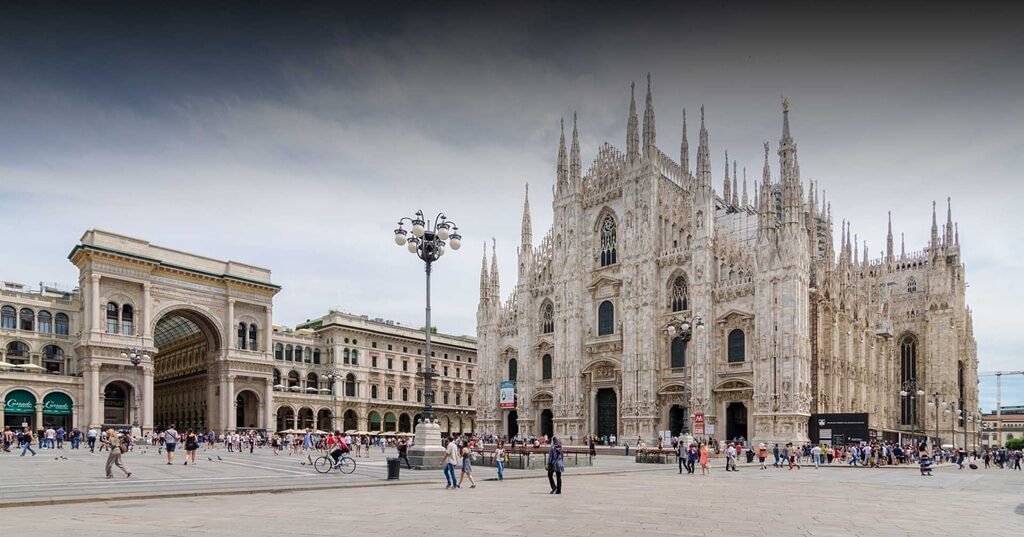
Drive from previous stop: 148 km (92 miles), about 1 hour 50 minutes · Toll: €17.50 · Stay: 2 nights · Book ahead: the Last Supper, months out
The Last Supper is the single most booking-sensitive sight in Italy. Tickets release in three-month blocks, roughly on the third Wednesday of the second month before the block opens. Prime slots sell within hours of release. A small batch drops each Wednesday at noon for the following week if you miss it. Groups are capped at 40 and you get 15 minutes with the mural. It’s €15, closed Mondays, and arriving less than 30 minutes early forfeits the ticket. Book at cenacolovinciano.vivaticket.it.
- The Duomo, and its roof terraces. Book three to five days ahead.
- The Galleria Vittorio Emanuele II, free to walk through.
- La Scala, bookable only through the theatre’s own site. It warns, correctly, that no legitimate reseller holds tickets before it does.
Milan has two schemes, not one. Area C is a €7.50 daily congestion charge over the historic centre, Monday to Friday. Area B is a low-emission zone covering nearly the whole city, and it is a ban, not a charge: older diesels are simply not allowed in. Most modern rentals are fine, but check the car’s Euro class at pickup.
The clean answer: use an ATM park-and-ride at a metro terminus. It’s a flat €4.50 a day including a metro ticket, and it sidesteps both schemes. Lampugnano and San Donato are the easiest from the motorway.
Stop 11: Lake Como
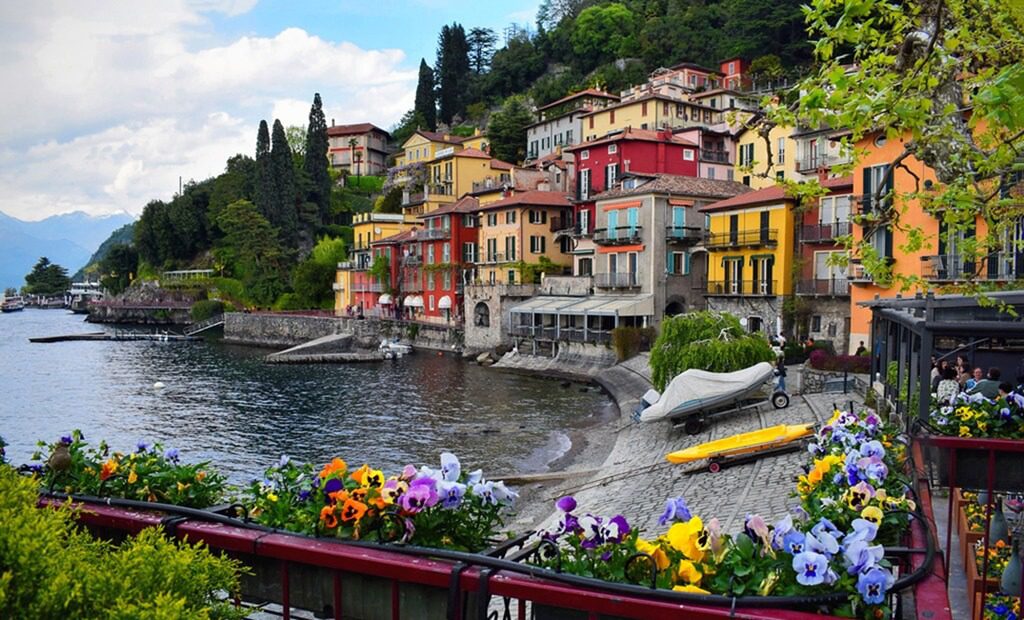
Drive from previous stop: 48 km (30 miles), about 55 minutes · Toll: €3.79 · Stay: 2 nights · Book ahead: Villa del Balbianello
Then leave the car parked and get on a boat. The ferry hop between Bellagio, Varenna, Menaggio, and Tremezzo is the best thing on the lake, and driving the lakeside roads in summer is a slow, blind-cornered grind.
- Villa del Balbianello, on its own promontory. The interior is guided-tour only and must be pre-booked. It opens weekends from mid-February and daily from mid-March.
- Villa Carlotta’s gardens, open roughly late March to mid-October, and spectacular in spring.
- Bellagio, and the Villa Melzi gardens along the water.
Park at Autosilo Auguadri in Como town, about €1.50 for the first hour.
The ZTL: the one thing that will cost you money
A Zona a Traffico Limitato is a restricted zone covering almost every Italian historic centre. There is no barrier and no booth. Each entry point is a camera that photographs your plate and checks it against a permit list. If you’re not on it, you’re fined.
Reading the sign: a white sign with a red circle, marked “Zona a Traffico Limitato.” Below it, a panel reads Varco Attivo (active — do not enter) or Varco Non Attivo (inactive — you may enter). Many zones are time-limited, which is why that panel exists.
How it reaches you. The fine runs €80 to €300. It goes first to the registered keeper, which is your rental company, which then hands over your name and billing address and charges you €30 to €50 per citation just for the paperwork. The actual fine arrives by post weeks or months later, sometimes as much as a year, occasionally via a collection agency.
Each camera is a separate fine. Drive in, realise, panic, loop around and drive back in: that is three fines from one confused afternoon.
The rule that removes all risk: never drive into a historic centre. Park outside and walk. If your hotel is inside a ZTL, phone ahead and have them register your plate.
Is a car even worth it?
Not for the whole route, no. This is worth being honest about.
The train wins on the spine. Rome to Florence is 1 hour 15 minutes by Frecciarossa, centre to centre, with advance fares from about €16. Driving it is three and a half hours, plus tolls, plus parking, plus ZTL risk. Florence to Bologna is 37 minutes by train. There is no argument to be had.
The car earns its keep in three places: the Tuscan hill towns and the Chianti back roads, where the rail network simply doesn’t go; the approach to the Cinque Terre; and Lake Como’s smaller lakeside towns.
The efficient version of this trip: take the train from Rome to Florence, rent a car there for three or four days of Tuscany, drop it, train to the Cinque Terre and on to Milan, then take a short second rental or the ferries for Como. That cuts you to five or seven rental days, three or four parking days, and removes both Rome and central Florence from your driving entirely.
If you want the road trip as a road trip, drive it all. Just know what you’re paying for.
Best time to go
Late April to May, and September to early October. Mild weather, manageable crowds, lodging 20 to 40 percent below peak. Rome is around 20°C in late April and 24 to 28°C in September.
July and August are hot and full. Ferragosto, 15 August, closes much of the country, and many family-run restaurants and shops shut for the fortnight around it. State museums stay open. The cities empty while the coast and the lakes fill.
November to March: the Cinque Terre largely closes, with reduced trains and trails, reopening around 1 April. Lake Como’s villas shut for winter. Rental cars are at their cheapest.
Practical car facts
- Manual is the default. Automatics are a small slice of the fleet, cost €10 to €20 a day more, and sell out. Book one weeks ahead.
- The IDP rule, correctly stated: American and Canadian drivers do legally need an International Driving Permit alongside their licence. UK and EU licences do not. In the US, AAA is the only authorised issuer, and it costs about $20.
- Tolls: take a ticket on entry, pay on exit, by cash or card. Avoid the yellow Telepass-only lanes. You cannot take a ticket in one, and reversing out of a toll plaza is a bad afternoon.
- Fuel: benzina is petrol, gasolio is diesel. Confirm which your car takes before the first fill. Fai da te is self-service; servito is attended and adds €0.15 to €0.25 a litre.
- One-way drop fee, Rome to Como: budget €50 to €150 and get an exact quote at booking. Quotes vary wildly.
Rough 14-day driving cost: around €865 at the low end (manual, self-service fuel, careful parking) and around €1,690 typical, once you add optional insurance and city garages. One ZTL mistake through two gates adds €220 to €300.
Frequently asked questions
Will I actually get a ZTL fine? If you drive into a historic centre, yes. About 300 towns have camera-enforced zones. Park outside and the risk goes to zero.
Do I need an International Driving Permit? Americans and Canadians, yes, legally, carried with your home licence. UK and EU drivers, no.
Can I drive to the Cinque Terre? You drive to La Spezia or Levanto and park. Cars are banned inside all five villages. The Cinque Terre Express train connects them every 15 minutes in season.
Should I rent an automatic? Only if you need one. It costs more, there are fewer of them, and Italian hill towns are not where you want to learn a clutch.
How far ahead do I book the Last Supper? The day its three-month block opens. Not weeks ahead. The day.
Is Pisa worth stopping for? For an afternoon. The tower needs booking 90 days out if you want to climb it, and the rest of the Piazza dei Miracoli is better than the tower.
When is the Cinque Terre least crowded? Mid-to-late April and mid-to-late October. May, June, and September are its busiest months, which surprises people.