
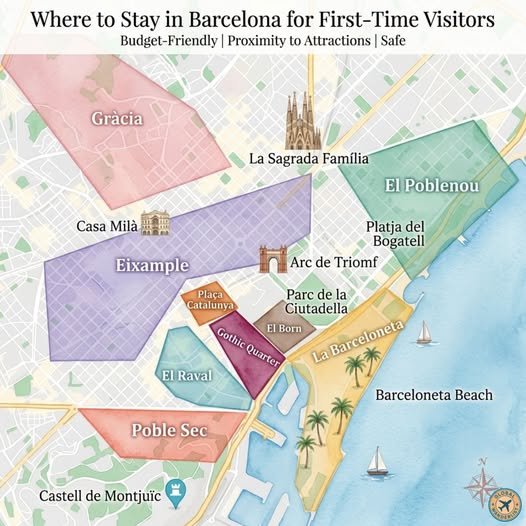
Choosing where to stay can shape your entire Barcelona trip. Each neighborhood has its own rhythm, look, and crowd. Picking the right one saves you time, money, and daily frustration.
Some areas put you steps from major landmarks. Others offer quieter streets and better value. Your choice affects how much you walk, what you spend, and how safe you feel at night.
This guide breaks down Barcelona’s most popular neighborhoods for visitors. Each section covers atmosphere, attractions, dining, and who each area suits best.
Barcelona Neighborhood Quick Comparison
| Neighborhood | Best For | Average Budget | Nearby Attractions | Atmosphere |
|---|---|---|---|---|
| Gràcia | Local culture, longer stays | $$ | Park Güell, Casa Vicens | Bohemian, residential |
| Eixample | First-timers, architecture fans | $$$ | Sagrada Família, Casa Milà | Elegant, spacious |
| El Poblenou | Beach access, modern travelers | $$ | Platja del Bogatell, Rambla del Poblenou | Trendy, creative |
| El Raval | Budget travelers, nightlife | $ | MACBA, Rambla del Raval | Edgy, multicultural |
| Gothic Quarter | History lovers, walkers | $$ | Barcelona Cathedral, Plaça Reial | Medieval, lively |
| El Born | Culture seekers, foodies | $$$ | Picasso Museum, Arc de Triomf | Romantic, stylish |
| La Barceloneta | Beach lovers, seafood fans | $$ | Barceloneta Beach, Port Vell | Coastal, casual |
| Poble Sec | Value seekers, tapas fans | $$ | Montjuïc Castle, Poble Espanyol | Local, laid-back |
*Budget symbols reflect average nightly hotel rates: $ (under 80), $ (80-150), $ $ ($150-250).*
Gràcia: Bohemian Charm Away from the Crowds
Gràcia sits north of the main tourist zone, once its own independent town. Narrow streets open onto lively little squares. It attracts travelers who want a residential, local feel.
The neighborhood has a strong creative streak. Independent shops, vintage stores, and small theaters line its streets. Families and young professionals live here alongside visitors.
Gràcia works best for travelers staying a week or longer. It sits slightly farther from the main sights, but the metro connects it quickly to downtown.
What to Do in Gràcia
- Explore Park Güell, Gaudí’s colorful park with mosaic benches and sweeping city views.
- Wander Plaça del Sol and Plaça de la Vila de Gràcia, popular evening gathering spots.
- Visit Casa Vicens, Gaudí’s first major residential building and a UNESCO World Heritage Site.
- Browse vintage shops and independent boutiques along Carrer de Verdi.
- Catch an independent film at Cines Verdi, a neighborhood institution since 1988.
- Join the Festa Major de Gràcia in August, when residents decorate entire streets.
Where to Eat in Gràcia
- La Panxa del Bisbe – Modern Catalan tapas – $$$
- Botafumeiro – Galician seafood – $$$$
- Con Gracia – Contemporary tasting menu – $$$
- Bar Bo – Casual Catalan tapas and vermouth – $$
- La Pubilla – Market-driven Catalan cuisine – $$$
Eixample: Grand Boulevards and Iconic Architecture
Eixample means “expansion” in Catalan, and its wide grid layout reflects that history. Broad avenues connect Barcelona’s most famous Modernist buildings. This is the city’s most central, well-connected district.
Wide sidewalks and consistent architecture make Eixample feel spacious. It splits into Dreta (right) and Esquerra (left), each with its own character. Esquerra is known as a welcoming LGBTQ+ hub.
Eixample suits first-time visitors who want convenience and comfort. It offers strong transit links, upscale shopping, and easy access to major landmarks.
What to Do in Eixample
- Tour the Sagrada Família, Gaudí’s unfinished basilica and Barcelona’s most visited landmark.
- Admire Casa Milà, also called La Pedrera, known for its wave-like stone facade.
- Visit Casa Batlló, a fantastical building covered in mosaic tiles and curved balconies.
- Shop along Passeig de Gràcia, home to luxury boutiques and flagship stores.
- Stroll Rambla de Catalunya, a quieter, more local alternative to Las Ramblas.
- Explore the Hospital de Sant Pau, a stunning Modernist complex often overlooked by visitors.
Where to Eat in Eixample
- Cerveseria Catalana – Classic Catalan tapas – $$
- Mont Bar – Elevated tapas and tasting menus – $$$$
- Vinitus – Mediterranean tapas and wine – $$
- Tapas 24 – Traditional tapas by a renowned chef – $$
- El Racó d’en Cesc – Traditional Catalan cuisine – $$$
El Poblenou: Beachside Living with a Creative Edge
El Poblenou sits along the coast east of the city center. Once an industrial zone, it now blends converted factories with modern apartment blocks. Startups, designers, and remote workers have reshaped its identity.
The neighborhood offers a calmer beach experience than Barceloneta. Wide streets and fewer crowds make it feel more residential. Sunday markets and rooftop bars add to its appeal.
El Poblenou suits travelers who want beach access without constant tourist traffic. It works well for longer stays or digital nomads.
What to Do in El Poblenou
- Relax at Platja del Bogatell, a wide, less crowded beach popular with locals.
- Walk or bike along Rambla del Poblenou, a tree-lined pedestrian street full of cafes.
- Browse Mercat dels Encants, one of Europe’s oldest flea markets.
- Visit Torre Glòries, a striking bullet-shaped skyscraper lit up at night.
- Explore Can Framis Museum, a contemporary art space in a former textile factory.
- Catch sunset drinks at a rooftop bar overlooking the Mediterranean.
Where to Eat in El Poblenou
- Els Pescadors – Traditional Catalan seafood – $$$
- Floreta Cuina Espai – Seasonal tapas and small plates – $$
- Els Tres Porquets – Casual tapas and natural wine – $$
- Eldelmar – Upscale seafood with harbor views – $$$$
El Raval: Gritty, Multicultural, and Full of Energy
El Raval sits west of Las Ramblas, historically the city’s rougher edge. It has transformed dramatically over the past two decades. Art institutions and international restaurants now sit beside old tenement buildings.
The neighborhood remains one of Barcelona’s most diverse. Moroccan, Pakistani, and Filipino communities have shaped its food and culture. Nightlife here runs late and skews toward younger crowds.
El Raval suits budget-conscious travelers and those seeking nightlife. It requires more street awareness at night than other central areas, though it has improved significantly.
What to Do in El Raval
- Visit MACBA, Barcelona’s contemporary art museum with a striking white facade.
- Wander Rambla del Raval, a wide pedestrian street lined with cafes and a giant cat sculpture.
- Explore the Boqueria Market entrance, technically bordering El Raval and Ciutat Vella.
- Discover Filmoteca de Catalunya, a cultural cinema showing classic and independent films.
- Browse vintage and record shops along Carrer de la Riera Baixa.
- Check out Palau Güell, an early Gaudí mansion often less crowded than his later works.
Where to Eat in El Raval
- Louro – Modern Spanish and Galician-inspired cuisine – $$$
- Ca l’Isidre – Long-running Catalan fine dining – $$$$
- Succulent – Creative tapas on Rambla del Raval – $$
- Chaka Khan – International small plates – $$
Gothic Quarter: Medieval Streets and Timeless Landmarks
The Gothic Quarter, or Barri Gòtic, forms Barcelona’s historic core. Narrow stone streets wind between buildings dating back centuries. The Barcelona Cathedral anchors the neighborhood’s dramatic skyline.
Tourist crowds are heaviest here, especially near Las Ramblas. Still, quieter corners exist just a few streets away. History lovers find this area endlessly walkable.
The Gothic Quarter suits visitors who prioritize sightseeing over quiet nights. Expect noise, especially near Plaça Reial, but unmatched proximity to landmarks.
What to Do in the Gothic Quarter
- Tour Barcelona Cathedral, a Gothic masterpiece with a peaceful cloister of geese.
- Wander Plaça Reial, a palm-lined square surrounded by bars and restaurants.
- Explore Roman ruins beneath the Museu d’Història de Barcelona.
- Browse boutiques and chocolate shops along Carrer de Petritxol.
- Visit Plaça Sant Jaume, home to Catalonia’s regional government buildings.
- Get lost intentionally in the maze of alleys between Carrer del Call and Carrer Ferran.
Where to Eat in the Gothic Quarter
- Cañete – Michelin-starred Andalusian tapas – $$$$
- Bar La Plata – Historic four-item tapas bar since 1945 – $
- Los Caracoles – Traditional Catalan cuisine since 1835 – $$$
- Milk Bar & Bistro – All-day brunch and tapas – $$
El Born: Elegant Alleys and Cultural Treasures
El Born sits just east of the Gothic Quarter, known for its romantic streets and string lights. Medieval buildings house design shops, wine bars, and small museums. It feels polished without losing historic charm.
The Picasso Museum draws many visitors here, alongside the striking Santa Maria del Mar basilica. Evenings bring a stylish crowd to its wine bars and terraces.
El Born suits travelers who want atmosphere and culture with a touch of luxury. It sits close to everything but commands higher prices than nearby areas.
What to Do in El Born
- Visit the Picasso Museum, housing one of the world’s largest collections of his early work.
- Admire Santa Maria del Mar, a stunning example of Catalan Gothic architecture.
- Relax in Parc de la Ciutadella, home to a lake, a zoo, and the Arc de Triomf nearby.
- Browse independent design shops along Carrer del Rec.
- Sip cava at El Xampanyet, a classic tapas bar open since the 1930s.
- Wander quiet alleys near Passeig del Born after sunset for a romantic evening.
Where to Eat in El Born
- Bar del Pla – Modern Catalan tapas – $$$
- Tapeo Del Born – Traditional tapas near the Picasso Museum – $$
- El Xampanyet – Historic cava and tapas bar – $$
- Arcano – Mediterranean cuisine in a 17th-century building – $$$
La Barceloneta: Sun, Sand, and Fresh Seafood
La Barceloneta occupies a narrow triangle of land between the port and the sea. Once a fishing village, it retains a grid of tight streets and laundry-lined balconies. The city’s main beach sits right at its edge.
This neighborhood buzzes with energy, especially in summer. Beach bars, seafood restaurants, and a lively promenade define daily life here.
La Barceloneta suits beach lovers and travelers who want a casual, coastal vibe. It gets crowded and loud in peak season, so expect a busier stay.
What to Do in La Barceloneta
- Spend a morning at Barceloneta Beach, the city’s most popular stretch of sand.
- Walk along Port Vell, browsing yachts and waterfront restaurants.
- Visit the Barcelona Aquarium, one of Europe’s largest marine life centers.
- Climb the Torre de Sant Sebastià for cable car views over the harbor.
- Wander the narrow residential streets for an authentic fishing village feel.
- Watch the sunrise over the water, one of the city’s most peaceful moments.
Where to Eat in La Barceloneta
- Can Solé – Classic seafood and rice dishes since 1903 – $$$
- Can Majo – Beachfront paella and seafood – $$$
- Carballeira – Galician seafood institution since 1944 – $$$
- El Vaso de Oro – Historic tapas and craft beer bar – $$
- La Cova Fumada – No-frills tapas, birthplace of the bomba – $
Poble Sec: Local Life Beneath Montjuïc Hill
Poble Sec sits at the base of Montjuïc, offering easy access to green space and city views. It remains one of Barcelona’s more authentic, less touristy neighborhoods. Locals far outnumber visitors on most streets.
Carrer de Blai anchors the area’s tapas scene, with small bars serving inexpensive pintxos. The neighborhood has a relaxed, unpretentious feel throughout the day and night.
Poble Sec suits budget-conscious travelers who still want central access. It offers real value alongside genuine local atmosphere.
What to Do in Poble Sec
- Ride the cable car or funicular up to Montjuïc Castle for panoramic city views.
- Explore Poble Espanyol, an open-air museum recreating Spanish architecture.
- Visit the Fundació Joan Miró, showcasing the artist’s paintings and sculptures.
- Stroll Avinguda del Paral·lel, historically Barcelona’s theater district.
- Sample pintxos along Carrer de Blai, the neighborhood’s tapas-crawl hub.
- Watch the Magic Fountain show at the base of Montjuïc, free most evenings.
Where to Eat in Poble Sec
- Quimet i Quimet – Historic stand-up tapas bar – $$
- Estimar – Michelin-starred seafood – $$$$
- La Tasqueta de Blai – Budget-friendly pintxos – $
- Oysters Menorca Barcelona – Fresh oysters and seafood plates – $$$
Finding Your Match
Barcelona rewards visitors who choose their base carefully. History lovers will thrive in the Gothic Quarter or El Born. Architecture fans should look toward Eixample.
Beach seekers have two solid options. La Barceloneta offers energy and tradition, while El Poblenou provides more space and calm.
Budget travelers do well in El Raval or Poble Sec, where prices stay lower without sacrificing character. Gràcia remains ideal for longer, quieter stays away from the busiest crowds.
Whichever neighborhood you choose, Barcelona’s compact size keeps everything within reach. Most areas connect easily by metro, bus, or a pleasant walk.