
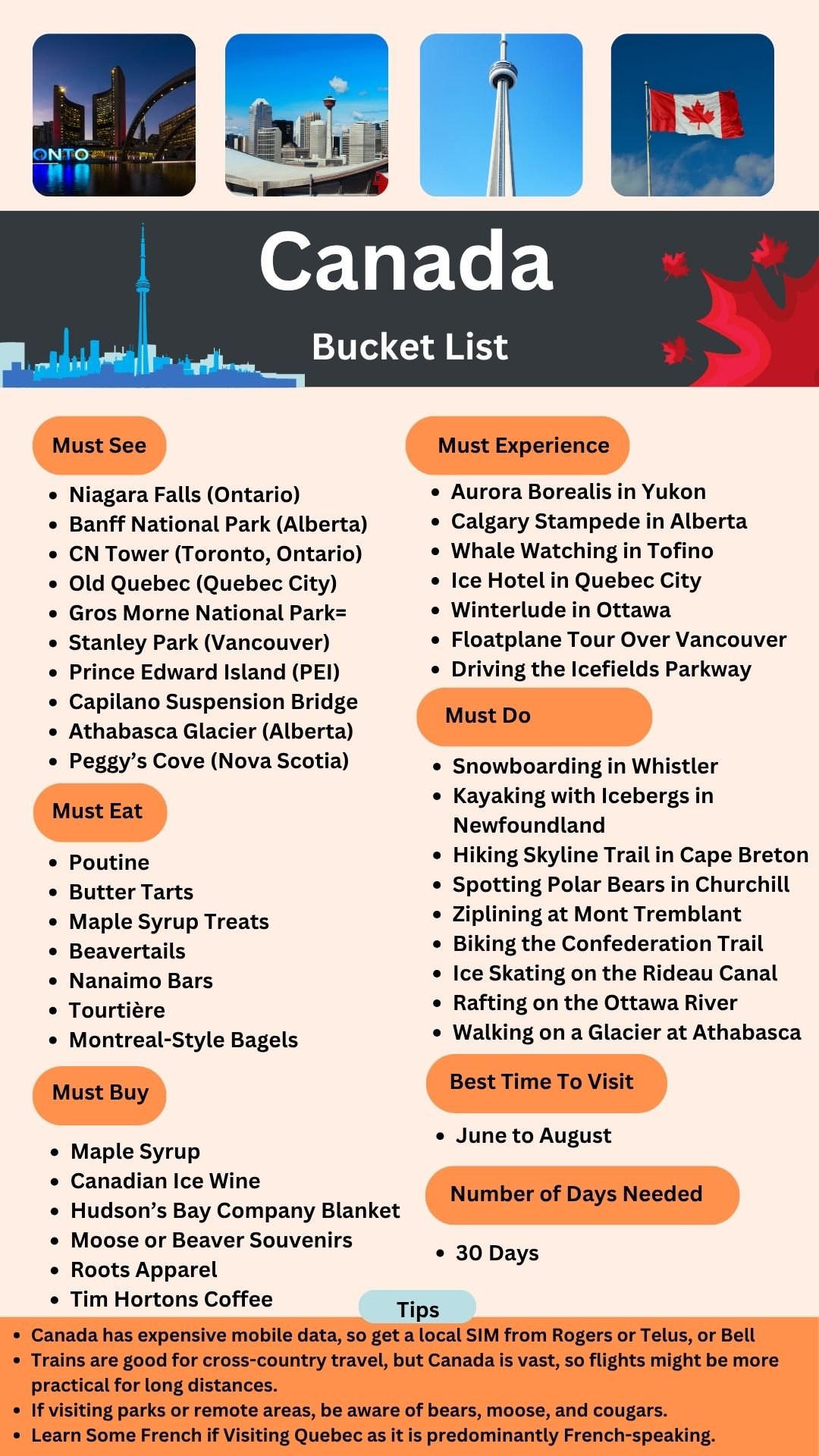
Canada is the second-largest country in the world, and its bucket list reflects that scale. Glacier-carved mountains, Atlantic fishing villages, and northern lights all fit somewhere within its borders. Deciding what to prioritize can feel overwhelming for a first-time visitor.
This guide breaks Canada’s biggest draws into manageable categories, from landmarks to food to seasonal timing. Whether you have two weeks or a full month, it should help shape a trip worth remembering.
Must-See Landmarks Across Canada
Canada’s landmarks stretch from Atlantic cliffs to Pacific rainforest, with the Rockies anchoring the middle. Niagara Falls remains the most visited natural wonder, drawing millions of tourists to Ontario each year. Banff National Park offers an entirely different kind of scenery, with turquoise lakes framed by snow-capped peaks.
Old Quebec adds a European layer to the list, as North America’s only walled city north of Mexico. Stanley Park in Vancouver and Peggy’s Cove in Nova Scotia round out the coastal side of things, each offering a distinct slice of Canadian identity.
Planning Tips for Landmark Hopping
- Group landmarks by region rather than trying to see everything in one trip. Ontario, the Rockies, and the Maritimes each deserve their own dedicated visit.
- Book Banff and Niagara Falls accommodations well ahead during summer, since both draw enormous crowds between June and August.
- Consider shoulder season travel in September for quieter landmark visits with more comfortable temperatures.
Best Photo Spots
- Photograph Niagara Falls from the Canadian side, which offers a direct view of the Horseshoe Falls rather than the American Falls.
- Capture Banff’s Lake Louise early in the morning, before wind disturbs the glassy, mirror-like water surface.
- Shoot Old Quebec from the Dufferin Terrace, which frames the Château Frontenac against the St. Lawrence River.
Signature Experiences Worth Building a Trip Around
Some Canadian experiences are seasonal and worth planning an entire trip around. The Aurora Borealis in Yukon draws visitors specifically for the dark winter skies, while the Calgary Stampede transforms Alberta’s largest city every July. Whale watching in Tofino and an ice hotel stay in Quebec City offer more niche, but equally memorable, experiences.
Winterlude in Ottawa celebrates the coldest months with ice sculptures and outdoor skating, while a floatplane tour over Vancouver offers a completely different perspective on the coastal city. Driving the Icefields Parkway ties much of this together, linking glaciers and mountain lakes along one continuous stretch of highway.
Booking These Experiences Ahead
- Reserve Yukon aurora viewing tours for winter months, ideally between November and March, since clear, dark skies matter most.
- Book Calgary Stampede accommodation up to a year in advance, since the entire city fills during the ten-day event each July.
- Confirm ice hotel bookings in Quebec City early, since rooms are limited and only available during the coldest months.
Combining Multiple Experiences
- Pair a Rockies trip with a drive along the Icefields Parkway, since both fall within the same general region and travel season.
- Combine Winterlude in Ottawa with a stop in Quebec City, given their relative proximity and shared winter festival timing.
- Add a Tofino whale watching tour to a broader Vancouver Island itinerary, since ferries connect the two regions easily.
Bucket List Activities for Active Travelers
Canada’s outdoor activities range from mountain adventure to Arctic wildlife encounters. Snowboarding in Whistler remains one of the most celebrated winter sports experiences in North America. Kayaking alongside icebergs in Newfoundland offers something far less common, timed to the annual iceberg season along the province’s coast.
Hiking the Skyline Trail in Cape Breton and spotting polar bears in Churchill both showcase Canada’s wilder side. Ziplining at Mont Tremblant, biking the Confederation Trail, and rafting on the Ottawa River round out a strong list for travelers who want their trip built around movement rather than sightseeing alone.
Seasonal Timing for Outdoor Activities
- Plan Whistler snowboarding trips between December and April, when the resort typically holds the most reliable snow conditions.
- Time a Newfoundland iceberg kayaking trip for late spring, when icebergs drift furthest south along what locals call Iceberg Alley.
- Visit Churchill between late September and early November for the best chance of spotting polar bears near Hudson Bay.
Gear and Safety Tips
- Rent gear locally in Whistler or Mont Tremblant rather than traveling with your own, since rental shops are well stocked and convenient.
- Book Churchill polar bear tours through established operators, since independent wildlife viewing in this region carries real safety risks.
- Wear a proper personal flotation device for any iceberg kayaking tour, since cold water conditions demand extra caution.
Also read: The Great Divide Trail of Canada
Food You Need to Try Across Canada
Canadian cuisine varies enormously by region, though a handful of dishes have become nationally recognized. Poutine, originally from Quebec, has spread across the country as an unofficial national dish. Butter tarts and maple syrup treats round out the sweeter side of Canadian comfort food.
Beavertails, a fried dough pastry popular at winter festivals, pair well with a stop at Nanaimo for the bar dessert that shares the city’s name. Tourtière, a savory meat pie from Quebec, and Montreal-style bagels both reflect the strong French-Canadian influence on the country’s food culture.
Where Regional Specialties Taste Best
- Try poutine in Montreal, where the dish originated and where countless variations continue to compete for local bragging rights.
- Sample a proper Montreal-style bagel from one of the city’s wood-fired bakeries, distinct from the boiled bagels found elsewhere.
- Look for fresh Beavertails stands at winter festivals like Winterlude, where the pastry is served hot and customizable with toppings.
Pairing Food with Regional Travel
- Combine a tourtière tasting with a visit to Old Quebec, since the dish has deep roots in the surrounding region’s culinary history.
- Sample Nanaimo bars while island hopping near Vancouver, ideally from a local bakery rather than a mass-produced version.
- Save room for maple syrup treats if visiting during a spring sugar shack tour, when the harvest season is in full swing.
Souvenirs Worth Buying in Canada
Canada offers a strong range of souvenirs that go beyond typical tourist trinkets. Maple syrup remains the most obvious choice, though quality varies significantly between mass-produced and small-batch producers. Canadian ice wine, a dessert wine made from frozen grapes, has earned international recognition, particularly from Ontario’s Niagara region.
A Hudson’s Bay Company blanket carries genuine historical weight, tied to the fur trading company that helped shape the country’s early economy. Moose or beaver themed souvenirs, Roots apparel, and even a bag of Tim Hortons coffee round out a well-rounded shopping list.
Finding Authentic, Quality Souvenirs
- Buy maple syrup directly from a sugar shack or farmers market rather than an airport gift shop, where markups are steep.
- Look for Grade A ice wine from Niagara-on-the-Lake wineries, considered among the most respected producers in the country.
- Verify Hudson’s Bay Company blankets are genuine wool before purchasing, since lower-quality imitations circulate in tourist areas.
Budget-Friendly Shopping Tips
- Buy Roots apparel during seasonal sales rather than at full price, since the brand frequently discounts older collections.
- Purchase Tim Hortons coffee and snacks at any location nationwide, since pricing stays consistent regardless of city.
- Save ice wine purchases for larger bottles if traveling with checked luggage, since airport duty-free pricing is often less competitive than winery direct sales.
Best Time to Visit and How Long to Stay
June through August offers the most reliable weather across most of Canada, making it the most popular travel window. Warmer temperatures open up hiking, whale watching, and most outdoor activities nationwide. That said, this popularity also means higher prices and busier landmarks during peak summer months.
A full Canadian trip benefits from around 30 days, given the distances between major regions. Trying to cover the Rockies, Quebec, and the Maritimes in a shorter window usually means sacrificing depth for breadth.
Making the Most of a Shorter Trip
- Focus on one region rather than attempting a coast-to-coast trip if your available time is under two weeks.
- Fly between distant regions rather than driving, since Canada’s size makes overland travel between provinces genuinely time-consuming.
- Prioritize two or three major experiences per region rather than overpacking your itinerary with too many stops.
Extending a Trip Beyond 30 Days
- Add a Yukon or Northwest Territories leg if you have extra time and want a genuine shot at seeing the Aurora Borealis.
- Build in buffer days around the Rockies, since weather can delay hikes and scenic drives unexpectedly.
- Consider a rail journey, such as the Rocky Mountaineer, to add a slower, scenic travel day between major stops.
Final Thoughts
Canada’s bucket list spans mountains, coastlines, and cities, each offering a genuinely different kind of trip. Whether your priority is wildlife, food, or iconic landmarks, the country rewards travelers who plan around regions rather than trying to see it all in one visit. Get a local SIM card before you go, brush up on some French if Quebec is on your list, and stay alert around wildlife in more remote areas.