
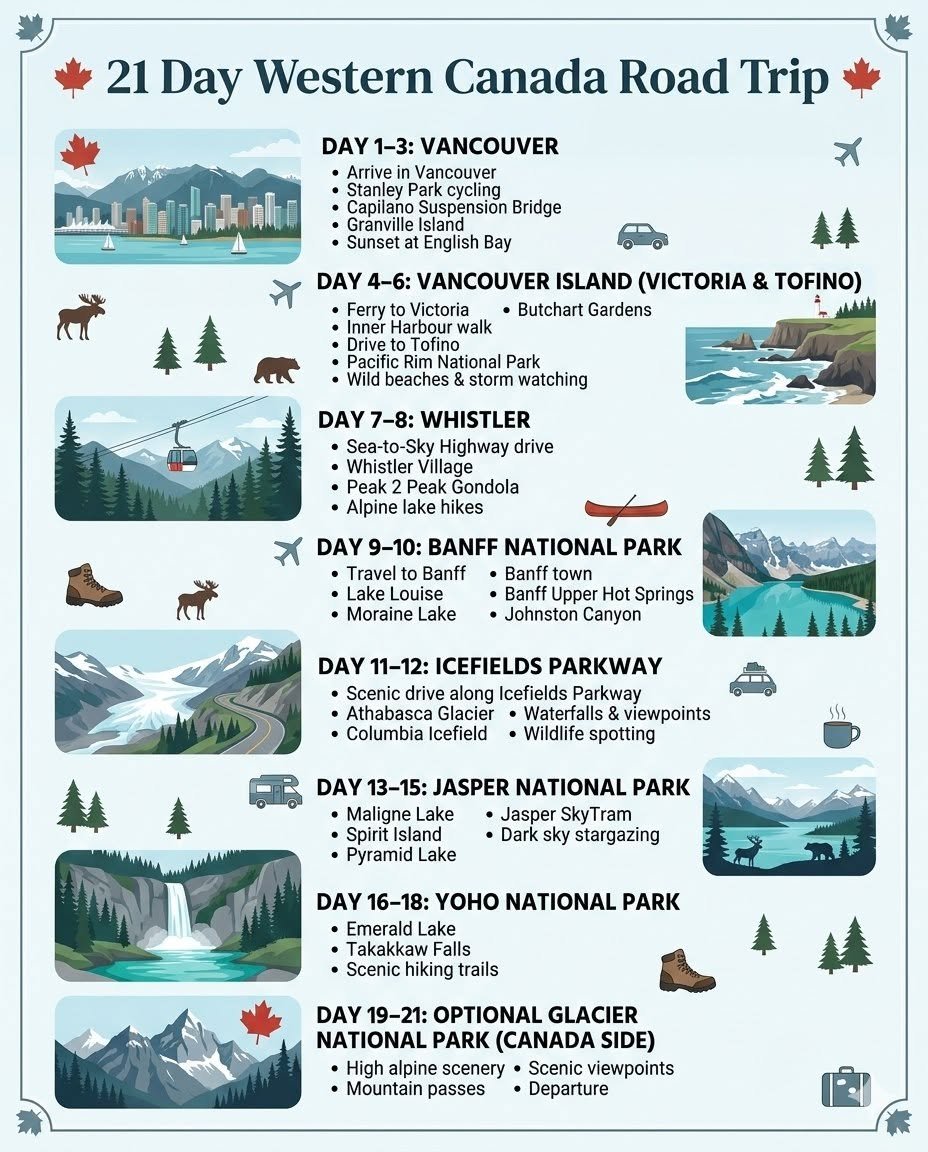
A Western Canada road trip is one of the most rewarding journeys in North America. Over 21 days, you’ll travel from the vibrant city of Vancouver to the rugged Pacific coastline of Vancouver Island before heading into the Canadian Rockies, where turquoise lakes, glaciers, waterfalls and mountain towns await. This itinerary balances scenic drives with enough time to experience each destination properly, making it ideal for first-time visitors. Whether you’re chasing sunsets on the Pacific Ocean, hiking through national parks or spotting wildlife along the Icefields Parkway, every stop offers something unforgettable.
Route Overview
| Destination | What to See | What to Do |
| Vancouver | Stanley Park, Granville Island, Capilano Suspension Bridge, English Bay | Sightseeing, cycling, shopping, waterfront walks |
| Vancouver Island (Victoria & Tofino) | Inner Harbour, Butchart Gardens, Pacific Rim National Park | Ferry ride, beach walks, whale watching, surfing |
| Whistler | Peak 2 Peak Gondola, Whistler Village, Sea-to-Sky Highway | Gondola rides, hiking, mountain biking |
| Banff National Park | Lake Louise, Moraine Lake, Johnston Canyon | Hiking, canoeing, wildlife spotting |
| Icefields Parkway | Athabasca Glacier, Columbia Icefield, waterfalls | Scenic driving, glacier tours, photography |
| Jasper National Park | Maligne Lake, Spirit Island, Jasper SkyTram | Boating, hiking, stargazing |
| Yoho National Park | Emerald Lake, Takakkaw Falls | Hiking, canoeing, sightseeing |
| Glacier National Park | Rogers Pass, alpine viewpoints | Scenic driving, hiking, photography |
Days 1–3: Vancouver
Vancouver is the perfect starting point for a Western Canada road trip. Surrounded by mountains and the Pacific Ocean, the city combines outdoor adventure with world-class dining, vibrant neighbourhoods and scenic waterfronts. Spend your first three days exploring its iconic landmarks before heading towards Vancouver Island.
What to Do
- Cycle or walk the Stanley Park Seawall.
- Visit the Capilano Suspension Bridge Park.
- Explore Granville Island Public Market.
- Watch the sunset at English Bay Beach.
- Wander through the historic streets of Gastown.
- Shop along Robson Street.
- Visit Canada Place and Coal Harbour.
- Explore Vancouver Aquarium.
Where to Eat
- Miku Vancouver
- Botanist
- Joe Fortes Seafood & Chop House
- Vij’s
- Cardero’s Restaurant
- Jam Cafe
- Blue Water Cafe
- Phnom Penh Restaurant
Where to Stay
- Fairmont Pacific Rim
- Paradox Hotel Vancouver
- Hyatt Regency Vancouver
- Blue Horizon Hotel
- Pinnacle Hotel Harbourfront
Days 4–6: Vancouver Island (Victoria & Tofino)
Take the ferry from Vancouver to Vancouver Island and discover two of British Columbia’s most beautiful destinations. Victoria offers elegant gardens, heritage architecture and a picturesque harbour, while Tofino is famous for its rugged coastline, surfing beaches and ancient temperate rainforest.
What to Do
- Walk around Victoria’s Inner Harbour.
- Visit the British Columbia Parliament Buildings.
- Explore Butchart Gardens.
- Discover the Royal BC Museum.
- Drive across Vancouver Island to Tofino.
- Visit Pacific Rim National Park Reserve.
- Relax on Long Beach and Cox Bay.
- Join a whale watching tour.
- Go storm watching during autumn and winter.
- Explore rainforest hiking trails.
Where to Eat
Victoria
- Red Fish Blue Fish
- Il Terrazzo
- Nourish Kitchen & Cafe
- Pagliacci’s
Tofino
- Wolf in the Fog
- Shelter Restaurant
- Tacofino
- Rhino Coffee House
Where to Stay
Victoria
- Fairmont Empress
- Hotel Grand Pacific
- Inn at Laurel Point
Tofino
- Pacific Sands Beach Resort
- Long Beach Lodge Resort
- Wickaninnish Inn
Days 7–8: Whistler
From Vancouver, drive the spectacular Sea-to-Sky Highway to Whistler, one of Canada’s premier mountain destinations. While famous for skiing, Whistler is equally rewarding during summer thanks to alpine hiking, scenic gondola rides and outdoor adventures surrounded by breathtaking mountain scenery.
What to Do
- Drive the scenic Sea-to-Sky Highway.
- Ride the Peak 2 Peak Gondola.
- Explore Whistler Village.
- Hike to alpine lakes.
- Visit Lost Lake.
- Walk the Valley Trail.
- Try mountain biking during summer.
- Enjoy wildlife viewing tours.
Where to Eat
- Araxi Restaurant & Oyster Bar
- Rimrock Cafe
- Red Door Bistro
- Wild Blue Restaurant + Bar
- Alta Bistro
- Purebread
- Caramba Restaurant
- Creekbread
Where to Stay
- Fairmont Chateau Whistler
- Pan Pacific Whistler Mountainside
- Summit Lodge Boutique Hotel
- Nita Lake Lodge
- Hilton Whistler Resort & Spa
Days 9–10: Banff National Park
Banff National Park is the highlight of many Western Canada road trips. Surrounded by snow-capped peaks, turquoise lakes and abundant wildlife, Canada’s oldest national park offers some of the country’s most iconic scenery. Two days gives you enough time to explore Banff town, visit its famous lakes and enjoy several unforgettable viewpoints.
What to Do
- Visit the picturesque town of Banff.
- See the turquoise waters of Lake Louise.
- Visit Moraine Lake (seasonal access).
- Ride the Banff Gondola to Sulphur Mountain.
- Relax at Banff Upper Hot Springs.
- Hike through Johnston Canyon.
- Drive the Bow Valley Parkway.
- Watch for elk, bighorn sheep and bears along scenic roads.
Where to Eat
- Sky Bistro
- The Bison Restaurant
- Farm & Fire
- LUPO Italian Ristorante
- Park Distillery Restaurant + Bar
- Three Bears Brewery & Restaurant
- Bluebird Wood-Fired Steakhouse
- Brazen
Where to Stay
- Fairmont Banff Springs
- Moose Hotel & Suites
- Rimrock Resort Hotel
- Canalta Lodge
- Peaks Hotel & Suites
Days 11–12: Icefields Parkway
Frequently ranked among the world’s most scenic drives, the Icefields Parkway stretches for over 230 kilometres between Banff and Jasper National Parks. Every turn reveals towering mountain peaks, glaciers, waterfalls and crystal-clear lakes, making the journey just as memorable as the destinations themselves.
What to Do
- Drive the entire Icefields Parkway.
- Visit the Athabasca Glacier.
- Experience the Columbia Icefield Adventure.
- Walk the Glacier Skywalk.
- Stop at Peyto Lake Viewpoint.
- Visit Bow Lake.
- Photograph Sunwapta Falls.
- Explore Athabasca Falls.
- Stop at numerous scenic pull-offs.
- Watch for mountain goats, elk and bears.
Where to Eat
- Altitude Restaurant (Glacier Discovery Centre)
- Chalet Restaurant (The Crossing Resort)
- Sunwapta Falls Restaurant
- Saskatchewan River Crossing Café
- Columbia Icefield Café
Where to Stay
- The Crossing Resort
- Glacier View Lodge
- Sunwapta Falls Rocky Mountain Lodge
- HI Rampart Creek Wilderness Hostel
- Columbia Icefield Glacier Discovery Centre (seasonal accommodation)
Days 13–15: Jasper National Park
Jasper National Park offers a quieter and more rugged experience than Banff, with vast wilderness, dramatic mountain scenery and exceptional wildlife viewing. Three days allows enough time to explore its famous lakes, scenic drives and dark skies while enjoying a more relaxed pace.
What to Do
- Cruise across Maligne Lake.
- Visit the famous Spirit Island viewpoint.
- Ride the Jasper SkyTram.
- Walk around Pyramid Lake.
- Visit Athabasca Falls.
- Explore Maligne Canyon.
- Drive the scenic Maligne Lake Road.
- Go wildlife spotting for elk, moose and bears.
- Experience dark sky stargazing.
- Relax in the town of Jasper.
Where to Eat
- The Raven Bistro
- Evil Dave’s Grill
- Jasper Brewing Company
- Terra
- Syrahs of Jasper
- Fiddle River Restaurant
- Harvest Food & Drink
- Patricia Street Deli
Where to Stay
- Fairmont Jasper Park Lodge
- Forest Park Hotel
- Jasper Inn & Suites
- Chateau Jasper
- Tonquin Inn
Days 16–18: Yoho National Park
Located just west of Banff National Park in British Columbia, Yoho National Park may be smaller than its famous neighbours, but it delivers equally spectacular scenery. Towering waterfalls, emerald-coloured lakes, dramatic mountain peaks and peaceful hiking trails make Yoho a favourite among travellers looking to escape the larger crowds.
What to Do
- Visit the stunning Emerald Lake.
- See the impressive Takakkaw Falls.
- Hike the Iceline Trail.
- Explore Natural Bridge.
- Visit Wapta Falls.
- Drive the scenic Yoho Valley Road.
- Canoe on Emerald Lake.
- Spot wildlife throughout the park.
Where to Eat
- Cilantro Café
- Truffle Pigs Bistro
- Mount Burgess Dining Room
- The Siding Café
- Spiral Tunnels Café
Where to Stay
- Cathedral Mountain Lodge
- Emerald Lake Lodge
- Canadian Rockies Inn
- Winston Lodge
- Lake Louise Inn (near Yoho)
Days 19–21: Glacier National Park (Canada)
Complete your Western Canada road trip in Glacier National Park, one of British Columbia’s hidden gems. Known for rugged mountain landscapes, alpine passes and scenic highways, the park is an ideal place to enjoy one final adventure before heading home.
What to Do
- Drive through Rogers Pass National Historic Site.
- Stop at Glacier National Park viewpoints.
- Visit the Rogers Pass Discovery Centre.
- Hike the Hemlock Grove Boardwalk.
- Explore Bear Creek Falls.
- Drive the Trans-Canada Highway through the park.
- Enjoy panoramic mountain photography.
- Watch for mountain goats and other wildlife.
Where to Eat
- Woolsey Creek Bistro
- Chubby Funsters Kitchen & Cocktails
- Quartermaster Eatery
- The Village Idiot Bar & Grill
- Kawakubo Japanese Restaurant
- Terra Firma’s Kitchen
- La Baguette
- Old School Eatery
Where to Stay
- Glacier House Hotel & Resort
- Sutton Place Hotel Revelstoke Mountain Resort
- Coast Hillcrest Hotel
- Basecamp Resorts Revelstoke
- Best Western Plus Revelstoke
Tips for Planning Your Western Canada Road Trip
- Visit between June and September for the best weather and full access to mountain roads, hiking trails and attractions.
- Reserve accommodation several months in advance, especially in Banff, Jasper, Whistler and Tofino, where hotels often sell out during summer.
- Book timed entry or shuttle reservations for Moraine Lake, as private vehicle access is restricted during the peak season.
- Purchase a Parks Canada Discovery Pass if you plan to visit multiple national parks. It offers better value than paying individual park entrance fees.
- Fuel up whenever possible along the Icefields Parkway, as petrol stations are limited and widely spaced.
- Download offline maps before leaving major towns, as mobile coverage can be unreliable in remote mountain regions.
- Pack layers, waterproof clothing and sturdy hiking shoes. Mountain weather can change rapidly, even during summer.
- Drive carefully at dawn and dusk when wildlife such as elk, deer and bears are most active along the roads.