
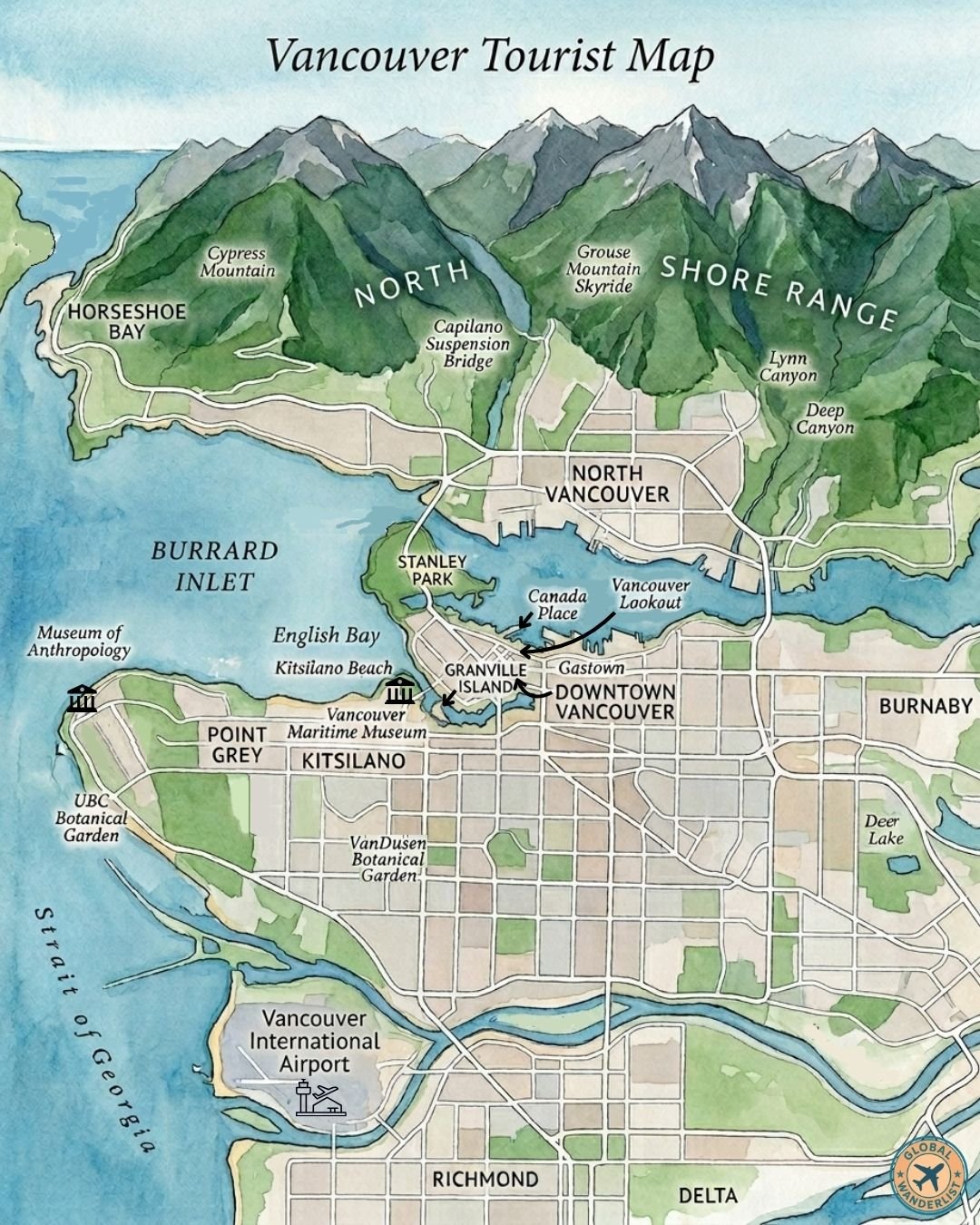
Vancouver’s geography shapes almost everything about how visitors experience the city. Mountains rise directly behind the North Shore, while downtown sits on a peninsula surrounded by water on three sides. Understanding how these distinct zones connect makes it far easier to plan a trip that balances city sightseeing with the outdoor adventure Vancouver is famous for.
This guide breaks the city down by geographic zone, from the North Shore mountains down through downtown and out to the university lands at Point Grey. Below is a full breakdown of each area, along with what to see and practical tips for getting around.
Zone Overview
| Zone | Key Attractions | Best For |
|---|---|---|
| North Shore Mountains | Cypress Mountain, Grouse Mountain, Capilano Suspension Bridge, Lynn Canyon | Hiking, skiing, forest views |
| Downtown & Stanley Park | Stanley Park, Canada Place, Vancouver Lookout, English Bay | City sights, waterfront walks |
| Kitsilano & Point Grey | Kitsilano Beach, Museum of Anthropology, UBC Botanical Garden | Beaches, academic sights |
| Gastown & Granville Island | Gastown, Granville Island Public Market | Shopping, historic charm |
| Richmond & Airport Area | Vancouver International Airport, Richmond | Arrival point, day trips |
Each of these zones offers a genuinely different pace, from mountain trails to beachfront neighborhoods to the busier downtown core.
The North Shore Mountains
Directly across Burrard Inlet from downtown, the North Shore mountains dominate Vancouver’s skyline. Cypress Mountain and Grouse Mountain both offer skiing in winter and hiking in summer, drawing visitors year-round. The Capilano Suspension Bridge, along with the quieter Lynn Canyon and Deep Canyon, adds a forested, adventure-focused dimension to this zone.
What to See on the North Shore
- Ride the Grouse Mountain Skyride for panoramic views over the city and surrounding waters, followed by trails and wildlife exhibits at the summit.
- Cross the Capilano Suspension Bridge, suspended above a forested canyon, then continue on to the treetop walkways nearby.
- Hike the trails at Lynn Canyon, a quieter and free alternative to the more commercial Capilano attraction.
Getting to the North Shore
- Take the SeaBus from downtown to North Vancouver, then connect to a bus for Grouse Mountain or the Capilano Suspension Bridge.
- Drive across the Lions Gate Bridge if you have a rental car, since it offers the most direct route to this zone.
- Visit earlier in the day during summer, since both Grouse Mountain and the Capilano Bridge draw significant crowds by midday.
Downtown Vancouver and Stanley Park
Downtown Vancouver sits on a peninsula bordered by Burrard Inlet and English Bay, with Stanley Park occupying much of its northern tip. Canada Place, with its distinctive sail-shaped roofline, anchors the waterfront alongside the Vancouver Lookout tower. This zone forms the heart of most visitors’ Vancouver itinerary.
What to See Downtown and in Stanley Park
- Cycle or walk the Stanley Park seawall, one of the longest uninterrupted waterfront paths in the world.
- Visit Canada Place for harbor views and, depending on timing, passing cruise ships docked at its terminal.
- Climb the Vancouver Lookout for a 360-degree view over the city, mountains, and surrounding water.
Getting Around Downtown
- Walk or cycle between Stanley Park and Canada Place, since both sit within the same compact downtown peninsula.
- Use the SkyTrain’s Waterfront Station for easy access to Canada Place and the surrounding downtown core.
- Rent a bike near English Bay if you plan to explore the Stanley Park seawall at a more relaxed pace.
Kitsilano and Point Grey
South across English Bay, Kitsilano offers a laid-back beach neighborhood popular with joggers and yoga enthusiasts. Point Grey, further west, is home to the University of British Columbia and its notable Museum of Anthropology. The UBC Botanical Garden rounds out this zone with a quieter, academic character compared to the busier downtown core.
What to See in Kitsilano and Point Grey
- Relax at Kitsilano Beach, one of Vancouver’s most popular beaches, with views back across English Bay toward downtown.
- Visit the Museum of Anthropology at UBC, known for its striking collection of Northwest Coast Indigenous art and architecture.
- Explore the UBC Botanical Garden, one of the oldest university botanical gardens in Canada.
Getting Around Kitsilano and Point Grey
- Take a bus or drive along 4th Avenue to reach Kitsilano Beach from downtown, a straightforward direct route.
- Continue further west by bus to reach UBC and the Museum of Anthropology, since it sits at the far end of the peninsula.
- Combine a Kitsilano Beach visit with a stop at the nearby Vancouver Maritime Museum, both within easy reach of each other.
Gastown and Granville Island
Gastown, one of Vancouver’s oldest neighborhoods, sits just east of the main downtown core, known for cobblestone streets and restored Victorian architecture. Granville Island, connected by a short bridge from downtown, combines a public market with artisan studios on a small peninsula. Both offer a slower, more textured alternative to the high-rise downtown core.
What to See in Gastown and Granville Island
- Walk through Gastown’s historic streets, including its famous steam clock, a popular photo stop for visitors.
- Browse Granville Island’s public market for fresh produce, seafood, and baked goods from local vendors.
- Explore Granville Island’s artisan studios, many open to visitors watching glassblowing, pottery, and other crafts in progress.
Getting Around Gastown and Granville Island
- Walk from downtown to Gastown, since the neighborhood sits directly adjacent to the main core.
- Take a small passenger ferry or walk across the Granville Street Bridge to reach Granville Island from downtown.
- Visit Granville Island’s market in the morning for the freshest produce and shortest lines at popular food stalls.
Richmond and the Airport Area
South of downtown, Richmond serves as the location of Vancouver International Airport, making it most visitors’ first and last stop in the region. The area has also developed a strong reputation for its Asian food scene, particularly sushi and the seasonal Richmond Night Market. It functions as both a practical gateway and a worthwhile destination in its own right.
What to See in Richmond
- Visit the Richmond Night Market during summer months, a lively outdoor market known for its street food stalls.
- Sample sushi at one of Richmond’s many well-regarded Japanese restaurants, considered among the best outside Japan.
- Explore Steveston Village, a historic fishing village within Richmond, known for its waterfront boardwalk and seafood.
Getting Around Richmond
- Take the Canada Line SkyTrain directly from downtown to Richmond, a fast and straightforward connection.
- Plan extra time near the airport if catching an early flight, since Richmond sits a reasonable distance from the downtown core.
- Combine a Richmond visit with your airport arrival or departure, since it requires minimal detour from the standard route.
Final Thoughts
Vancouver’s geography naturally divides the city into distinct zones, from mountain trails on the North Shore to beach culture in Kitsilano and historic charm in Gastown. Planning your visit around these zones, rather than jumping between distant neighborhoods, keeps the trip efficient and enjoyable. Use the SkyTrain and SeaBus to move between zones quickly, and save the North Shore mountains for a clear day when views will be at their best.