
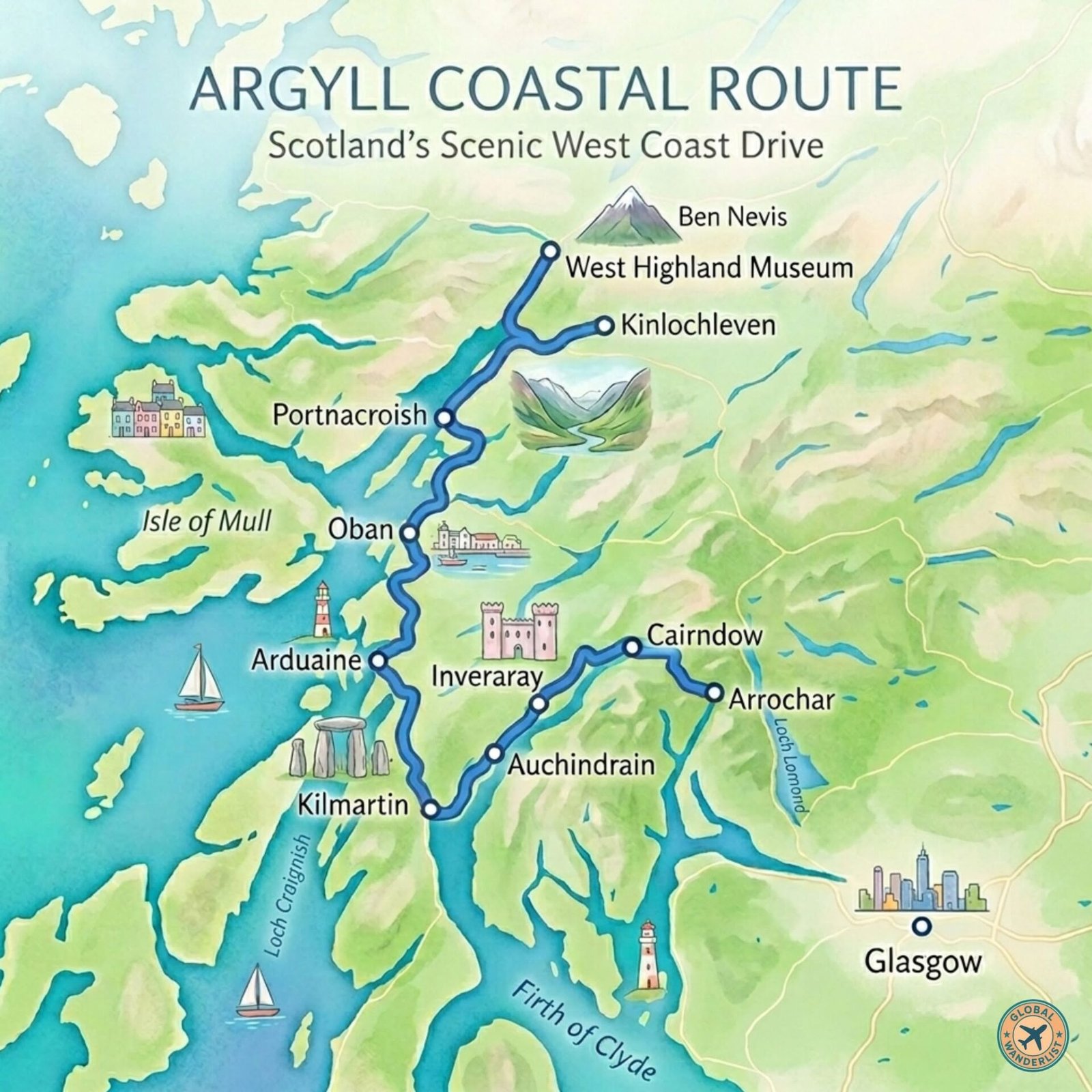
The Argyll coast delivers Scotland’s scenery at its most varied. Sea lochs, ancient stone circles, working castles, and mountain passes all sit along one flowing route.
This drive suits travelers who want a genuine road trip rather than a checklist of cities. History lovers, seafood fans, hikers, and photographers will all find plenty to stop for. The pace rewards slow travel, with small villages and scenic pull-offs at nearly every turn.
Starting near Glasgow, the route winds up through Loch Lomond country, along Loch Fyne, past ancient Kilmartin Glen, and up the coast to Oban before climbing into the Highlands near Ben Nevis. Below is a full breakdown of what to see, where to eat, and how to drive this route at its best.
Argyll Coastal Route at a Glance
| Stop | Distance from Previous Stop | Driving Time | Main Highlights | Recommended Stay Duration |
|---|---|---|---|---|
| Arrochar | Starting point (from Glasgow) | About 1 hour from Glasgow | The Cobbler, Loch Long views | 1-2 hours |
| Cairndow | 15 miles | About 25 minutes | Loch Fyne, Ardkinglas Woodland Garden | 1-2 hours |
| Inveraray | 10 miles | About 15 minutes | Inveraray Castle, Inveraray Jail | Half day |
| Auchindrain | 6 miles | About 10 minutes | Historic township museum | 1 hour |
| Kilmartin | 16 miles | About 25 minutes | Kilmartin Glen standing stones | Half day |
| Arduaine | 20 miles | About 30 minutes | Arduaine Garden, coastal views | 1-2 hours |
| Oban | 17 miles | About 25 minutes | McCaig’s Tower, harbor seafood | Half day to full day |
| Portnacroish | 24 miles | About 40 minutes | Castle Stalker, Loch Linnhe views | 1-2 hours |
| Fort William | 25 miles | About 40 minutes | Ben Nevis, West Highland Museum | Full day |
| Kinlochleven | 9 miles | About 20 minutes | Mamores hiking, West Highland Way | Half day |
Arrochar
Arrochar sits at the head of Loch Long, framed by the jagged peak known as The Cobbler. This small village marks a natural starting point for the Argyll route, easily reached from Glasgow in about an hour. Its position between Loch Lomond and the sea loch gives it a distinctly dramatic backdrop for a first stop.
Where to Eat in Arrochar
- Cù Mara Bistro & Takeaway — Scottish, $$. This local favorite serves pizza and loaded fries alongside stunning views of The Cobbler, and consistently earns praise for its friendly staff and cozy atmosphere.
- The Village Inn — British, Scottish, $$. A traditional pub setting on the loch shore, popular with hikers finishing routes in the Arrochar Alps.
- Tarbet Tea Room — British, Scottish, $. A short drive up the road in nearby Tarbet, this welcoming tea room is a favorite for a warm lunch stop.
What to See in Arrochar
- The Cobbler. This distinctive three-peaked mountain towers over the village and draws serious hikers for its challenging summit scramble. Even a partial walk up offers rewarding views over Loch Long.
- Loch Long shoreline. A short stroll along the water offers classic Highland scenery without requiring a full hike. Early morning light here makes for excellent photography.
- Argyll Forest Park. This surrounding forest park offers gentler walking trails for those not tackling The Cobbler. It is a good stop for stretching legs before the drive north.
- Rest and Be Thankful viewpoint. A short detour up this historic mountain pass rewards drivers with sweeping views over Glen Croe. The road itself has a storied history as one of Scotland’s earliest engineered mountain routes.
Cairndow
Cairndow sits at the head of Loch Fyne, where the mountains meet the sea in classic Argyll fashion. The village became famous in the 1970s when local oyster farming put it on the culinary map. Today it remains a required stop for seafood lovers driving this coast.
Where to Eat in Cairndow
- Loch Fyne Oyster Bar — Seafood, $$$. The original location of Scotland’s now-famous seafood chain, this spot serves oysters harvested just outside the window, along with a full seafood platter menu.
- Loch Fyne Deli — Seafood, $. Attached to the main restaurant, the deli offers smoked salmon and shellfish for a quicker, more casual stop.
- The Oystercatcher — British, $$. A short drive away on the loch shore, this pub offers relaxed dining with sweeping water views.
What to See in Cairndow
- Ardkinglas Woodland Garden. This garden holds some of Britain’s tallest trees, including a towering silver fir. Spring brings a spectacular display of rhododendrons throughout the grounds.
- Loch Fyne views. The head of the loch offers some of the most photogenic water and mountain combinations along the entire route. Pull-offs near the village make it easy to stop for photos.
- Cairndow Church. This small historic church adds a quiet, contemplative stop along the drive. Its octagonal design is unusual for the region.
- Rest and Be Thankful connection. Cairndow sits at the base of routes leading toward this historic pass, making it a natural stop before or after tackling the climb.
Inveraray
Inveraray blends whitewashed Georgian architecture with centuries of clan history as the traditional seat of Clan Campbell. The town was rebuilt in the 18th century as a planned settlement alongside Inveraray Castle, giving it an unusually uniform, elegant appearance for the Highlands. Its position on Loch Fyne made it a hub of the herring trade for generations.
Where to Eat in Inveraray
- The George Hotel Restaurant — Scottish, $$$. Set in a historic building with open fires and centuries-old stone walls, this restaurant serves West Coast seafood and premium Scottish steaks, and is celebrating its 250th year.
- Brambles of Inveraray — Cafe, $$. A cozy spot for soup, sandwiches, and coffee, popular for a relaxed lunch break while exploring the town.
- The Loch Fyne Hotel & Spa Restaurant — Scottish, $$$. Offers loch views alongside a menu built around local produce and seafood.
What to See in Inveraray
- Inveraray Castle. This fairy-tale castle has been the seat of the Duke of Argyll since the 1740s. Its ornate interiors and armory hall make it one of Scotland’s most visited stately homes.
- Inveraray Jail. This restored courthouse and prison offers an unusually vivid, interactive look at 19th century justice. Costumed guides bring the cells and courtroom to life.
- The waterfront. Whitewashed buildings line the loch shore, offering some of the most photogenic architecture along the route. An evening stroll here captures the town at its most atmospheric.
- Inveraray Bell Tower. Climbing this tower rewards visitors with panoramic views over the town and loch. It also houses the second heaviest ring of bells in the world.
Auchindrain
Auchindrain preserves a rare, untouched example of a traditional Highland farming township. Unlike most communal settlements that were cleared or modernized, this site survived largely intact into the 20th century. It now operates as an open air museum showing how tenant farmers actually lived before the Highland Clearances reshaped the region.
Where to Eat near Auchindrain
- The George Hotel — Scottish, $$$. The closest full restaurant option sits back in nearby Inveraray, just a short drive away.
- Loch Fyne Oyster Bar — Seafood, $$$. Also within easy reach back toward Cairndow, making it a convenient bookend to an Auchindrain visit.
- Brambles of Inveraray — Cafe, $$. A practical lunch stop before or after exploring the township, located in nearby Inveraray.
What to See in Auchindrain
- The township buildings. Original thatched and stone cottages give a genuine sense of pre-Clearance rural life. Many buildings are furnished as they would have appeared generations ago.
- Communal farming layout. Unlike single-family farms, Auchindrain shows how multiple households once shared land under a runrig system. Information panels throughout explain this now-vanished way of life.
- Walking trails. Short paths wind through the settlement and surrounding farmland, offering a quiet, reflective stop along the route. Allow about an hour to explore thoroughly.
- Seasonal events. The museum sometimes hosts traditional craft demonstrations, adding an extra layer of context for visitors interested in Highland heritage.
Kilmartin
Kilmartin Glen holds one of the densest concentrations of prehistoric monuments anywhere in Scotland. Standing stones, burial cairns, and stone circles dot the landscape within a few miles of the village, some dating back over 5,000 years. The scale of ancient activity here rivals better-known sites like Stonehenge, though with far fewer crowds.
Where to Eat in Kilmartin
- Kilmartin Hotel and Restaurant — Scottish, $$. A historic inn offering hearty, extensive menus in a cozy setting close to all the glen’s major sites.
- Kilmartin Museum Café — Cafe, $. A convenient stop for coffee and light bites while exploring the museum and nearby monuments.
- The Cairn Restaurant — Scottish, $$. Located within the museum complex, this spot serves locally sourced dishes with a view over the glen.
What to See in Kilmartin
- Kilmartin Museum. This award-winning museum provides essential context for the surrounding ancient landscape. Exhibits cover 5,000 years of continuous human activity in the glen.
- Nether Largie Cairns. These Bronze Age burial chambers sit within easy walking distance of the village. Visitors can step inside several of the ancient tombs.
- Temple Wood Stone Circles. Two adjacent stone circles here date back thousands of years, predating many similar monuments elsewhere in Britain. The site remains remarkably atmospheric and uncrowded.
- Carnasserie Castle. This ruined tower house sits on a hill just north of the village, offering sweeping views over the glen. It is free to explore and rarely busy.
- Dunadd Fort. This rocky hillfort once served as the capital of the ancient kingdom of Dál Riata. A carved footprint at the summit is linked to ancient inauguration ceremonies.
Arduaine
Arduaine sits on a small peninsula overlooking the Sound of Jura, known primarily for its exceptional coastal garden. The mild, moist climate here supports plant species that would struggle almost anywhere else in Scotland. It makes a peaceful, scenic pause roughly midway through the coastal drive.
Where to Eat in Arduaine
- The Bistro at Loch Melfort Hotel — International, Scottish, $$$. The primary dining option in the area, offering seasonal menus with sweeping sea views over the Sound of Jura.
- Kilmelford Village Stores — Cafe, $. A short drive away, this welcoming stop offers surprisingly good vegan-friendly options and coffee.
- Melfort Village Café — Scottish, $$. Located near the reception of the Melfort Village complex, convenient for a casual bite.
What to See in Arduaine
- Arduaine Garden. Managed by the National Trust for Scotland, this coastal garden holds an internationally significant rhododendron collection. Spring and early summer bring the most dramatic blooms.
- Sound of Jura viewpoints. The peninsula offers sweeping views across the water toward the islands of Jura and Scarba. Clear days reveal the famous Corryvreckan whirlpool in the distance.
- Coastal walking paths. Short trails wind along the shoreline, offering peaceful stretches away from the main road. Wildlife including otters is occasionally spotted here.
- Craobh Haven Marina. A short drive away, this small marina offers a pleasant stop to watch sailing boats and enjoy coastal views.
Oban
Known as the seafood capital of Scotland, Oban serves as the main ferry gateway to the Hebridean islands. Its curved Victorian harbor front is lined with shops, restaurants, and the unfinished Colosseum-style McCaig’s Tower looming above. The town’s energy picks up considerably compared to the quieter villages earlier on the route.
Where to Eat in Oban
- Ee-Usk — Seafood, $$$. A glass-fronted restaurant right on the North Pier, famous for grand seafood platters and panoramic bay views, run by the MacLeod family for over 25 years.
- Coast — Seafood, Scottish, $$$. A well-reviewed restaurant known for attentive service and thoughtfully prepared local seafood.
- Tralee Bay Fish & Chips — Fish and chips, $. A local favorite for a classic, affordable seafood meal on the go.
- The Waypoint — Seafood, $$. A relaxed harborside spot popular for groups and casual seafood dining.
What to See in Oban
- McCaig’s Tower. This unfinished Colosseum-style folly overlooks the town from a hilltop, built by a local banker in the 1890s. The walk up rewards visitors with sweeping views over the bay and islands.
- Oban Distillery. This historic distillery has operated in the town center since 1794, making it one of Scotland’s oldest. Tours explain the whisky-making process in an unusually compact urban setting.
- The harbor front. Fresh seafood stalls and ferry activity make the waterfront the liveliest part of town. Watching the CalMac ferries depart for Mull and beyond is a genuine local experience.
- Dunollie Castle. These ruins sit just outside the town center, offering coastal views and a look at clan history. The walk there follows a scenic stretch of shoreline.
- Oban War and Peace Museum. This small, free museum covers the town’s role during both World Wars. It offers an interesting contrast to the area’s ancient history found elsewhere on the route.
Portnacroish
Portnacroish sits along the shore of Loch Linnhe, best known for the striking silhouette of Castle Stalker rising from the water nearby. This quiet stretch of coast, part of the Lynn of Lorn National Scenic Area, offers some of the most photographed views in the region. The neighboring village of Port Appin shares the same stunning outlook toward the islands of Lismore and Mull.
Where to Eat in Portnacroish
- The Pierhouse Hotel Restaurant — Seafood, $$$. Set at the end of the Port Appin pier, this award-winning restaurant serves langoustine, lobster, and freshly landed seafood with panoramic loch views.
- Airds Hotel Restaurant — Scottish, $$$. A refined dining option nearby, known for elevated Scottish cuisine in an elegant countryside setting.
- Castle Stalker View Café — Cafe, $. A simple, welcoming stop offering scones and tea with a direct view of the famous castle.
What to See in Portnacroish
- Castle Stalker. This four-story tower house sits on its own tiny tidal islet, making it one of the most photographed castles in Scotland. The best views come from the roadside viewpoint just south of the village.
- Loch Linnhe shoreline. The loch’s calm waters and mountain backdrop make this stretch of coast especially scenic at sunset. Photographers favor the golden hour for capturing the castle silhouette.
- Lismore ferry crossing. A small passenger ferry departs from the pier at Port Appin, offering an easy day trip to the peaceful island of Lismore. The short crossing itself offers excellent photo opportunities.
- Lynn of Lorn National Scenic Area. This designated area covers the surrounding coastline, protecting its combination of sea, mountain, and island views. It rewards travelers who take the time to slow down and look around.
Fort William
Fort William sits at the base of Ben Nevis, earning its reputation as the outdoor capital of the United Kingdom. Britain’s highest peak looms directly over the town, drawing hikers and climbers from around the world. The town also serves as a gateway to Glen Coe and the wider Lochaber region, making it a natural final major stop on this route.
Where to Eat in Fort William
- Crannog at Garrison West — Seafood, $$$. A Fort William institution since 1989, now relocated to the town center, serving fresh oysters, scallops, and seafood tagliatelle.
- Silly Goose at The Lime Tree — Scottish, French influence, $$$. An award-winning, refined restaurant championing seasonal, locally sourced ingredients just off the High Street.
- The Grog & Gruel — Pub, British, $$. A lively real-ale pub serving pizza, chili, and classic pub grub, popular with both locals and hikers for over 25 years.
- Ben Nevis Inn — Scottish, $$. Located at the base of the mountain, this rustic spot is ideal for refueling with haggis or Cullen skink after a hike.
What to See in Fort William
- Ben Nevis. Britain’s highest peak challenges serious hikers with a six-to-eight-hour round trip summit trail. Even a shorter walk into Glen Nevis offers a genuine sense of the mountain’s scale.
- West Highland Museum. This small museum holds an eclectic collection covering Jacobite history, tartan, and local Highland life. It is one of the oldest folk museums in Scotland.
- The Jacobite Steam Train. This historic train crosses the famous Glenfinnan Viaduct on its scenic route toward Mallaig. Booking well ahead is recommended during peak summer months.
- Neptune’s Staircase. This series of canal locks near Fort William showcases impressive 19th century engineering on the Caledonian Canal. It makes an easy, flat walk with good photo opportunities.
- Glen Nevis. This valley offers accessible walking trails with dramatic mountain scenery, including the popular route to Steall Falls. It suits travelers wanting mountain views without a full summit attempt.
Kinlochleven
Kinlochleven sits at the head of Loch Leven, framed by the dramatic Mamores mountain range. Once home to a major aluminum smelting works, the village has reinvented itself as a hub for outdoor adventure. It marks the final stretch of the West Highland Way, making it a fitting last stop on this Highland route.
Where to Eat in Kinlochleven
- The Bothy Bar — Pub, British, $$. Known for spectacular loch views, especially at sunset, and a genuinely warm welcome for tired hikers.
- Highland Getaway Restaurant — British, Scottish, $$. Offers both casual bar dining and a proper restaurant section, popular with West Highland Way walkers.
- Tailrace Inn — Pub, $$. A comfortable, welcoming spot for a hearty meal after a day on the trails.
What to See in Kinlochleven
- The Mamores. This dramatic mountain range rises directly above the village, offering some of the best hillwalking in the Highlands. Even short walks into the foothills reward visitors with sweeping views.
- West Highland Way finish point. Kinlochleven marks the final overnight stop for most hikers completing this famous long-distance trail. The village has a genuine sense of accomplishment in the air during peak hiking season.
- The Aluminium Story Visitor Centre. This small museum explains the village’s unusual industrial past as a center of aluminum production, once powered by a massive hydroelectric scheme. It adds an unexpected layer of history to the mountain scenery.
- Loch Leven views. The loch’s dramatic setting, framed by steep peaks on both sides, makes for one of the most scenic final stops on the entire route. Early morning light here is especially striking.
Final Thoughts
The Argyll Coastal Route captures the full range of what makes Scotland’s west coast so compelling. Ancient stone circles, working castles, world-class seafood, and dramatic mountain scenery all sit within a single, flowing drive. Each stop rewards travelers willing to slow down and explore beyond the road itself.
Use this route as a solid framework for your own Argyll adventure. Build in extra time for photography stops, seafood lunches, and short walks along the way. This corner of Scotland rewards travelers who treat the journey itself as the destination.