
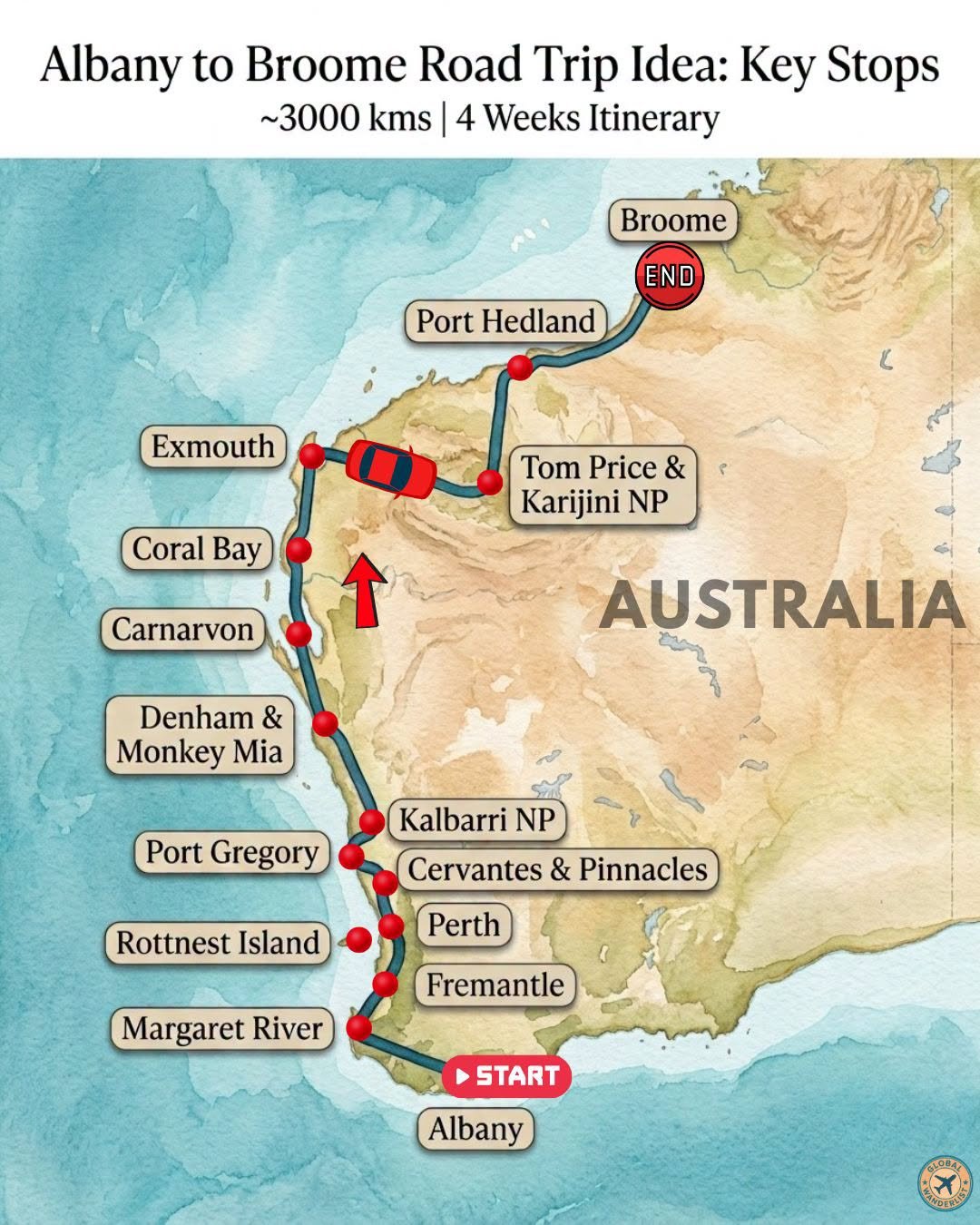
The drive from Albany to Broome traces almost the entire western edge of Australia. Over roughly 3,000 kilometers, it moves through wine country, wildflower country, and increasingly remote coastal desert before reaching the Kimberley’s gateway town. Most travelers set aside about four weeks to complete it properly.
This route showcases an extraordinary range of Western Australian scenery, from towering karri forests to coral reefs and red-dirt ranges. Below is a full breakdown of the journey, along with where to eat and what to see at each major stop.
Route Overview
| Stop | Distance from Previous Stop | Best For |
| Albany (Start) | – | Southern Ocean cliffs, whale history |
| Margaret River | 400 km | Wine country, surf beaches |
| Perth & Fremantle | 280 km | City sights, harborside dining |
| Cervantes & Pinnacles | 250 km | Desert rock formations |
| Kalbarri National Park | 300 km | Gorges, coastal cliffs |
| Denham & Monkey Mia | 400 km | Dolphin encounters, Shark Bay |
| Carnarvon & Coral Bay | 350 km | Tropical fruit, reef access |
| Exmouth | 150 km | Ningaloo Reef, whale sharks |
| Karijini National Park (Tom Price) | 400 km | Deep red gorges |
| Port Hedland | 300 km | Industrial port, red dust sunsets |
| Broome (End) | 610 km | Cable Beach, pearling history |
Total driving distance runs close to 3,000 kilometers. Spread across four weeks, this allows real time to explore each region without rushing.
Albany
Albany sits on Western Australia’s rugged southern coast, one of the state’s earliest European settlements. Its whaling history has since given way to whale watching, with southern rights and humpbacks passing close to shore each year. Dramatic granite formations line the coastline just outside town.
Where to Eat in Albany
- Gourmandise & Co specializes in French-style pastries and coffee, ideal for an easy breakfast before a day of sightseeing. Its warm, boulangerie feel has made it a local favorite.
- Albany’s waterfront precinct offers several casual seafood options with harbor views, suited to a relaxed lunch after visiting the coastline.
What to See in Albany
- Walk across The Gap and Natural Bridge, dramatic granite formations along the coast. A glass viewing platform lets visitors look directly down at the crashing waves below.
- Visit the National Anzac Centre, which tells the story of Albany’s role as the departure point for Australian and New Zealand troops in World War I.
- Take a whale-watching cruise between June and October. Albany’s waters are one of the best places in the country to see migrating whales up close.
Margaret River
Margaret River is Western Australia’s best-known wine region, paired with some of the country’s most celebrated surf breaks. Forests, caves, and beaches surround the town, making it a natural place to slow down early in the trip.
Where to Eat in Margaret River
- The Cape Lodge Restaurant offers refined dining set among vineyards, ideal for a special evening meal. Its degustation menu highlights regional produce.
- The River is known locally for consistently good food at fair prices, making it a solid choice for a casual dinner.
What to See in Margaret River
- Tour the region’s wineries, many offering cellar door tastings with lunch included. Vasse Felix and Leeuwin Estate are among the most established.
- Explore Jewel Cave, one of the region’s most impressive underground formations. Guided tours run throughout the day.
- Watch surfers at Margaret River Mouth, where river and ocean meet in a striking natural setting.
Perth & Fremantle
Perth offers a relaxed, sunny break partway through this long drive north. Fremantle, just south of the city center, retains a historic port-town character with a genuinely excellent food scene. Both make a worthwhile stop to restock supplies and rest before the more remote stretches ahead.
Where to Eat in Perth & Fremantle
- Wildflower, a rooftop restaurant in the Perth CBD, offers sweeping Swan River views paired with a menu inspired by the state’s six Aboriginal seasons. It is one of the city’s most distinctive dining experiences.
- Bread in Common in Fremantle is built around house-made, wood-fired bread and share plates. Its warehouse setting has made it a long-standing favorite among locals.
What to See in Perth & Fremantle
- Walk through Kings Park for views over the Swan River and city skyline. Its botanic gardens rank among the largest inner-city parks in the world.
- Explore Fremantle’s historic port precinct, including its markets and converted warehouses. The area has become one of the state’s most vibrant dining and shopping districts.
- Take the ferry to Rottnest Island to see quokkas up close, along with some of the state’s best beaches.
Cervantes & the Pinnacles
Cervantes is a small coastal town best known as the gateway to the Pinnacles Desert within Nambung National Park. Thousands of limestone spires rise from yellow sand, creating one of the state’s most surreal landscapes. Western rock lobster is the other major draw, given the town’s fishing industry.
Where to Eat in Cervantes
- Lobster Shack offers fresh, local western rock lobster with a working factory tour included. It is one of the more unique dining experiences on this route.
- Cervantes’s small selection of cafes and takeaways provide easy, casual meals suited to a quick overnight stop before continuing north.
What to See in Cervantes
- Walk or drive through the Pinnacles Desert at sunrise or sunset. The changing light dramatically shifts the color and shadows across the limestone formations.
- Visit Lake Thetis to see living stromatolites, among the oldest life forms on Earth. A boardwalk loop makes them easy to view up close.
- Explore Hangover Bay for a quieter beach experience nearby. It offers calm, clear water suited to swimming and snorkeling.
Kalbarri National Park
Kalbarri combines dramatic river gorges with equally striking coastal cliffs, all within a compact national park. The Murchison River has carved deep red and white banded gorges over millions of years. The town of Kalbarri itself sits where the river meets the Indian Ocean.
Where to Eat in Kalbarri
- Kalbarri’s waterfront strip offers several casual seafood restaurants with river views, suited to an easy dinner after a day of hiking. Fresh local fish is a common highlight.
- The town’s bakery and cafe scene provides good options for breakfast or a packed lunch before heading into the national park.
What to See in Kalbarri National Park
- Walk across Nature’s Window, a naturally formed rock arch framing the Murchison River gorge below. It is one of the most photographed spots in Western Australia.
- Explore the Z-Bend lookout and gorge trail for dramatic views over the river’s sharp bends. The walk down into the gorge is steep but rewarding.
- Drive along the coastal cliffs south of town, including Red Bluff and Eagle Gorge. Sunset here is particularly striking against the red sandstone.
Denham & Monkey Mia
Denham and Monkey Mia sit within Shark Bay, a UNESCO World Heritage Site known for its marine biodiversity. Monkey Mia’s wild dolphins have visited the shallows here daily for decades, drawing visitors from around the world. Denham, the region’s main town, offers a quieter base nearby.
Where to Eat in Denham & Monkey Mia
- The Old Pearler Restaurant in Denham is built entirely from compacted shells, offering a unique setting for fresh local seafood. Its Shark Bay crab is a signature dish worth booking ahead for.
- The Boughshed Restaurant at Monkey Mia Dolphin Resort sits right on the beach, making it a convenient stop after the morning dolphin interaction.
What to See in Denham & Monkey Mia
- Watch the wild dolphin interaction at Monkey Mia, held each morning along the shallow beach. Rangers provide context throughout the experience.
- Visit Shell Beach, made up almost entirely of tiny white cockle shells rather than sand. It is one of only a few beaches like it in the world.
- Explore Francois Peron National Park by 4WD, known for its striking red dunes meeting turquoise water. Wildlife spotting is common throughout the park.
Carnarvon & Coral Bay
Carnarvon sits at the mouth of the Gascoyne River, known as the food bowl of Western Australia for its tropical fruit plantations. Further north, Coral Bay offers direct access to the Ningaloo Reef right from the beach. Both towns make for an easy, relaxed stretch of the journey.
Where to Eat in Carnarvon & Coral Bay
- Carnarvon’s fruit stalls and small cafes are worth stopping for, given the area’s reputation for fresh mangoes, bananas, and other tropical produce. Roadside stands are common along the highway.
- Coral Bay’s beachfront cafes and casual restaurants serve straightforward seafood and pub-style meals, suited to a relaxed evening after snorkeling.
What to See in Carnarvon & Coral Bay
- Visit the Carnarvon Space and Technology Museum, which tells the story of the town’s role in early satellite tracking. It is an unexpected highlight for history buffs.
- Snorkel directly from the beach at Coral Bay, one of the few places in the world where the reef sits so close to shore.
- Take a glass-bottom boat tour at Coral Bay to see coral formations and marine life without getting in the water.
Exmouth
Exmouth serves as the main gateway to Ningaloo Reef, one of the largest fringing reefs in the world. Whale sharks pass through nearby waters between March and July, drawing divers and snorkelers from across the globe. The town has developed a genuinely strong casual dining and craft beer scene in recent years.
Where to Eat in Exmouth
- Whalebone Brewing Co is Exmouth’s most beloved brewery, serving wood-fired pizzas alongside beers and spirits brewed on site. Its relaxed, family-friendly atmosphere makes it a local institution.
- Mantarays Dining & Bar at Mantarays Ningaloo Beach Resort offers water views paired with a contemporary Australian menu. Its seafood platters are a popular choice.
What to See in Exmouth
- Swim with whale sharks on a guided tour, one of Ningaloo’s signature experiences. Season timing is essential, so book well in advance.
- Snorkel at Turquoise Bay, known for its drift snorkel that carries swimmers gently along the reef edge. It consistently ranks among Australia’s best beaches.
- Visit Cape Range National Park for dramatic gorges and coastal lookouts. Yardie Creek offers both hiking trails and boat tours.
Karijini National Park (Tom Price)
Karijini is one of Australia’s most spectacular national parks, known for its deep red gorges cutting through ancient rock. Tom Price, a mining town nearby, serves as the main base for exploring the park. This stretch marks a shift from coastal scenery to the dramatic red interior of the Pilbara.
Where to Eat in Tom Price
- Tom Price’s local tavern and bistro options serve straightforward pub meals suited to travelers passing through. Given the remote setting, options are limited but reliable.
- Karijini Eco Retreat, within the park itself, offers a restaurant serving meals to guests staying nearby. Booking ahead is recommended given its remote location.
What to See in Karijini National Park
- Swim in Fern Pool, a peaceful, fern-lined swimming hole within Dales Gorge. It offers welcome relief after a day of hiking in the heat.
- Explore Hancock Gorge, including the narrow Kermits Pool section. This walk requires wading and some rock scrambling, so sturdy shoes are essential.
- Visit Joffre Gorge lookout for sweeping views over one of the park’s most dramatic amphitheater-shaped gorges.
Port Hedland
Port Hedland is one of the world’s largest bulk export ports, shipping vast quantities of iron ore each year. The town has a distinctly industrial character, quite different from the natural landscapes surrounding it. Red dust sunsets over the port have become an unexpected visual highlight for visitors.
Where to Eat in Port Hedland
- Port Hedland’s local pubs and bistros serve hearty meals suited to shift workers and travelers alike. Options are practical rather than fine dining, reflecting the town’s working character.
- The town’s small selection of Asian and takeaway restaurants provide variety for an overnight stop before continuing toward Broome.
What to See in Port Hedland
- Watch the massive iron ore ships loading at the port, best viewed from the designated lookout points around town. The scale of the operation is genuinely striking.
- Visit the Royal Flying Doctor Service Visitor Centre to learn about the essential role the service plays across remote Western Australia.
- Photograph the town’s famous red dust sunsets, a byproduct of the mining operations that has become an unusual visual signature of Port Hedland.
Broome
Broome closes out this long coastal journey, marked by turquoise water, red cliffs, and a rich pearling history. Cable Beach draws most visitors, particularly for its camel ride sunsets. Chinatown reflects the multicultural community that built the town’s pearling industry.
Where to Eat in Broome
- Matso’s Broome Brewery remains the town’s most iconic dining destination, known for its mango beer and slow-cooked lamb ribs. It is a fitting way to celebrate finishing the drive.
- Papá Fuego at The Continental Hotel serves lively, Latin-inspired share plates. Its colorful atmosphere suits a celebratory final dinner.
What to See in Broome
- Watch the sunset camel ride procession along Cable Beach, one of the most iconic images of Western Australia.
- Explore Broome’s pearling history at the Historical Museum, including old diving suits and pearling luggers.
- Visit Gantheaume Point at low tide to see exposed dinosaur footprints in the rock formations.
Final Thoughts
The Albany to Broome route captures nearly every landscape Western Australia has to offer, from Southern Ocean cliffs to coral reefs to deep red gorges. Each stop shifts the scenery dramatically, keeping the long drive consistently interesting. Give yourself the full four weeks if possible, and let the smaller detours along the way shape your journey.