
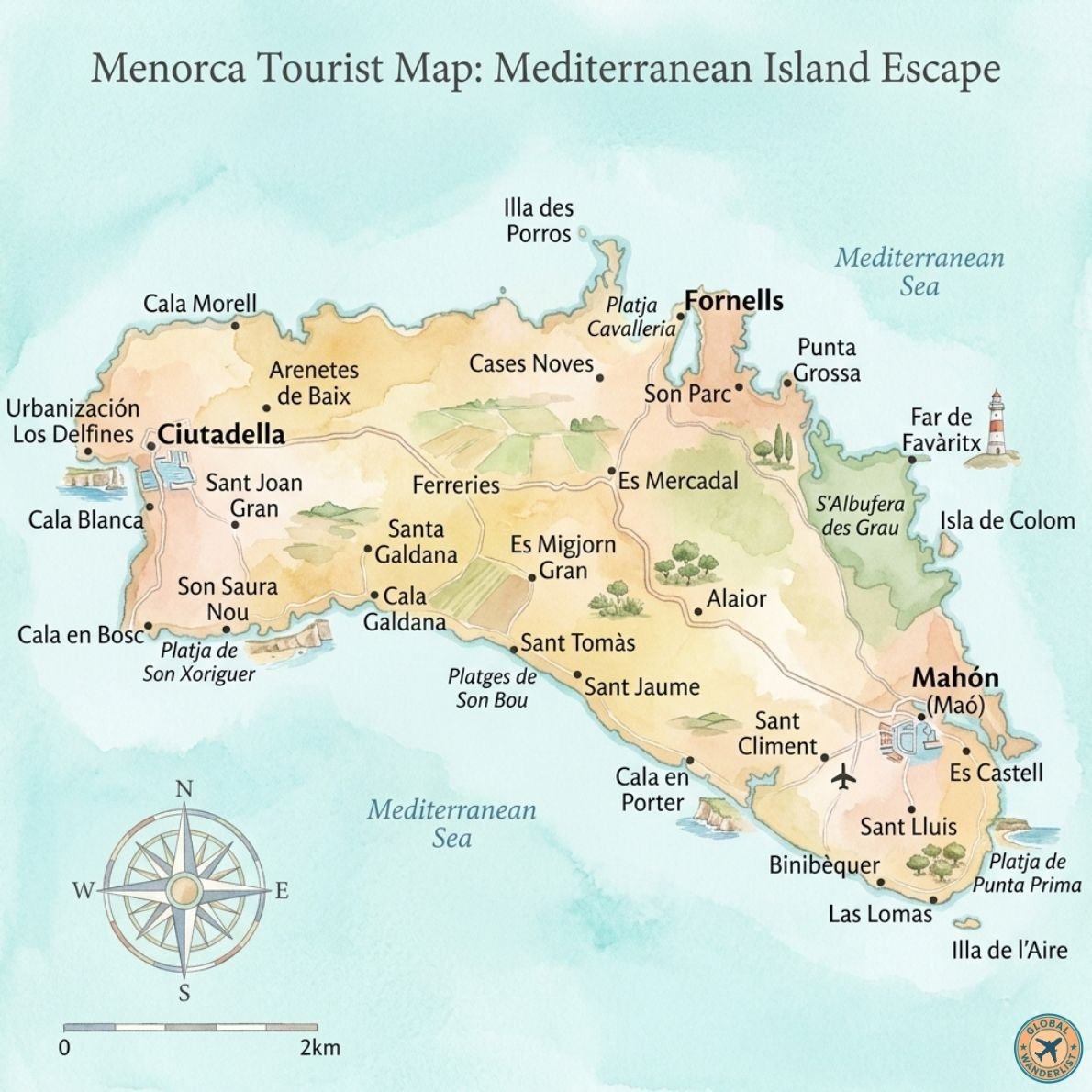
Menorca moves at a slower pace than its Balearic neighbors, and that is exactly its appeal. Turquoise coves, whitewashed towns, and ancient stone monuments fill an island that resists overdevelopment.
Menorca earned UNESCO Biosphere Reserve status in 1993, a rare distinction that has helped protect its coastline from the dense resort construction found elsewhere in the Mediterranean. Travelers come here for quiet beaches, dark night skies, and a genuine sense of discovery. Few islands this size pack in such a mix of Talayotic ruins, colonial history, and dramatic coastal scenery.
Menorca at a Glance
| Place | Category | Best Known For | Recommended Visit Duration |
|---|---|---|---|
| Ciutadella | Historic city | Gothic architecture, former capital | 1-2 days |
| Fornells and the North Coast | Coastal town | Windsurfing, seafood, rugged cliffs | 1 day |
| Es Mercadal and Monte Toro | Central town | Island’s highest point, panoramic views | Half day |
| Ferreries and Cala Galdana | Town and beach | Craft shops, dramatic cove | 1 day |
| Es Migjorn Gran and Sant Tomàs | Town and beach | Wide sandy beach, laid-back pace | Half day |
| Alaior | Historic town | Cheese production, hilltop church | Half day |
| Cala en Porter | Coastal village | Cliffside caves, dramatic coastline | Half day |
| Mahón (Maó) | Capital city | Natural harbor, colonial architecture | 1-2 days |
| Es Castell | Harbor town | British colonial history | Half day |
| Sant Lluís and the Southeast | Town and beaches | Windmills, family-friendly coves | 1 day |
| S’Albufera des Grau and Favàritx | Nature reserve | Wetlands, lighthouse, wild coastline | Half day |
Ciutadella
Ciutadella served as Menorca’s capital until the British moved the seat of power to Mahón in the 18th century. Its historic core still reflects that older status, with a Gothic cathedral and grand palaces lining narrow stone streets. The city’s protected harbor and golden sandstone buildings give it a distinctly elegant character.
What to See in Ciutadella
- The Old Town. Narrow, shaded streets wind past centuries-old palaces built by Menorcan nobility. A slow walk here reveals balconies, inner courtyards, and quiet plazas worth photographing.
- Ciutadella Cathedral. This Gothic church was built atop a former mosque after the Christian reconquest of the island. Its bell tower offers a memorable climb for sweeping views over the rooftops.
- The harbor. Restaurants and bars line this narrow, protected inlet, making it a lively spot for an evening meal. Boats dock just steps from outdoor seating.
- Cala Morell. This small cove northwest of the city holds a rare cluster of prehistoric cave dwellings carved into the cliffside. It makes a quiet, scenic stop away from the busier beaches.
- Cala Blanca and Son Saura Nou. These calm, family-friendly beaches sit a short drive south of the city, offering clear water without heavy crowds.
- Cala en Bosc and Platja de Son Xoriguer. This resort area anchors the island’s southwest corner, with a marina and long sandy beach popular with families.
Ciutadella gets especially lively during the Sant Joan festival each June, when horses parade through the crowded streets. Book accommodations well ahead if visiting during this period.
Fornells and the North Coast
Fornells sits along a deep, sheltered bay on Menorca’s rugged north coast, historically a fishing village turned watersports hub. Strong, steady winds make this stretch of coastline one of the best windsurfing and kitesurfing spots in the Mediterranean. The town’s seafood restaurants have built a reputation around the traditional Menorcan lobster stew known as caldereta de langosta.
What to See in Fornells and the North Coast
- Fornells village. Whitewashed houses and a small watchtower overlook the bay, giving the town a classic Mediterranean fishing village feel.
- Platja de Cavalleria. This dramatic red-cliffed beach ranks among the most photographed spots on the island, with clear turquoise water against rust-colored rock.
- Illa des Porros. This small uninhabited islet off the north coast adds a scenic backdrop to boat trips exploring the area.
- Punta Grossa. This rugged headland offers sweeping views along the north coast, popular with hikers following the coastal trail.
- Son Parc. This low-key resort area centers on a wide sandy beach backed by pine forest, along with the island’s only golf course.
The north coast tends to be windier and wilder than the calmer south, making it better suited to hikers and windsurfers than sunbathers. Afternoon light along this stretch produces some of the island’s best photography conditions.
Es Mercadal and Monte Toro
Es Mercadal sits almost exactly at Menorca’s geographic center, making it a natural stopping point when crossing the island. The town itself is small and unassuming, known mainly as the gateway to Monte Toro, Menorca’s highest peak. A short drive to the summit rewards visitors with views stretching across the entire island.
What to See in Es Mercadal and Monte Toro
- Monte Toro summit. At just over 1,100 feet, this is the highest point on Menorca, topped by a small monastery and sweeping 360-degree views.
- The Sanctuary of Nostra Senyora del Toro. This monastery has stood atop the peak for centuries and remains an active pilgrimage site for locals.
- Es Mercadal town center. Traditional bakeries here are known for local pastries like formatjades and rubiols, worth a stop before continuing the drive.
- Arenetes de Baix. This quieter rural area near Es Mercadal offers a glimpse of Menorca’s agricultural interior, away from the coastal crowds.
- Cases Noves. This small settlement sits along the main road crossing the island, a useful landmark for orienting a north-south route.
Clear days offer the best visibility from Monte Toro’s summit, with both coastlines sometimes visible at once. The drive up is narrow, so early morning visits help avoid tour bus traffic.
Ferreries and Cala Galdana
Ferreries holds a reputation as one of Menorca’s most charming inland towns, known for leather workshops and a lively weekly market. Its elevated position offers pleasant views over the surrounding countryside. The town sits within easy reach of Cala Galdana, one of the island’s most dramatic beaches.
What to See in Ferreries and Cala Galdana
- Ferreries town center. Local leather goods and handmade shoes have been produced here for generations, making the shops worth a browse.
- The Friday market. This weekly market fills the town square with local produce, crafts, and a lively community atmosphere.
- Cala Galdana. This horseshoe-shaped cove features calm, sheltered water framed by pine-covered cliffs, making it one of the most photographed beaches on the island.
- Santa Galdana walking trails. Coastal paths near the beach lead to smaller, quieter coves that reward a bit of extra walking.
- Barranc d’Algendar. This lush ravine near Ferreries offers a shaded hiking route through dense Mediterranean vegetation, a cool escape on hot afternoons.
Cala Galdana gets busy by midmorning during summer, so early arrival helps secure both parking and a good spot on the sand.
Es Migjorn Gran and Sant Tomàs
Es Migjorn Gran remains one of Menorca’s smallest and least touristy towns, offering a genuine slice of local island life. Its proximity to Sant Tomàs beach makes it a practical base for travelers wanting sand without the crowds of larger resorts. The surrounding countryside stays notably quiet even during peak summer months.
What to See in Es Migjorn Gran and Sant Tomàs
- Es Migjorn Gran village. This small town retains an authentic, low-key atmosphere with local bars and simple architecture.
- Sant Tomàs beach. This long, wide stretch of sand offers plenty of room to spread out, backed by a row of relaxed beachfront restaurants.
- Platges de Son Bou. As one of Menorca’s longest beaches, Son Bou stretches nearly two miles and includes the remains of a small Paleochristian basilica.
- Sant Jaume. This quieter coastal area sits between Son Bou and Sant Tomàs, offering a calmer alternative for travelers avoiding crowds.
Son Bou’s basilica ruins are easy to miss, tucked near the eastern end of the beach behind low dunes. Visiting early or late in the day avoids both crowds and the strongest midday sun.
Alaior
Alaior sits on a hilltop near the island’s center, historically known for cheese production and leather manufacturing. Menorcan cheese, particularly the aged variety known as Mahón cheese, has deep roots in this region’s dairy farming tradition. The town’s elevated position gives it commanding views over the surrounding countryside.
What to See in Alaior
- Santa Eulària Church. This hilltop church anchors the town’s skyline and offers a glimpse into its religious architectural history.
- Local cheese producers. Several traditional dairies near Alaior offer tastings and tours, showcasing the island’s protected designation of origin cheese.
- The historic center. Narrow streets lined with traditional Menorcan architecture make for a pleasant, uncrowded walk.
- Torre d’en Galmés. This nearby Talayotic settlement ranks among the largest prehistoric sites on the island, with stone structures dating back over 3,000 years.
Alaior makes a practical stop between the north and south coasts, especially for travelers interested in the island’s culinary traditions.
Cala en Porter
Cala en Porter combines a scenic clifftop village with one of Menorca’s more unusual attractions. The dramatic coastal setting includes deep limestone caves carved into the cliffside above the sea. This stretch of coastline draws both beachgoers and those seeking a distinctive nightlife experience after dark.
What to See in Cala en Porter
- Cova d’en Xoroi. This cave complex built into the cliff face operates as a bar and viewpoint by day, transforming into a nightclub after sunset.
- Cala en Porter beach. This sheltered cove sits at the base of dramatic cliffs, offering calm swimming water and striking scenery.
- The clifftop walk. Paths along the top of the cliffs offer sweeping views over the cove and open Mediterranean beyond.
- Sant Climent. This small nearby village serves as a quieter base, known for a well-regarded jazz bar and relaxed local atmosphere.
Sunset visits to Cova d’en Xoroi are especially popular, so arriving early secures a better viewpoint before crowds build.
Mahón (Maó)
Mahón has served as Menorca’s capital since the British took control of the island in the 18th century, valuing its deep natural harbor as a strategic naval base. That British influence still shows in the town’s Georgian-style windows and doorways, unusual for a Mediterranean town. The harbor itself ranks among the largest natural ports in the world.
What to See in Mahón
- The harbor. One of the deepest natural harbors in the Mediterranean, it remains lined with restaurants, boats, and colonial-era buildings.
- Santa María Church. This church houses a historic organ still used for regular concerts, drawing music lovers throughout the summer season.
- Xoriguer Gin Distillery. This distillery continues a gin-making tradition introduced by British sailors, offering tastings of the island’s distinctive spirit.
- The old town streets. Georgian architecture mixes with traditional Spanish design, a visible reminder of the island’s multiple colonial rulers.
- Mahón Market. This covered market offers fresh produce, cheese, and local specialties, a good stop for picking up picnic supplies.
Mahón’s airport sits just outside the city, making it a natural arrival and departure point for most visitors to the island.
Es Castell
Es Castell began as a British military settlement originally named Georgetown, built to house naval forces stationed at Mahón’s harbor. Its most distinctive feature remains the Cala Corb harbor, lined with a row of colorful fishing boats and cafes. The town retains a quieter, more residential feel than the busier capital nearby.
What to See in Es Castell
- Cala Corb harbor. This narrow, picturesque inlet is lined with small boats and waterfront cafes, especially lively in the evening.
- The Plaça d’Espanya. This central square anchors the town’s daily life, surrounded by shops and casual dining spots.
- Fort Marlborough. This restored 18th century fort offers insight into the island’s British military history through underground tunnels and exhibits.
- The waterfront promenade. A relaxed walk along the water offers views back toward Mahón’s harbor entrance.
Es Castell makes an easy, low-key day trip from Mahón, especially for travelers interested in the island’s British colonial past.
Sant Lluís and the Southeast
Sant Lluís was founded by the French during their brief occupation of Menorca in the 18th century, giving it a distinct architectural imprint among the island’s towns. A restored 18th century windmill still stands near the town center as a landmark from that era. The surrounding coastline holds some of the island’s most popular family beaches.
What to See in Sant Lluís and the Southeast
- The Sant Lluís windmill. This restored mill offers a glimpse into the island’s agricultural history and French colonial period.
- Binibèquer Vell. This whitewashed fishing village, designed to look centuries old, has become one of the island’s most photographed spots.
- Platja de Punta Prima. This wide, sandy beach offers calm, shallow water that makes it especially popular with families.
- Illa de l’Aire. This small island just off Punta Prima holds a historic lighthouse and is known for its population of distinctive black lizards.
- Las Lomas. This residential coastal area offers a quieter stretch of shoreline away from the busier beach resorts nearby.
Illa de l’Aire is visible from the mainland shore, and short boat trips occasionally run out to the island depending on conditions.
S’Albufera des Grau and Favàritx
S’Albufera des Grau forms the core of Menorca’s UNESCO Biosphere Reserve, a protected wetland teeming with birdlife. This nature reserve contrasts sharply with the rocky, windswept landscape surrounding the nearby Favàritx lighthouse. Together, they represent some of the island’s most ecologically significant terrain.
What to See at S’Albufera des Grau and Favàritx
- S’Albufera des Grau lagoon. This wetland reserve supports flamingos, herons, and numerous migratory bird species throughout the year.
- Walking and cycling trails. Well-marked paths circle the lagoon, offering an accessible way to explore the reserve on foot or by bike.
- Cap de Favàritx lighthouse. This striking black-and-white lighthouse sits atop a stark, slate-covered landscape unlike anywhere else on the island.
- Isla de Colom. This small island near the reserve’s coastline adds another layer of protected, undeveloped scenery to the area.
The Favàritx landscape looks especially dramatic under overcast skies, when the dark slate rock takes on an almost lunar appearance.
Final Thoughts
Menorca rewards travelers who venture beyond its most obvious beaches and into its quieter towns and protected landscapes. Ancient stone monuments, colonial architecture, and wild coastal trails sit within easy reach of each other across this compact island. Renting a car opens up far more of the island than staying in one resort town ever could.
Take the time to explore beyond Menorca’s famous coves, into its hilltop towns and protected nature reserves. This island rewards a slower pace, and its quieter corners often turn out to be the most memorable.