
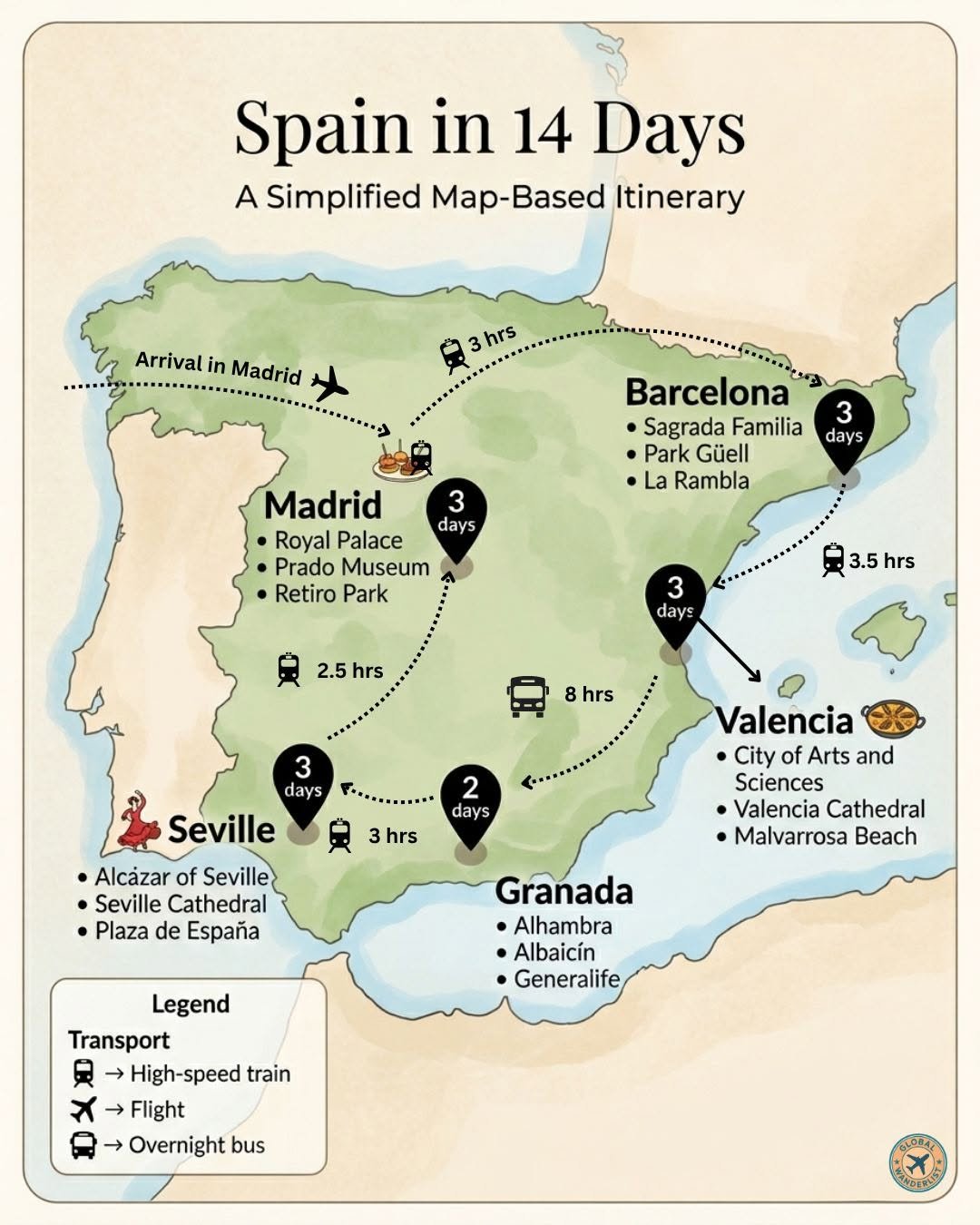
Spain rewards travelers who loop through its regions rather than settling into one city. This route links Gaudí’s Barcelona, futuristic Valencia, Moorish Granada, flamenco-soaked Seville, and royal Madrid into one complete circuit.
It suits travelers who want a genuine cross-section of the country without renting a car. Architecture lovers, food fans, and history buffs will all find a rhythm that works. The pace balances long travel days with several full days of exploring in each city.
High-speed trains carry most of this route, with one overnight bus connecting the eastern coast to Andalusia. Below is a full breakdown of what to see, where to stay, and how to move smoothly through each stop.
Itinerary at a Glance
| Stop | Recommended Stay | Main Highlights | Driving Time to Next Stop | Best For |
|---|---|---|---|---|
| Madrid (arrival) | Transit only | Flight arrival, onward train | 3 hours by train to Barcelona | International arrival |
| Barcelona | 3 days | Sagrada Família, Park Güell, La Rambla | 3.5 hours by train to Valencia | Architecture lovers |
| Valencia | 3 days | City of Arts and Sciences, Valencia Cathedral | 8 hours by overnight bus to Granada | Modern design, beaches |
| Granada | 2 days | Alhambra, Albaicín, Generalife | 3 hours by train to Seville | Moorish history |
| Seville | 3 days | Alcázar, Cathedral, Plaza de España | 2.5 hours by train to Madrid | Flamenco, architecture |
| Madrid | 3 days | Royal Palace, Prado Museum, Retiro Park | Departure | Museums, city energy |
Arrival in Madrid
Most international flights into Spain land in Madrid, making it the natural gateway for this route. Rather than sightseeing immediately, this itinerary saves Madrid’s major attractions for the end of the trip. A short connection carries travelers straight onto a high-speed train toward Barcelona the same day or the next morning.
Madrid’s airport connects easily to the city’s train stations by metro or taxi, so allow at least 90 minutes between landing and departure. Booking the onward train ticket in advance secures better pricing and a guaranteed seat. Travelers with a long layover can grab a quick meal near Atocha Station before continuing on.
Barcelona
Barcelona blends Antoni Gaudí’s wild architecture with medieval streets and a lively Mediterranean waterfront. Three days here allows time for the city’s major landmarks along with a proper beach evening. Its mix of art, history, and coastline makes it an energetic first full stop on this route.
Things to Do in Barcelona
- Sagrada Família. Gaudí’s unfinished masterpiece has been under construction since 1882 and remains the city’s defining landmark. Booking tickets online in advance is essential, since walk-up lines can stretch for hours.
- Park Güell. This whimsical park showcases Gaudí’s playful mosaic work and sweeping city views. Arrive early to catch the famous mosaic terrace before crowds build.
- La Rambla. This tree-lined boulevard cuts through the heart of the city, lined with flower stalls and street performers. It connects easily to the nearby Boqueria Market and Gothic Quarter.
- Gothic Quarter wandering. Barcelona’s oldest district holds narrow medieval streets and hidden plazas layered with centuries of history. A slow walk through takes about two hours.
- Barceloneta Beach. This urban beach sits within walking distance of the Gothic Quarter, making it easy to end a sightseeing day with a swim. Beachfront bars serve drinks well into the evening.
Where to Stay in Barcelona
- Mercer Hotel Barcelona (Luxury). Set inside a converted medieval building in the Gothic Quarter, this hotel blends historic architecture with a serene rooftop terrace. It consistently ranks among the top luxury stays in the city.
- Barceló Raval (Mid-range). This modern hotel near the Gothic Quarter offers a rooftop terrace with panoramic city views. It provides reliable comfort at a more moderate price point.
- TOC Hostel Barcelona (Budget). This well-reviewed hostel offers both private and shared rooms close to the city center. It is a practical, social choice for budget-conscious travelers.
Valencia
Valencia pairs futuristic architecture with the birthplace of paella, making it one of Spain’s most underrated stops. Three days allows time for both the striking City of Arts and Sciences and a relaxed afternoon at the beach. Its walkable center and sunny climate give it a noticeably different pace than Barcelona.
Things to Do in Valencia
- City of Arts and Sciences. This futuristic complex of museums, an aquarium, and an opera house was designed by architect Santiago Calatrava. Its striking white structures look especially dramatic reflected in the surrounding pools.
- Valencia Cathedral. This Gothic cathedral holds what many believe to be the Holy Grail, alongside a bell tower offering sweeping views over the old town.
- Malvarrosa Beach. This wide, sandy beach sits just outside the city center, offering a relaxed break from sightseeing. Beachfront restaurants here serve some of the city’s best paella.
- Turia Gardens. This former riverbed was transformed into a nine-kilometer park, now one of the most pleasant places in the city for walking or cycling.
- Central Market. This ornate covered market offers fresh produce, cured meats, and local specialties, a good stop for sampling regional ingredients.
Where to Stay in Valencia
- Caro Hotel (Luxury). Set in a 19th century mansion near the cathedral, this hotel incorporates Roman and Moorish ruins discovered on site into its design. It ranks among Valencia’s most distinctive luxury stays.
- Petit Palace Bristol (Mid-range). Centrally located near the old town, this hotel offers modern, well-kept rooms with reliable comfort. It provides an easy base for exploring the historic center on foot.
- Home Youth Hostel Valencia (Budget). This well-reviewed hostel offers both private and shared rooms close to the city’s major sights. It is a practical, social choice for budget-conscious travelers.
The overnight bus from Valencia to Granada takes about eight hours, making it a genuine leg of the journey rather than a quick hop. Booking a reclining seat in advance makes the ride considerably more comfortable, and many travelers use the overnight timing to save a night of accommodation.
Granada
Granada holds one of the most extraordinary palaces in Europe, set against the dramatic backdrop of the Sierra Nevada mountains. Two days allows time to properly explore the Alhambra along with the winding streets of the old Moorish quarter. Its layered Islamic and Christian history gives the city a uniquely atmospheric character.
Things to Do in Granada
- The Alhambra. This sprawling fortress and palace complex showcases some of the finest Islamic architecture in Europe, including the intricately carved Nasrid Palaces. Booking tickets well in advance is essential, since daily entry is strictly limited.
- Albaicín district. This historic Moorish quarter features narrow, winding streets and whitewashed houses climbing a hillside opposite the Alhambra. Sunset views from the Mirador de San Nicolás are among the best in the city.
- Generalife Gardens. These terraced gardens within the Alhambra complex offer fountains, courtyards, and sweeping views over the city below.
- Tapas culture. Granada remains one of the few Spanish cities where a free tapa comes with every drink ordered, making bar hopping both social and affordable.
- Sierra Nevada views. Granada’s setting beneath these mountains offers a striking backdrop, with ski slopes reachable within an hour during winter months.
Where to Stay in Granada
- Alhambra Palace Hotel (Luxury). This Moorish-style hotel sits just below the Alhambra itself, with a legendary terrace bar overlooking the entire city. It remains one of Granada’s most iconic luxury stays.
- Casa 1800 Granada (Mid-range). Tucked into a former aristocratic mansion in the Albaicín, this hotel offers Moorish-tiled interiors and a rooftop terrace with Alhambra views. It consistently earns strong reviews for character and location.
- Room Mate Leo (Budget). This colorful, design-led hotel sits in Granada’s pedestrianized city center, offering a rooftop pool and generous breakfast. It provides excellent value close to the main sights.
Seville
Seville captures the heart of Andalusian culture, from its soaring Gothic cathedral to the passionate rhythm of live flamenco. Three days allows time to explore its major landmarks at an unhurried pace and still catch an evening performance. The city’s orange-tree-lined streets and Moorish palaces give it a distinctly romantic character.
Things to Do in Seville
- Alcázar of Seville. This stunning royal palace showcases intricate Mudéjar architecture and lush garden courtyards. It remains a working royal residence, still used by the Spanish royal family today.
- Seville Cathedral. This is the largest Gothic cathedral in the world, built atop a former mosque and holding the tomb of Christopher Columbus. Climbing the Giralda tower rewards visitors with sweeping city views.
- Plaza de España. This grand semicircular plaza was built for the 1929 Ibero-American Exposition and features colorful tiled alcoves representing Spanish provinces.
- A flamenco show. Seville is considered one of the birthplaces of flamenco, and its intimate tablaos offer passionate, authentic performances. Evening shows typically run about an hour.
- Santa Cruz Quarter. This former Jewish quarter holds narrow, flower-lined streets that reward slow, aimless wandering, sitting within easy walking distance of the cathedral.
Where to Stay in Seville
- Hotel Alfonso XIII, A Luxury Collection Hotel (Luxury). This landmark hotel near the cathedral has hosted royalty and dignitaries since 1928. It remains Seville’s most celebrated luxury address.
- Hotel Casa 1800 Sevilla (Mid-range). Set in a converted 19th century mansion in Santa Cruz, this hotel offers a rooftop terrace with cathedral views. It consistently earns strong reviews for its central location and character.
- Hostal Goya (Budget). This well-reviewed guesthouse sits in the heart of Santa Cruz, offering simple, comfortable rooms close to the major sights. It is a practical, centrally located choice for budget travelers.
Madrid
Madrid closes out this route as the final, longest stop, saved deliberately for the end of the journey. Three days here allows a relaxed pace through the capital’s museums, parks, and food scene before departure. Its central location also makes it the most practical city from which to catch an international flight home.
Things to Do in Madrid
- Royal Palace of Madrid. This is the official residence of the Spanish royal family, with over 3,000 rooms across its grounds. Budget at least two hours to see the lavish state rooms.
- Prado Museum. Home to masterpieces by Velázquez, Goya, and Bosch, this museum ranks among the finest art collections anywhere. Plan for at least two to three hours to see the highlights.
- Retiro Park. This sprawling green space once served as royal grounds before opening to the public in the 19th century. A relaxed walk through takes about an hour, longer with a rowboat ride on the lake.
- Gran Vía. Madrid’s grand central avenue is lined with early 20th century architecture, theaters, and flagship shops, worth an evening stroll.
- Tapas in La Latina. This historic neighborhood is packed with traditional tapas bars, especially lively on weekend afternoons. Hopping between two or three spots captures the spirit of Madrid’s food culture.
Where to Stay in Madrid
- Mandarin Oriental Ritz Madrid (Luxury). This landmark hotel near the Prado Museum has anchored Madrid’s luxury scene since 1910. It remains one of the most celebrated addresses in the city.
- Petit Palace Puerta del Sol (Mid-range). Centrally located steps from Puerta del Sol, this hotel offers modern, well-kept rooms at a reasonable price. It provides an easy base for exploring the city center on foot.
- The Hat Madrid (Budget). This popular hostel near Plaza Mayor offers a rooftop terrace and a lively social atmosphere. It is a reliable, well-reviewed choice for budget travelers.
With Madrid as the final stop, most travelers depart from Adolfo Suárez Madrid-Barajas Airport, well connected to the city center by metro. Building in a relaxed final morning for a last café con leche and a walk through Retiro Park makes for a fitting close to the trip.
Final Thoughts
This route captures Spain at its most varied, blending Gaudí’s architecture, futuristic design, Moorish palaces, and royal history into one complete circuit. Each stop offers enough to fill several days without feeling rushed. Mixing high-speed trains with one overnight bus makes the distances between regions easy to manage without a car.
Use this itinerary as a solid framework for planning your own Spain trip. Adjust the pace based on how much time you want to spend in each region. Spain rewards travelers who leave room to slow down, eat well, and take in each stop along the way.