
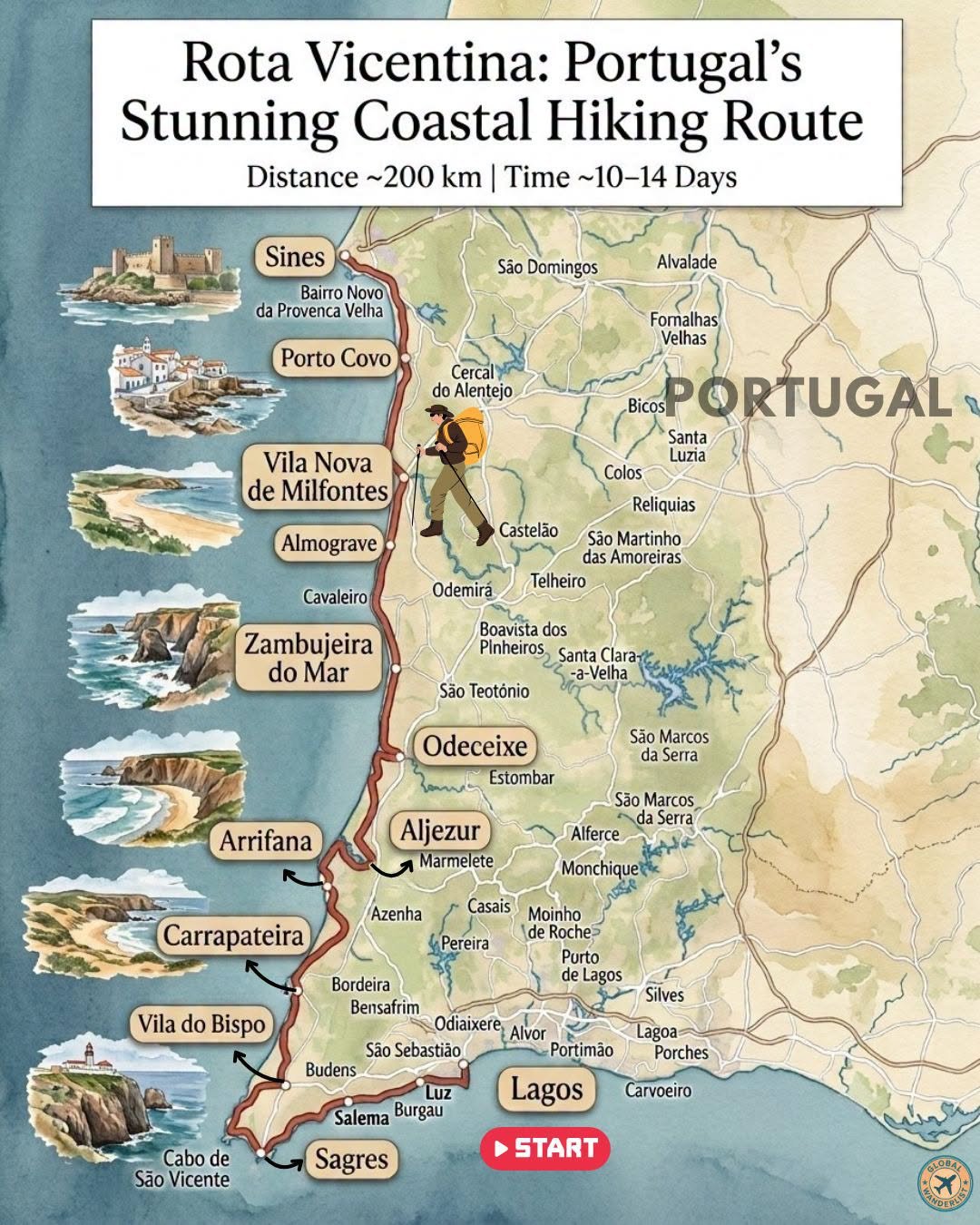
Rota Vicentina traces roughly 200 kilometers along Portugal’s wild southwestern coast, linking Sagres to Sines through some of Europe’s least developed shoreline. Dramatic cliffs, quiet fishing villages, and long stretches of empty beach define the route. Few coastal trails in Europe still feel this untouched.
This trek suits hikers of moderate fitness who want big scenery without technical mountain terrain. The Fishermen’s Trail, which runs closest to the coast, involves sandy paths and some steep cliff sections. Inland alternatives exist for those wanting gentler walking, though the coastal route delivers the most memorable views.
Most hikers complete the full route in 10 to 14 days, moving from village to village. Guesthouses and small hotels replace mountain huts here, making logistics simpler than many long-distance trails. Spring and fall offer the best combination of mild temperatures and manageable crowds.
Trek Overview
| Trek Stop | Elevation | Distance from Previous Stop | Estimated Hiking Time | Overnight Stay |
|---|---|---|---|---|
| Sagres (Start) | 40 m | – | – | Guesthouse or hotel |
| Vila do Bispo | 130 m | 12 km | 3-4 hours | Guesthouse |
| Carrapateira | 40 m | 18 km | 5-6 hours | Guesthouse |
| Arrifana | 30 m | 15 km | 4-5 hours | Guesthouse or hotel |
| Aljezur | 70 m | 10 km | 3 hours | Guesthouse or hotel |
| Odeceixe | 50 m | 18 km | 5-6 hours | Guesthouse |
| Zambujeira do Mar | 60 m | 20 km | 6 hours | Guesthouse or hotel |
| Almograve | 40 m | 15 km | 4-5 hours | Guesthouse |
| Vila Nova de Milfontes | 20 m | 12 km | 3-4 hours | Guesthouse or hotel |
| Porto Covo | 30 m | 20 km | 5-6 hours | Guesthouse |
| Sines (End) | 30 m | 12 km | 3-4 hours | Hotel |
Sagres
Sagres sits at Portugal’s southwestern tip, a windswept fishing town long associated with the Age of Discoveries. Prince Henry the Navigator is said to have established a school of navigation nearby, and the dramatic fortress overlooking the sea still reflects that maritime legacy. Cliffs plunge sharply into the Atlantic here, setting a fittingly dramatic tone for the trek ahead.
Most hikers spend a night in Sagres before starting the trail, using the extra time to visit Cabo de Sao Vicente just west of town. This is continental Europe’s southwesternmost point, marked by a lighthouse and sweeping ocean views. Strong winds are common, so pack a windbreaker even in warmer months.
Where to Stay in Sagres
Sagres offers a solid range of accommodations for a small coastal town. Memmo Baleeira Hotel sits within a short walk of the beach and offers ocean-view rooms with strong recent reviews. Mareta Beach Boutique Bed and Breakfast provides a smaller, more intimate option overlooking Mareta Beach, while Pousada de Sagres sits closer to the fortress with clifftop views over the bay.
What to See in Sagres
- Cabo de Sao Vicente marks continental Europe’s southwesternmost point, with a lighthouse and dramatic cliff views.
- The Sagres Fortress offers a wide sea-facing terrace and a compass rose etched into the ground.
- Praia da Mareta provides a sheltered beach right in town, good for a swim before starting the trail.
- Local fish restaurants along the harbor serve grilled catches fresh from the morning boats.
Vila do Bispo
Vila do Bispo marks the first proper stage of the trek, a small inland town known for its whitewashed church and quiet agricultural surroundings. The trail here moves through low scrubland before reconnecting with the coast further north. This stretch offers a gentler introduction before the more dramatic cliff sections ahead.
Water refill points are limited on this stage, so carry enough for at least four hours of walking. The path alternates between packed dirt trails and short paved sections near the village. Morning starts help avoid the strongest midday sun during summer months.
Where to Stay in Vila do Bispo
Vila do Bispo offers several small, well-reviewed guesthouses suited to trekkers passing through. Casa Nook Sagres, despite its name, sits in Vila do Bispo and provides comfortable rooms with parking for those arriving by car ahead of the trek. Local rural guesthouses in the surrounding countryside offer a quieter, farmhouse-style alternative.
What to See in Vila do Bispo
- The Church of Nossa Senhora da Conceicao features striking blue and white azulejo tilework inside.
- Surrounding scrubland supports migratory bird populations, worth watching for during spring and fall passage.
- The town’s small central square offers a relaxed spot to refuel before continuing north.
- Nearby Praia do Castelejo provides a dramatic beach detour framed by layered rock cliffs.
Carrapateira
Carrapateira delivers some of the trek’s most striking coastal scenery, with two beaches separated by a rocky headland. Praia da Bordeira stretches wide and flat, backed by dunes and a small river estuary. Praia do Amado, just south, draws a strong surfing crowd thanks to consistent Atlantic swells.
This stage covers longer, more exposed sections of trail, so sun protection matters even on cooler days. The Pontal da Carrapateira viewpoint offers one of the best places to rest and take in the coastline. Wildlife along this stretch includes storks nesting on cliffside rock formations, an unusual sight this close to the ocean.
Where to Stay in Carrapateira
Carrapateira’s accommodations lean toward small guesthouses and surf lodges rather than large hotels. Casa Fajara offers well-reviewed rooms with parking, popular with hikers and surfers passing through. Several family-run guesthouses in the village center provide simple, comfortable stays within easy walking distance of both beaches.
What to See in Carrapateira
- Praia da Bordeira’s wide, dune-backed sands make for one of the most dramatic beach stretches on the entire trail.
- Praia do Amado draws surfers year-round, with consistent swells and a lively beach bar scene.
- Pontal da Carrapateira offers sweeping headland views over both beaches at once.
- Storks nesting on coastal cliffs here represent an unusual adaptation, typically seen inland rather than by the sea.
Arrifana
Arrifana ranks among the most photogenic stops on the entire route, with a horseshoe bay framed by tall cliffs. Fishing boats still launch from a small harbor built directly into the rock. The clifftop fort ruins above the bay add a layer of history to an already dramatic setting.
This shorter stage gives hikers time to properly enjoy the beach before continuing. Surfers favor Arrifana for its consistent waves, and rental shops near the beach offer boards and lessons. Sunset here draws a steady crowd to the clifftop viewpoints above the bay.
Where to Stay in Arrifana
Arrifana offers a small but well-regarded selection of guesthouses and surf lodges close to the beach. Several properties near the clifftop provide ocean views along with easy walking access down to the harbor. Booking ahead matters during summer, since Arrifana draws a strong surf tourism crowd alongside trekkers.
What to See in Arrifana
- The horseshoe-shaped bay offers one of the most photographed views along the entire coastal route.
- Clifftop fort ruins above the beach provide a quiet historical detour with sweeping ocean views.
- The small fishing harbor still operates daily, with boats launching directly from the rocky cove.
- Sunset from the clifftop viewpoint delivers some of the best light on the whole trek.
Aljezur
Aljezur sits slightly inland, its hilltop Moorish castle ruins visible from a distance across the surrounding countryside. The town split historically between an upper Moorish quarter and a lower Christian settlement, a division still visible in its layout today. Sweet potato farming has become a local specialty, celebrated each November with a dedicated festival.
This shorter stage offers a good rest day option, with more restaurant and shop variety than the smaller coastal villages. The castle ruins reward a short uphill walk with views stretching toward the coast. Aljezur also makes a practical resupply point before the longer stage ahead.
Where to Stay in Aljezur
Aljezur offers a wider range of guesthouses and small hotels than most stops on this stretch of trail, given its slightly larger size. Aljezur Villas provides guesthouse-style accommodations with pool access and parking, well suited to a rest day. Several centrally located guesthouses put the castle ruins and main street within easy walking distance.
What to See in Aljezur
- The hilltop Moorish castle ruins offer panoramic views over the town and surrounding valley.
- The historic lower town preserves narrow lanes reflecting centuries of Moorish and Christian layered settlement.
- Local restaurants serve sweet potato dishes, a specialty tied to the region’s distinct agricultural history.
- The Aljezur Municipal Museum provides context on the area’s archaeological and cultural history.
Odeceixe
Odeceixe marks the boundary between the Algarve and Alentejo regions, a whitewashed village overlooking a river valley. A traditional windmill sits above the town, a reminder of the area’s agricultural past. The beach here, reached by a short walk along the river, ranks among the most scenic on the entire route.
This stage covers longer, varied terrain, moving between farmland, cliffs, and river estuary scenery. Odeceixe Beach itself splits into river and ocean sections, offering calmer swimming on the estuary side. The windmill above town provides a good rest stop with views over the valley.
Where to Stay in Odeceixe
Odeceixe offers a handful of well-reviewed guesthouses within the compact village center. Small, family-run properties provide simple rooms close to both the main square and the trail heading toward the beach. Booking ahead is recommended in peak summer, since options here are more limited than in larger towns.
What to See in Odeceixe
- Odeceixe Beach splits into calmer river and more dramatic ocean sections, both worth a visit.
- The traditional windmill above town offers valley views and a glimpse into the region’s agricultural history.
- The village’s whitewashed streets reflect classic Alentejo coastal architecture.
- The river estuary supports a range of bird life, particularly active in early morning hours.
Zambujeira do Mar
Zambujeira do Mar delivers a dramatic stretch of cliffside coastline, with layered rock formations dropping straight into the Atlantic. The village itself stays small and low-key, popular with Portuguese vacationers more than international tourists. This makes it one of the more authentic stops along the entire trek.
This is one of the longer stages on the route, so an early start helps manage the distance comfortably. Cliffside sections offer little shade, making sun protection essential during summer months. The beach below town provides a well-earned reward at the end of a long walking day.
Where to Stay in Zambujeira do Mar
Hotel Alcatruz stands out as a well-reviewed, modern boutique option in the village center, praised for friendly service and a convenient location. Several guesthouses and vacation rentals throughout town offer additional options at a range of price points. Booking ahead matters here too, given the village’s small size relative to its popularity.
What to See in Zambujeira do Mar
- The main beach sits beneath dramatic cliffs, one of the most striking coastal settings on the trek.
- Nearby Cabo Sardao offers a quieter clifftop viewpoint, home to nesting white storks on sea-facing rocks.
- The village’s small square and surrounding streets reflect an unpolished, authentically local atmosphere.
- Sunset over the ocean here draws a steady but never overwhelming crowd to the clifftop paths.
Almograve
Almograve continues the trend of dramatic, sparsely developed coastline, with wide beaches backed by low dunes and scrubland. The village itself stays quiet, functioning mainly as a gateway to the surrounding natural park. This stretch of trail feels remote even by the standards of the rest of the route.
Trail conditions here mix sandy coastal paths with firmer inland sections, so proper footwear matters. Wind can pick up significantly along the exposed cliff stretches, so a light jacket is worth carrying even in summer. Wildlife sightings increase along this quieter section, including foxes and a wide range of coastal bird species.
Where to Stay in Almograve
Almograve offers a modest selection of guesthouses and rural accommodations, reflecting its small size and quiet character. Countryside properties just outside the village provide farmhouse-style stays with easy trail access. Given limited options, booking ahead during peak season is strongly advised.
What to See in Almograve
- Praia do Almograve stretches wide and largely undeveloped, one of the emptier beaches along the entire route.
- Cliffside paths here offer sweeping views with far fewer visitors than busier stops further south.
- Coastal scrubland supports a wide range of bird species, particularly active during migration seasons.
- The quiet village center makes a good, unhurried rest stop before the next stage.
Vila Nova de Milfontes
Vila Nova de Milfontes sits where the Mira River meets the Atlantic, one of the liveliest stops along the entire route. A small fort overlooks the river mouth, while the town’s beaches offer both sheltered river swimming and open ocean waves. This is one of the more developed stops on the trek, with a wider range of restaurants and accommodations.
This shorter stage makes a good rest day option after the longer walk from Almograve. The river estuary provides a distinctly different landscape from the cliffside stretches further south. Boat trips along the river offer an easy, relaxed way to spend an afternoon off the trail.
Where to Stay in Vila Nova de Milfontes
Vila Nova de Milfontes offers the widest range of accommodations along this stretch of the trek. Casa do Adro, set in a restored 17th-century house, provides antique-filled rooms with strong recent reviews. Hotel Casa dos Arcos and Casa Amarela both offer well-regarded, centrally located options within easy walking distance of the beach and town center.
What to See in Vila Nova de Milfontes
- The Sao Clemente Fort overlooks the river mouth, offering views where the Mira meets the Atlantic.
- Praia da Franquia provides calm, sheltered swimming on the river side of town.
- The town’s riverfront promenade makes a relaxed evening walk after a day on the trail.
- Boat trips along the Mira River reveal quieter stretches of marshland and birdlife upstream.
Porto Covo
Porto Covo offers a smaller, quieter alternative to Vila Nova de Milfontes, with a compact whitewashed village center overlooking the sea. Nearby Ilha do Pessegueiro, a small island with Roman ruins, adds a historical layer to the coastal scenery. This stage covers a long, varied stretch of trail before the final approach to Sines.
Cliffside paths here alternate with quieter stretches of pine forest, offering welcome shade on warmer days. The island just offshore can be reached by a short boat ride during calmer summer months. This stop feels distinctly less touristed than the busier towns further south.
Where to Stay in Porto Covo
Porto Covo’s accommodations lean toward small guesthouses and boutique properties within the village center. Several well-reviewed options sit within a short walk of the main square and the clifftop paths leading to the beach. Given the village’s compact size, advance booking is recommended during summer months.
What to See in Porto Covo
- Ilha do Pessegueiro holds the remains of a Roman fish-salting settlement, visible on a short boat trip offshore.
- The village’s whitewashed main square offers a relaxed, low-key atmosphere compared to busier coastal towns.
- Praia Grande de Porto Covo provides a wide, scenic beach just below the village center.
- Pine forest sections along this stage offer a welcome change of scenery from the open cliffs further south.
Sines
Sines closes out the trek, a working port town with a more industrial character than the villages preceding it. Despite this, the historic center and clifftop fortress retain real charm, and the town holds an unexpected claim as the birthplace of explorer Vasco da Gama. Long, sandy beaches stretch north of the harbor, offering a final coastal reward.
The approach into Sines mixes cliffside trail with a more urban finish near the port. This contrast can feel abrupt after days of quiet coastal walking, but the town’s beaches and historic quarter provide a satisfying close to the route. Public transport connections from Sines make it an easy point to end the trek and head onward.
Where to Stay in Sines
Sines offers a fuller range of hotels than most stops on the trek, given its larger size and port town infrastructure. Several centrally located hotels provide comfortable rooms within walking distance of both the historic center and the main beaches. This makes Sines a practical, well-equipped place to rest before departing the region.
What to See in Sines
- Sines Castle, overlooking the harbor, is traditionally cited as the birthplace of explorer Vasco da Gama.
- Praia Vasco da Gama stretches north of town, offering a long, sandy beach to mark the trek’s end.
- The historic center’s quiet streets contrast with the town’s working port, reflecting its dual character.
- The clifftop path just south of town offers a final scenic overlook back toward the coastline just completed.
Final Thoughts
Rota Vicentina delivers ten to fourteen days of dramatic, largely untouched coastline, from Sagres’s windswept cliffs to Sines’s working harbor. Pace yourself on the longer stages, and carry enough water on stretches with limited refill points. Spring and fall offer the most comfortable hiking conditions, avoiding both summer heat and winter storms.
Book accommodations ahead during peak season, since many villages along the route offer only a handful of rooms. Respect the region’s protected natural park status by staying on marked trails and packing out all trash. Complete this trek with care, and Portugal’s wild southwestern coast will reward you at every turn.