
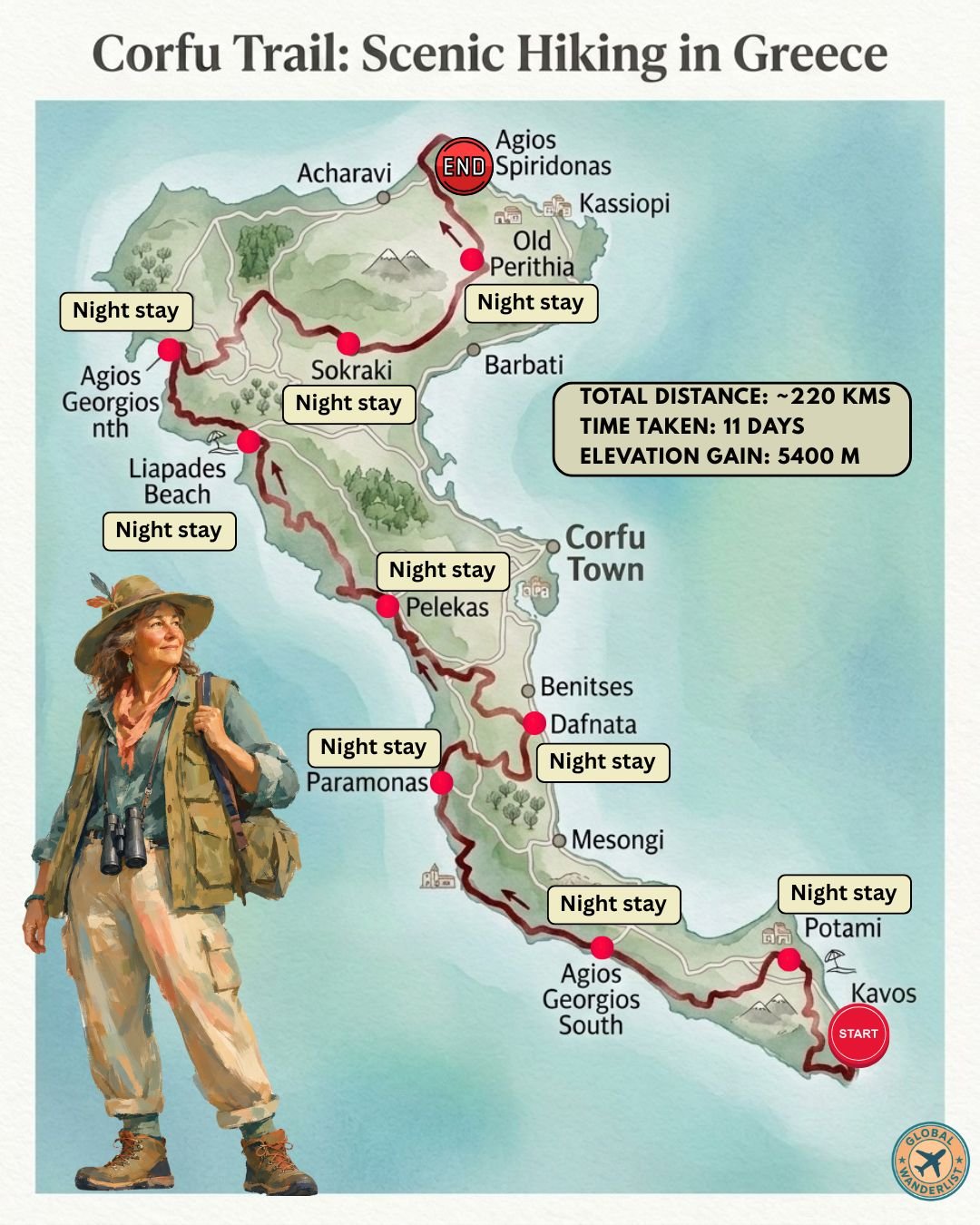
The Corfu Trail traces roughly 220 kilometers from the island’s southern tip to its mountainous north, crossing olive groves, hilltop villages, and dramatic coastal scenery along the way. This route offers a genuinely different side of Corfu, far from the beach resorts most visitors know. Few Greek islands pack this much varied terrain into one hikeable loop.
This trek suits hikers of moderate fitness who want a village-to-village walk with real cultural texture. Trail conditions range from coastal paths to forested mountain tracks, with a total elevation gain of about 5,400 meters across the full route. Most hikers complete it in ten to eleven days, staying in guesthouses and small hotels rather than camping.
The best season runs from April through June or September through October, avoiding both summer heat and winter rain. Spring brings wildflowers and green hillsides, while fall offers warm days and cooler nights. Below is a complete breakdown of every major stop, following the trail from Kavos in the south to Agios Spiridonas in the north.
Trek Overview
| Trek Stop | Elevation | Distance from Previous Stop | Estimated Hiking Time | Overnight Stay |
|---|---|---|---|---|
| Kavos (Start) | 10 m | – | – | Guesthouse or hotel |
| Potami | 20 m | 15 km | 4-5 hours | Guesthouse |
| Agios Georgios South | 15 m | 12 km | 3-4 hours | Guesthouse or hotel |
| Paramonas | 30 m | 20 km | 6 hours | Guesthouse |
| Dafnata | 50 m | 18 km | 5-6 hours | Guesthouse |
| Pelekas | 150 m | 22 km | 6-7 hours | Guesthouse |
| Liapades Beach | 20 m | 20 km | 5-6 hours | Guesthouse |
| Agios Georgios North | 15 m | 15 km | 4-5 hours | Guesthouse |
| Sokraki | 320 m | 18 km | 6 hours | Guesthouse |
| Old Perithia | 350 m | 20 km | 6-7 hours | Guesthouse |
| Agios Spiridonas (End) | 10 m | 15 km | 4-5 hours | Guesthouse |
Kavos
Kavos marks the starting point of the Corfu Trail, a lively beach resort town at the island’s southeastern tip. This is a stark contrast to the quiet villages waiting further along the route, giving hikers one last taste of nightlife and amenities before heading into quieter terrain. The surrounding coastline offers a straightforward, scenic start to the trek.
Most hikers spend a night here before setting out, using the town’s shops and restaurants to stock up on trail supplies. The first stretch of trail heads north along a mix of coastal path and country road. Early morning starts help avoid both crowds and the day’s building heat.
Where to Stay in Kavos
Kavos offers the widest range of accommodations on this route, from budget hostels to full resort hotels. Several well-reviewed guesthouses near the town center provide simple, comfortable rooms suited to hikers preparing for an early departure. Booking ahead is straightforward here given the town’s large tourist infrastructure.
What to See in Kavos
- The town’s long sandy beach offers a relaxed start or end point for the trail, depending on your direction.
- Cape Asprokavos, just south of town, provides dramatic cliff views over the Ionian Sea.
- The Monastery of Panagia Arkoudilas sits in a quiet forest setting near the cape, worth a short detour.
- Kavos’s restaurant scene offers a final chance to stock up on supplies before quieter trail stretches ahead.
Potami
Potami offers a quieter, more rural introduction to the trail after Kavos, its name meaning river in Greek. Olive groves and small farming communities line this stretch of path, easing hikers into the trek’s rhythm. The pace here already feels noticeably slower than the resort town left behind.
This stage covers a mix of country roads and dirt paths through agricultural land. Water refill points appear regularly through small villages along the way. Morning starts help manage the distance before afternoon heat sets in during summer months.
Where to Stay in Potami
Potami and the surrounding area offer modest guesthouses suited to hikers passing through this rural stretch. Several small, family-run properties provide simple rooms close to the main trail. Booking a day ahead is wise during peak hiking season, given the limited number of rooms in this smaller stop.
What to See in Potami
- The surrounding olive groves offer a genuine, unhurried introduction to rural southern Corfu.
- Small rural chapels along the route reflect the deep Orthodox tradition found throughout the island.
- Quiet farming villages nearby give a sense of everyday Corfiot life away from the coast.
- The gentle terrain here makes for a comfortable warm-up stage before more demanding sections ahead.
Agios Georgios South
Agios Georgios South delivers the trail’s first proper beach stop, a long stretch of sand backed by low dunes and a growing resort scene. This is one of the longer beaches on Corfu’s southern coast, offering a scenic contrast to the inland stretches before it. The wide bay makes for a memorable arrival after a day of walking.
This stage moves between coastal paths and inland tracks, with some exposed stretches along the shoreline. Sun protection matters here, given the lack of shade along the beach approach. The town itself offers a good range of restaurants for refueling after the day’s distance.
Where to Stay in Agios Georgios South
Agios Georgios South offers a solid range of guesthouses and small hotels given its established beach resort status. Several properties sit within easy walking distance of both the beach and the trail continuing north. Booking ahead helps during summer, when the town draws a steady stream of beach-focused visitors alongside hikers.
What to See in Agios Georgios South
- The long, wide beach offers one of the most scenic swimming stops directly on the trail route.
- Lake Korission, just north of town, forms a protected wetland home to diverse bird species.
- The dune systems backing the beach support unusual coastal plant life worth a slow look.
- Sunset over the bay delivers some of the best evening views on the southern half of the island.
Paramonas
Paramonas sits along Corfu’s dramatic western coastline, a small beach village framed by cliffs and forested hills. This stage introduces hikers to steeper, more varied terrain compared to the flatter southern stretches. The scenery here shifts noticeably toward the rugged, mountainous character found further north.
This is one of the longer stages on the trail, so pacing matters from early in the day. The coastal cliffs offer dramatic photography opportunities, particularly in late afternoon light. Trail markers become especially important through this more remote stretch.
Where to Stay in Paramonas
Paramonas offers a handful of well-reviewed guesthouses and small hotels suited to hikers covering this longer stage. Properties here tend to sit close to the beach, offering a well-earned rest after a demanding day. Given the village’s smaller size, booking ahead is recommended during busier months.
What to See in Paramonas
- The clifftop coastal views along this stretch rank among the most dramatic on the trail’s western side.
- Paramonas Beach itself offers a scenic, less crowded swimming stop compared to busier resort towns.
- Forested hillsides above the village provide welcome shade during the warmer parts of the day.
- The rugged coastline here previews the more mountainous terrain waiting further north on the route.
Dafnata
Dafnata sits inland from the coast, a quiet village surrounded by olive terraces and traditional stone architecture. This stage moves away from the sea, giving hikers a different perspective on Corfu’s agricultural interior. The pace here feels distinctly rural and unhurried.
Trail conditions mix forest paths with quiet country roads through this stretch. Water refill points appear at village fountains along the way. This stop suits hikers wanting a break from coastal exposure before returning toward the sea later in the route.
Where to Stay in Dafnata
Dafnata offers modest guesthouse accommodations reflecting its small, rural character. Nearby villages provide additional options for those wanting more choice. Booking ahead matters here given the limited number of rooms available in this quieter stretch of the trail.
What to See in Dafnata
- Terraced olive groves surrounding the village reflect centuries of traditional Corfiot agriculture.
- Stone architecture throughout the settlement showcases classic inland Corfu building style.
- Quiet village fountains provide reliable water refill points along this stage.
- The surrounding countryside offers a peaceful, unhurried contrast to the trail’s coastal stretches.
Pelekas
Pelekas ranks among the most popular stops on the entire trail, a hilltop village famous for sweeping sunset views over the island’s western coast. The Kaiser’s Throne viewpoint, once used by German Emperor Wilhelm II, delivers one of the best panoramas on Corfu. This stage also happens to align well with a proper rest day given the village’s larger size.
This is one of the longer stages on the route, climbing steadily toward the hilltop village. The final approach rewards hikers with increasingly dramatic views as elevation builds. Pelekas draws both trail hikers and day-tripping tourists, so expect more company here than at quieter stops.
Where to Stay in Pelekas
Agnes Rooms stands out as a well-reviewed guesthouse specifically noted by past guests as a perfect overnight stop for Corfu Trail hikers, offering mountain views and private parking. Madalenas B&B provides another solid, highly rated option within walking distance of Kontogialos Beach. Both properties suit hikers looking for a comfortable, central base before continuing north.
What to See in Pelekas
- The Kaiser’s Throne viewpoint delivers one of the best sunset panoramas anywhere on the island.
- Kontogialos Beach sits just below the village, offering an easy swimming detour.
- The village’s small main street holds cafes and shops well suited to a proper rest stop.
- Pelekas’s elevated position offers sweeping views over Corfu’s western coastline throughout the day.
Liapades Beach
Liapades Beach offers a dramatic stretch of coastline, framed by tall cliffs and clear turquoise water. This stage returns hikers to the sea after the inland climb through Pelekas, with striking views along much of the descent. The beach itself ranks among the most photogenic stops on the western half of the trail.
Trail conditions here mix forest paths with a steep coastal descent toward the shoreline. The dramatic cliffs offer excellent photography opportunities, especially in morning light. This stop suits hikers wanting a proper swim after a demanding stretch of trail.
Where to Stay in Liapades Beach
Liapades offers a range of guesthouses and small hotels given its popularity as a scenic beach stop. Several properties sit within easy reach of both the beach and the trail continuing toward Agios Georgios North. Booking ahead helps during peak summer months.
What to See in Liapades Beach
- The dramatic cliffs framing the beach create one of the most photographed coastal scenes on the trail.
- Clear, turquoise water here offers some of the best swimming conditions on the western coast.
- Sea caves accessible by boat from the beach add an adventurous half-day detour option.
- The village above the beach preserves a quieter, more traditional atmosphere away from the shoreline.
Agios Georgios North
Agios Georgios North offers a second beach stop bearing the same name as its southern counterpart, though with a distinctly different character. This stretch of coastline feels quieter and less developed than the trail’s southern beaches. The approach into town crosses varied terrain, from forest to open coastal path.
This stage covers a moderate distance with a mix of trail conditions throughout. The beach itself provides a scenic, relatively uncrowded stop compared to busier resort towns further south. This makes a good spot to rest before the trail’s final push into the mountainous north.
Where to Stay in Agios Georgios North
Agios Georgios North offers a smaller but well-regarded selection of guesthouses suited to hikers passing through. Properties here tend to be quieter and more low-key than the trail’s southern beach stops. Booking ahead is recommended given the more limited number of rooms in this stretch of the route.
What to See in Agios Georgios North
- The beach here offers a quieter, less developed alternative to busier stops further south on the trail.
- Coastal cliffs nearby provide scenic viewpoints without the crowds found at more popular beaches.
- The surrounding countryside previews the mountainous terrain waiting in the trail’s final stages.
- Local tavernas near the beach offer a relaxed spot to refuel before the climb toward Sokraki.
Sokraki
Sokraki marks the trail’s shift into Corfu’s mountainous interior, a traditional village known for its distilleries producing tsipouro, the local grape spirit. Stone houses and narrow lanes reflect centuries of mountain village architecture. This stop introduces hikers to a noticeably cooler, higher-elevation stretch of the route.
This stage involves significant climbing, gaining real elevation as the trail moves toward Mount Pantokrator. Trail conditions shift to rockier, more mountainous terrain through this stretch. The village’s distilleries offer a genuine cultural stop worth building extra time around.
Where to Stay in Sokraki
Sokraki offers a handful of traditional guesthouses reflecting the village’s mountain character. Properties here tend to be small and family-run, offering an authentic overnight experience. Booking ahead matters given the limited accommodation options in this smaller mountain village.
What to See in Sokraki
- Traditional tsipouro distilleries throughout the village offer tastings of this potent local grape spirit.
- Stone architecture and narrow lanes reflect centuries of mountain village building tradition.
- The village’s elevated position offers early views toward Mount Pantokrator, the island’s highest peak.
- Surrounding forest trails provide a scenic, shaded approach into the village from the south.
Old Perithia
Old Perithia ranks among the most atmospheric stops on the entire trail, a beautifully preserved 14th-century village tucked beneath Mount Pantokrator. Once largely abandoned, the settlement has seen a genuine revival, with restored stone houses now welcoming visitors. This designated heritage site offers one of the most memorable overnight stays on the route.
This stage involves substantial climbing through forested mountain terrain before reaching the village. The setting feels remote and unspoiled, with views stretching toward both the island’s highest point and the Ionian Sea below. This makes a fitting, atmospheric stop before the trail’s final descent.
Where to Stay in Old Perithia
The Merchants House stands out as a beautifully restored heritage guesthouse built from three traditional stone houses, consistently earning excellent reviews from recent guests. Conveniently positioned directly on the Corfu Trail, it serves as the ideal final overnight stop before the descent to Agios Spiridonas. The property’s garden terrace and mountain views make it a memorable way to close out the trek’s high-elevation stretch.
What to See in Old Perithia
- The village’s restored stone houses showcase centuries of traditional Corfiot mountain architecture.
- Views from the settlement stretch toward both Mount Pantokrator and the Ionian Sea below.
- Small tavernas here serve traditional mountain dishes in a genuinely atmospheric historic setting.
- The surrounding forest trails offer quiet, shaded walks away from the village center.
Agios Spiridonas
Agios Spiridonas marks the finish line, a quiet coastal village on the island’s northern shore. The final descent from Old Perithia drops steadily toward sea level, closing out the trail’s dramatic elevation changes. Reaching the water here offers a satisfying sense of completion after days of varied terrain.
This final stage covers a moderate distance with a mostly downhill profile. Many hikers feel a genuine sense of achievement arriving at the northern coast after the mountainous stretch behind them. The nearby village of Kassiopi offers a lively spot to celebrate finishing the trek.
Where to Stay in Agios Spiridonas
Agios Spiridonas and nearby Kassiopi offer a range of guesthouses and hotels suited to a well-earned final night on the island. Several properties sit within easy reach of the coastline, offering a relaxed close to the trek. Given the area’s popularity, booking ahead is worthwhile during peak season.
What to See in Agios Spiridonas
- The northern coastline here offers a satisfying final view after days spent moving through the island’s interior.
- Nearby Kassiopi provides a lively harbor town with restaurants well suited to a celebratory final meal.
- The relatively flat final approach offers an easier close to the trek after the demanding mountain stages.
- Views back toward Mount Pantokrator provide a fitting look at the terrain just completed.
Final Thoughts
The Corfu Trail delivers ten to eleven days of genuinely varied scenery, from southern beach resorts to mountain villages and a dramatic northern coastline. Pace yourself on the longer stages, and carry enough water on stretches with limited refill points. Spring and early fall offer the most comfortable hiking conditions, avoiding both summer heat and winter rain.
Book accommodations ahead during peak season, since several villages along the route offer only a handful of rooms. Respect the island’s natural areas by staying on marked trails and packing out all trash. Complete this trek with care, and Corfu will reward you with a side of the island most visitors never see.