
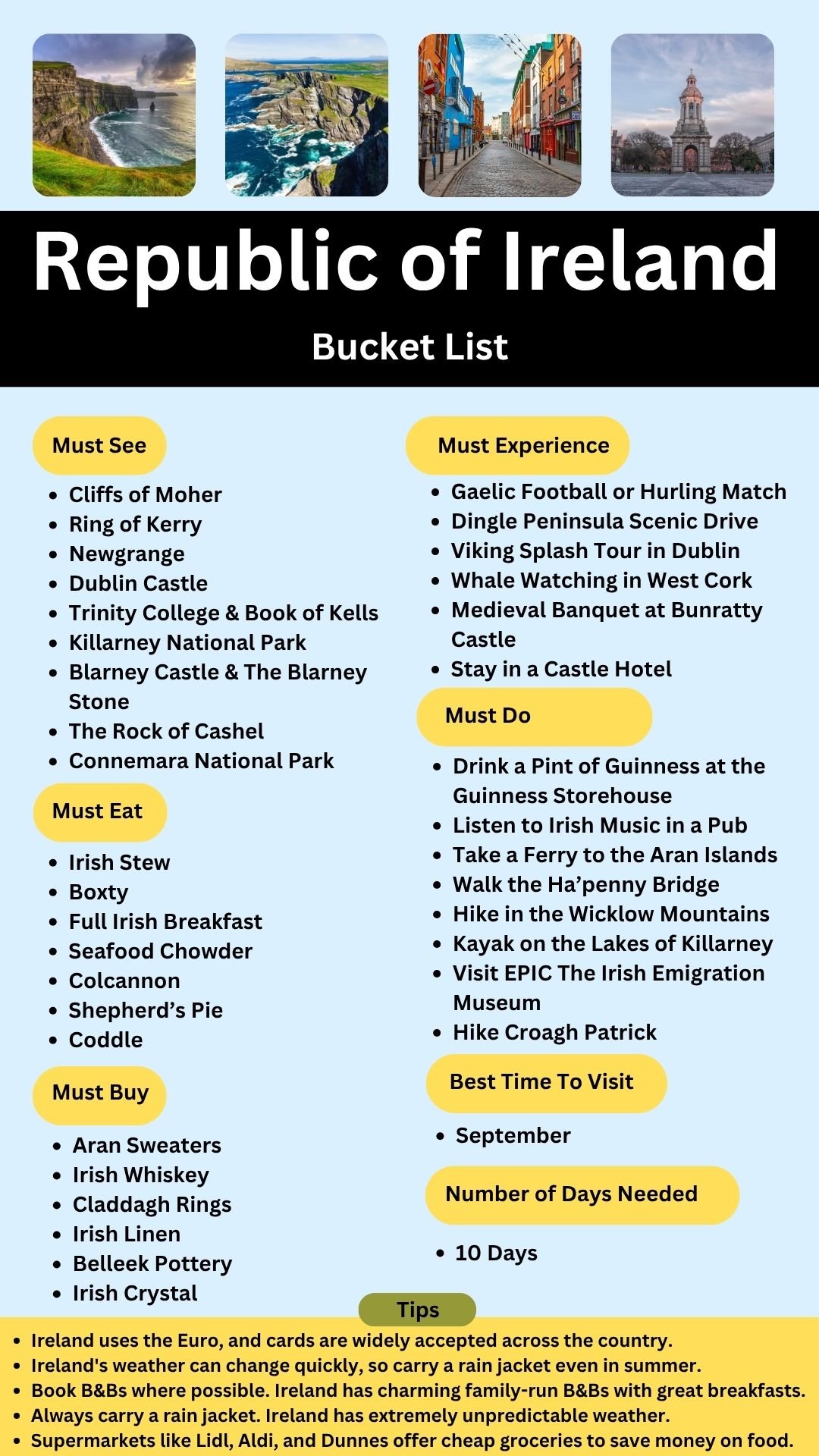
Ireland delivers dramatic coastlines, ancient monuments, and lively pub culture within a single manageable trip. Few countries let travelers stand at sea cliffs older than memory in the morning and dance to traditional music by night. The island’s compact size makes it possible to cover an enormous variety of experiences in just a week or two.
This is a country that rewards curiosity. Prehistoric tombs sit quietly beside medieval castles, and small towns often hold more character than famous cities. Ireland belongs on every traveler’s bucket list because it rarely feels like just another stop on a checklist.
Trip Summary
| Category | Top Recommendation | Best Time | Recommended Duration |
|---|---|---|---|
| Must-See Landmark | Cliffs of Moher | Morning or early evening | Half day |
| Must Experience | Dingle Peninsula scenic drive | Spring through fall | Half to full day |
| Must Do | Guinness Storehouse and pub music | Anytime | 1 evening |
| Local Food | Irish stew or seafood chowder | Lunch or dinner | 1 hour |
| Best Season | September | September | 10 days |
Must-See Landmarks in Ireland
Ireland’s landmarks span thousands of years, from Neolithic tombs to medieval fortresses. Many sit within reach of each other, making road trips between them genuinely rewarding. These sites anchor almost every serious Ireland itinerary.
Places You Shouldn’t Miss
- Cliffs of Moher: These sea cliffs rise 214 meters above the Atlantic along the County Clare coast. Marked walking paths and an eco-friendly visitor center make exploring the area easy for most fitness levels.
- Ring of Kerry: This scenic driving route circles the Iveragh Peninsula for roughly 179 kilometers. Small villages, ancient forts, and coastal viewpoints line the entire loop.
- Newgrange: This prehistoric passage tomb in County Meath dates back around 5,200 years, making it older than Stonehenge and the Great Pyramids of Giza. Its winter solstice alignment still illuminates the inner chamber for 17 minutes each December.
- Dublin Castle: This former seat of British administration now hosts state ceremonies and public tours. Its ornate state apartments reveal centuries of political history in the heart of the capital.
- Trinity College and the Book of Kells: Founded in 1592, Trinity houses this illuminated ninth-century manuscript inside its historic Long Room library. The soaring shelves of ancient books make the room itself worth the visit.
- Killarney National Park: This park protects Ireland’s only native red deer herd alongside ancient oak woodland. Its three connected lakes offer boating, cycling, and walking routes for every energy level.
- Blarney Castle and the Blarney Stone: Visitors climb to the castle’s top to kiss this famous stone, said to grant the gift of eloquence. The surrounding gardens and rock formations reward a slower, unhurried visit.
- Rock of Cashel: This dramatic limestone outcrop in County Tipperary once served as the seat of Munster’s kings. Medieval chapel ruins and a round tower still stand atop the site today.
- Connemara National Park: This rugged park in County Galway features bogland, mountains, and free-roaming Connemara ponies. Diamond Hill offers one of the park’s most rewarding short hikes.
Must-Experience Activities in Ireland
Beyond famous sites, Ireland offers experiences that feel distinctly local. These activities connect travelers to the country’s sporting culture, coastal life, and storytelling traditions. Each one adds texture that photographs alone cannot capture.
Unforgettable Experiences
- A Gaelic football or hurling match: These fast-paced native Irish sports draw passionate local crowds throughout the season. Attending a match offers genuine insight into Irish community life.
- Dingle Peninsula scenic drive: This coastal route passes ancient beehive huts, dramatic cliffs, and Irish-speaking villages. The full loop takes about three hours without stops, longer with photo breaks.
- Viking Splash Tour in Dublin: This amphibious vehicle tour rolls through city streets before splashing into the Grand Canal Dock. It suits families and offers a lighthearted break from traditional walking tours.
- Whale watching in West Cork: Boat tours here spot minke whales, fin whales, and dolphins, especially between summer and late fall. Calm sea days generally offer the best sighting conditions.
- Medieval banquet at Bunratty Castle: This evening event recreates a fifteenth-century feast complete with period costumes and traditional entertainment. Reservations fill up quickly during peak tourist season.
- A night in a castle hotel: Several restored Irish castles now operate as hotels, offering an overnight stay with genuine historic atmosphere. Booking well ahead is wise, since rooms are limited.
Must-Do Activities Across Ireland
Certain activities feel almost mandatory for a first Ireland trip. These range from lively city outings to quiet mountain hikes. Together they capture both the social and natural sides of the country.
Best Outdoor Adventures
- Drink a pint at the Guinness Storehouse: This Dublin attraction traces the brewing process before rewarding visitors with a fresh pint at the rooftop Gravity Bar. The panoramic city view makes the visit worthwhile even for non-drinkers.
- Listen to Irish music in a pub: Traditional sessions happen nightly across the country, especially in Dublin, Galway, and Doolin. Arriving early usually secures a seat close to the musicians.
- Take a ferry to the Aran Islands: These remote islands off Galway preserve Irish-speaking communities and ancient stone forts like Dun Aengus. The ferry ride takes around 40 minutes from Rossaveal.
- Walk the Ha’penny Bridge: This cast-iron pedestrian bridge crosses Dublin’s River Liffey and takes its name from its original toll. It remains one of the city’s most photographed spots, especially after dark.
- Hike in the Wicklow Mountains: This range south of Dublin offers trails through heather-covered hills and past the ancient monastic site of Glendalough. Routes range from easy lakeside walks to demanding mountain climbs.
- Kayak on the Lakes of Killarney: Paddling these three interconnected lakes offers a quieter perspective on the national park’s scenery. Beginners can manage the calmer sections without prior experience.
- Visit EPIC The Irish Emigration Museum: This interactive museum in Dublin tells the story of Irish emigrants who shaped nations worldwide. Digital exhibits make it engaging for travelers of every age.
- Hike Croagh Patrick: This pilgrimage mountain in County Mayo draws thousands of climbers annually, particularly on the last Sunday in July. Sturdy footwear matters, since the upper section is loose scree.
Local Food You Have to Try
Irish cuisine centers on hearty, comforting dishes built from local produce and quality dairy. Traditional pubs remain the most reliable place to find authentic versions. Regional specialties add variety across different parts of the country.
What to Eat
- Irish stew: This slow-cooked dish combines lamb, potatoes, carrots, and onions in a rich broth. Traditional pubs across the country serve some of the most authentic versions.
- Boxty: This traditional potato pancake blends grated and mashed potato before frying. It appears often in the west of Ireland, sometimes filled with meat or vegetables.
- Full Irish breakfast: This hearty plate includes eggs, sausage, bacon, black pudding, and grilled tomato. Guesthouses and B&Bs typically serve generous portions to fuel a full day of sightseeing.
- Seafood chowder: This creamy soup features a mix of local fish and shellfish. Coastal towns like Howth, Galway, and Dingle tend to serve the freshest versions.
- Colcannon: This comforting side dish mixes mashed potatoes with cabbage or kale and butter. It appears frequently on traditional pub menus, especially in colder months.
- Shepherd’s pie: This baked dish layers minced lamb and vegetables beneath a mashed potato topping. Nearly every traditional pub kitchen offers its own version.
- Coddle: This Dublin specialty simmers sausages, bacon, potatoes, and onions together into a hearty stew. It remains a beloved comfort food particularly associated with the capital.
Souvenirs and Local Shopping
Ireland’s craft traditions run deep, producing goods that make meaningful souvenirs rather than generic trinkets. Many of these items connect directly to regional history and materials. Shopping for them also supports smaller, local producers.
What to Buy
- Aran sweaters: These thick wool sweaters originated on the Aran Islands, where distinctive stitch patterns once identified individual fishing families. Authentic versions are handknit and widely sold in Galway and along the west coast.
- Irish whiskey: Ireland’s whiskey tradition dates back centuries, with distilleries across the country offering tastings and tours. Bottles from smaller craft distilleries make distinctive gifts beyond the major national brands.
- Claddagh rings: This traditional ring design, featuring hands holding a crowned heart, originated in the Claddagh fishing village near Galway. The direction worn traditionally signals relationship status.
- Irish linen: Ireland has produced high-quality linen for centuries, prized for its durability and texture. Tablecloths, napkins, and clothing made from it remain popular practical souvenirs.
- Belleek pottery: This delicate, cream-colored porcelain originates from a small County Fermanagh workshop founded in 1857. Its intricate basketweave patterns are sold in shops throughout Ireland.
- Irish crystal: Waterford and other Irish crystal makers produce heavily cut glassware known for its weight and clarity. Pieces range from small ornaments to full crystal stemware sets.
Best Time to Visit Ireland
Ireland’s weather stays mild year-round but changes quickly regardless of season. Late summer and early fall often bring the best balance of decent weather and manageable crowds. Timing a visit around specific festivals or events can shape the whole experience.
Seasonal Highlights
- September: This month offers comfortable temperatures, fewer crowds than peak summer, and lower accommodation prices. Many travelers consider it the sweet spot for a first Ireland trip.
- June through August: Summer brings the longest daylight hours and the fullest festival calendar. Expect higher prices and busier attractions during this stretch.
- March: St. Patrick’s Day transforms cities and towns with parades and celebrations. Booking well in advance is essential around this date.
- Winter months: December through February bring shorter days and a higher chance of rain. Fewer tourists during this period means quieter attractions and better hotel rates.
Planning Your Trip Length
Ten days gives most first-time visitors enough time to combine Dublin, the west coast, and the south without constant rushing. This length allows for driving between regions while still spending real time in each place rather than just passing through. Shorter trips of five to seven days work better focused on one region, such as Dublin and the east or the west coast alone.
Travelers with two weeks or more can add remote areas like Donegal or the far reaches of the Ring of Kerry. Building in flexible days also helps absorb Ireland’s unpredictable weather without losing planned activities entirely.
Essential Travel Tips for Ireland
A little preparation goes a long way when traveling around Ireland. Currency, weather, and accommodation choices all affect how smoothly a trip runs. These practical details help avoid common first-time visitor mistakes.
Essential Travel Tips
- Currency and payments: Ireland uses the euro, and cards are widely accepted across shops, restaurants, and hotels. Carrying some cash still helps for smaller rural businesses and parking meters.
- Pack for unpredictable weather: Ireland’s weather can shift from sun to rain within the same afternoon, even in summer. A packable rain jacket is essential regardless of the season.
- Book bed and breakfasts where possible: Ireland’s family-run B&Bs often provide warm hospitality and generous breakfasts. Booking ahead during peak season secures the best-reviewed options.
- Always carry rain protection: This point deserves repeating, since unexpected showers are a near-daily possibility in most regions. A compact umbrella or waterproof layer prevents a soaked afternoon from ruining plans.
- Shop at local supermarkets for savings: Chains like Lidl, Aldi, and Dunnes Stores offer affordable groceries throughout the country. Stocking up on snacks and drinks here helps stretch a travel budget further.
Building Your Own Ireland Itinerary
Ireland offers enough variety to fill a lifetime of return visits, let alone a single trip. Mixing famous landmarks with quieter local experiences almost always produces the most memorable journey. There is no single correct route through the country, only the one that matches your own interests.
Use this bucket list as a flexible starting point rather than a fixed schedule. Choose the sights, food, and activities that genuinely appeal to you, and let Ireland’s changeable skies and warm welcomes shape the rest.