
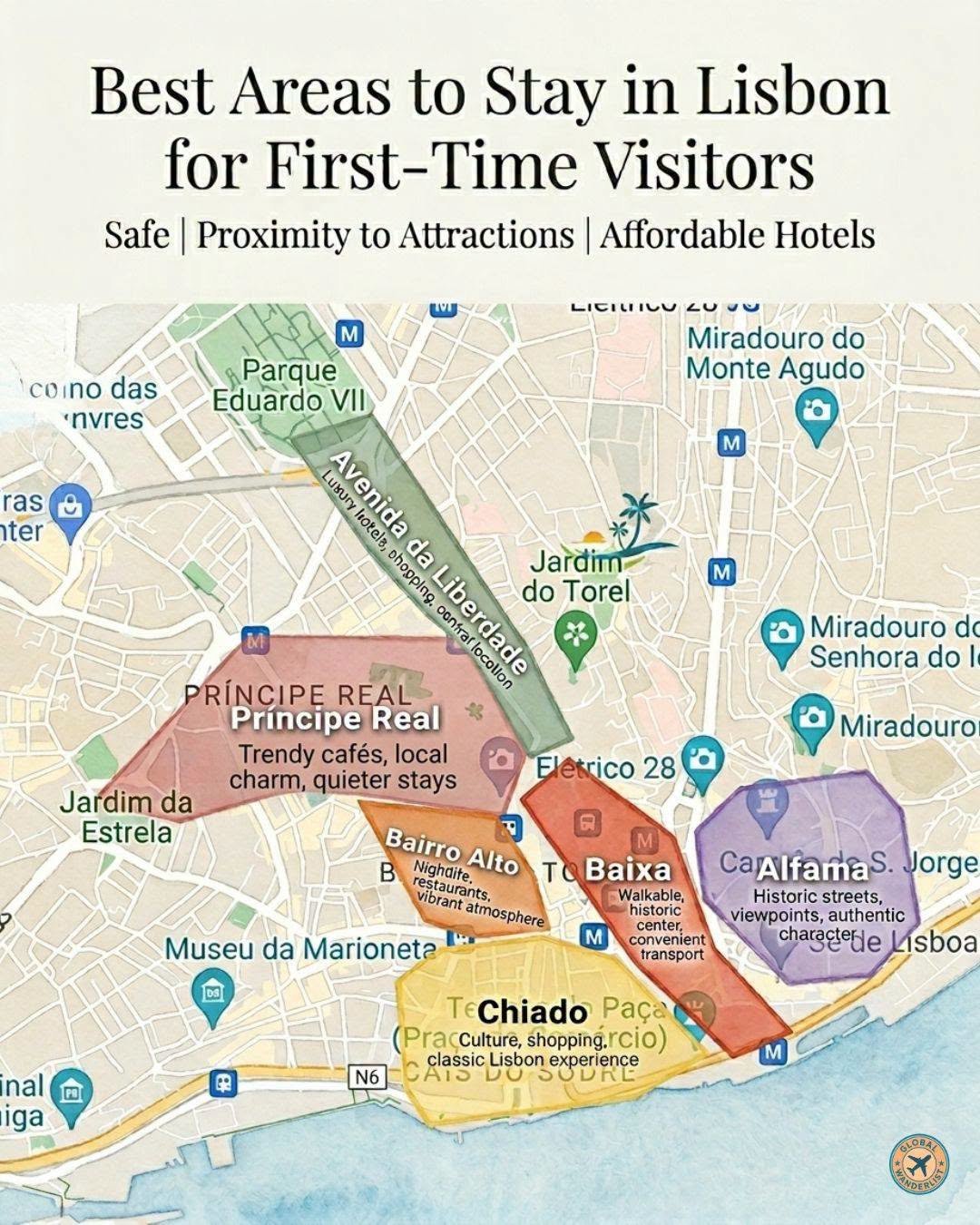
Choosing where to stay in Lisbon can make or break your trip. The city is built across seven hills, and each neighborhood has its own rhythm, character, and access to attractions. Pick the wrong one, and you might spend your vacation climbing stairs to reach anything interesting.
Lisbon rewards visitors who stay somewhere walkable and central. The historic core is compact, but steep, so proximity matters more here than in flatter cities. Public transportation helps, yet nothing beats stepping outside your hotel into the action.
This guide breaks down six of Lisbon’s best neighborhoods for first-time visitors. Each one suits a different kind of traveler, from quiet luxury seekers to nightlife lovers. Read on to find the area that matches your travel style and budget.
Neighborhood Overview
-$-$
| Neighborhood | Best For | Average Budget | Nearby Attractions | Atmosphere |
|---|---|---|---|---|
| Avenida da Liberdade | Luxury travelers, shoppers | $$$$ | Marques de Pombal, Eduardo VII Park | Upscale, polished |
| Príncipe Real | Trendy travelers, couples | $$$ | Jardim da Estrela, Botanical Garden | Chic, relaxed |
| Bairro Alto | Nightlife lovers, young travelers | $$ | Miradouro de Santa Catarina | Lively, bohemian |
| Baixa | First-time visitors, convenience seekers | Praca do Comercio, Rossio Square | Walkable, central | |
| Alfama | History lovers, romantics | Sao Jorge Castle, Lisbon Cathedral | Historic, authentic | |
| Chiado | Culture and shopping fans | $$$ | Carmo Convent, Bertrand Bookstore | Elegant, classic |
Avenida da Liberdade
Avenida da Liberdade is Lisbon’s grand boulevard, lined with luxury hotels and high-end shopping. This tree-shaded avenue connects Restauradores Square to Marques de Pombal and Eduardo VII Park. It suits travelers who want a central location without sacrificing polish or comfort.
The avenue itself feels more European capital than Iberian old town. Wide sidewalks, designer boutiques, and grand facades set a formal tone. It works especially well for business travelers or anyone celebrating a special occasion.
What to Do in Avenida da Liberdade
- Stroll the full length of the avenue, admiring its Belle Epoque buildings and rotating outdoor art installations.
- Browse flagship stores from brands like Louis Vuitton and Gucci, alongside a few independent Portuguese designers.
- Walk up to Eduardo VII Park for sweeping views back down toward the river.
- Visit Jardim do Torel, a small hillside garden with a quiet pool and city views, just a short detour off the avenue.
- Take the funicular or walk up to Miradouro de Sao Pedro de Alcantara for one of the city’s best sunset viewpoints.
- Explore the nearby Restauradores Square, home to historic theaters and grand cafes.
Where to Eat in Avenida da Liberdade
- Casa do Alentejo – Traditional Portuguese cuisine in a Moorish-style palace – $
- Cervejaria Liberdade – Upscale Portuguese seafood and beer hall classics – $$$$
- 2Monkeys – Michelin-starred tasting menus with theatrical presentation – $$$$
- JNcQUOI Avenida – Sophisticated Portuguese and international dishes – $$$
Príncipe Real
Príncipe Real sits just uphill from Avenida da Liberdade, known for its 19th-century mansions and concept stores. It has become one of Lisbon’s trendiest neighborhoods, popular with design lovers and creative professionals. This area suits travelers who want charm without full-on tourist crowds.
The neighborhood centers on Jardim do Príncipe Real, a leafy square shaded by a massive century-old cedar tree. Around it, quiet streets hold boutique shops, wine bars, and some of the city’s best new restaurants. It feels local, stylish, and noticeably calmer than the historic core below.
What to Do in Príncipe Real
- Relax under the giant cedar tree in Jardim do Príncipe Real, especially during the antiques market on the second Saturday of each month.
- Browse Embaixada, a concept store inside a restored neo-Moorish palace, for Portuguese fashion and design.
- Visit the Lisbon Botanical Garden, a peaceful escape with towering tropical plants just steps from the square.
- Wander the surrounding streets for independent boutiques, vintage shops, and cozy wine bars.
- Head downhill toward Jardim da Estrela for a quieter, more residential park experience.
- Catch sunset drinks on a rooftop bar, since several of the neighborhood’s best terraces face west toward the river.
Where to Eat in Príncipe Real
- Pica-Pau – Traditional Portuguese comfort food with a modern twist – $$
- Cerveteca – Portuguese craft beer bar with a strong small-plates menu – $
- Loucos de Lisboa – Speakeasy-style petiscos and natural wines – $$
- Café Príncipe Real – Portuguese and Mediterranean dishes on a lively terrace – $$
Bairro Alto
Bairro Alto is Lisbon’s nightlife headquarters, a hillside grid of narrow streets that transforms after dark. By day, it feels quiet, almost residential, with small shops and family-run tascas. By night, bars spill onto the sidewalks, and the whole neighborhood turns into an open-air party.
This area suits younger travelers and anyone prioritizing nightlife over peace and quiet. Expect noise well into the early morning hours, especially on weekends. It works best for short stays rather than travelers craving a restful night’s sleep every night.
What to Do in Bairro Alto
- Bar hop through the neighborhood’s dense cluster of small, characterful bars, each with its own crowd and playlist.
- Visit Miradouro de Santa Catarina for river views and a lively, informal crowd gathering for sunset.
- Browse Rua do Norte and Rua da Rosa for independent record shops and vintage clothing stores.
- Ride the Elevador da Bica, a charming yellow funicular connecting the hilltop to the riverside neighborhood below.
- Explore by day when the streets are calm, revealing colorful tiled facades and quiet courtyards.
- Catch a live fado performance at one of the neighborhood’s traditional, intimate music venues.
Where to Eat in Bairro Alto
- Taberna da Rua das Flores – Portuguese petiscos in a rustic, historic setting – $$
- Kaffeehaus – Austrian-style cafe with hearty central European dishes – $
- La Paparrucha – Steak-focused Argentine grill with Portuguese touches – $$$$
- Landeau Chocolate – Famous for its rich, dense chocolate cake – $
Baixa
Baixa is Lisbon’s downtown core, rebuilt on a strict grid after the devastating 1755 earthquake. It sits at low elevation between the hills of Alfama and Chiado, right along the Tagus River. This makes it the most walkable and centrally located area in the entire city.
Wide pedestrian streets, grand plazas, and easy metro access define Baixa’s appeal. Praca do Comercio opens dramatically onto the riverfront, while Rossio Square buzzes with cafes and street performers. It suits first-time visitors who want everything within easy reach.
What to Do in Baixa
- Walk down Rua Augusta, the pedestrian shopping street, through its triumphal arch toward the river.
- Stand in Praca do Comercio, one of Europe’s grandest riverside squares, framed by yellow arcaded buildings.
- Ride the historic Santa Justa Lift for panoramic views over the rooftops toward Sao Jorge Castle.
- Explore Rossio Square, with its wave-patterned pavement and the ornate Dona Maria II National Theatre.
- Take a ride on the iconic Tram 28, which winds through Baixa on its way toward Alfama and Graca.
- Visit the Lisbon Story Centre for a quick, engaging introduction to the city’s earthquake history and rebuilding.
Where to Eat in Baixa
- Bastardo – Playful, contemporary Portuguese cuisine in a bright dining room – $$$
- Casa das Bifanas – Beloved spot for classic bifana pork sandwiches – $
- Delfina – Small plates and creamy bacalhau in a boutique hotel setting – $$
- Time Out Market Lisboa – Food hall featuring dozens of the city’s top chefs and stalls – $$
Alfama
Alfama is Lisbon’s oldest neighborhood, a maze of narrow lanes that survived the 1755 earthquake largely intact. Steep, winding streets climb past tiled facades, hidden courtyards, and laundry strung between balconies. It feels like stepping into a different century.
This area suits history lovers and romantics who don’t mind a workout on the hills. Fado music, the city’s soulful traditional genre, was born here and still echoes from small taverns at night. Alfama rewards slow wandering more than any other Lisbon neighborhood.
What to Do in Alfama
- Climb to Sao Jorge Castle for commanding views over the city’s rooftops and the river beyond.
- Wander without a map, since Alfama’s charm lies in getting pleasantly lost among its stepped alleys.
- Visit the Lisbon Cathedral, the city’s oldest church, dating back to the 12th century.
- Stop by the Museu do Fado to learn the history behind Portugal’s melancholic musical tradition.
- Catch sunset from Miradouro das Portas do Sol, one of the city’s most photographed viewpoints.
- Ride Tram 28 through the neighborhood’s tightest curves for a classic, if crowded, Lisbon experience.
Where to Eat in Alfama
- Prado – Farm-to-table casual dining with Michelin-level execution – $$$
- Restaurante Farol de Santa Luzia – Well-known spot for classic Portuguese seafood – $$
- Audrey’s – Relaxed brunch spot with a lovely outdoor terrace – $$
- Palacete Chafariz D’el Rei – Elegant tearoom inside a converted palace – $$
Chiado
Chiado sits just above Baixa, a refined neighborhood built after a 19th-century fire reshaped its streets. It blends art nouveau architecture with high-end shopping and some of Lisbon’s most celebrated restaurants. This is the neighborhood for travelers who want culture, history, and comfort together.
Historically the meeting point for writers and intellectuals, Chiado still has a literary, artistic feel. Bookshops, theaters, and museums sit alongside designer boutiques and grand old cafes. It suits travelers who want a classic, elegant Lisbon experience close to everything.
What to Do in Chiado
- Visit the ruins of Carmo Convent, left roofless since the 1755 earthquake, now home to an evocative archaeological museum.
- Browse Bertrand Bookstore, recognized as the oldest operating bookshop in the world.
- People-watch at A Brasileira, a historic art deco cafe famous since 1905.
- Shop along Rua Garrett, Chiado’s main pedestrian street, for both international and Portuguese fashion brands.
- Catch a performance at the Sao Carlos National Theatre, Lisbon’s grand opera house.
- Walk down toward Cais do Sodre for river views and access to the lively Pink Street nightlife strip.
Where to Eat in Chiado
- Belcanto – Two-Michelin-starred Portuguese fine dining by chef Jose Avillez – $$$$
- Cantinho do Avillez – Approachable Portuguese cuisine with international touches – $$$
- Taberna da Rua das Flores – Cozy petiscos spot in a former palace building – $$
- A Brasileira – Historic cafe serving coffee, pastries, and light seafood dishes – $
Final Thoughts
Lisbon offers something different depending on where you rest your head at night. Avenida da Liberdade suits travelers chasing polish and easy shopping access. Príncipe Real works well for couples wanting charm without the busiest crowds.
Bairro Alto fits nightlife-focused younger travelers who can handle noise until late. Baixa remains the safest bet for first-timers who want walkability above all else. Alfama rewards patient explorers drawn to history and authentic atmosphere, while Chiado balances culture, shopping, and comfort in one elegant package.
Whichever neighborhood you choose, Lisbon’s compact size means you are never far from the next one. Base yourself according to your travel style, then let the whole city unfold on foot.