
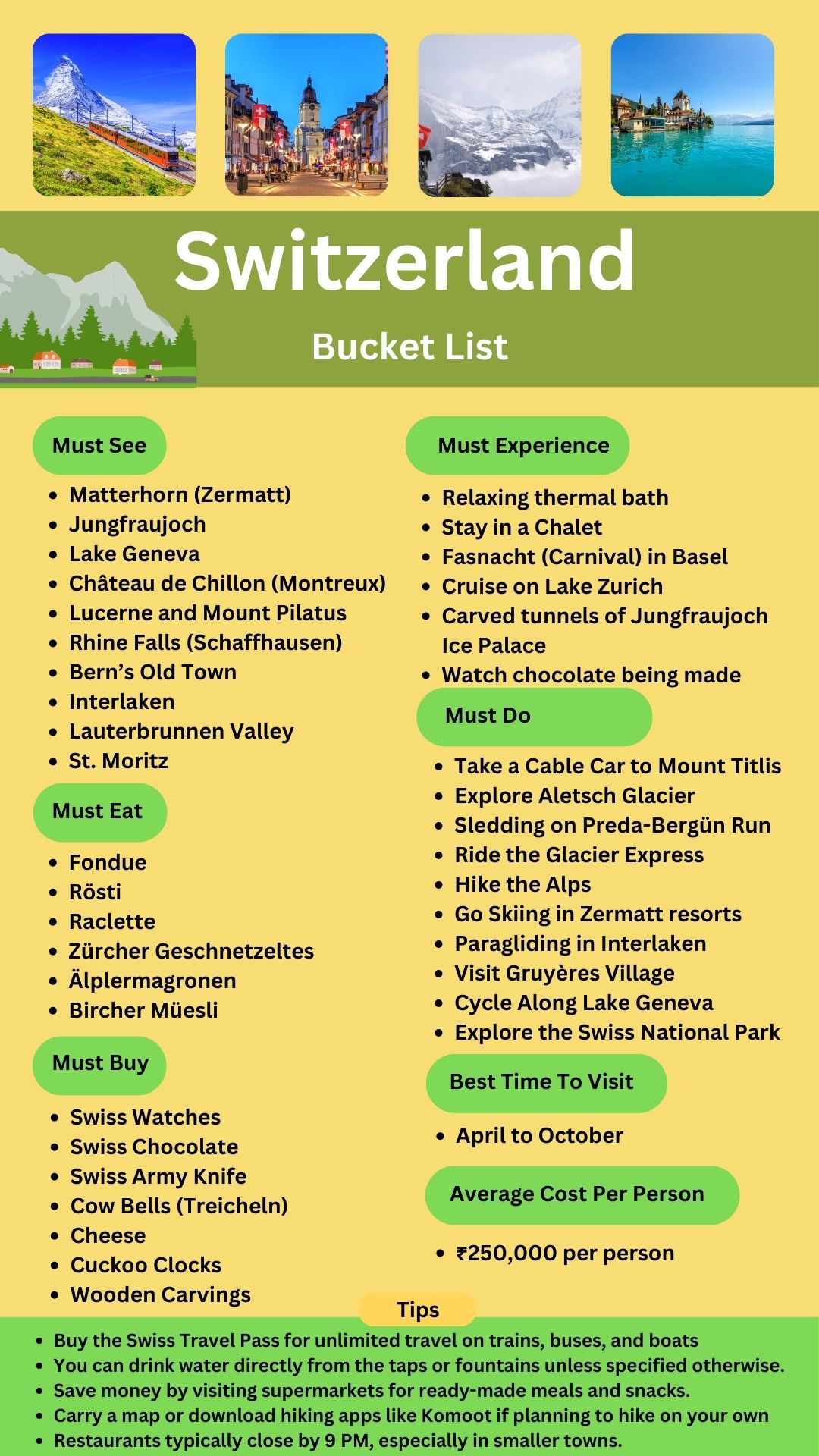
Switzerland feels like a postcard come to life. Snow capped peaks rise above turquoise lakes, and cobblestone old towns sit within reach of glaciers. Add in world class trains, rich chocolate, and cozy alpine villages, and it is easy to see why this country tops so many travel lists.
This guide covers the top places to visit, food to try, experiences to book, and tips to help your trip run smoothly. Whether you have a week or a full month, use this as your planning foundation.
Iconic Landmarks and Alpine Scenery
Switzerland’s most famous sights range from towering peaks to storybook lakeside towns. Many sit within a few hours of each other by train.
The Matterhorn in Zermatt is one of the most photographed mountains in the world. Its pyramid shaped peak dominates the skyline above the car free village. Zermatt itself makes a great base for both sightseeing and skiing.
Jungfraujoch, often called the Top of Europe, sits at over 11,000 feet. A scenic railway carries visitors through tunnels carved directly into the mountain. Panoramic views of the Aletsch Glacier await at the top.
Lake Geneva stretches along the border between Switzerland and France. Vineyards and charming towns line much of its shore. A lakeside walk or boat ride offers some of the country’s calmest scenery.
Château de Chillon near Montreux is one of Switzerland’s most visited castles. It sits dramatically on a rocky island at the edge of Lake Geneva. Its medieval halls and dungeons draw history lovers year round.
Lucerne and Mount Pilatus pair a beautiful old town with dramatic mountain views. Lucerne’s wooden Chapel Bridge is one of the most photographed spots in the country. A cogwheel railway carries visitors up Pilatus for sweeping alpine views.
Rhine Falls near Schaffhausen is the largest waterfall in Europe by volume. Boat tours let visitors get close to the thundering water. A viewing platform near the falls offers a dramatic vantage point too.
Bern’s Old Town is a UNESCO World Heritage site packed with medieval architecture. Arcaded streets and a famous clock tower define the city center. The Aare River loops around much of the old town, and locals swim in it during summer.
Interlaken sits between two lakes and serves as a gateway to the Bernese Alps. It is a popular base for adventure sports and mountain excursions. Its central location makes day trips to Jungfraujoch and Lauterbrunnen easy.
Lauterbrunnen Valley is famous for its dramatic cliffs and waterfalls. Staubbach Falls drops directly into the valley near the village center. It is considered one of the most scenic valleys in the entire Alps.
St. Moritz combines luxury resort culture with high alpine scenery. This upscale town has hosted the Winter Olympics twice. Its lake and surrounding peaks draw both skiers and summer hikers.
Insider Tips for Visiting Major Landmarks
- Book Jungfraujoch train tickets in advance during peak season, since capacity is limited daily. Morning departures usually offer clearer mountain visibility.
- Visit the Matterhorn viewpoints early in the day, before clouds typically roll in during early afternoon. Gornergrat offers one of the best unobstructed views.
- Walk across Lucerne’s Chapel Bridge in the early morning to avoid tour bus crowds. Photos taken then also benefit from softer light on the water.
- Combine a Rhine Falls visit with a stop in nearby Schaffhausen’s old town. It rounds out a half day trip nicely.
Unforgettable Experiences Across the Country
Switzerland offers plenty of experiences that go beyond simple sightseeing. These moments help travelers connect more directly with local culture and daily life.
A relaxing thermal bath is a popular way to unwind after a day of sightseeing or hiking. Several regions across Switzerland have natural or heated mineral baths. Many spas combine indoor and outdoor pools with mountain views.
Staying in a chalet gives visitors a taste of traditional alpine living. Wooden interiors, cozy fireplaces, and mountain views define the classic chalet experience. Many chalets are available for short term rental in ski towns.
Fasnacht, the carnival celebration in Basel, is one of Switzerland’s most colorful traditions. Masked parades and drum processions fill the streets for several days each year. It typically takes place in late winter, timed with the Christian calendar.
A cruise on Lake Zurich offers a relaxed way to see the city from the water. Boats depart regularly from the city center. Sunset cruises are especially popular during summer months.
The carved tunnels of the Jungfraujoch Ice Palace sit beneath the glacier itself. Visitors walk through chambers carved directly into the ice. Sculptures throughout the palace add an artistic touch to the icy setting.
Watching chocolate being made is a favorite activity for visitors of all ages. Several chocolate factories and museums offer live demonstrations. Many tours end with generous tasting sessions.
Hidden Gems Beyond the Usual Tourist Trail
- Look for smaller, local thermal baths outside the major resort towns. These often feel more relaxed and less crowded than famous spa destinations.
- Book a chalet stay in a smaller village rather than a major ski resort. It usually costs less and offers a quieter, more authentic experience.
- Ask locals about smaller regional carnival events if Basel’s Fasnacht dates do not align with your trip. Similar celebrations happen in other Swiss towns.
- Visit a family run chocolate workshop instead of the largest commercial factories. These smaller operations often provide a more personal, hands on experience.
Adventure Activities for Thrill Seekers
Switzerland’s mountains and valleys make it a natural destination for adventure travel. Activities here range from gentle scenic rides to serious alpine challenges.
Taking a cable car to Mount Titlis brings visitors to a glacier accessible year round. A rotating cable car offers 360 degree views during the ascent. A glacier cave and suspension bridge add extra highlights at the summit.
Exploring the Aletsch Glacier lets visitors walk alongside the largest glacier in the Alps. Marked trails offer safe access to viewpoints along its edge. Guided glacier walks are available for those wanting to explore further.
Sledding on the Preda-Bergün run is one of the longest sled runs in the country. The route follows a scenic mountain path through forest and open terrain. Sleds can be rented locally, and the nearby train makes return trips easy.
Riding the Glacier Express connects Zermatt and St. Moritz through some of the most dramatic alpine scenery in Europe. The full journey takes about eight hours. Panoramic windows make it one of the best ways to see the Alps without hiking.
Hiking the Alps offers something for every fitness level, from gentle valley walks to demanding mountain routes. Trail networks are extensive and well marked throughout the country. Many trails connect directly to mountain huts for overnight stays.
Going skiing in Zermatt resorts appeals to both beginners and experienced skiers. The resort offers year round skiing on higher glacier terrain. Views of the Matterhorn make the slopes here especially memorable.
Paragliding in Interlaken combines adrenaline with sweeping views over the surrounding lakes and mountains. Tandem flights require no prior experience. Most flights launch from nearby peaks and land close to the town center.
Visiting Gruyères Village pairs adventure travel with cultural charm. This medieval hilltop town is famous for its cheese production. A cheese factory tour here rounds out a day of alpine activities nicely.
Cycling along Lake Geneva offers a relaxed way to explore vineyards and lakeside towns. Dedicated bike paths run along much of the shoreline. Bike rentals are widely available in towns like Lausanne and Montreux.
Exploring the Swiss National Park gives visitors a look at protected alpine wilderness. Strict conservation rules keep the park largely untouched by development. Marked trails allow hiking without disturbing native wildlife.
Planning Tips for Adventure Activities
- Book the Glacier Express well in advance during peak summer months. Panoramic window seats sell out quickly on popular departure dates.
- Reserve Zermatt ski passes online ahead of your trip during winter high season. This often saves time compared to buying in person.
- Pack proper gear for glacier walks near Aletsch, including sturdy boots and layered clothing. Weather conditions can change quickly at higher elevations.
- Check paragliding weather conditions the morning of your flight in Interlaken. Flights are often rescheduled due to wind or visibility issues.
A Food Lover’s Guide to Swiss Cuisine
Swiss food reflects the country’s regional diversity, blending French, German, and Italian influences.
Fondue is Switzerland’s most iconic dish. Melted cheese, often a blend of Gruyère and Emmental, gets served with bread for dipping. Communal fondue pots make it a social, shared dining experience.
Rösti is a crispy, pan fried potato dish popular across the country. It resembles a large hash brown and often accompanies main courses. Regional variations sometimes add cheese, bacon, or onions.
Raclette involves melting cheese and scraping it directly onto potatoes and pickles. Traditional raclette grills let diners melt their own portions at the table. It is especially popular during colder months.
Zürcher Geschnetzeltes is a creamy veal dish from the Zurich region. Thin strips of veal cook in a white wine and cream sauce. It is almost always served alongside rösti.
Älplermagronen combines pasta, potatoes, cheese, and cream into a hearty alpine dish. Caramelized onions and apple sauce often accompany it as toppings. It reflects the simple, filling meals traditionally eaten by mountain farmers.
Bircher müesli is a Swiss breakfast classic made of oats, fruit, and yogurt or milk. It was originally developed as a healthy dish for patients in a Swiss clinic. Today it appears on breakfast menus throughout the country.
Local Etiquette Around Food and Dining
- Share fondue pots communally rather than requesting individual servings. Dropping bread into the pot is part of the traditional social experience.
- Avoid rushing through meals, since Swiss dining culture values a relaxed pace. Multi-course meals are common, especially in the evening.
- Note that restaurants typically close by 9 p.m., especially in smaller towns. Plan dinner reservations earlier than you might in larger international cities.
- Tip modestly, since service charges are often already included in the bill. Rounding up the total is common practice rather than a large percentage tip.
Souvenirs and Shopping Worth Your Suitcase Space
Shopping in Switzerland offers a chance to bring home precise craftsmanship and rich local flavors.
Swiss watches represent some of the finest timepiece craftsmanship in the world. Brands range from accessible everyday watches to high end luxury pieces. Buying from an authorized retailer ensures authenticity and warranty coverage.
Swiss chocolate is famous worldwide for its smooth, high quality texture. Many chocolatiers offer both classic and creative flavor combinations. Buying directly from a chocolatier often means fresher, higher quality bars than supermarket options.
A Swiss Army knife is a practical and iconic souvenir. These multi tool knives combine various functions into a compact design. Engraving services are often available at specialty shops for a personalized touch.
Cow bells, known locally as treicheln, are a traditional alpine souvenir. Farmers historically used them to track livestock in mountain pastures. Decorative versions make popular wall hangings or keepsakes.
Cheese makes a flavorful, practical gift for food lovers back home. Gruyère and Emmental are among the most famous Swiss varieties. Vacuum sealed packaging helps cheese travel well internationally.
Cuckoo clocks are often associated with Switzerland, though they actually originate from Germany’s Black Forest region. Many Swiss shops still sell them as classic European souvenirs. Look for detailed, handcrafted versions rather than mass produced imports.
Wooden carvings reflect traditional alpine craftsmanship found throughout mountain villages. Common items include figurines, bowls, and decorative wall pieces. Buying from local artisans supports small scale, traditional woodworking.
Budget Tips for Shopping Smart
- Compare prices at a few watch retailers before making a larger purchase. Prices can vary noticeably between shops in tourist heavy areas and quieter towns.
- Buy chocolate at supermarkets for everyday treats and save chocolatier purchases for special gifts. This balances cost with quality for different needs.
- Look for cheese and local products at regional markets rather than airport shops. Prices at the airport tend to run significantly higher.
- Save money by visiting supermarkets for ready-made meals and snacks. This helps offset the higher cost of restaurant dining throughout your trip.
When to Go and How Much to Budget
Timing your Switzerland trip well can make a real difference in weather, crowds, and cost.
The best time to visit overall runs from April to October. This period offers milder weather and better access to hiking trails and mountain passes. Winter months suit travelers focused specifically on skiing and snow sports.
Average costs run around 250,000 rupees per person for a full trip, though this varies with travel style. Budget travelers can reduce costs significantly by using supermarkets and public transport passes. Those seeking luxury resorts and private tours should budget considerably more.
Seasonal Advice for First-Time Visitors
- Visit in late spring or early autumn for pleasant hiking weather and thinner crowds. Trails and mountain passes are usually open and less crowded during these shoulder seasons.
- Plan a winter trip if skiing is your main priority, since resorts operate at full capacity then. Zermatt and St. Moritz both offer reliable snow conditions.
- Book accommodations early if traveling during peak summer months. July and August bring the largest crowds to popular lake and mountain towns.
- Pack layers regardless of season, since alpine weather can shift quickly at higher elevations.
Practical Tips Every Traveler Should Know
A few practical habits will make your Switzerland trip smoother from the moment you arrive.
Buy the Swiss Travel Pass for unlimited travel on trains, buses, and boats. It often saves money compared to buying individual tickets, especially for longer trips. The pass also includes discounts on some mountain railways.
You can drink water directly from taps or public fountains unless specified otherwise. Switzerland has some of the cleanest tap water in the world. Carrying a reusable bottle helps you stay hydrated without buying bottled water constantly.
Carry a map or download hiking apps like Komoot if planning to hike on your own. Trail signage is generally excellent, but apps add an extra layer of confidence. Offline maps are especially useful in areas with limited cell service.
Common Mistakes First-Timers Make
- Underestimating how expensive dining out can be throughout the country. Mixing restaurant meals with supermarket options helps manage overall costs.
- Assuming restaurants stay open late, especially in smaller towns. Many kitchens close by 9 p.m., so plan dinner reservations accordingly.
- Skipping the Swiss Travel Pass and paying for individual train tickets instead. This often costs more for travelers visiting multiple regions.
- Packing only summer clothing for a trip that includes mountain excursions. Even warm months bring cool temperatures at higher elevations.
Final Thoughts on Planning Your Switzerland Adventure
Switzerland delivers a rare mix of dramatic mountain scenery, rich culinary tradition, and effortless travel logistics. Glaciers, lakes, and storybook old towns all sit within reach of each other on a well connected train network. Few countries offer this much natural beauty in such an accessible package.
Whether you come for the peaks above Zermatt, a fondue dinner in the Alps, or a scenic ride on the Glacier Express, Switzerland leaves a lasting impression. Start planning early, pack for changing mountain weather, and get ready for one of Europe’s most rewarding trips.