
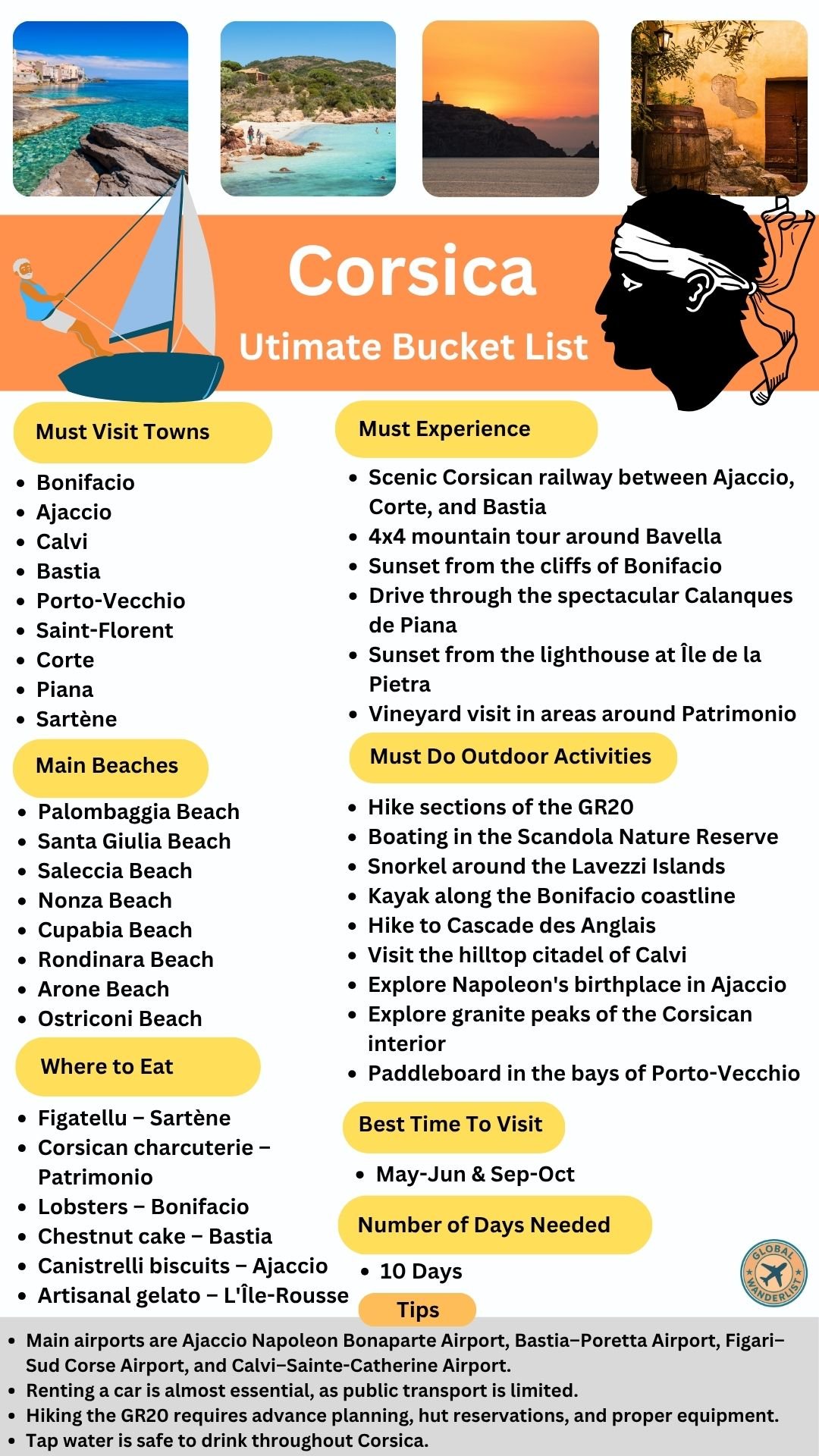
Corsica rises dramatically from the Mediterranean, combining alpine peaks with some of Europe’s clearest water. Locals call it the Island of Beauty, and it earns that name at nearly every turn. Granite cliffs meet turquoise coves, medieval citadels overlook fishing harbors, and mountain villages sit just an hour from powder white beaches.
This guide covers the top towns, beaches, experiences, activities, food, and travel tips to help you plan an unforgettable Corsica trip. Whether you have a long weekend or a full ten days, use this as your starting point.
| Category | Top Recommendation | Best Time | Recommended Duration |
|---|---|---|---|
| Towns | Bonifacio | May to October | 1-2 days |
| Beaches | Palombaggia Beach | June to September | Half day |
| Experiences | Scenic railway between Ajaccio and Bastia | Year round | Full day |
| Outdoor Activities | Hiking the GR20 | June to September | Multi-day to full trek |
| Local Food | Figatellu in Sartène | Year round | One meal |
| Overall Trip | Full island exploration | May-June & Sep-Oct | 10 days |
Must Visit Towns
Corsica’s towns each carry their own distinct character, shaped by centuries of Genoese, French, and Mediterranean influence. From clifftop citadels to mountain villages, these destinations anchor any island itinerary.
Places You Shouldn’t Miss
- Bonifacio sits dramatically atop limestone cliffs on Corsica’s southern tip. Its medieval citadel overlooks the sea from nearly 200 feet up, and boat tours below the cliffs reveal the town’s full scale. Plan at least a full day to explore both the old town and the harbor.
- Ajaccio, Corsica’s capital, holds deep ties to Napoleon Bonaparte, who was born here in 1769. His childhood home operates as a museum open to visitors year round. The city’s palm lined waterfront and lively markets make it an easy, walkable base for a day or two.
- Calvi combines a striking hilltop citadel with some of the island’s best beaches just below. Its marina buzzes with activity in the evenings, especially during summer months. The citadel itself offers sweeping views over the Gulf of Calvi.
- Bastia serves as Corsica’s main gateway from mainland France and Italy, with a lively old port and Baroque churches. It feels less polished than some southern towns, giving it a more authentic, working port city atmosphere.
- Porto-Vecchio blends a historic upper town with some of the island’s most glamorous beach clubs nearby. It makes an excellent base for exploring southern Corsica’s beaches, including Palombaggia and Santa Giulia.
- Saint-Florent offers a quieter, more relaxed alternative to the busier southern resorts. Its Genoese citadel and calm gulf waters attract sailors and travelers seeking a slower pace.
- Corte sits inland, surrounded by Corsica’s mountainous interior. This former capital carries a strong sense of Corsican identity and serves as a gateway to hiking trails in the island’s rugged center.
- Piana anchors the dramatic Calanques de Piana, a series of red granite formations plunging into the sea. The village itself is small, but its surrounding scenery ranks among the most photographed on the island.
- Sartène has been described by writers as one of the most authentically Corsican towns, with tightly packed stone buildings and steep, narrow streets. It also serves as a launching point for trying some of the island’s best charcuterie.
Main Beaches
Corsica’s coastline stretches for hundreds of miles, offering everything from wide sandy stretches to hidden rocky coves. Water clarity here rivals the best beaches in the Mediterranean.
Best Beaches to Visit
- Palombaggia Beach near Porto-Vecchio is often ranked among Europe’s most beautiful beaches. Pink tinted sand and pine trees frame turquoise water, making it a popular spot for both relaxing and photography. Arrive early during summer to secure a good spot, since it draws large crowds.
- Santa Giulia Beach offers calm, shallow water ideal for families and casual swimmers. Its gentle slope into the sea makes it especially popular with those traveling with children.
- Saleccia Beach sits in a protected nature reserve, accessible mainly by boat or a longer hike. This remote setting keeps crowds smaller than more accessible beaches, rewarding those willing to make the extra effort.
- Nonza Beach features distinctive black sand, a striking contrast to Corsica’s typical white and pink beaches. It sits below a dramatic clifftop village on the Cap Corse peninsula.
- Cupabia Beach offers a quieter alternative on the island’s western coast, framed by hills and turquoise water. It suits travelers looking to escape the busier southern beach towns.
- Rondinara Beach forms a nearly perfect circular cove, often compared to a tropical lagoon. Its sheltered shape makes it a favorite for calm swimming conditions.
- Arone Beach sits near Piana, offering golden sand along with proximity to the dramatic Calanques scenery. It pairs well with a day spent exploring the nearby red cliffs.
- Ostriconi Beach remains one of the island’s more untouched stretches, backed by dunes and a small river mouth. Its relative remoteness keeps it quieter than beaches closer to major towns.
Must Experience
Beyond sightseeing, Corsica offers experiences that connect travelers directly to its landscape and culture. These moments often become the most memorable parts of a trip.
Unforgettable Experiences
- The scenic Corsican railway connecting Ajaccio, Corte, and Bastia is considered one of Europe’s great train journeys. Tracks wind through mountains, viaducts, and forest, offering views inaccessible by road. The full ride takes several hours, making it a relaxing way to see the island’s interior.
- A 4×4 mountain tour around Bavella takes visitors deep into Corsica’s dramatic granite spires. These rock formations rank among the most striking mountain scenery on the island. Guided tours are recommended given the rugged terrain.
- Watching sunset from the cliffs of Bonifacio offers one of Corsica’s most memorable views. The limestone cliffs glow warmly as the sun drops toward the Mediterranean. Arriving an hour before sunset secures a good vantage point.
- Driving through the Calanques de Piana reveals red granite cliffs plunging dramatically into blue water. This UNESCO World Heritage listed coastline ranks among the most photographed drives in France. Early morning or late afternoon light brings out the rock’s deepest colors.
- Watching sunset from the lighthouse at Île de la Pietra near Île-Rousse combines coastal walking with dramatic evening light. The short walk out to the lighthouse makes for an easy, rewarding excursion.
- Visiting vineyards around Patrimonio introduces travelers to one of Corsica’s most respected wine regions. This area produces distinctive reds, whites, and rosés using grape varieties found almost nowhere else. Many estates offer tastings paired with sweeping vineyard views.
Outdoor Activities
Corsica’s mountainous interior and rugged coastline make it one of the Mediterranean’s top destinations for active travelers. Activities here range from gentle coastal walks to serious mountain trekking.
Best Outdoor Adventures
- Hiking sections of the GR20 offers a taste of one of Europe’s most demanding long distance trails. The full route takes around two weeks and crosses Corsica’s mountainous spine. Shorter day sections are accessible for hikers who do not want to commit to the entire trek, though even partial routes require good fitness.
- Boating in the Scandola Nature Reserve reveals a UNESCO protected coastline of red cliffs and hidden grottoes. Access is by boat only, since the reserve is closed to vehicle and foot traffic. Summer offers the calmest water for exploring the coastline.
- Snorkeling around the Lavezzi Islands reveals some of Corsica’s clearest water and richest marine life. This protected nature reserve sits just off the coast near Bonifacio. Boat tours typically combine snorkeling stops with time on the islands’ beaches.
- Kayaking along the Bonifacio coastline offers a unique perspective on the town’s dramatic cliffs from sea level. Paddling beneath the citadel gives a completely different vantage point than viewing it from land. Morning sessions typically bring the calmest water.
- Hiking to Cascade des Anglais near Bavella leads through pine forest to a series of natural pools and waterfalls. The moderate trail suits most fitness levels and offers a refreshing swim at the end.
- Visiting the hilltop citadel of Calvi combines light exercise with historic sightseeing. The climb up rewards visitors with sweeping views over the gulf and surrounding mountains.
- Exploring the granite peaks of the Corsican interior appeals to serious hikers and climbers. The Bavella massif in particular offers dramatic scenery and varied trail difficulty.
- Paddleboarding in the bays of Porto-Vecchio offers a relaxed way to explore the coastline at your own pace. Calm, clear water makes it accessible even for beginners.
Local Food
Corsican cuisine reflects the island’s mountainous interior as much as its coastline, blending French technique with distinct local ingredients. Chestnuts, cured meats, and fresh seafood all play central roles.
What to Eat
- Figatellu is a traditional Corsican sausage made primarily from pork liver, often grilled and eaten with bread. Sartène is particularly known for high quality versions of this rustic specialty. It reflects the island’s long standing charcuterie tradition.
- Corsican charcuterie in general reaches its finest expression around Patrimonio, where cured meats benefit from the region’s mountain air and traditional aging methods. Trying a full charcuterie board here offers a genuine taste of island tradition.
- Fresh lobster in Bonifacio takes advantage of the town’s prime coastal location. Restaurants along the harbor often serve the day’s catch with minimal preparation, letting the seafood’s flavor stand on its own.
- Chestnut cake in Bastia reflects Corsica’s historic reliance on chestnut flour, once a dietary staple across the island’s mountain villages. This naturally gluten free dessert offers a distinctly earthy sweetness.
- Canistrelli biscuits from Ajaccio are a crunchy, not overly sweet treat often flavored with anise, lemon, or almond. They pair well with coffee and make a practical, packable souvenir.
- Artisanal gelato in L’Île-Rousse rounds out a warm day of sightseeing nicely. Many shops incorporate local ingredients like Corsican citrus and chestnut into their flavors.
Best Time to Visit
Corsica’s Mediterranean climate means warm, dry summers and mild winters, though timing your visit well still makes a meaningful difference.
Seasonal Highlights
- May and June offer pleasant temperatures without the peak crowds of high summer. Hiking conditions in the mountains are typically excellent, and beaches remain comfortably warm without feeling overcrowded.
- September and October provide a similar advantage, with warm sea temperatures lingering from summer. This period also tends to have better availability for accommodations and lower prices than peak season.
- July and August bring the busiest crowds and highest prices, especially around popular beach towns like Porto-Vecchio and Saint-Tropez adjacent regions. Booking accommodations and rental cars well in advance is essential during these months.
- Winter remains mild along the coast, though snow covers the mountainous interior. This season suits travelers interested in a quieter visit focused on towns and coastal walks rather than beaches or high altitude hiking.
Travel Tips
A few practical habits will help your Corsica trip run smoothly, especially given the island’s mountainous terrain and limited public transport.
Essential Travel Tips
- Main airports serving Corsica include Ajaccio Napoleon Bonaparte Airport, Bastia-Poretta Airport, Figari-Sud Corse Airport, and Calvi-Sainte-Catherine Airport. Choosing the airport closest to your primary destination can save significant driving time once you arrive.
- Renting a car is almost essential for exploring Corsica properly, since public transport options remain limited outside major towns. A car gives far more flexibility for reaching beaches, mountain villages, and scenic viewpoints.
- Hiking the GR20 requires advance planning, including hut reservations and proper equipment. This demanding trail should not be attempted casually, even for experienced hikers, given its technical sections and remote terrain.
- Tap water is safe to drink throughout Corsica, which helps cut down on plastic bottle waste during your trip. Carrying a reusable bottle is a simple, practical habit for warmer months.
- Book accommodations early if traveling during July or August, since popular coastal towns fill up quickly during peak season. Prices also tend to rise significantly during this window.
- Pack layers if planning any mountain activities, since temperatures in the interior can differ significantly from the coast. Even summer visits to higher elevations can feel notably cooler than the beach.
Building Your Own Corsica Adventure
Corsica delivers a rare combination of mountain adventure, historic towns, and some of the Mediterranean’s most stunning beaches. Clifftop citadels, granite peaks, and turquoise coves all sit within reach of each other on this compact island. Few destinations offer this much variety in such a manageable space.
Whether you come for the cliffs of Bonifacio, a hike through the Bavella massif, or a plate of fresh lobster by the harbor, Corsica rewards travelers willing to explore beyond the obvious. Use this bucket list as a starting point, then build an itinerary that matches your own pace and interests. The island has plenty to offer, however you choose to experience it.