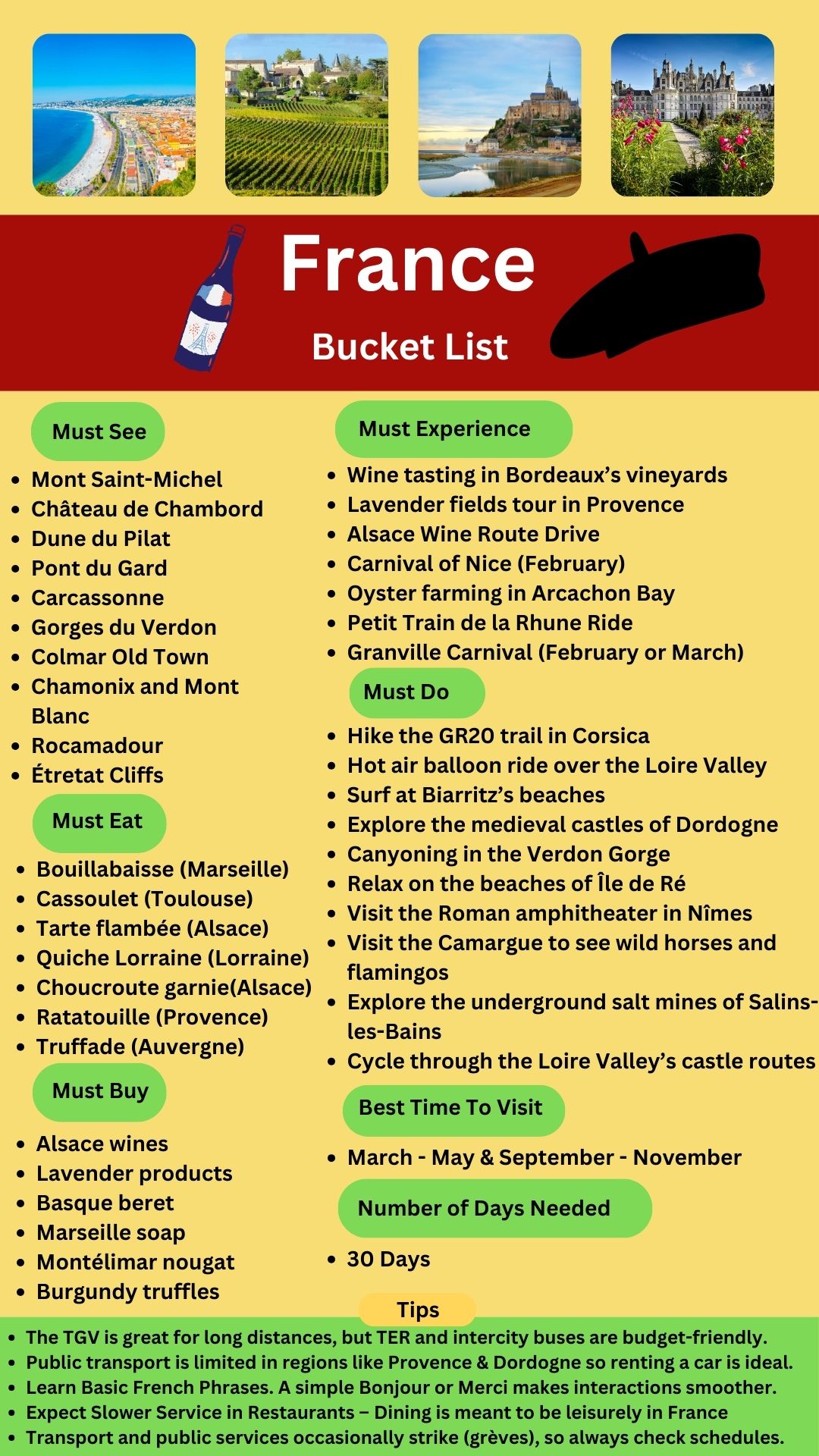
France offers far more than its famous capital. Medieval fortresses rise above river valleys, lavender fields stretch across Provence, and dramatic cliffs meet the sea in Normandy. Add in world class wine regions and deeply regional cuisine, and it becomes clear why France remains one of the most visited countries on the planet.
This guide covers the top places to visit, food to try, experiences to book, and tips to help your trip run smoothly. Whether you have two weeks or a full month, use this as your planning foundation.
Iconic Landmarks and Natural Wonders
France’s landscape ranges from fairytale castles to dramatic coastal cliffs. Many of its most famous sights sit far beyond Paris, spread across distinct regions.
Mont Saint-Michel rises dramatically from tidal flats along the Normandy coast. This medieval abbey sits atop a rocky island, accessible by a causeway. Tides here shift quickly, so checking timing before a visit matters.
Château de Chambord is one of the largest and most recognizable castles in the Loire Valley. Its distinctive double helix staircase is often attributed to Leonardo da Vinci’s influence. Sprawling gardens and forest surround the château’s grounds.
Dune du Pilat is the tallest sand dune in Europe, located near Arcachon Bay. Climbing to the top rewards visitors with sweeping views over the Atlantic coastline. It offers a striking contrast to France’s more famous historic landmarks.
Pont du Gard is an ancient Roman aqueduct bridge in southern France. This engineering marvel once carried water across the Gardon River valley. It remains remarkably well preserved after nearly 2,000 years.
Carcassonne is a fortified medieval city with towering stone walls and turrets. Its dual ring of ramparts makes it one of the best preserved fortress cities in Europe. Walking its cobblestone streets feels like stepping into the Middle Ages.
Gorges du Verdon is often called Europe’s Grand Canyon, carved by the turquoise Verdon River. Dramatic limestone cliffs rise above the water’s vivid blue green color. It ranks among the most scenic natural landmarks in southern France.
Colmar’s Old Town in Alsace charms visitors with half timbered houses and canal lined streets. Its fairytale architecture reflects a blend of French and German influence. It is often considered one of the most picturesque towns in the country.
Chamonix and Mont Blanc offer access to the highest peak in the Alps. Cable cars carry visitors up for dramatic mountain views without requiring technical climbing skills. The town itself serves as a hub for both summer hiking and winter skiing.
Rocamadour is a cliffside village built directly into a limestone gorge. Chapels and shrines stack dramatically along the rock face. It has long been a significant pilgrimage site in French religious history.
Étretat Cliffs in Normandy are famous for their natural rock arches carved by the sea. These white chalk cliffs have inspired countless painters, including Claude Monet. Coastal trails offer some of the best vantage points for photos.
Insider Tips for Visiting Major Landmarks
- Check tide schedules before visiting Mont Saint-Michel, since the causeway can flood during high tide. Arriving a few hours before low tide often gives the best access and views.
- Rent a car to explore Château de Chambord and the surrounding Loire Valley castles efficiently. Public transport between these sites is limited.
- Visit Gorges du Verdon in the morning for calmer water and better photo lighting. Kayaking or canoeing here also tends to be more pleasant before afternoon crowds arrive.
- Walk Carcassonne’s ramparts early in the day to avoid the largest tour groups. Sunset visits also offer a quieter, more atmospheric experience.
Cultural Experiences and Regional Traditions
France’s regions each carry distinct traditions, from wine harvests to coastal carnivals. These experiences offer travelers a deeper connection to local culture.
Wine tasting in Bordeaux’s vineyards introduces visitors to one of the world’s most celebrated wine regions. Rolling estates surround the city, many offering tours paired with tastings. Bordeaux’s reds are especially well regarded internationally.
A lavender fields tour in Provence captures one of France’s most iconic summer sights. Purple fields stretch across the countryside, typically blooming from late June through early August. Valensole is among the most photographed lavender regions.
The Alsace Wine Route drive winds through picturesque villages and vineyard covered hills. This scenic route connects towns like Colmar and Riquewihr. It pairs beautifully with tastings of the region’s distinctive white wines.
The Carnival of Nice in February is one of France’s largest and most colorful festivals. Elaborate floats and flower battles fill the streets during the celebration. It ranks among the most significant carnival events in the country.
Oyster farming in Arcachon Bay showcases a centuries old regional tradition. Visitors can tour oyster farms and sample fresh catches straight from the water. The bay remains one of France’s most productive oyster growing regions.
The Petit Train de la Rhune offers a scenic rack railway ride through the Basque countryside. This vintage train climbs toward the summit of La Rhune mountain. Views stretch across the Basque coastline and into Spain on clear days.
The Granville Carnival, held in February or March, is one of Normandy’s most beloved traditions. Parades, costumes, and street parties fill this coastal town for several days. It offers a quieter alternative to the larger Nice carnival.
Hidden Gems Beyond the Usual Tourist Trail
- Visit smaller Provence lavender farms outside Valensole during peak bloom season to avoid the heaviest crowds. These often provide a quieter, equally scenic experience.
- Explore lesser known villages along the Alsace Wine Route beyond Colmar and Riquewihr. Smaller towns often have fewer visitors and just as much charm.
- Attend the Granville Carnival as a quieter alternative to Nice’s larger celebration. It offers similar festivity with a more local, community feel.
- Look for smaller oyster farms in Arcachon Bay rather than the largest commercial operations. Family run farms often provide more personal tours.
Adventure Activities and Outdoor Escapes
France’s diverse terrain supports everything from coastal surf breaks to alpine hiking trails. These activities pair well with the country’s cultural sightseeing.
Hiking the GR20 trail in Corsica is considered one of the most demanding long distance trails in Europe. This rugged route crosses the island’s mountainous interior over several weeks. Experienced hikers consider it a serious bucket list challenge.
A hot air balloon ride over the Loire Valley offers sweeping views of castles and vineyards from above. Flights typically launch early in the morning for calmer wind conditions. It provides a unique perspective on the region’s famous château landscape.
Surfing at Biarritz’s beaches takes advantage of the Basque coast’s reliable Atlantic swells. This coastal town has a long standing surf culture dating back decades. Surf schools here cater well to both beginners and experienced surfers.
Exploring the medieval castles of Dordogne reveals a region rich in fortified architecture. Clifftop castles overlook the Dordogne River throughout the area. Canoeing along the river offers a scenic way to see several castles at once.
Canyoning in the Verdon Gorge combines hiking, swimming, and rappelling through the region’s dramatic limestone canyons. Guided tours are recommended given the technical nature of the activity. It ranks among the top adventure activities in southern France.
Relaxing on the beaches of Île de Ré offers a laid back contrast to France’s more famous coastal destinations. This small island off La Rochelle is known for its whitewashed villages and cycling paths. Bike rentals make it easy to explore the entire island.
Visiting the Roman amphitheater in Nîmes showcases one of the best preserved Roman arenas in the world. This ancient structure still hosts events today, including concerts and bullfighting style spectacles. It offers a striking counterpart to Rome’s own Colosseum.
Visiting the Camargue to see wild horses and flamingos introduces travelers to a unique wetland ecosystem. This regional nature park in southern France is home to distinctive white horses and pink flamingos. Guided tours often include horseback rides through the marshland.
Exploring the underground salt mines of Salins-les-Bains reveals centuries of French salt production history. Guided tours take visitors through tunnels once used for extracting this valuable resource. It offers an interesting, less touristy stop in eastern France.
Cycling through the Loire Valley’s castle routes combines gentle terrain with spectacular scenery. Dedicated bike paths connect many of the region’s most famous châteaux. It is one of the most relaxed ways to see multiple castles in a single trip.
Planning Tips for Adventure Activities
- Book guided canyoning tours in the Verdon Gorge well in advance during peak summer season. Proper safety gear and trained guides are essential for this activity.
- Reserve hot air balloon flights over the Loire Valley early, since flights depend heavily on weather conditions. Morning slots typically offer the most reliable scheduling.
- Pack proper gear for the GR20 trail if attempting any portion of it, since conditions can be demanding even for experienced hikers.
- Rent bikes locally on Île de Ré rather than bringing your own, since rental shops are widely available and convenient.
A Food Lover’s Guide to French Cuisine
French food varies dramatically by region, with each area offering its own distinct culinary identity.
Bouillabaisse from Marseille is a rich seafood stew rooted in the city’s Mediterranean fishing tradition. It typically includes several types of fish along with a flavorful saffron infused broth. Authentic versions are often served with a side of rouille sauce.
Cassoulet from Toulouse is a hearty baked dish featuring white beans, sausage, and duck or pork. This slow cooked comfort food is especially popular during colder months. Regional variations exist throughout southwestern France.
Tarte flambée from Alsace is a thin, crispy flatbread topped with crème fraîche, onions, and bacon. It resembles a pizza in shape but differs significantly in flavor and texture. Wood fired ovens are traditionally used for baking it.
Quiche Lorraine originated in the Lorraine region and remains one of France’s most recognized dishes internationally. Its filling combines eggs, cream, and bacon in a buttery pastry crust. Simple ingredients come together for a rich, satisfying result.
Choucroute garnie, another Alsace specialty, features fermented cabbage served with various sausages and cured meats. It reflects the region’s German influenced culinary traditions. Mustard is a common accompaniment to the dish.
Ratatouille from Provence is a vegetable based dish featuring eggplant, zucchini, peppers, and tomatoes. It can be prepared as a rustic stew or arranged more elegantly for presentation. The dish highlights the fresh produce of southern France.
Truffade from Auvergne combines potatoes with melted cheese, often Cantal or Tomme. This rustic mountain dish is hearty and simple. It reflects the traditional farming culture of France’s central highlands.
Local Etiquette Around Food and Dining
- Expect slower service in restaurants, since dining is meant to be leisurely in France. Rushing through a meal goes against typical French dining customs.
- Learn basic French phrases before your trip, since a simple “Bonjour” or “Merci” makes interactions smoother. Locals often appreciate the effort, even with limited language skills.
- Tip modestly at restaurants, since service charges are usually already included in the bill. Rounding up is common practice rather than a larger percentage tip.
- Try regional specialties rather than only familiar dishes, since French cuisine changes significantly from one region to the next.
Souvenirs and Shopping Worth Your Suitcase Space
Shopping in France offers a chance to bring home regional products tied to specific traditions and locations.
Alsace wines make an excellent gift for wine lovers, known especially for their aromatic whites. Riesling and Gewürztraminer are among the region’s signature varieties. Buying directly from vineyards along the Alsace Wine Route often provides better selection.
Lavender products from Provence range from oils to soaps to dried bundles. These fragrant items capture the scent of the region’s famous fields. Local markets throughout Provence offer a wide variety of options.
A Basque beret represents traditional French headwear with deep regional roots. These wool caps originated in the Basque country in southwestern France. Authentic versions are typically handmade by specialized regional manufacturers.
Marseille soap, or savon de Marseille, is a traditional olive oil based soap with centuries of history. It is prized for its simple, natural ingredients. Authentic versions carry certification marks confirming their traditional production method.
Montélimar nougat is a classic French confection made from honey, sugar, and nuts. This sweet treat has been produced in the town of Montélimar for centuries. It makes a flavorful, packable gift.
Burgundy truffles are among France’s most prized culinary exports. These earthy fungi are especially valued in French cooking for their intense flavor. Buying fresh truffles requires proper storage and quick use after purchase.
Budget Tips for Shopping Smart
- Buy Alsace wines directly from smaller vineyards rather than large retail shops. Prices and selection are often better closer to the source.
- Compare prices at a few soap and lavender shops in Provence before purchasing larger quantities. Local markets often offer better value than tourist focused boutiques.
- Purchase Montélimar nougat from the town itself rather than general tourist shops elsewhere in the country. It tends to be fresher and better priced at the source.
- Look for smaller, family owned truffle sellers rather than large commercial vendors. This often ensures better quality and freshness.
When to Go and How Long to Stay
Timing your France trip well can make a real difference in weather, crowds, and overall experience.
The best time to visit is from March to May or September to November. These shoulder seasons offer milder weather and smaller crowds than peak summer. Coastal regions like the French Riviera remain pleasant well into early autumn.
Most travelers need around 30 days to properly explore France’s major regions. This allows time for Paris, the countryside, coastal areas, and mountain regions without feeling rushed. Shorter trips work well if focused on just one or two regions.
Seasonal Advice for First-Time Visitors
- Visit Provence in late June or July specifically for peak lavender bloom season. Timing is essential, since the display only lasts a few weeks each summer.
- Plan a Nice trip around February for Carnival season if experiencing this festival is a priority. Accommodations book up quickly around this time.
- Book ski trips to Chamonix during winter months for reliable snow conditions. December through March typically offers the most consistent skiing.
- Pack layers regardless of season, since French weather can shift quickly between coastal, mountain, and inland regions.
Practical Tips Every Traveler Should Know
A few practical habits will make your France trip smoother from the moment you arrive.
The TGV is great for long distances, but TER and intercity buses are budget-friendly for shorter regional trips. High speed trains connect major cities efficiently, while regional options offer more flexibility for smaller towns. Booking TGV tickets in advance often secures better pricing.
Public transport is limited in regions like Provence and Dordogne, so renting a car is ideal. Many rural attractions and smaller villages are difficult to reach without one. A car offers far more flexibility for exploring castle routes and countryside vineyards.
Transport and public services occasionally strike, known locally as grèves, so always check schedules. Strikes can affect trains, buses, and even museum access with little advance notice. Checking transit updates the day before travel helps avoid surprises.
Common Mistakes First-Timers Make
- Assuming public transport covers every region equally well. Rural areas often require a rental car for practical exploration.
- Rushing through meals instead of embracing the slower pace of French dining. This can leave visitors feeling out of step with local customs.
- Skipping basic French phrases and assuming English will suffice everywhere. A little effort with the language goes a long way with locals.
- Not checking for strikes before major travel days. Transport disruptions can affect trains, buses, and even flights with limited warning.
Final Thoughts on Planning Your France Adventure
France delivers an extraordinary mix of medieval history, natural beauty, and deeply regional culinary tradition. Cliffside abbeys, lavender fields, and fortified medieval towns all sit within reach of a well connected rail network. Few countries offer this much diversity in landscape and culture within a single trip.
Whether you come for the castles of the Loire Valley, the lavender of Provence, or a bowl of cassoulet in Toulouse, France leaves a lasting impression. Start planning early, learn a few French phrases, and get ready for one of Europe’s most rewarding and varied trips.