
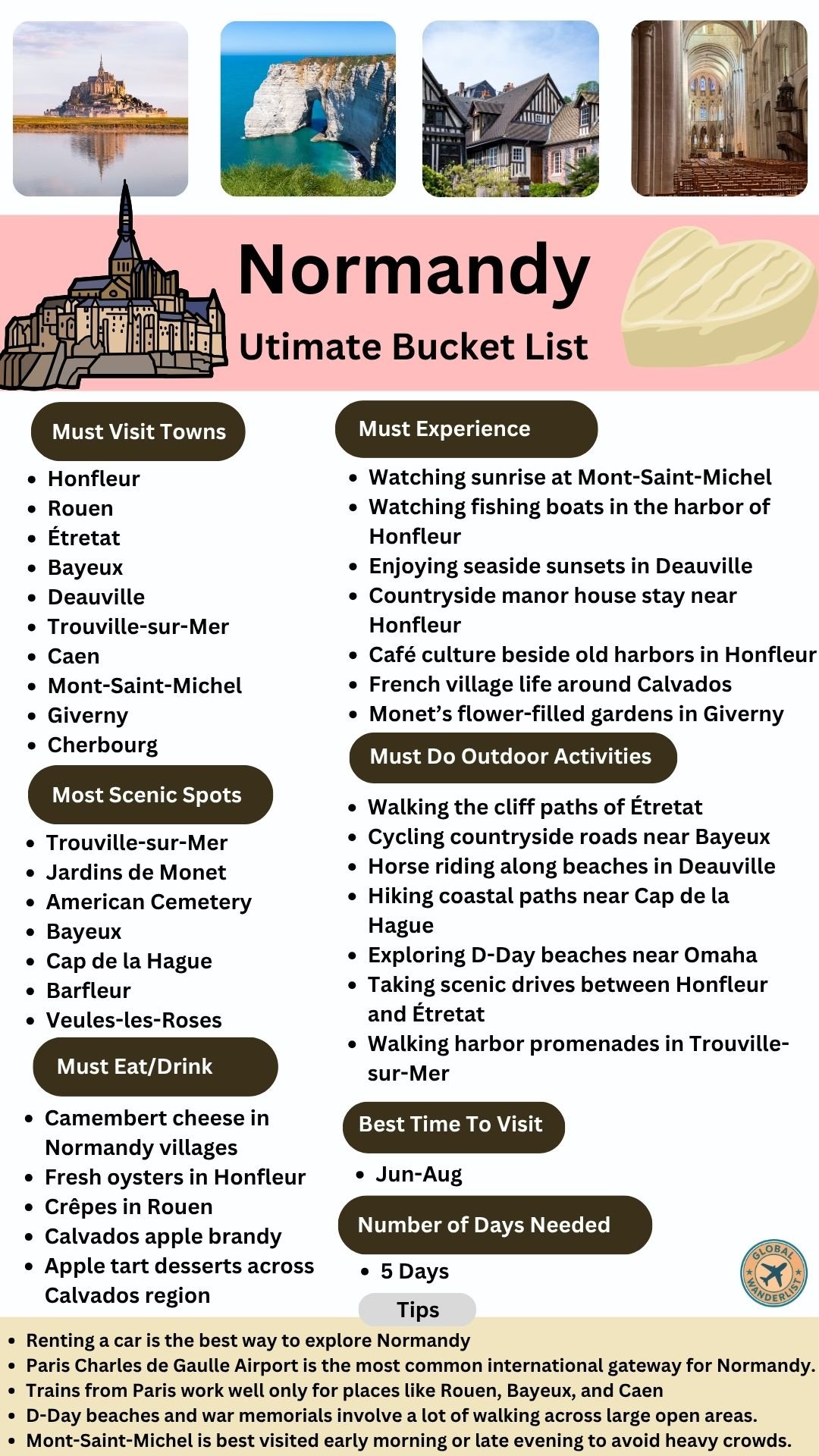
Normandy blends dramatic cliffs, half timbered villages, and centuries of layered history into one unforgettable region. Mont-Saint-Michel rises from tidal flats like something out of a fairy tale, while D-Day beaches carry the weight of modern history just a short drive away. Add in Monet’s gardens, fresh oysters, and calvados apple brandy, and it becomes clear why this corner of France deserves its own dedicated trip.
This guide covers the top towns, scenic spots, experiences, activities, food, and travel tips to help you plan your Normandy adventure. Whether you have five days or a full week, use this as your starting point.
| Category | Top Recommendation | Best Time | Recommended Duration |
|---|---|---|---|
| Towns | Mont-Saint-Michel | June to August | 1-2 days |
| Scenic Spots | Jardins de Monet | May to September | Half day |
| Experiences | Sunrise at Mont-Saint-Michel | Year round | Early morning |
| Outdoor Activities | Walking the cliff paths of Étretat | April to October | Half day |
| Local Food | Fresh oysters in Honfleur | Year round | One meal |
| Overall Trip | Full regional exploration | June to August | 5 days |
Must Visit Towns
Normandy’s towns range from fishing harbors to medieval cities, each carrying its own distinct character. These destinations anchor any regional itinerary and reflect centuries of Norman history.
Places You Shouldn’t Miss
- Honfleur remains one of Normandy’s most picturesque ports, with tall, narrow houses lining its historic harbor. Artists like Monet once painted here, drawn by the shifting coastal light. A stroll along the harbor at golden hour captures the town at its most photogenic.
- Rouen’s medieval old town combines half timbered buildings with a stunning Gothic cathedral, repeatedly painted by Monet. The city also marks the site of Joan of Arc’s execution in 1431. Its pedestrian streets make for easy, unhurried exploring.
- Étretat is famous for its dramatic chalk cliffs and natural rock arches carved by the sea. These formations inspired painters like Monet and Courbet, and they remain one of Normandy’s most photographed landscapes. Trails along the clifftops offer sweeping coastal views in both directions.
- Bayeux survived World War II largely undamaged, preserving its medieval streets and famous tapestry depicting the Norman Conquest. The nearly 1,000 year old embroidered artwork remains one of the most significant historical textiles in Europe. Its cathedral also ranks among the region’s finest Gothic structures.
- Deauville built its reputation as an elegant seaside resort, popular with Parisians since the 19th century. Its boardwalk, lined with beach cabins named after film stars, reflects the town’s long standing ties to French cinema. Sunset here brings a distinctly romantic atmosphere.
- Trouville-sur-Mer sits just across the river from Deauville, offering a slightly more relaxed, less polished alternative. Its working fishing harbor and long sandy beach give it a genuine, local feel.
- Caen serves as Normandy’s historic capital, home to a medieval castle built by William the Conqueror. The city also holds deep significance in D-Day history, with several museums nearby offering detailed context.
- Mont-Saint-Michel rises dramatically from tidal flats, its medieval abbey visible from miles away. This UNESCO World Heritage site ranks among France’s most iconic landmarks. Checking tide schedules before visiting helps you plan around the causeway’s flooding patterns.
- Giverny, though technically just outside Normandy’s borders, draws visitors for Claude Monet’s home and gardens. The artist lived and painted here for over 40 years, and the flower filled grounds inspired many of his most famous works.
- Cherbourg anchors Normandy’s northern coast, known for its deep water port and maritime history. The city played a key role in both World War II history and the RMS Titanic’s final voyage, which briefly stopped here in 1912.
Most Scenic Spots
Normandy’s landscape shifts dramatically from chalk cliffs to formal gardens to quiet memorial grounds. These spots showcase the region’s natural beauty alongside its more reflective, historic sites.
Best Scenic Spots to Visit
- Trouville-sur-Mer offers a scenic boardwalk and sandy beach with views back toward Deauville across the river. Its relaxed, local atmosphere makes it a pleasant contrast to busier tourist spots.
- Jardins de Monet in Giverny showcase the flower filled landscape that inspired the artist’s famous water lily paintings. Visiting in late spring or early summer brings the gardens to their most vibrant bloom.
- The American Cemetery near Omaha Beach honors the thousands of soldiers who died during the D-Day landings. Rows of white crosses overlook the coastline, creating a solemn, moving atmosphere that stays with most visitors.
- Bayeux offers scenic value beyond its tapestry, with a well preserved medieval town center largely untouched by wartime destruction. Its cathedral and surrounding streets reward slow, unhurried wandering.
- Cap de la Hague marks Normandy’s rugged northwestern tip, with wild coastal scenery and dramatic cliffs. It offers a quieter, less crowded alternative to Étretat’s more famous formations.
- Barfleur ranks among France’s officially designated most beautiful villages, with a charming stone harbor and pale gray buildings. Its understated beauty makes it a favorite stop for those exploring the Cotentin peninsula.
- Veules-les-Roses combines a small pebble beach with France’s shortest river running directly through the village. Watercress beds and old mills along the water add to its storybook charm.
Must Experience
Normandy offers experiences that go beyond typical sightseeing, connecting travelers to its history, art, and coastal rhythms. These moments often become the most memorable parts of a trip.
Unforgettable Experiences
- Watching sunrise at Mont-Saint-Michel offers a quieter, more atmospheric alternative to the crowded daytime visits. Early morning light on the tidal flats creates a striking, almost otherworldly scene.
- Watching fishing boats in the harbor of Honfleur captures the town’s working maritime rhythm. Evenings bring boats returning with the day’s catch, adding authentic local color to a harbor stroll.
- Enjoying seaside sunsets in Deauville pairs naturally with a walk along the boardwalk. The town’s elegant architecture glows warmly as the sun drops over the Channel.
- A countryside manor house stay near Honfleur offers a taste of rural Normandy hospitality. Many properties combine historic charm with quiet, pastoral surroundings just minutes from the coast.
- Café culture beside old harbors in Honfleur reflects a slower, more contemplative side of Norman life. Lingering over coffee while watching harbor activity is a simple, genuine local pleasure.
- French village life around Calvados offers a glimpse into the region’s apple growing heartland. Small towns throughout this area reflect Normandy’s agricultural traditions and orchard covered countryside.
- Monet’s flower filled gardens in Giverny remain one of the most rewarding art related experiences in the region. Walking the same paths that inspired his water lily series adds real depth to viewing his paintings elsewhere.
Outdoor Activities
Normandy’s coastline and countryside support a wide range of outdoor activities, from clifftop hikes to horseback rides along the sand. Most activities suit a range of fitness levels.
Best Outdoor Adventures
- Walking the cliff paths of Étretat takes visitors along dramatic chalk formations with sweeping Channel views. The main trails suit most fitness levels, though sturdy shoes help with uneven sections. Allow two to three hours for a thorough exploration.
- Cycling countryside roads near Bayeux offers a relaxed way to see rural Normandy’s rolling farmland. Quiet rural roads connect small villages and historic sites throughout the area.
- Horse riding along beaches in Deauville has long been part of the town’s elegant coastal tradition. Several local stables offer guided rides suitable for both beginners and experienced riders.
- Hiking coastal paths near Cap de la Hague reveals some of Normandy’s wildest, least developed scenery. Trails here range from easy coastal walks to longer, more demanding routes along the cliffs.
- Exploring D-Day beaches near Omaha involves significant walking across large open areas and memorial grounds. Comfortable shoes and a full day help you properly take in the scale and significance of the sites.
- Taking scenic drives between Honfleur and Étretat connects several of Normandy’s most photogenic coastal towns. The route passes through small villages and farmland, making for a pleasant half day excursion.
- Walking harbor promenades in Trouville-sur-Mer offers an easy, flat route ideal for a relaxed afternoon. The path connects the beach, harbor, and town center without requiring much physical effort.
Local Food
Normandy’s cuisine reflects its dairy rich pastures and productive coastline, with cheese, apples, and seafood all playing central roles. Regional specialties here differ significantly from other parts of France.
What to Eat
- Camembert cheese originated in Normandy and remains one of the region’s most famous exports. Small villages throughout the countryside produce traditional versions using unpasteurized milk, offering a richer flavor than mass produced varieties found elsewhere.
- Fresh oysters in Honfleur take advantage of the town’s coastal location and long standing seafood tradition. Harborside restaurants often serve them simply, with just a squeeze of lemon to let the briny flavor shine.
- Crêpes in Rouen reflect Normandy’s broader crêpe and galette tradition, similar to neighboring Brittany. Local creameries add a distinctly rich, buttery quality to the batter that sets Norman crêpes apart.
- Calvados apple brandy is distilled from the region’s abundant apple orchards, particularly in the Calvados department. It is often served between courses in a tradition called the trou normand, meant to aid digestion during a long meal.
- Apple tart desserts appear throughout the Calvados region, reflecting Normandy’s deep connection to apple cultivation. Tarte Normande, made with cream and thinly sliced apples, remains a classic regional specialty worth seeking out.
Best Time to Visit
Normandy’s coastal climate means mild summers and cooler, wetter winters, making timing an important part of trip planning.
Seasonal Highlights
- June through August offers the warmest, driest weather for exploring beaches, gardens, and outdoor D-Day sites. This period also brings the largest crowds, especially around Mont-Saint-Michel and the American Cemetery.
- Late spring, particularly May, brings Monet’s gardens in Giverny to their most vibrant bloom. Milder temperatures also make this a comfortable time for cliffside walking and cycling.
- Early autumn offers a quieter alternative to peak summer, with apple harvest season adding extra charm to the Calvados countryside. Coastal towns remain pleasant well into September.
- Winter brings a quieter, more contemplative atmosphere, particularly at historic and memorial sites. Shorter days and cooler, wetter weather make this season better suited to town exploration than outdoor coastal activities.
Travel Tips
A few practical habits will help your Normandy trip run smoothly, particularly given the region’s mix of historic sites and rural countryside.
Essential Travel Tips
- Renting a car is the best way to explore Normandy, since many of its most scenic spots and coastal towns sit beyond convenient train access. A car also allows flexibility for combining several stops in a single day.
- Paris Charles de Gaulle Airport is the most common international gateway for reaching Normandy. From there, both rental cars and regional trains offer straightforward onward travel into the region.
- Trains from Paris work well specifically for places like Rouen, Bayeux, and Caen, all of which have direct rail connections. Smaller villages and coastal towns typically require a car or local bus once you arrive.
- D-Day beaches and war memorials involve a lot of walking across large open areas, so comfortable footwear matters. Allow a full day if you plan to visit multiple sites along the coast.
- Mont-Saint-Michel is best visited early morning or late evening to avoid heavy crowds. Midday visits during peak season can mean significant waits and packed pathways through the abbey.
Building Your Own Normandy Adventure
Normandy delivers a rare mix of dramatic coastline, layered history, and quiet rural charm. Medieval abbeys, chalk cliffs, and apple orchard covered countryside all sit within reach of a well connected road network. Few regions offer this much depth within such a manageable area.
Whether you come for the tides of Mont-Saint-Michel, the gardens of Giverny, or a plate of fresh oysters in Honfleur, Normandy rewards travelers willing to slow down and explore. Use this bucket list as a starting point, then shape an itinerary around the towns and experiences that speak to you most. The region has plenty to offer, however you choose to see it.