
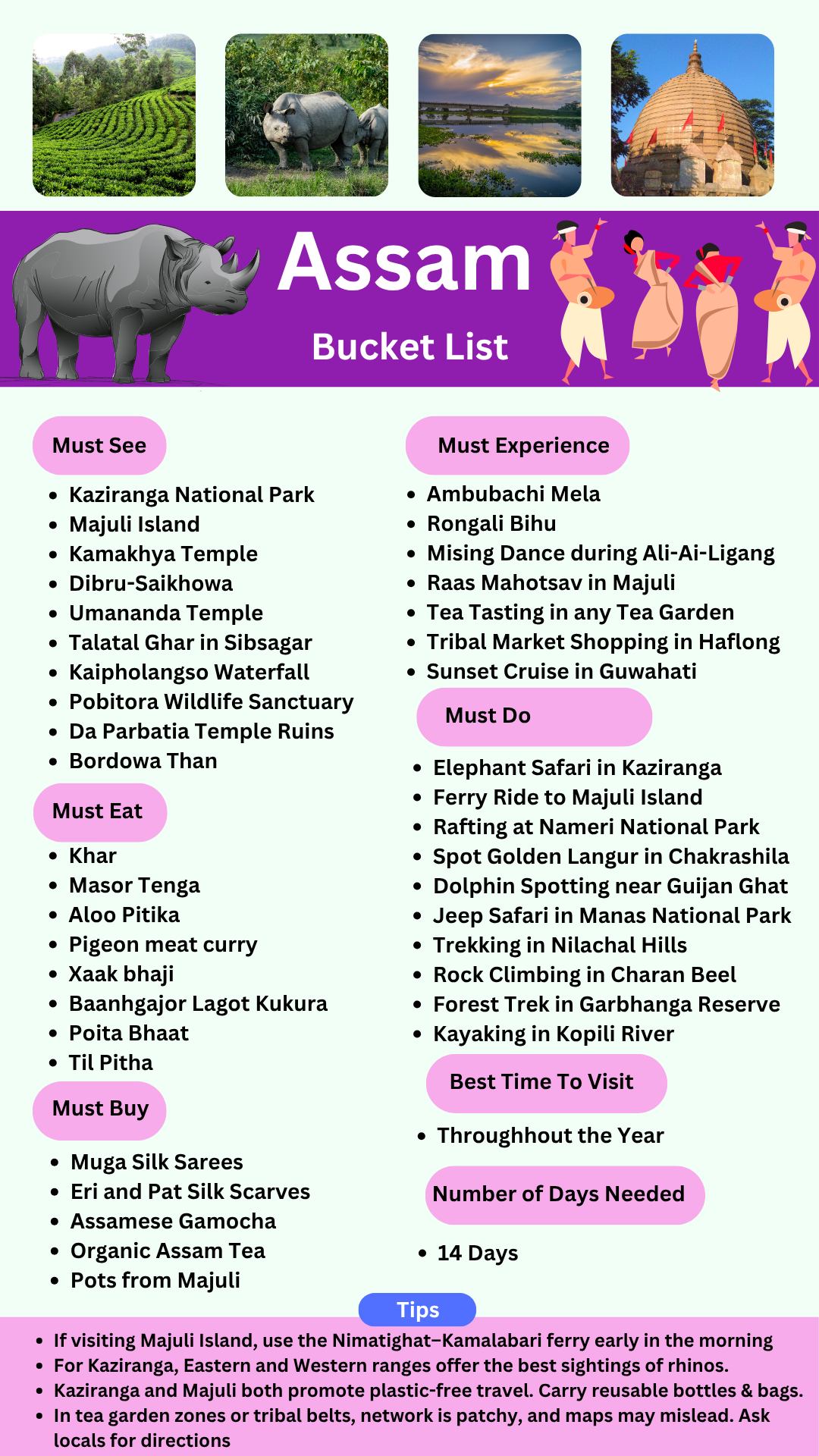
Assam feels like a secret India keeps for itself. The mighty Brahmaputra winds through emerald tea estates, rhinos graze in misty grasslands, and ancient temples crown sacred hills. Few places pack wildlife, living culture, and slow river travel into one trip.
Add silk-weaving villages, hill-town markets, and food built on fresh herbs and fermented flavors. This Assam bucket list brings together the sights, experiences, activities, and practical tips for a first visit.
Assam Bucket List at a Glance
| Category | Top Recommendation | Best Time | Recommended Duration |
|---|---|---|---|
| Wildlife | Kaziranga National Park | November to April | 2 to 3 days |
| River Island | Majuli Island | October to March | 2 nights |
| Temples | Kamakhya Temple, Guwahati | October to April | Half day |
| Tea | Tea estate stay near Jorhat or Dibrugarh | March to June, plus winter | 1 to 2 days |
| Heritage | Sivasagar and Talatal Ghar | October to March | 1 day |
| Festivals | Rongali Bihu and Raas Mahotsav | April and November | Plan around dates |
| Local Food | Masor tenga and khar | Year-round | 3 to 4 meals |
| Shopping | Muga silk in Sualkuchi | Year-round | Half day |
| Overall Trip | Wildlife, river, culture, and tea | October to April | 14 days |
Must-See Destinations
Places You Shouldn’t Miss
- Kaziranga National Park: This UNESCO World Heritage Site protects more than 2,600 greater one-horned rhinos. Jeep safaris cross grasslands, wetlands, and forest in several ranges. The park closes during the monsoon, so confirm the season before booking.
- Majuli Island: Among the world’s largest river islands, Majuli holds Vaishnavite monasteries called satras. Mask makers, potters, and Mishing stilt homes add depth. Stay two nights, and rent a bicycle for flat village rides.
- Kamakhya Temple: Perched on Nilachal Hill in Guwahati, this is one of India’s most important Shakti Peethas. Its beehive-shaped domes reflect a distinct Assamese style. Arrive early, dress modestly, and expect long queues on festival days.
- Dibru-Saikhowa: This Tinsukia biosphere reserve blends wetlands, grasslands, and riverine forest. Feral horses, waterfowl, and river dolphins live here. Visit between November and March, and cross the river by boat.
- Umananda Temple: Built in 1694 on Peacock Island, this Shiva shrine sits in the middle of the Brahmaputra. A short ferry from Guwahati leads to its quiet hilltop path. Go in the morning for softer light.
- Talatal Ghar in Sivasagar: This 18th-century Ahom military palace hides underground floors and tunnel-like passages. Brick vaults and arched halls reveal royal engineering. Pair it with nearby Rang Ghar, and plan a full day in Sivasagar.
- Kaipholangso Waterfall: Tucked into the hills of Dima Hasao, this cascade suits travelers who enjoy remote scenery. Base yourself in Haflong, Assam’s only hill station. Hire a local guide, and avoid heavy monsoon weeks.
- Pobitora Wildlife Sanctuary: About 30 miles from Guwahati, this small sanctuary has one of the highest rhino densities anywhere. It makes an easy half-day trip. The 2026-27 season reopens in mid-October.
- Da Parbatia Temple Ruins: Near Tezpur, these ruins feature a carved doorframe dating to about the sixth century. The sculpture shows early Assamese art. It is a quick stop, ideal alongside a Nameri visit.
- Bordowa Than: This Nagaon shrine marks the birthplace of Srimanta Sankardeva, the saint who shaped Assamese culture. Prayer halls and ponds create a calm setting. Visit in the morning, and cover your head if asked.
Must-Experience Moments
Unforgettable Experiences
- Ambubachi Mela: Held each June at Kamakhya, this mela marks a symbolic annual period when the temple closes for three days. Hundreds of thousands of pilgrims gather. Book transport and stays early, and expect heavy crowds.
- Rongali Bihu: Assam’s spring new year arrives in mid-April with drumming, folk songs, and dances. Locals wear white-and-red muga and cotton attire. Join a public Bihu stage in Guwahati or Jorhat for the best view.
- Mising dance during Ali-Ai-Ligang: This Mising spring festival usually falls in February or March and marks the start of sowing. Dancers perform the energetic Gumrag dance. Visit Majuli or Dhemaji, and ask villagers about public events.
- Raas Mahotsav in Majuli: Celebrated around the November full moon, this festival stages devotional dance-dramas across the island’s satras. Costumes, masks, and lamplit courtyards fill the evenings. Book homestays months ahead.
- Tea tasting in any tea garden: Assam produces malty black tea known worldwide. Estates near Jorhat and Dibrugarh offer tastings, factory tours, and bungalow stays. Try the second flush, harvested around May and June.
- Tribal market shopping in Haflong: The town’s weekly market sells woven shawls, bamboo goods, and seasonal fruit. Dimasa and other communities trade here. Bargain gently, and sample local snacks.
- Sunset cruise in Guwahati: Brahmaputra cruises show the city as a golden skyline. Operators run short evening trips lasting one to two hours. Go between October and March for clearer skies.
Must-Do Activities
Best Outdoor Adventures
- Elephant safari in Kaziranga: Dawn rides start from the Kohora and Bagori ranges and begin on November 1. Elephants move quietly through tall grass for close rhino views. Book early, since seats are limited.
- Ferry ride to Majuli Island: Ferries cross from Nimati Ghat near Jorhat to Kamalabari in about one hour. Deck views include sandbars, birds, and sometimes dolphins. Ferries do not run in severe flooding.
- Rafting at Nameri National Park: The Jia Bhoroli River offers gentle rapids through forested valleys. Trips last a few hours and suit most fitness levels. Go between November and March.
- Spot golden langurs in Chakrashila: This sanctuary in western Assam shelters the rare golden langur. Walk quietly at dawn for the best views. Bring binoculars, and hire a forest guide.
- Dolphin spotting near Guijan Ghat: Gangetic river dolphins surface in the Brahmaputra near Tinsukia. Early morning boat trips offer the best chances. Keep a respectful distance and bring patience.
- Jeep safari in Manas National Park: This UNESCO site and tiger reserve opened for 2026-27 in early October. Different ranges close on different weekdays. Check the schedule, and book safaris ahead.
- Trekking in Nilachal Hills: Trails above Guwahati climb through forest to temples and viewpoints. The routes are moderate and suit casual hikers. Go early, and carry water.
- Rock climbing near Charan Beel: Charan Beel in Morigaon is known mainly for kayaking and canoeing. Nearby Elephant Rocks and Guwahati cliffs suit climbers. Use certified guides, and avoid wet seasons.
- Forest trek in Garbhanga Reserve: The popular route from Basistha covers about 10 miles of rolling forest. Difficulty is moderate to challenging. Start early, carry plenty of water, and hire a local guide.
- Kayaking in the Kopili River: Near Panimur, the Kopili offers calm stretches and scenic gorges. Beginners can join guided sessions. Visit after the monsoon for safer water levels.
Where to Eat
What to Eat
- Khar: This traditional opening dish uses raw papaya, pulses, or vegetables cooked with a natural alkaline filtrate. It tastes earthy and mildly salty. Look for it at traditional thali restaurants in Guwahati and Upper Assam.
- Masor Tenga: A tangy fish curry soured with tomatoes, lemon, or elephant apple. It is light, fragrant, and ideal with rice. Order it at local Assamese restaurants and homestays.
- Aloo Pitika: Mashed potato is mixed with mustard oil, onion, chili, and herbs. It is simple and deeply comforting. Pair it with dal and rice at any local meal.
- Pigeon meat curry: This beloved regional dish is cooked slowly in spices. It is a specialty at traditional homes and some local restaurants. Ask ahead at homestays, since it is often prepared to order.
- Xaak Bhaji: Fresh leafy greens are stir-fried lightly with garlic. The dish highlights Assam’s abundance of edible herbs. Order it with rice as part of a full meal.
- Baanhgajor Lagot Kukura: Chicken simmers with tender bamboo shoots for a tangy, earthy flavor. It is especially popular in rural and tribal-influenced menus. Try it at homestays or village kitchens.
- Poita Bhaat: This fermented rice dish is soaked overnight in water and served cold. It is refreshing in hot weather, usually with pitika or fried fish. Look for it in village-style restaurants.
- Til Pitha: These rice rolls hold sesame and jaggery filling. They are made for Bihu, especially in January. Look for them at festival stalls and local sweet shops.
What to Buy
Best Souvenirs to Buy
- Muga silk sarees: Muga is a golden silk produced only in Assam. Sualkuchi, a weaving town near Guwahati, is the best place to shop. Ask for authenticity marks, and compare prices.
- Eri and Pat silk scarves: Eri silk is warm and soft, often called peace silk. Pat silk is smooth and light. Both make easy gifts that pack well.
- Assamese gamosa: This white cotton towel with a red border is a symbol of Assamese identity. Locals use it to honor guests. Buy a few as gifts, especially around Bihu.
- Organic Assam tea: Estate shops near Jorhat and Dibrugarh sell fresh tea directly. Ask for harvest dates and flush type. Look for organic certification on packaging.
- Pots from Majuli: Potters in Salmora shape clay by hand without a wheel. The pieces are earthy and traditional. Wrap items carefully, since they can crack.
Best Time to Visit Assam
Seasonal Highlights
- November to March: Cool, dry weather suits safaris, river trips, and cultural tours. Mornings can be foggy, so build in flexibility. This is the best window for Kaziranga, Manas, and Majuli.
- April to June: Bihu brings celebration in April, while Ambubachi draws pilgrims in June. Heat and humidity rise, and rain begins. Tea estates are lively with fresh second-flush picking.
- July to September: Monsoon floods the plains, and some wildlife parks stay closed. Ferries and roads can face disruption. This season suits only flexible travelers.
- October: Parks begin reopening after the monsoon. Kaziranga and Manas opened for the 2026-27 season in early October. Elephant safaris follow on November 1.
How Many Days Do You Need?
Suggested Trip Length
- 14 days for the full state: This pace covers Guwahati, Kaziranga, Majuli, Sivasagar, and Manas. Use domestic flights to cut long drives. Keep a spare day for weather and ferry delays.
- 5 days for Upper Assam: Combine Kaziranga, Jorhat, Majuli, and Sivasagar. Jorhat is the best base for flights. Add a tea estate stay for slow evenings.
- 3 days for Guwahati and nearby: See Kamakhya, Umananda, Sualkuchi, and Pobitora. Guwahati has the state’s main airport. A short trip suits weekend travelers.
- 4 days for Dima Hasao: Add Haflong, waterfalls, and village visits. Roads are winding and slower than expected. Allow extra time for weather and permits.
Travel Tips
Essential Travel Tips
- Take the early Majuli ferry: The first ferry leaves Nimati Ghat around 7:30 a.m., and the last runs mid-afternoon. Water levels can change schedules. Confirm times a day ahead.
- Choose Kaziranga ranges wisely: The Eastern and Western ranges are often praised for rhino sightings. The Central range is easiest to reach. Book safaris early and go at dawn.
- Travel plastic-free: Kaziranga and Majuli both promote reusable bottles and bags. Carry a filter bottle and a cloth tote. Refuse single-use plastic whenever possible.
- Expect patchy network: Tea gardens and tribal areas often have weak signal. Maps can mislead on small roads. Ask locals for directions, and download offline maps.
- Plan realistic transport: Guwahati, Jorhat, and Dibrugarh have airports, and trains connect major towns. Roads can be slow, especially after rain. Hire a driver for park visits.
- Respect temple and village customs: Dress modestly at Kamakhya and satras. Ask before photographing people, especially during ceremonies. Remove shoes at prayer halls.
Build Your Own Assam Itinerary
Assam rewards patience, curiosity, and early mornings. Pair a wildlife dawn with a river afternoon, add a tea estate stay, and plan around a festival if you can. Choose your favorites from this list, and travel between October and April.