
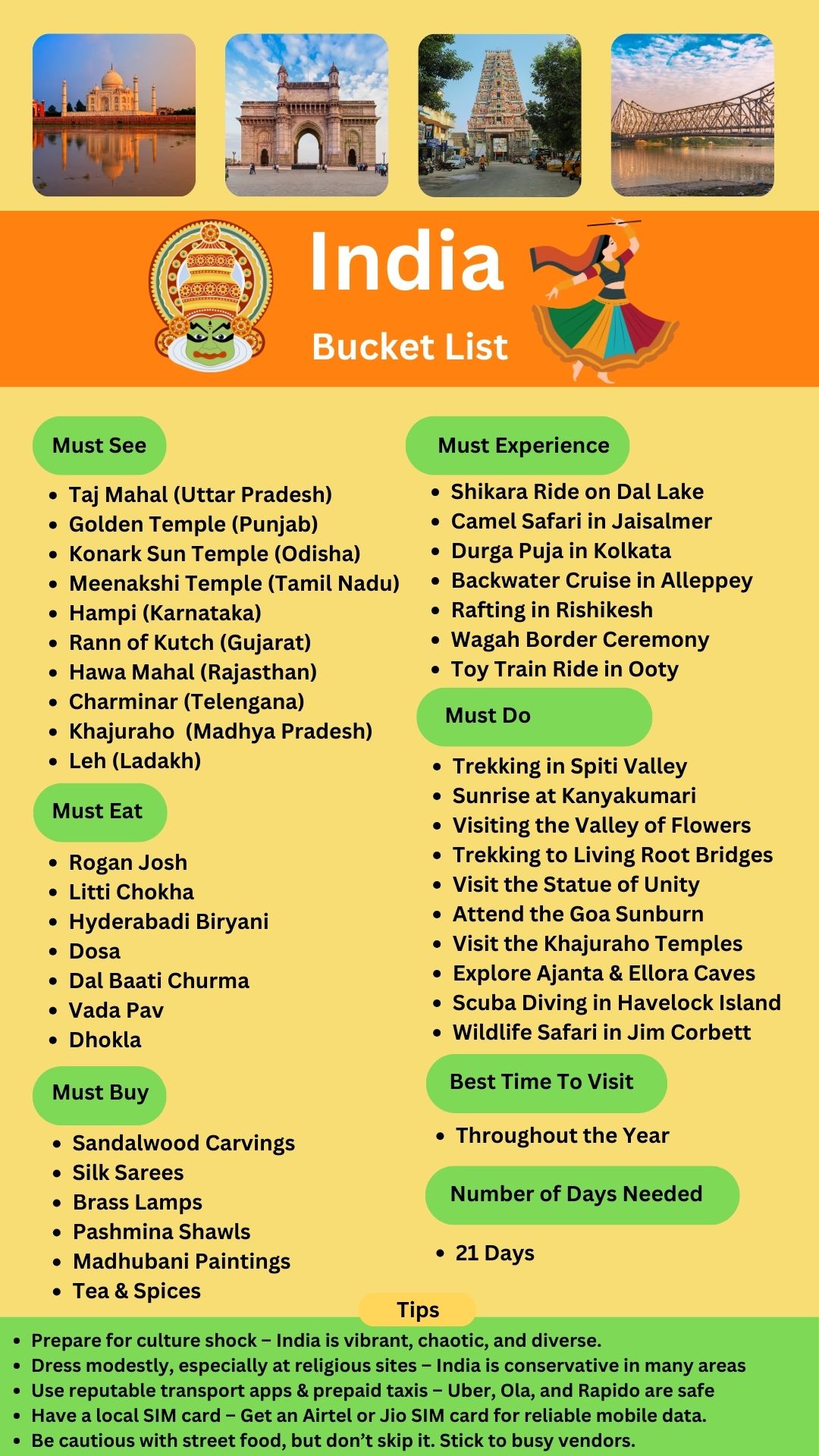
India is not a country you simply visit. It is a place you experience with every sense. Ancient temples sit beside busy bazaars, and snowy peaks stand a few flights from tropical beaches.
Because of this variety, first-time visitors often feel overwhelmed. This bucket list solves that problem. It covers the top sights, experiences, foods, and souvenirs, along with timing advice and practical tips.
Use it as a menu rather than a checklist. Most travelers can only see a few regions in one trip, so pick the stops that fit your interests.
| Category | Top Recommendation | Best Time | Recommended Duration |
|---|---|---|---|
| Must See | Taj Mahal, Agra | October to March | 1 day |
| Must Experience | Backwater cruise in Alleppey | November to February | 1 to 2 days |
| Must Do | Ajanta and Ellora Caves | October to March | 2 days |
| Must Eat | Hyderabadi biryani | Year-round | 1 meal |
| Must Buy | Pashmina shawls from Kashmir | Year-round | 1 to 2 hours |
| Overall Trip | Delhi, Agra, Rajasthan, and Kerala | October to March | 21 days |
Must See
Places You Shouldn’t Miss
- Taj Mahal (Uttar Pradesh): Emperor Shah Jahan built this white marble tomb for his wife, Mumtaz Mahal. It was finished in the 1650s. Arrive at sunrise for softer light and smaller crowds, and remember that it closes on Fridays.
- Golden Temple (Punjab): This Sikh shrine in Amritsar glows above a sacred pool. Its community kitchen serves free meals to thousands of people every day. Cover your head, remove your shoes, and visit at night for the best reflections.
- Konark Sun Temple (Odisha): This 13th-century temple is shaped like a giant stone chariot. It has 24 carved wheels and seven horses. Because the site is exposed, visit early in the morning and allow about two hours.
- Meenakshi Temple (Tamil Nadu): Madurai’s famous temple is crowned with towering, brightly painted gateways. Inside, long halls of carved pillars lead to quiet shrines. Dress modestly, check the rules on phones, and return for the evening ceremony.
- Hampi (Karnataka): Hampi was once the capital of the mighty Vijayanagara Empire. Today, boulders and ruined temples cover the landscape. Rent a bicycle or scooter, and plan at least two days between October and February.
- Rann of Kutch (Gujarat): This vast white salt desert looks like another planet at sunset. The Rann Utsav festival runs in the cooler months. However, summer heat is extreme, so winter is the safest choice.
- Hawa Mahal (Rajasthan): The Palace of Winds in Jaipur has hundreds of small windows. Royal women once watched street life from behind them. For example, a rooftop cafe across the road gives the best morning photos.
- Charminar (Telangana): Built in 1591, this granite monument rises above Hyderabad’s Old City. Its four minarets glow at night. Also, the nearby bazaars sell bangles and pearls, so allow time to browse.
- Khajuraho (Madhya Pradesh): These temples were built by the Chandela dynasty about a thousand years ago. Their sculptures show daily life, music, and dance with remarkable detail. Hire a guide, since the carvings reward close study.
- Leh (Ladakh): Leh sits at about 11,500 feet, so the air is thin and the views are huge. Monasteries, high passes, and bright blue lakes surround the town. Rest for two days before sightseeing, and visit between June and September.
Must Experience
Unforgettable Experiences
- Shikara Ride on Dal Lake: These painted wooden boats glide past houseboats and floating gardens in Srinagar. A sunrise ride is magical because the lake is calm and the vendors are busy. Agree on the price before you board.
- Camel Safari in Jaisalmer: Ride across the Thar Desert toward the Sam sand dunes. Many outfitters offer overnight trips with dinner and music. Winter is best, while summer nights are too hot for comfort.
- Durga Puja in Kolkata: This festival honors the goddess Durga with huge decorated pavilions. UNESCO recognizes it as an important cultural tradition. It falls in autumn and the dates change yearly, so check the calendar early.
- Backwater Cruise in Alleppey: Traditional rice barges, now converted into houseboats, drift through Kerala’s canals. You will pass villages, paddy fields, and coconut groves. Book an overnight stay between November and February for the best weather.
- Rafting in Rishikesh: The Ganges rushes through rapids here, and most trips suit beginners. Rafting season usually runs from autumn to spring. Afterward, visit the evening river ceremony at the ghats.
- Wagah Border Ceremony: Each evening, India and Pakistan hold a lively flag-lowering ritual at their border near Amritsar. Soldiers march, crowds cheer, and the mood is festive. Arrive early, carry ID, and travel light because security checks are strict.
- Toy Train Ride in Ooty: The Nilgiri Mountain Railway climbs through tea estates and tunnels. UNESCO lists it as a World Heritage Site. Book through the official railway website, and expect the full ride to take several hours.
Must Do
Best Things to Do
- Trekking in Spiti Valley: This cold desert valley in Himachal Pradesh has remote villages and ancient monasteries. Hikes pass Key Monastery and high mountain lakes. Go between June and October, and acclimatize first because the altitude is serious.
- Sunrise at Kanyakumari: India’s southern tip is where three seas meet. Watch the sun rise behind the Vivekananda Rock Memorial. Clear skies are most common from October to March, so arrive before dawn.
- Visiting the Valley of Flowers: This Himalayan valley in Uttarakhand bursts into color during the monsoon. UNESCO protects it as part of a national park. Plan a moderate trek between July and September, and pack rain gear.
- Trekking to Living Root Bridges: In Meghalaya, the Khasi people guide tree roots into natural bridges. The famous double-decker bridge requires thousands of steps. Therefore, bring sturdy shoes, and avoid the wettest months.
- Visiting the Statue of Unity: Honoring Sardar Vallabhbhai Patel, this statue is about 597 feet tall. A viewing gallery offers wide views of the Narmada River. Check opening days first, and visit in the cooler season.
- Attending the Goa Sunburn: Sunburn is a major electronic music festival that has been held in Goa in many years. It usually happens around late December. Because venues and dates can change, confirm details before booking flights and hotels.
- Visiting the Khajuraho Temples: Beyond daytime sightseeing, try the evening sound and light show. Meanwhile, the Western Group is the most photogenic cluster. Spend half a day, and consider visiting during the February dance festival.
- Exploring Ajanta and Ellora Caves: These rock-cut caves near Chhatrapati Sambhajinagar span Buddhist, Hindu, and Jain traditions. Ajanta is known for ancient paintings, while Ellora features the giant Kailasa Temple. Allow two days, and note that each site has a weekly closing day.
- Scuba Diving in Havelock Island: Clear water and coral reefs make the Andaman Islands a top dive spot. Beginners can try a guided discovery dive. The best season runs from November to April, and ferries from Port Blair take a couple of hours.
- Wildlife Safari in Jim Corbett: India’s oldest national park is home to tigers, elephants, and many birds. Safaris run in open jeeps with trained guides. Book permits online well ahead, and note that the park closes for much of the monsoon.
Must Eat
What to Eat
- Rogan Josh: This Kashmiri lamb curry gets its red color from mild local chilies. It is rich, aromatic, and not overly spicy. Try it in Srinagar, ideally as part of a traditional multi-course feast.
- Litti Chokha: Bihar’s classic dish pairs roasted wheat balls with a smoky mashed vegetable mix. The balls are filled with roasted gram flour and spices. Look for it in Patna and Varanasi, served with plenty of ghee.
- Hyderabadi Biryani: Fragrant rice and marinated meat cook together in a sealed pot. The result is aromatic and deeply savory. Therefore, eat it in Hyderabad itself, where long-running restaurants have perfected the method.
- Dosa: This crisp crepe is made from fermented rice and lentil batter. Masala dosa adds a spiced potato filling. Order it in Chennai, Bengaluru, or Udupi, and enjoy it with coconut chutney and sambar.
- Dal Baati Churma: Rajasthan’s famous meal features baked wheat balls, spiced lentils, and a sweet crumbled grain dish. It was designed for desert life. Find it in Jodhpur and Jaipur, and drizzle on extra ghee.
- Vada Pav: Mumbai’s favorite snack is a spiced potato fritter tucked into a soft bun. Chutneys add heat and tang. As a result, it is cheap, filling, and best eaten at busy street stalls.
- Dhokla: This soft, steamed cake is made from fermented chickpea batter. A tempering of mustard seeds adds flavor. Try it in Ahmedabad, where it appears at breakfast and in snack shops.
Must Buy
Best Souvenirs to Buy
- Sandalwood Carvings: Karnataka is famous for fragrant sandalwood sculptures and small boxes. Buy from government emporiums in Mysore, since they offer fixed prices. Ask about certification, because imitations are common.
- Silk Sarees: Varanasi and Kanchipuram are known for rich, hand-woven silk. Each region has its own patterns and colors. Visit weavers’ cooperatives, and look for official silk marks.
- Brass Lamps: These lamps are used in homes and temples across India. Kerala’s traditional styles are especially graceful. Because brass is heavy, check airline weight limits before you shop.
- Pashmina Shawls: Kashmir’s finest shawls are made from soft goat wool and are lightweight and warm. Prices vary widely. For this reason, buy from trusted emporiums and ask about authenticity and labeling.
- Madhubani Paintings: This folk art comes from Bihar’s Mithila region. Artists use bold lines, patterns, and natural pigments to depict myths and nature. Buy directly from artists when possible, since this supports local craft.
- Tea and Spices: Darjeeling, Assam, and Nilgiri teas make excellent gifts. Kerala is famous for cardamom, pepper, and cloves. Choose sealed packs, and check food import rules for your home country.
Best Time to Visit
Seasonal Highlights
- Winter (October to March): This is the most popular season for the plains, Rajasthan, and the south. Days are pleasant and skies are clear. However, popular sites get busy, so book hotels and trains early.
- Summer (April to June): Most of India is very hot, but the Himalayas open up. Ladakh and Spiti are excellent now. Also, hill stations like Ooty offer relief from the heat.
- Monsoon (July to September): Rain turns the country green and brings the Valley of Flowers to life. However, travel delays are common, and some parks close. Choose the Himalayas or Meghalaya, and pack waterproof gear.
- Year-Round Planning: Because India is so large, something is always in season. Match each region to the right month rather than choosing one date. For example, go south in winter and north in summer.
How Many Days You Need
Sample 21-Day Route
- Days 1 to 7, the Golden Triangle: Start in Delhi, then continue to Agra and Jaipur. This route covers the Taj Mahal and Hawa Mahal. It also gives you time to adjust to the pace and the climate.
- Days 8 to 14, Rajasthan and Gujarat: Head to Jaisalmer for a desert night, then travel on to the Rann of Kutch. Trains and domestic flights connect these stops. As a result, you can see a lot without long drives.
- Days 15 to 21, the South: Fly to Kerala for a houseboat cruise, then add Hampi or Madurai. Finish with a beach day or a hill station. This keeps the trip balanced after busy sightseeing.
Travel Tips
Essential Travel Tips
- Prepare for culture shock: India is vibrant, noisy, and wonderfully diverse. Crowds, traffic, and street life can feel intense at first. Therefore, build rest days into your plan and stay flexible when schedules shift.
- Dress modestly: Many areas are conservative, especially at religious sites. Cover your shoulders and knees, and carry a scarf for temples. Also, expect to remove your shoes, so wear slip-on footwear.
- Use reliable transport: Uber, Ola, and Rapido are widely used and generally safe. Prepaid taxis at airports and stations also help you avoid haggling. For long distances, book trains in advance through the official railway site.
- Get a local SIM card: An Airtel or Jio SIM gives you reliable mobile data for maps and rides. Bring your passport and expect some paperwork. Alternatively, ask your home provider about an eSIM before you fly.
- Eat street food wisely: Street food is a highlight, but caution helps. Choose busy vendors where food is cooked fresh and turns over quickly. Drink bottled or filtered water, and introduce spicy dishes gradually.
- Plan your paperwork and budget: Most travelers need a visa, and many can apply online before departure. India is affordable, but entry fees and private drivers add up. Carry some cash for small shops, and use cards where accepted.
Build Your Own India Itinerary
India rewards curiosity, patience, and a flexible plan. Choose a few regions, match them to the right season, and leave room for surprises. With this bucket list as your guide, you can design a trip that feels entirely your own.