
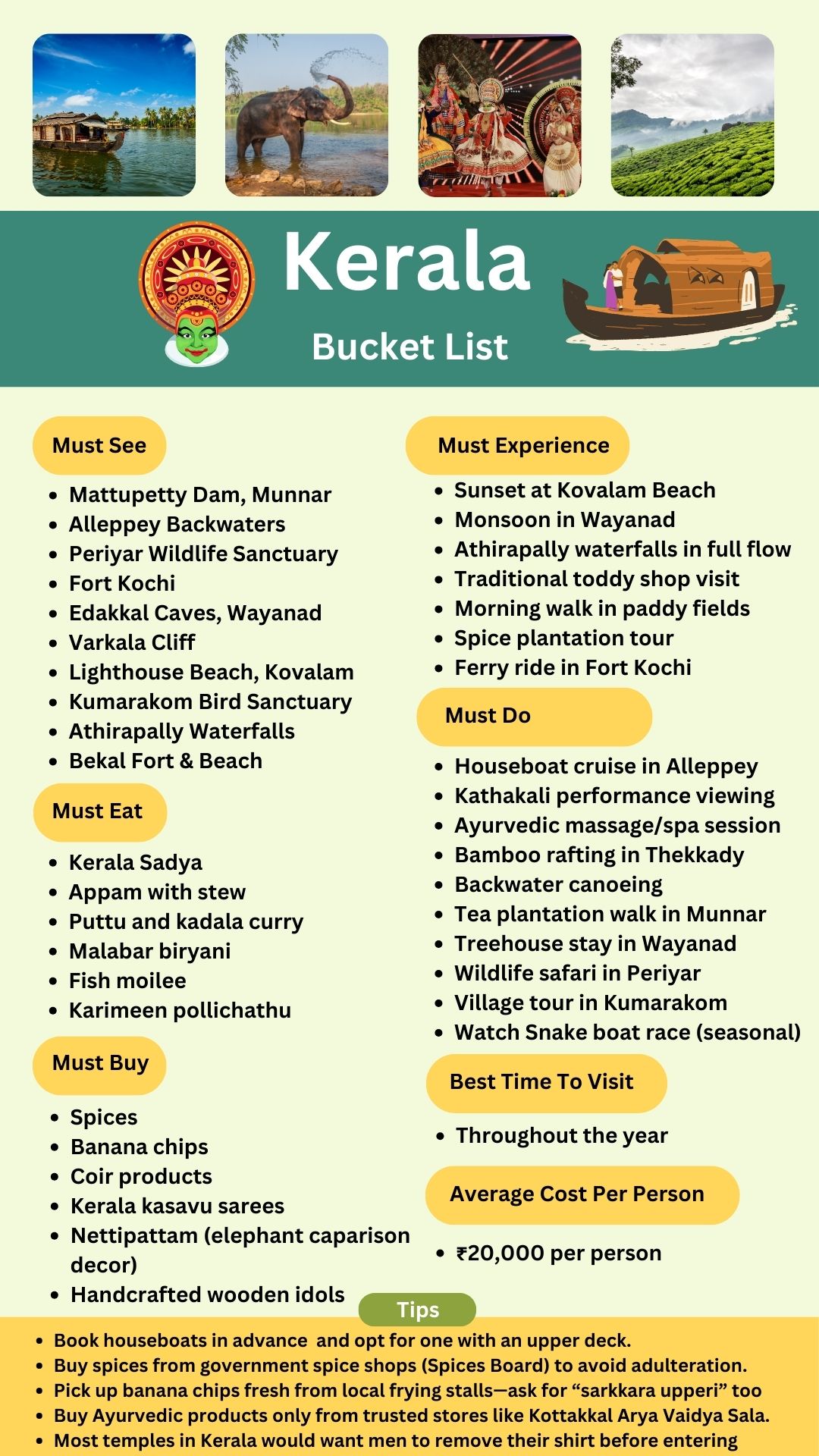
Kerala earns its nickname, God’s Own Country, within hours of arrival. Palm-fringed backwaters, misty tea hills, wild elephants, and 350 miles of coastline all share one compact state. Add classical dance, Ayurvedic healing, and some of India’s most flavorful cooking, and the appeal is easy to see.
This Kerala bucket list gathers the sights, experiences, flavors, and practical tips that matter most. It works whether you have a week or a month. Read on, then pick the pieces that fit your pace.
Kerala Bucket List at a Glance
| Category | Top Recommendation | Best Time | Recommended Duration |
|---|---|---|---|
| Backwaters | Houseboat cruise in Alleppey | October to March | 1 to 2 nights |
| Hill Stations | Mattupetty Dam and tea estates, Munnar | September to March | 2 to 3 days |
| Wildlife | Periyar Wildlife Sanctuary, Thekkady | October to March | 1 to 2 days |
| Heritage | Fort Kochi | October to March | 1 to 2 days |
| Beaches | Varkala Cliff and Kovalam | November to March | 2 to 3 days |
| Waterfalls and Monsoon | Athirapally Waterfalls and Wayanad | June to September | 2 days |
| Culture | Kathakali performance | Year-round | 1 evening |
| Local Food | Kerala Sadya | Year-round | 1 festive meal |
| Overall Trip | Backwaters, hills, coast, and culture | October to March | 7 to 10 days |
Must-See Destinations
Places You Shouldn’t Miss
- Mattupetty Dam, Munnar: This reservoir sits around 8 miles from Munnar town, framed by rolling tea hills. Boating is popular, and wild elephants occasionally appear near the shore. Visit early for clear views before mist and crowds arrive.
- Alleppey Backwaters: Alappuzha, called the Venice of the East, sits on the edge of Vembanad Lake. Narrow canals wind past rice fields, coconut groves, and village homes. Allow one to two nights to feel the rhythm of the water.
- Periyar Wildlife Sanctuary: Set in the Cardamom Hills, this reserve surrounds a lake formed by an 1895 dam. Elephants often gather along the shore. Boat cruises run about two hours, and early departures offer the best wildlife sightings.
- Fort Kochi: This coastal quarter blends Portuguese, Dutch, British, and Jewish heritage. Sights include the Chinese fishing nets, St. Francis Church, and the lanes of Mattancherry. Walk or cycle slowly, and plan a full day.
- Edakkal Caves, Wayanad: These rock shelters on Ambukuthi Hill hold ancient carvings thousands of years old. The climb involves steep steps and a short trek. Wear sturdy shoes, and visit in dry months for safer footing.
- Varkala Cliff: Red sandstone cliffs rise above the Arabian Sea, lined with cafes and small shops. The cliff is recognized as a geological heritage site. Arrive near sunset, and swim only where lifeguards are present.
- Lighthouse Beach, Kovalam: This crescent of sand is named for the striped lighthouse above it. Climb the tower for wide coastal views. The calm, sheltered water suits relaxed afternoons and easy swimming.
- Kumarakom Bird Sanctuary: This wetland on Vembanad Lake shelters herons, egrets, kingfishers, and cormorants. Migratory species arrive in winter. Take a morning boat ride when birds are most active, and bring binoculars.
- Athirapally Waterfalls: Fed by the Chalakudy River, this wide cascade drops about 80 feet through dense forest. It is most dramatic after heavy rain. Stay behind railings, and check access before driving from Kochi.
- Bekal Fort and Beach: This keyhole-shaped 17th-century fort overlooks the Arabian Sea in northern Kerala. Climb the ramparts for sunset views. The beach below is calm and uncrowded, making it a quiet northern highlight.
Must-Experience Moments
Unforgettable Experiences
- Sunset at Kovalam Beach: Fishing boats glide home while the sky turns orange and pink. The mood is relaxed, and cafes line the shore. Arrive 45 minutes early to secure a good spot.
- Monsoon in Wayanad: From June to September, mist and waterfalls transform the hills into a deep green world. Trails can be slippery and leeches are common. Heavy rains can cause landslides, so follow local advisories.
- Athirapally waterfalls in full flow: Monsoon turns the falls into a thundering curtain of water. The spray cools the air and creates rainbows on bright days. Wear non-slip shoes, and protect your camera from mist.
- Traditional toddy shop visit: Toddy is a mildly alcoholic drink made from coconut palm sap. Licensed toddy shops serve it with spicy fish curry and tapioca. Drink in moderation, and try family-run shops around Kuttanad.
- Morning walk in paddy fields: Kuttanad farms lie below sea level, protected by earthen bunds. Dawn brings soft light, egrets, and the smell of wet earth. Wear comfortable shoes, and ask locals before entering private fields.
- Spice plantation tour: Plantations around Thekkady, Munnar, and Wayanad grow pepper, cardamom, cloves, and vanilla. Guides explain how each plant grows and is processed. Tours last about one to two hours and suit all ages.
- Ferry ride in Fort Kochi: Public ferries link Fort Kochi with Ernakulam and nearby islands for a few rupees. The short crossing offers skyline views and fishing boats. Go at dusk for golden light and fewer crowds.
Must-Do Activities
Best Things to Do
- Houseboat cruise in Alleppey: These converted rice barges, called kettuvallams, drift through quiet canals. Most overnight cruises start around noon and end the next morning. Choose one with an upper deck for sunset views.
- Kathakali performance viewing: This classical dance-drama features dramatic makeup, elaborate costumes, and expressive hand gestures. Performances in Kochi and Cheruthuruthy often last about 90 minutes. Arrive early to watch the performers apply their makeup.
- Ayurvedic massage or spa session: Kerala is a center for traditional Ayurvedic therapy. A single session offers a taste, while longer programs involve consultations and personalized oils. Choose centers approved by Kerala Tourism for better standards.
- Bamboo rafting in Thekkady: This full-day eco-tourism program combines forest trekking with rafting on the Periyar lake. Groups are small and guided by forest staff. Book ahead, and expect moderate fitness demands and leech socks.
- Backwater canoeing: Small canoes slip into canals too narrow for larger boats. Without engine noise, you hear birds, paddles, and village life. Two hours in the morning is ideal, especially around Alleppey and Kumarakom.
- Tea plantation walk in Munnar: Emerald slopes stretch across the high ranges in every direction. Guided walks explain how tea leaves are picked and processed. Go early in the day, and carry a light jacket.
- Treehouse stay in Wayanad: Elevated cabins rise among tall trees, with forest sounds all night. The experience feels remote yet comfortable. Book early in peak season, and bring insect repellent.
- Wildlife safari in Periyar: Boat cruises and guided walks offer different views of the reserve. Elephants, deer, and bison are the most common sightings. Tigers are rare, so focus on enjoying the landscape.
- Village tour in Kumarakom: Local hosts demonstrate coir spinning, fishing, and toddy tapping. These tours support small communities directly. Choose operators that hire local guides and respect village privacy.
- Watch a snake boat race: The Nehru Trophy Boat Race on Punnamada Lake began in 1952. Long snake boats carry more than 100 rowers each. It is held in August, so book tickets and lodging well in advance.
Where to Eat
What to Eat
- Kerala Sadya: This vegetarian feast is served on a banana leaf and can include more than 20 dishes. Expect rice, sambar, avial, thoran, and sweet payasam. It is the highlight of Onam, and many restaurants serve it during festivals.
- Appam with stew: Appam is a lacy rice pancake with soft, spongy centers. Mild stew with coconut milk, vegetables, or chicken completes the dish. It is a classic breakfast in central Kerala, especially around Kottayam.
- Puttu and kadala curry: Puttu is steamed rice flour layered with grated coconut. Kadala curry is a spiced black chickpea gravy. Find it at tea shops and small breakfast spots across the state.
- Malabar biryani: This northern specialty uses short-grain rice and gentle spices rather than heavy heat. Meat and rice are slow-cooked together. Look for it in Kozhikode and Thalassery.
- Fish moilee: Fish simmers in a creamy coconut milk sauce with turmeric, ginger, and green chilies. The flavor is mellow and fragrant. Backwater restaurants around Alleppey and Kochi serve especially fresh versions.
- Karimeen pollichathu: Pearl spot fish is marinated in spices, wrapped in banana leaf, and pan-fried. It is Kerala’s state fish and a Kuttanad favorite. Order it at lakeside restaurants in Kumarakom and Alleppey.
What to Buy
Best Souvenirs to Buy
- Spices: Black pepper, cardamom, cinnamon, and cloves reflect Kerala’s long spice trade history. Buy whole spices in sealed packs for better freshness. Kumily, Munnar, and Mattancherry are strong shopping areas.
- Banana chips: Thin slices of raw banana are fried in coconut oil until crisp. Buy small batches, since freshness matters. Chips are sold in bakeries and fry shops across the state.
- Coir products: Mats, rugs, and baskets made from coconut husk are durable and light. Alappuzha has a long coir tradition. They pack flat and make practical gifts.
- Kerala kasavu sarees: These off-white cotton sarees have gold borders and are worn at Onam and Vishu. Handloom versions from Balaramapuram are especially admired. Look for authenticity labels when buying.
- Nettipattam (elephant caparison decor): These gilded ornamental headpieces are used on temple elephants during festivals. Miniature versions make striking wall decor. Look for them in Thrissur and Kochi souvenir shops.
- Handcrafted wooden idols: Kerala artisans carve figures from teak and other woods. Details are fine, and pieces are heavy for their size. Check export rules for protected woods before flying abroad.
Best Time to Visit Kerala
Seasonal Highlights
- October to March: Cooler, drier weather suits backwaters, beaches, and wildlife. Houseboats and resorts are busiest from December to January. Book early if you plan to travel during the holidays.
- April to May: Coastal areas turn hot and humid, but hill stations stay comfortable. Munnar and Wayanad offer relief with cooler air. This is a good window for tea estates and quieter trails.
- June to September: The southwest monsoon brings lush scenery and lower prices. It is ideal for waterfalls, Ayurveda programs, and the snake boat races. Expect rain, and follow safety notices in the hills.
- Onam season: This harvest festival usually falls in late August or September. Look for flower carpets, feasts, and cultural events. Hotels fill quickly, so reserve ahead.
Average Cost Per Person
Budget Breakdown
- Planning figure: A common estimate is around ₹20,000 per person for a short trip. Actual costs vary with season, comfort level, and itinerary. Treat it as a starting point.
- Biggest expenses: Houseboats and resort stays usually cost the most. Private cars add comfort but raise the budget. Public ferries, trains, and buses keep daily travel affordable.
- Where to save: Beaches, temple visits, and local meals cost very little. Travel in shoulder seasons for better rates. Mix a splurge night on a houseboat with simpler stays elsewhere.
Travel Tips
Essential Travel Tips
- Book houseboats in advance: Reserve early in peak winter months, and choose one with an upper deck. It offers shade, breeze, and wide views. Look for Kerala Tourism classification, and confirm meals and cruise hours.
- Buy spices from trusted shops: Government outlets linked to the Spices Board help reduce the risk of adulteration. Check seals and packaging details. Bring airtight bags for strong aromas.
- Pick up banana chips fresh: Local frying stalls offer the best flavor. Ask for sarkkara upperi, banana chips coated in jaggery. It is a sweet, crunchy treat.
- Buy Ayurvedic products carefully: Stick to trusted stores such as Kottakkal Arya Vaidya Sala. It was founded in 1902 and is widely respected. Avoid unlabeled oils sold in tourist areas.
- Follow temple dress rules: Most temples ask men to remove shirts before entering. Dress modestly, remove footwear, and follow posted rules. Some major temples admit only Hindus, so check before visiting.
- Plan transport realistically: Hill roads are winding, and distances take longer than expected. Trains, buses, taxis, and ferries each have a role. During monsoon, check road conditions and allow extra time.
Build Your Own Kerala Itinerary
Kerala works best when you slow down and choose carefully. Pair a hill escape with a backwater stay, add a beach, and leave room for meals. Pick your favorites from this list, travel when the weather suits you, and enjoy the pace.