
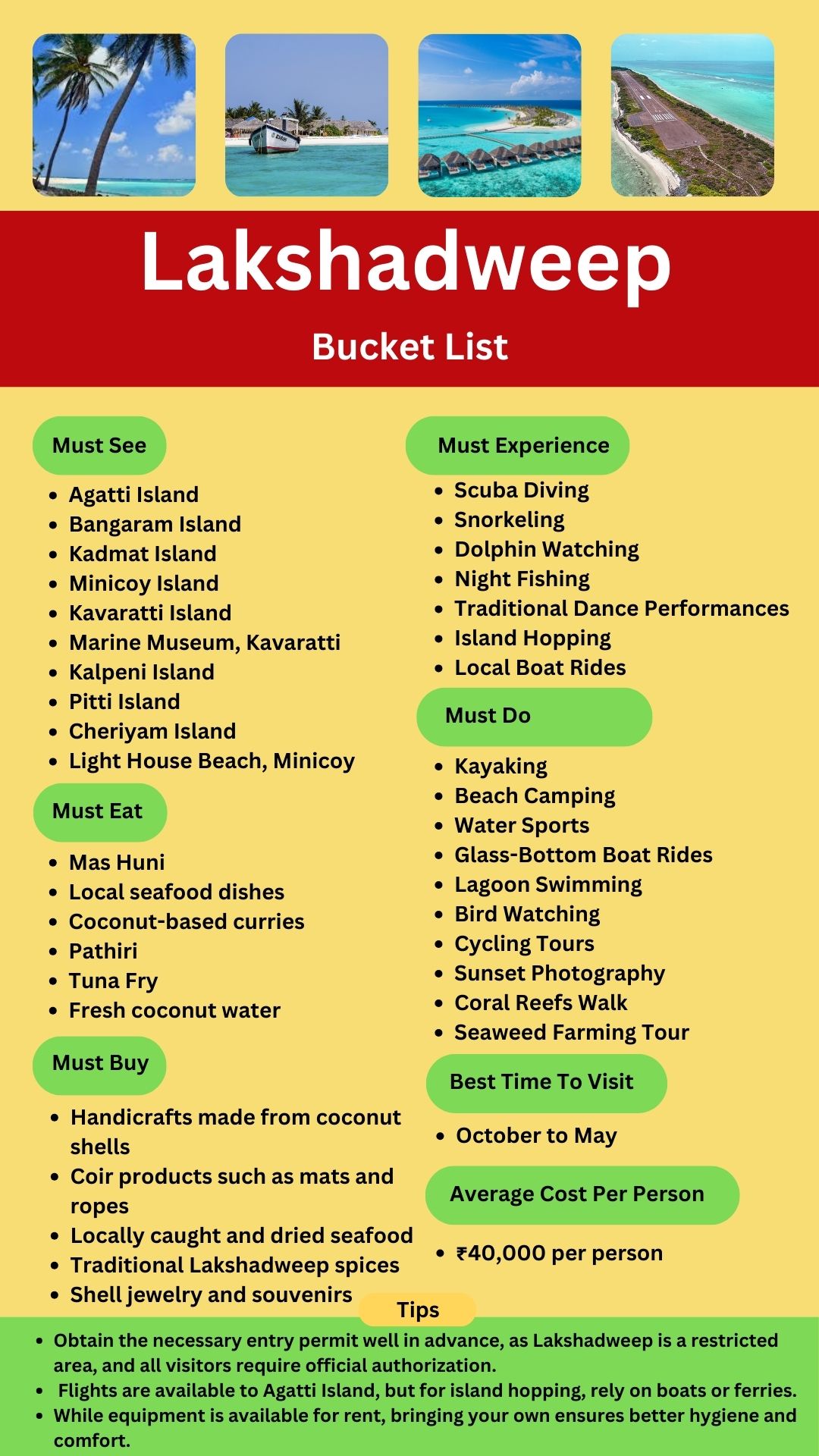
Lakshadweep is India’s best-kept island secret. This small Union Territory sits in the Arabian Sea, off the coast of Kerala. Its name means one hundred thousand islands, though the real number is far smaller.
The islands are made of coral atolls, so the lagoons glow in shades of turquoise. Life moves slowly, and the culture blends Kerala traditions with Islamic heritage. Because tourism is limited, the beaches and reefs stay wonderfully quiet.
This guide covers the top islands, experiences, activities, foods, and souvenirs. It also explains the best season, the budget, and the permit rules.
| Category | Top Recommendation | Best Time | Recommended Duration |
|---|---|---|---|
| Must See | Agatti and Bangaram islands | October to May | 2 days |
| Must Experience | Scuba diving | November to April | 1 to 2 days |
| Must Do | Glass-bottom boat ride | October to May | 1 to 2 hours |
| Must Eat | Tuna fry | Year-round | 1 meal |
| Must Buy | Coir products | Year-round | 1 hour |
| Overall Trip | Islands, reefs, and culture | October to May | 5 to 6 days |
Must See
Places You Shouldn’t Miss
- Agatti Island: This is the main gateway for flights, so most trips begin here. Its long beaches and calm lagoon are perfect for a relaxed start. Allow a full day to explore, and check boat transfers for nearby islands.
- Bangaram Island: Bangaram is a tiny, uninhabited island with a dazzling lagoon and white sand. It is usually visited by boat from Agatti. Go early to enjoy the quiet, and confirm current access and stay options.
- Kadmat Island: Kadmat is long and narrow, with beaches on both sides. It is known for diving and water sports. Also, its calm waters suit beginners, so plan at least a day.
- Minicoy Island: Minicoy has its own language and a culture linked to the Maldives. Its people are famous for graceful dances and boat building. Visit for the culture, and time your trip around festivals if possible.
- Kavaratti Island: Kavaratti is the capital of Lakshadweep. Visitors can see mosques, small markets, and clear lagoons. It is also easy to explore by bicycle, so rent one for a gentle day.
- Marine Museum, Kavaratti: This museum displays corals, shells, and local marine life. It helps you understand the reef before you dive or snorkel. Therefore, visit early in your trip, and allow about an hour.
- Kalpeni Island: Kalpeni is known for its large lagoon and sandbanks. Boat rides here reveal coral gardens and shallow blue water. Pick a calm morning, and bring a hat and sunscreen.
- Pitti Island: This small, uninhabited island is a bird haven. Terns and other seabirds nest here in season. Because it is protected, follow your guide’s instructions and keep your distance.
- Cheriyam Island: Cheriyam lies near Kalpeni and is mostly known for its quiet lagoon. It is ideal for peaceful swimming and photography. Visit on a boat trip, and avoid disturbing the coral.
- Light House Beach, Minicoy: This beach is near Minicoy’s famous lighthouse, which was built in the 19th century. The sand is soft and the sea is a rich blue. Visit near sunset for the best light.
Must Experience
Unforgettable Experiences
- Scuba Diving: Lakshadweep’s reefs are home to colorful fish, turtles, and rays. Certified centers on the islands run guided dives. Choose November to April, and expect to spend a few hours per dive.
- Snorkeling: Calm lagoons make snorkeling easy for beginners. You will see coral, parrotfish, and clownfish just below the surface. Go on a sunny morning, when the water is clearest.
- Dolphin Watching: Boat trips sometimes spot spinner dolphins leaping near the islands. Sightings are never guaranteed, but the scenery is superb. Book an early trip, and keep your camera ready.
- Night Fishing: Local fishermen head out after dark to catch tuna and other fish. Join a guided trip if your hosts offer one. Dress warmly, because the sea breeze can feel cool.
- Traditional Dance Performances: Island communities preserve folk dances and songs. Minicoy is known for its Lava dance. Ask your host about local events, and watch respectfully.
- Island Hopping: Each island has its own pace and personality. Travel by boat, ferry, or in some cases helicopter. Because schedules can change, build in extra time.
- Local Boat Rides: Traditional wooden boats called dhonis glide across the lagoons. They offer a slow, scenic way to see the coastline. Agree on a price in advance, and wear a life jacket.
Must Do
Best Things to Do
- Kayaking: Calm lagoons make kayaking easy and relaxing. Paddle along the shore and watch fish in the shallows. A one-hour trip suits all fitness levels.
- Beach Camping: Some islands allow camping in approved areas. Falling asleep to the sound of waves is unforgettable. However, always get permission first, and follow local rules.
- Water Sports: Kadmat and other islands offer activities like banana boat rides and paddling. Operators supply safety gear. Go in the morning, when the sea is calm.
- Glass-Bottom Boat Rides: These rides let you view the reef without getting wet. They are perfect for children and non-swimmers. Choose a sunny day, since light brings out the colors.
- Lagoon Swimming: The lagoons are shallow, warm, and gentle. Swim near the shore, and avoid stepping on coral. Also, apply reef-safe sunscreen to protect marine life.
- Bird Watching: Seabirds nest on small islands like Pitti. Binoculars help you see them from a distance. Visit early in the day, and stay quiet.
- Cycling Tours: The islands are flat, so cycling is easy. Quiet lanes pass palm groves and small villages. Bring water, and ride in the morning or late afternoon.
- Sunset Photography: The open horizon makes sunsets spectacular. Golden light spills across the lagoon. Arrive early, and use a tripod for sharper shots.
- Coral Reefs Walk: At low tide, guides may lead short walks over shallow reefs. It is a close look at marine life. Wear sturdy water shoes, and never touch or collect coral.
- Seaweed Farming Tour: Seaweed farming is part of island life in some areas. A visit shows how communities use the sea sustainably. Ask your host or guide to arrange it.
Must Eat
What to Eat
- Mas Huni: This simple dish mixes shredded tuna, coconut, onion, and chili. It is often eaten with flatbread. Try it for breakfast, ideally in a local home or small eatery.
- Local Seafood Dishes: Fresh fish, lobster, and octopus appear on many menus. Cooks often grill or fry them with simple spices. Because catches vary daily, ask what came in that morning.
- Coconut-Based Curries: Coconut is everywhere in island cooking. Creamy curries balance spice with sweetness. Order them with rice, and ask how spicy they are.
- Pathiri: These thin rice flatbreads are soft and mild. They pair well with fish curry or meat gravies. Look for them in small cafes and homestays.
- Tuna Fry: Tuna is the star of the islands. Cooks coat it in spices and fry it until crisp. Eat it fresh on the island where it was caught.
- Fresh Coconut Water: This is the perfect refreshment after a day in the sun. Vendors cut open green coconuts on the spot. Drink it cold, then scoop out the soft flesh.
Must Buy
Best Souvenirs to Buy
- Coconut Shell Handicrafts: Artisans turn coconut shells into bowls, spoons, and decorative items. They are lightweight and eco-friendly. Buy directly from local makers whenever possible.
- Coir Products: Coir comes from coconut husks and becomes mats, ropes, and baskets. These items are durable and practical. They pack flat, so they are easy to bring home.
- Locally Caught and Dried Seafood: Dried fish is a long-standing island specialty. It keeps well and has strong flavor. Check airline and customs rules, and pack it in sealed bags.
- Traditional Lakshadweep Spices: Island kitchens use spices to flavor seafood and coconut dishes. Small packets make great gifts. Buy from trusted local shops.
- Shell Jewelry and Souvenirs: Shell crafts are popular, but choose carefully. Some marine items are protected by law. Therefore, avoid coral, and buy only from legal, local sellers.
Best Time to Visit
Seasonal Highlights
- October to December: The seas are calm and the weather is pleasant. Visibility is excellent for diving and snorkeling. Also, this is a good time to book early.
- January to March: This is peak season, with clear skies and warm days. Services run smoothly, but prices can rise. Reserve flights and stays well in advance.
- April to May: It is hotter, but the lagoons are still calm. Fewer visitors mean quieter beaches. Meanwhile, early mornings are ideal for activities.
- June to September: Monsoon brings rough seas and limited transport. Many services pause. Therefore, plan your trip outside this window.
Average Cost Per Person
What to Budget For
- Overall budget: A rough average is about 40,000 rupees per person for a short trip. Actual costs depend on the season, the package, and the islands you choose. Compare options before booking.
- Transport: Flights to Agatti and boat transfers are a major cost. Ships can be cheaper but take longer. Book early, since seats are limited.
- Stay and food: Rooms range from simple guesthouses to resorts. Meals are often included in packages. Ask what is covered before you pay.
- Activities: Diving and water sports add to the total. Snorkeling and kayaking are usually cheaper. Choose a few highlights rather than trying everything.
Travel Tips
Essential Travel Tips
- Permit first: Lakshadweep is a restricted area, and all visitors need official authorization. Apply well in advance, because processing takes time. Carry printed copies and valid ID.
- Plan transport carefully: Flights serve Agatti, but island hopping relies on boats or ferries. Schedules can shift with weather. Therefore, keep your itinerary flexible.
- Bring your own gear: Rental equipment is available, but your own gear is more hygienic and comfortable. A mask, snorkel, and fins fit easily in a bag. Also, pack reef-safe sunscreen.
- Respect local customs: Island communities are conservative. Dress modestly in villages, and check local rules on alcohol. Always ask before photographing people.
- Prepare for limited services: ATMs and mobile networks can be unreliable. Carry some cash and download offline maps. Meanwhile, pack basic medicines.
Build Your Own Lakshadweep Itinerary
Lakshadweep rewards slow, careful planning. Start with the permit, choose your season, and pick a few islands. Use this bucket list to design a trip that feels calm, clear, and unforgettable.