
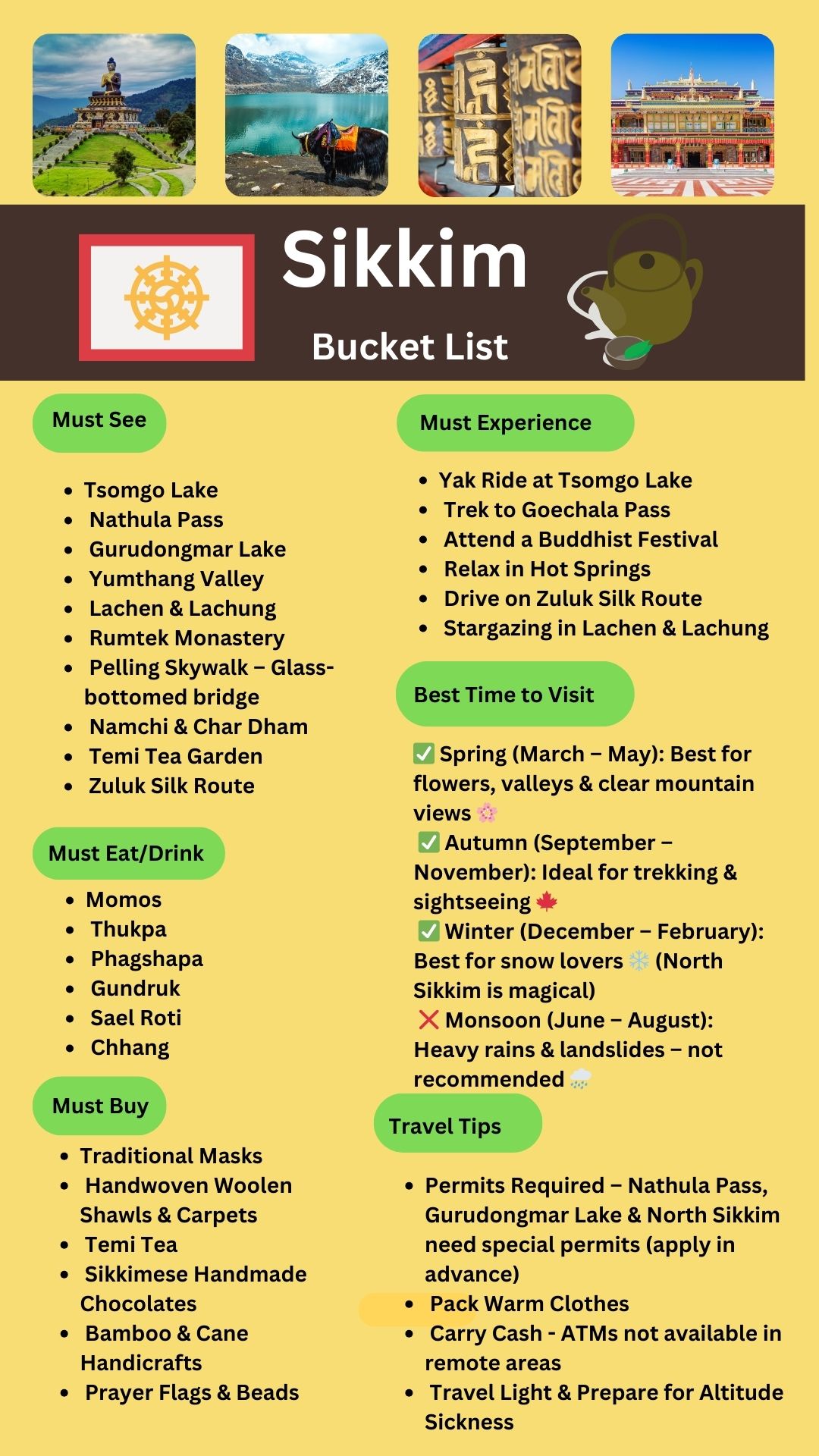
Sikkim is one of India’s smallest states, yet it feels endlessly big. Snowy peaks rise above terraced hills, and prayer flags flutter along every ridge. Mount Kanchenjunga, the world’s third-highest peak, watches over it all.
The state is also calm and welcoming. Buddhist monasteries sit beside Nepali villages, and mountain roads wind through rhododendron forests. Because it is clean, scenic, and relaxed, Sikkim suits first-time Himalayan travelers.
This guide covers the top sights, experiences, foods, and souvenirs. It also includes seasonal advice, permit notes, and altitude tips.
| Category | Top Recommendation | Best Time | Recommended Duration |
|---|---|---|---|
| Must See | Tsomgo Lake and Gurudongmar Lake | March to May, October to November | 2 to 3 days |
| Must Experience | Goecha La trek | April to May, October to November | 8 to 10 days |
| Must Eat and Drink | Momos and thukpa | Year-round | 1 meal each |
| Must Buy | Temi tea and handwoven carpets | Year-round | 1 to 2 hours |
| Overall Trip | Gangtok, North Sikkim, and Pelling | March to May, October to November | 7 to 10 days |
Must See
Places You Shouldn’t Miss
- Tsomgo Lake: Also called Changu Lake, this glacial lake sits above 12,000 feet near Gangtok. It is sacred to local people and changes color through the seasons. Visit in the morning, since fog often rolls in by afternoon.
- Nathula Pass: This high mountain pass on the Indo-China border was part of the ancient Silk Route. It rises above 14,000 feet. Access is limited to certain days and nationalities, so check the rules and permits first.
- Gurudongmar Lake: This lake in North Sikkim lies at about 17,800 feet. Buddhists and Sikhs both honor it as a holy place. Start before dawn, and keep your stay short because of the extreme altitude.
- Yumthang Valley: Known as the Valley of Flowers of Sikkim, this meadow blooms with rhododendrons in spring. Snow-capped peaks frame the scene. Go between April and May, and take a short soak in nearby hot springs.
- Lachen and Lachung: These two mountain villages are the gateways to North Sikkim. Lachen leads to Gurudongmar, while Lachung leads to Yumthang. Stay overnight in each, and enjoy the homestays and local meals.
- Rumtek Monastery: This large monastery near Gangtok is an important seat of the Karma Kagyu school. Its golden stupa and painted halls feel peaceful. Arrive in the morning, and remove your shoes before entering.
- Pelling Skywalk and Glass-Bottomed Bridge: This attraction features a giant statue of Chenrezig and a glass-bottomed walkway. The view of Kanchenjunga is superb on clear days. Visit early for the best visibility, and allow about two hours.
- Namchi and Char Dham: Namchi in South Sikkim features large temple complexes with replicas of famous pilgrimage sites. A huge statue of Guru Padmasambhava overlooks the town. Therefore, plan half a day, and wear comfortable shoes.
- Temi Tea Garden: This is Sikkim’s only tea estate and produces fragrant organic tea. The slopes are lush and photogenic. Visit during spring harvest for the best experience, and stop for a tasting.
- Zuluk Silk Route: This winding road in East Sikkim follows an old trade route to Tibet. Its hairpin bends offer dramatic mountain views. Go in spring or late autumn, and secure permits before you travel.
Must Experience
Unforgettable Experiences
- Yak Ride at Tsomgo Lake: Short yak rides are a fun way to enjoy the cold, high-altitude scenery. The yaks are decorated with colorful blankets. Agree on a price first, and wear gloves.
- Trek to Goecha La Pass: This trek starts in Yuksom and climbs to about 16,000 feet. It passes forests, alpine lakes, and views of Kanchenjunga. It demands good fitness, so go in April, May, October, or November.
- Attend a Buddhist Festival: Monasteries host colorful mask dances during festivals such as Losar and Pang Lhabsol. Dates follow the lunar calendar, so check them in advance. Watch quietly, and ask before taking photos.
- Relax in Hot Springs: Natural springs at places like Yumthang and Ravangla are believed to have healing properties. A soak feels wonderful after a cold day. Bring a towel and a change of clothes.
- Drive on the Zuluk Silk Route: The road zigzags up hillsides and offers wide views. It is best done with an experienced local driver. Avoid driving after dark, and allow extra time for stops.
- Stargazing in Lachen and Lachung: High altitude and low light pollution make for brilliant night skies. Winter and autumn offer the clearest views. Dress in layers, and step outside after dinner.
Must Eat and Drink
What to Eat and Drink
- Momos: These steamed dumplings are filled with vegetables, chicken, or pork. They come with a spicy chutney and a light soup. Try them at street stalls in Gangtok, where they are served hot and fresh.
- Thukpa: This warm noodle soup combines vegetables, meat, and a flavorful broth. It is ideal after a chilly day. Look for it in small cafes in Gangtok and North Sikkim.
- Phagshapa: This hearty stew features strips of pork fat cooked with radish and dried chilies. It is rich and warming. Order it at local restaurants, and share it with rice.
- Gundruk: Cooks ferment leafy greens, then use them in tangy soups and side dishes. The flavor is unique and slightly sour. Try it in homestays, where recipes are traditional.
- Sael Roti: This ring-shaped rice bread is crisp outside and soft inside. It is popular during festivals. Enjoy it with potato curry or tea.
- Chhang: This millet drink is served in a bamboo mug and sipped through a thin straw. Hot water is added as you drink. Drink it slowly, and pace yourself.
Must Buy
Best Souvenirs to Buy
- Traditional Masks: Wooden masks represent figures from local dance traditions. They are striking wall decorations. Buy from handicraft centers, and ask about their meaning.
- Handwoven Woolen Shawls and Carpets: Local weavers create warm shawls and richly patterned carpets. They are durable and colorful. Choose government-run outlets when possible, since they ensure fair prices.
- Temi Tea: This organic tea has a delicate flavor and a floral aroma. It makes an easy, lightweight gift. Buy from the estate or reliable shops in Gangtok.
- Sikkimese Handmade Chocolates: Small producers make chocolates using local ingredients. They are a sweet reminder of your trip. Pack them carefully, since heat can melt them.
- Bamboo and Cane Handicrafts: Baskets, trays, and decorative items are common. They are light and eco-friendly. Look for neat stitching and strong weaving.
- Prayer Flags and Beads: Prayer flags carry blessings across the mountains. Beads and mala necklaces are also popular. Hang flags respectfully, and never throw them away carelessly.
Best Time to Visit
Seasonal Highlights
- Spring (March to May): Rhododendrons bloom and valleys turn green. Mountain views are often clear. Consequently, this is a favorite season for sightseeing.
- Autumn (September to November): Skies are bright and trekking trails are in good shape. Temperatures are pleasant at lower elevations. Also, this is an ideal time for monasteries and viewpoints.
- Winter (December to February): Snow covers North Sikkim, creating a magical landscape. It is cold, though, and some roads can close. Pack extra layers, and check road conditions.
- Monsoon (June to August): Heavy rains bring landslides and travel delays. Views are often hidden by clouds. Therefore, most travelers avoid this season.
Travel Tips
Essential Travel Tips
- Permits required: Nathula Pass, Gurudongmar Lake, and much of North Sikkim need special permits. Apply well in advance through registered operators. Carry copies of your ID and permit papers.
- Pack warm clothes: Temperatures drop quickly at high altitude, even in spring. Bring thermal layers, a windproof jacket, gloves, and a hat. Also, pack sturdy shoes and sun protection.
- Carry cash: ATMs are rare in remote areas, and card payments are not always accepted. Withdraw money in Gangtok before heading north. Keep small notes for shops and yak rides.
- Travel light and prepare for altitude: Pack only essentials, since mountain roads are long. Ascend gradually and drink plenty of water. If you feel ill, descend and seek medical help.
- Plan transport carefully: Most visitors fly into Bagdogra and continue by road, though Pakyong Airport has limited flights. Shared jeeps and private cars are common. Allow extra time for monsoon and winter delays.
Build Your Own Sikkim Itinerary
Sikkim rewards slow travel and careful planning. Start with permits, pick a season, and choose a few regions. Use this bucket list to design a Himalayan trip that fits your pace.