
Few coastlines pack this much drama into so few miles. Pastel towns cling to cliffs above turquoise water. Lemon groves scent the air along narrow mountain roads.
The Amalfi Coast has drawn travelers for centuries, from Roman aristocrats to postwar Hollywood stars. UNESCO named it a World Heritage Site, recognizing a landscape shaped equally by nature and centuries of human ingenuity. Every town here offers a slightly different version of the same magic.
This is a coastline built for slow travel. Ferries hop between towns, hiking trails cross the cliffs above, and every terrace seems to frame a perfect sunset. Building a bucket list here means choosing which version of paradise fits your trip.
Quick Reference: Amalfi Coast at a Glance
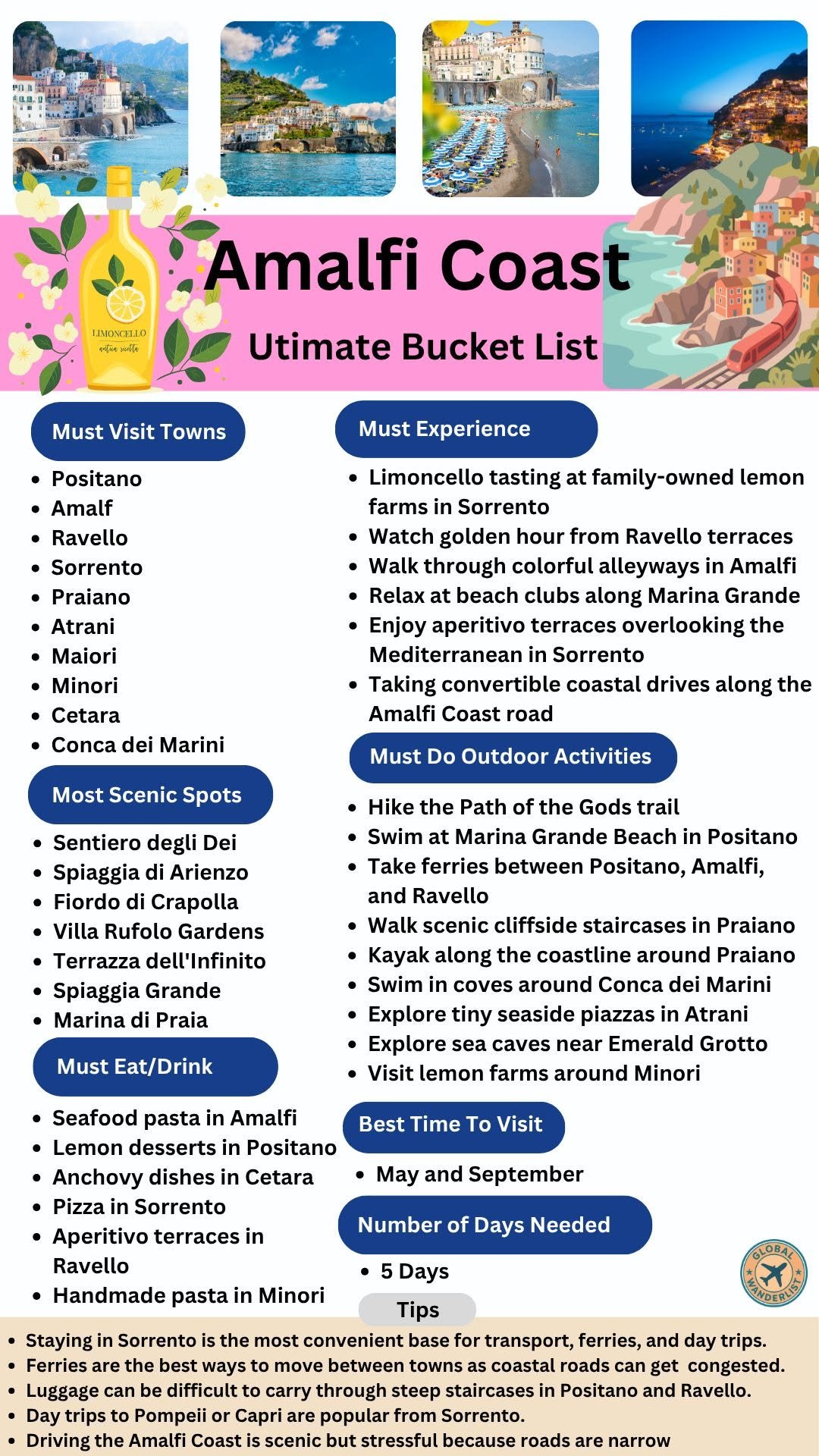
| Category | Top Recommendation | Best Time | Recommended Duration |
|---|---|---|---|
| Must Visit Towns | Positano and Ravello | April to June, September | 3-5 days total |
| Main Beaches | Spiaggia Grande, Positano | May to September | Half day per beach |
| Must Experience | Limoncello tasting in Sorrento | Year-round | 1-2 hours |
| Outdoor Activities | Path of the Gods hike | April, May, September | 3-4 hours |
| Local Food | Seafood pasta in Amalfi | Year-round | 1 meal |
| Best Time to Visit | Shoulder season | May and September | 5 days |
| Travel Tips | Base yourself in Sorrento | Year-round | N/A |
Must Visit Towns
Each town along this coast has its own personality, shaped by geography as much as history. Some cling to cliffs, others hide in quiet coves, and a few climb high above the sea entirely.
Places You Shouldn’t Miss
- Positano: Known as the vertical town, Positano stacks pastel houses up a steep cliffside above a pebble beach. Legend says Poseidon founded it for a nymph he loved, and the town has drawn romantics ever since. Plan at least a full day, since the scalinatelle staircases take time to explore properly.
- Amalfi: The coast’s namesake town was once a powerful maritime republic, rivaling Venice and Genoa by the 9th century. Its Duomo di Sant’Andrea rises above a grand staircase in the main piazza, blending Arab, Byzantine, and Romanesque styles. Give yourself half a day to see the cathedral, wander the old paper district, and relax by the harbor.
- Ravello: Perched 365 meters above the sea, Ravello offers a quieter, more refined experience than the towns below. Composers and writers have found inspiration here for centuries, earning it the nickname City of Music. Its clifftop gardens make it one of the best sunset spots on the entire coast.
- Sorrento: Technically just outside the Amalfi Coast proper, Sorrento serves as the region’s most convenient home base. Its clifftop position offers sweeping views over the Bay of Naples, with easy ferry and bus connections to everywhere else. Plan a full day here for lemon farm visits and evening aperitivo terraces.
- Praiano: A quieter alternative to Positano, Praiano sits along a stretch of coast known for scenic cliffside staircases. Its calmer beaches and lower prices make it popular with travelers wanting an authentic feel. A half day here suits most visitors well.
- Atrani: One of Italy’s smallest towns, Atrani hides just around the bend from Amalfi. Its tiny seaside piazza and tangle of narrow lanes feel worlds away from the busier coastal stops. An hour or two is enough to soak up its low-key charm.
- Maiori and Minori: These twin towns offer some of the coast’s longest sandy beaches and a more relaxed, local pace. Minori is known for its Roman villa ruins and handmade pasta traditions. Both towns work well as a half-day detour from busier stops.
- Cetara: This small fishing village built its reputation on anchovies, still processed here using centuries-old methods. Its harbor stays quieter than most of the coast, giving visitors a genuine fishing-village atmosphere. A short stop here pairs well with a meal at a local trattoria.
- Conca dei Marini: Famous for the Emerald Grotto hidden along its coastline, Conca dei Marini remains one of the coast’s smaller, less crowded stops. Its dramatic cliffs and clear water make it a favorite for swimming. A half day allows time for both the grotto and a swim.
Main Beaches
Beach culture on the Amalfi Coast looks different from flat sandy stretches elsewhere in Italy. Most beaches here are small coves tucked beneath cliffs, reached by boat, stairs, or narrow paths.
Best Beaches to Visit
- Spiaggia Grande, Positano: Positano’s main beach sits directly below the town center, lined with colorful umbrellas and beach clubs. It gets busy by midmorning in summer, so an early start helps secure a good spot. Ferries to other towns depart from docks right along the shore.
- Marina Grande, Positano: This stretch works well for swimmers wanting calmer water than the main beach offers. Restaurants line the promenade behind it, making it easy to combine a swim with lunch. Late afternoon brings softer light for photos.
- Spiaggia di Arienzo: Reached by around 300 steps from the road above Positano, this beach rewards the climb with a quieter, more secluded setting. Fewer crowds make it popular with travelers seeking a break from busier shores. Bring water, since amenities are limited.
- Marina di Praia: Tucked into a narrow inlet below Praiano, this beach mixes small fishing boats with sunbathers on smooth pebbles. Its sheltered position keeps the water calm most of the year. Evening here often includes a fresh seafood dinner at a beachfront restaurant.
- Fiordo di Crapolla: A dramatic fjord-like inlet near Massa Lubrense, this spot is best reached by boat or a challenging hike. Its isolation keeps crowds minimal even in peak summer. The clear water makes it a favorite for snorkeling.
Must Experience
Some moments on this coast go beyond sightseeing. These experiences capture the local culture and rhythm of daily life here.
Unforgettable Experiences
- Limoncello Tasting in Sorrento: Family-owned lemon farms around Sorrento grow the large, fragrant lemons used in the region’s signature liqueur. Many farms offer tastings alongside tours of their terraced groves. Plan about an hour, and expect to bring home at least one bottle.
- Golden Hour in Ravello: Ravello’s clifftop terraces, especially at Villa Cimbrone, offer some of the best sunset views on the coast. The gardens stay open into the early evening during summer months. Arrive at least 30 minutes before sunset to find a good vantage point.
- Walking Amalfi’s Alleyways: Behind the main piazza, Amalfi’s old town unfolds into a maze of narrow lanes and stone stairways. These streets reveal local shops, historic paper mills, and quiet corners tourists often miss. An unplanned wander here often becomes a trip highlight.
- Beach Clubs Along Marina Grande: Renting a sunbed at one of Positano’s beach clubs adds comfort to a day by the water. Many include lunch service, so you never have to leave your spot. Reservations help during peak summer weekends.
- Aperitivo Terraces in Sorrento: Early evening on the Amalfi Coast means aperitivo, a pre-dinner ritual of drinks and small bites. Sorrento’s clifftop bars pair Mediterranean views with this Italian tradition. Arrive around sunset for the best combination of light and atmosphere.
- Convertible Coastal Drives: The Amalfi Coast road, SS163, winds along cliffs with a new view around every curve. Renting a convertible adds to the experience, though the narrow road demands a confident driver. Mornings offer lighter traffic and cooler temperatures.
Outdoor Activities
Beyond the towns and beaches, the coast’s steep terrain creates opportunities for hiking, boating, and exploring hidden corners by land and sea.
Best Outdoor Adventures
- Path of the Gods Hike: This clifftop trail runs about 7.8 kilometers between Bomerano and Nocelle, with sweeping views over the entire coastline. Rated easy to moderate, it usually takes two to three hours at a steady pace. Spring and early fall offer the most comfortable hiking temperatures.
- Swimming at Marina Grande Beach: Positano’s main beach offers easy water access with rental umbrellas and chairs. The water stays warm enough for swimming from late May through September. Mornings before the crowds arrive make for the calmest swims.
- Ferries Between Positano, Amalfi, and Ravello: Boats connect these towns quickly, often faster than driving the winding coastal road. Ferries run frequently in summer and offer some of the best photo opportunities on the coast. Check schedules ahead, since service reduces in winter months.
- Cliffside Staircases in Praiano: Praiano’s steep stone staircases connect the upper town to the sea, doubling as scenic walking routes. They require moderate fitness but reward the effort with dramatic viewpoints. Comfortable shoes make a real difference here.
- Kayaking Around Praiano: Paddling along this stretch of coast reveals sea caves and quiet coves inaccessible by land. Rental outfitters near the beach offer guided and self-led options. Calm morning water makes the best conditions for beginners.
- Swimming in Coves Around Conca dei Marini: The clear water near this town suits both casual swimming and snorkeling. Small boats can be rented to reach coves further from shore. Midday sun offers the best visibility underwater.
- Exploring Atrani’s Seaside Piazzas: Wandering Atrani’s compact streets takes only an hour but reveals a slower pace of coastal life. Its small piazza right by the water makes a peaceful rest stop. Early morning visits avoid the midday tour groups.
- Sea Caves Near the Emerald Grotto: This partially submerged cave near Conca dei Marini glows with an eerie green light from sunlight filtering through the water. Small boats ferry visitors inside for a short but memorable visit. Visit midday when sunlight best illuminates the cave.
- Lemon Farms Around Minori: Terraced lemon groves surround Minori, some open for tours and tastings. Walking through them offers a close look at the region’s signature crop. Late spring brings the most fragrant blossoms.
Local Food
The Amalfi Coast’s cuisine reflects its geography, drawing on fresh seafood, citrus, and simple mountain ingredients. Each town has its own specialty worth seeking out.
What to Eat
- Seafood Pasta in Amalfi: Dishes like scialatielli ai frutti di mare combine handmade pasta with clams, mussels, and shrimp. Amalfi’s harbor-side restaurants serve some of the coast’s freshest versions. Look for spots away from the main piazza for better prices.
- Lemon Desserts in Positano: Delizia al limone, a lemon-cream sponge cake, showcases the region’s famous citrus in dessert form. Bakeries throughout Positano sell individual portions perfect for an afternoon treat. Pair it with a coffee for a classic coastal break.
- Anchovy Dishes in Cetara: Cetara’s fishing tradition centers on anchovies, used fresh, cured, and in the prized colatura di alici sauce. Local restaurants build entire menus around this humble but flavorful fish. The sauce makes a distinctive souvenir to bring home.
- Pizza in Sorrento: Naples may claim pizza’s invention, but Sorrento’s version, often topped with local tomatoes and buffalo mozzarella, holds its own. Casual pizzerias throughout town serve wood-fired pies at reasonable prices. Lunch here pairs well with a coastal view.
- Aperitivo Terraces in Ravello: Ravello’s elevated bars serve simple plates of cheese, cured meats, and olives alongside evening drinks. The setting, high above the coastline, elevates even a basic spread. Reserve a terrace table for the best views.
- Handmade Pasta in Minori: Minori has a long tradition of pasta making, particularly a thin noodle called ndunderi. Small trattorias here serve it with simple, seasonal sauces. The town’s quieter pace makes for an unhurried meal.
Best Time to Visit
Timing a trip here affects everything from crowd size to water temperature. The coast has a clear high season, but the months just outside it often offer the best overall experience.
Seasonal Highlights
- May: Spring brings warm days without full summer crowds, along with blooming flowers and fresh produce. Hiking trails stay comfortable, and hotel rates remain lower than peak summer. Water temperatures start warming enough for swimming.
- September: Late summer heat eases while the sea stays warm from months of sun. Crowds thin out noticeably after the August rush, especially on weekdays. Restaurant reservations become easier to secure.
- July and August: Peak season brings the warmest weather and busiest towns, along with higher prices throughout the coast. Ferries and roads get crowded, so advance planning matters. This period suits travelers prioritizing lively energy over quiet exploration.
- Winter Months: Many hotels and restaurants close between November and March, and ferry service drops significantly. The coast’s dramatic scenery remains, though, for travelers seeking a quieter, cooler visit. Driving becomes easier without summer traffic.
Travel Tips
A little planning goes a long way on a coastline built around narrow roads, steep stairs, and limited parking. These practical notes help smooth out common trip challenges.
Essential Travel Tips
- Base Yourself in Sorrento: Sorrento offers the most convenient transport connections, with ferries, buses, and trains all within easy reach. It works well as a central hub for day trips throughout the region. Hotel options here also tend to be more affordable than in Positano.
- Take Ferries Between Towns: Coastal roads get congested in peak season, making ferries a faster and more scenic alternative. Boats connect most major towns from spring through fall. Check schedules the night before, since frequency drops outside summer.
- Pack Light for Steep Staircases: Many hotels in Positano and Ravello require climbing significant stairs from the street. Rolling luggage can be difficult or impossible on these paths. A backpack or soft duffel makes arrival much easier.
- Plan Day Trips to Pompeii or Capri: Both destinations sit within easy reach of Sorrento, making them popular half-day or full-day additions. Pompeii offers ancient Roman ruins, while Capri adds a glamorous island escape. Book tickets in advance during summer months.
- Consider Skipping the Driving: The Amalfi Coast road is scenic but narrow, with tight switchbacks and heavy summer traffic. Hiring a driver or relying on ferries and buses reduces stress considerably. If you do drive, avoid midday hours when traffic peaks.
- Book Restaurants Ahead in Peak Season: Popular spots in Positano and Amalfi fill up quickly during summer evenings. Reserving a table a day or two ahead helps avoid long waits. Lunch reservations matter less but still help at the most popular places.
Start Building Your Amalfi Coast Itinerary
The Amalfi Coast rewards travelers who mix its famous highlights with quieter corners. Positano’s postcard views and Ravello’s gardens deserve their fame, but Cetara’s anchovies and Atrani’s tiny piazza hold their own charm.
Use this list as a starting point, not a strict itinerary. Pick a few towns, a couple of hikes, and enough time to sit still with a view.