
The Dolomites rise like jagged limestone cathedrals across northern Italy, unlike anywhere else in the Alps. Pink light washes over the peaks at sunrise and sunset, a glow locals call enrosadira. UNESCO named the range a World Heritage Site in 2009 for its dramatic geology.
This region rewards travelers in every season. Summer brings wildflower meadows and long hiking days, while winter transforms the same peaks into one of Europe’s largest ski networks. Add in Ladin culture, Austrian-Italian cuisine, and scenic mountain passes, and it’s easy to see why this bucket list keeps growing.
This guide breaks down the essential towns, views, food, and activities worth building a trip around.
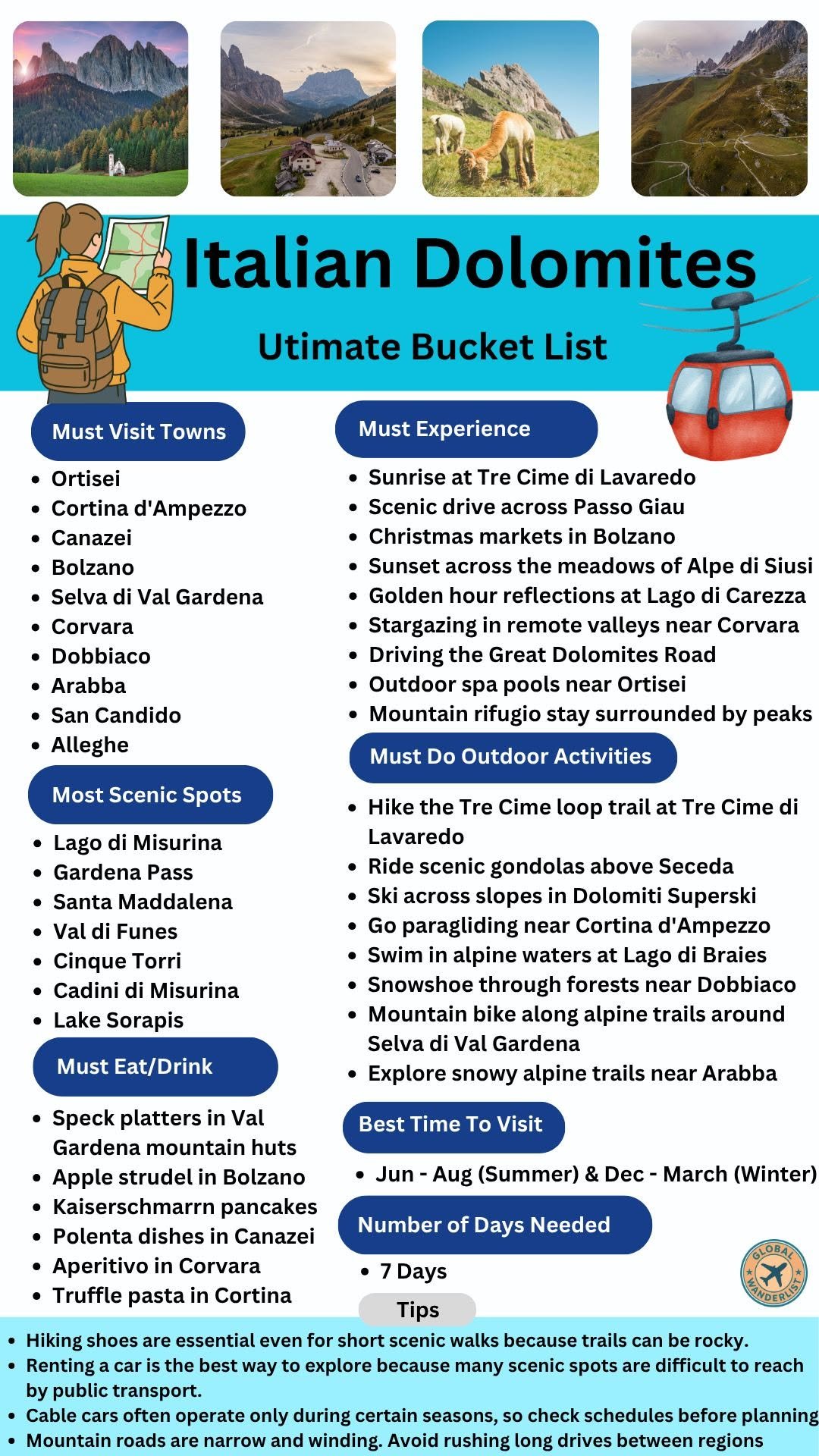
Dolomites Bucket List Summary Table
| Category | Top Recommendation | Best Time | Recommended Duration |
|---|---|---|---|
| Towns | Cortina d’Ampezzo | Jun-Aug, Dec-Mar | 7 days total |
| Scenic Spots | Lago di Braies | Summer for hiking | 1-2 hours per stop |
| Food and Drink | Speck platters in Val Gardena | Year-round | 1 meal per mountain hut |
| Experiences | Sunrise at Tre Cime di Lavaredo | Summer | Half day |
| Outdoor Activities | Hike the Tre Cime loop trail | Jun-Sep | 3-4 hours |
Must Visit Towns
Each Dolomites town carries its own character, shaped by centuries of Austrian, Italian, and Ladin influence. Some feel polished and upscale, while others remain small mountain villages with deep local tradition.
Places You Shouldn’t Miss
- Ortisei: The main town in Val Gardena, Ortisei is known for its woodcarving tradition and easy access to the Alpe di Siusi meadows. A gondola from town center connects directly to Seceda’s dramatic ridgeline. Plan a full day to explore both the town and nearby trails.
- Cortina d’Ampezzo: Nicknamed the “Queen of the Dolomites,” Cortina hosted the 1956 Winter Olympics and returned as a co-host in 2026. Elegant shops line the center, surrounded by some of the range’s most striking peaks. This town suits travelers wanting polished alpine luxury alongside serious outdoor access.
- Canazei: Sitting in Val di Fassa, Canazei serves as a major gateway to the Sella Ronda ski and hiking circuit. Views of the Marmolada glacier are visible from several points in town. It’s a strong base for travelers prioritizing the western Dolomites.
- Bolzano: South Tyrol’s capital blends Italian piazzas with Austrian architecture and a lively market scene. The city is home to Ötzi the Iceman, a 5,000-year-old mummy discovered nearby. Its December Christmas market ranks among the region’s most popular.
- Selva di Val Gardena: Neighboring Ortisei, this village offers direct access to the Sella Ronda circuit and dramatic mountain biking terrain. It feels slightly quieter than Ortisei while still offering strong lift access. A day or two here suits active travelers well.
- Corvara: The main village in Alta Badia, Corvara anchors the eastern side of the Sella Ronda. Restaurants and bars here take apres-ski and summer aperitivo culture seriously. Its central location makes it a convenient base for exploring surrounding passes.
- Dobbiaco: Sitting at the eastern edge of the Puster Valley, Dobbiaco serves as the main gateway to Tre Cime di Lavaredo. Composer Gustav Mahler spent several summers here composing. The town’s flat terrain also makes it popular for cross-country skiing.
- Arabba: This small ski village sits beneath the Marmolada and Sella massifs, offering quieter, less crowded slopes than larger resorts. Its position along the Pordoi and Campolongo passes makes it a natural stop for scenic driving routes. Winter travelers often base here for snowy trail access.
- San Candido: Near the Austrian border, San Candido holds one of the region’s most significant Romanesque churches. The town’s flat valley floor makes it especially popular for family-friendly biking and walking. It offers a quieter alternative to busier resort towns.
- Alleghe: Built around a lake formed by a sudden 1771 landslide, Alleghe sits beneath the dramatic Civetta massif. The unusual geological backstory adds character to an already scenic lakeside setting. It suits travelers wanting a quieter base away from major resorts.
Most Scenic Spots
Beyond its towns, the Dolomites offer some of the most photographed mountain scenery in the world. These spots reward travelers willing to plan around early light or a short hike.
Views Worth the Detour
- Lago di Misurina: This high-altitude lake reflects surrounding peaks with striking clarity on calm mornings. A flat, easy path circles the entire lake in under an hour. It also serves as a convenient starting point for reaching Tre Cime.
- Gardena Pass: Part of the famous Sella Ronda circuit, this pass connects Val Gardena to Alta Badia with sweeping views of the Sella massif. It’s especially scenic driven early morning before tour traffic builds. Cyclists tackle this route in summer as part of the full Sella Ronda loop.
- Santa Maddalena: This small village in Val di Funes appears in countless Dolomites photographs, framed by the jagged Odle peaks behind its onion-domed church. Sunrise offers the most dramatic light on the surrounding mountains. It remains one of the most recognizable images of the entire region.
- Val di Funes: Home to Santa Maddalena, this valley offers rolling meadows set against dramatic limestone spires. Several easy walking trails wind through the valley floor. Late spring brings especially vivid green pastures.
- Cinque Torri: These five distinctive rock towers near Cortina double as an open-air World War I museum, with preserved trenches nearby. A chairlift makes the area accessible without a demanding hike. Sunset lighting adds extra drama to the rock formations.
- Cadini di Misurina: Often called the Dolomites’ “shark teeth,” these jagged, closely packed peaks create one of the range’s most dramatic viewpoints. Reaching the best overlook requires a moderate hike from Rifugio Fonda Savio. Photographers consider this one of the top viewpoints in the entire region.
- Lake Sorapis: This striking turquoise glacial lake sits below dramatic cliffs near Cortina. The hike in takes roughly two to three hours each way, with some exposed sections requiring care. Summer offers the most stable trail conditions.
What to Eat
Dolomites cuisine blends Austrian and Italian influences, reflecting the region’s layered history under different rule. Mountain huts, called rifugi, often serve the most authentic versions of local dishes.
What to Eat
- Speck platters in Val Gardena mountain huts: This smoked, cured ham is a South Tyrolean staple, typically served alongside local cheese and dark rye bread. Mountain rifugi throughout Val Gardena serve some of the most authentic versions. It makes an ideal midday hiking meal.
- Apple strudel in Bolzano: South Tyrol’s orchards produce much of Italy’s apple crop, and Bolzano’s cafés take strudel seriously. The pastry reflects the region’s strong Austrian influence. Pair it with coffee at a historic café in the city center.
- Kaiserschmarrn pancakes: This shredded, caramelized pancake, dusted with powdered sugar and served with fruit compote, is a beloved Austrian-Italian dessert. Mountain huts across the Dolomites serve it as a hearty post-hike treat. Portions are often large enough to share.
- Polenta dishes in Canazei: Polenta appears throughout Val di Fassa, often paired with mushrooms, melted cheese, or slow-cooked game. Restaurants in Canazei serve it as a hearty, warming dish after a day on the mountain. It reflects the region’s Trentino culinary roots.
- Aperitivo in Corvara: Corvara’s bars take evening aperitivo seriously, serving spritz cocktails alongside small regional snacks. It’s a relaxed way to unwind after a day of hiking or skiing. Terraces with mountain views make the experience even better.
- Truffle pasta in Cortina: Cortina’s upscale dining scene includes seasonal truffle dishes, particularly in fall. Restaurants shave truffle fresh over handmade pasta. Reservations are recommended at the town’s more established restaurants.
Must Experience
Certain moments in the Dolomites go beyond simple sightseeing, offering deeper immersion into the landscape and local culture.
Unforgettable Experiences
- Sunrise at Tre Cime di Lavaredo: Watching first light hit these three iconic peaks is one of the Dolomites’ most rewarding experiences. Arriving before dawn helps secure parking and a quiet trail. The full loop trail takes three to four hours at a moderate pace.
- Scenic drive across Passo Giau: This winding mountain pass near Cortina delivers sweeping views with every switchback. It’s particularly stunning in early morning light with minimal traffic. The drive works well paired with a stop at the pass’s small rifugio.
- Christmas markets in Bolzano: Bolzano’s December market fills Piazza Walther with wooden stalls, mulled wine, and local crafts. It’s one of the most popular holiday markets in northern Italy. Visiting on a weekday evening helps avoid the heaviest crowds.
- Sunset across the meadows of Alpe di Siusi: Europe’s largest high-altitude alpine meadow glows warm gold as the sun sets behind the Sassolungo peaks. A cable car from Ortisei or Siusi reaches the plateau without a long hike. Evening light here draws photographers throughout summer.
- Golden hour reflections at Lago di Carezza: Known locally as the “rainbow lake,” this small lake reflects the Latemar mountain range with striking clarity. Calm evening conditions offer the best reflections. A short walking path circles the lake’s edge.
- Stargazing in remote valleys near Corvara: Limited light pollution in the surrounding valleys makes for excellent stargazing on clear nights. Higher elevation spots away from village lights offer the best visibility. Fall evenings often bring the clearest skies.
- Driving the Great Dolomites Road: This historic route connects Bolzano to Cortina, winding through some of the range’s most dramatic passes. The full drive takes most of a day with stops included. It remains one of the classic ways to see the region’s variety in a single trip.
- Outdoor spa pools near Ortisei: Several mountain hotels offer heated outdoor pools with direct views of surrounding peaks. Soaking after a day of hiking or skiing is a popular way to unwind. Many properties welcome day visitors for spa access.
- Mountain rifugio stay surrounded by peaks: Spending a night in a traditional mountain hut offers a different pace than valley towns. Meals are typically hearty and communal, often shared with other hikers. Booking ahead is essential during peak summer months.
Outdoor Activities
The Dolomites reward active travelers with terrain suited to both summer hiking and winter sports. Most activities accommodate a range of fitness levels, though some routes demand more preparation than others.
Best Outdoor Adventures
- Hike the Tre Cime loop trail: This roughly six-mile loop circles the base of the three iconic peaks, suited to hikers with moderate fitness. Allow three to four hours including photo stops. Summer offers the most reliable trail conditions.
- Ride scenic gondolas above Seceda: This lift delivers one of the Dolomites’ most dramatic ridgeline views without requiring a strenuous climb. The ride takes about fifteen minutes from Ortisei. Clear mornings offer the best visibility across the surrounding peaks.
- Ski across slopes in Dolomiti Superski: This connected network links a dozen ski areas across the region, among the largest in the world. It suits skiers of nearly every skill level, from beginner runs to challenging off-piste terrain. Peak season runs from December through March.
- Go paragliding near Cortina d’Ampezzo: Tandem paragliding flights offer a bird’s-eye view of Cortina’s surrounding peaks. No prior experience is needed for tandem flights with a certified instructor. Summer mornings typically offer the calmest flying conditions.
- Swim in alpine waters at Lago di Braies: This vividly turquoise lake allows swimming and rowboat rentals against a dramatic mountain backdrop. Water stays cold even in summer, so plan for a brief, refreshing swim. Early morning visits help avoid the heaviest crowds.
- Snowshoe through forests near Dobbiaco: Well-marked snowshoe trails wind through quiet forest terrain outside town. No prior experience is necessary, making this accessible for most fitness levels. Winter offers reliable snow cover for this activity.
- Mountain bike along alpine trails around Selva di Val Gardena: This area offers a strong network of marked mountain biking trails, from gentle valley paths to more technical descents. Bike rentals and lift access are widely available in town. Summer through early fall offers the best trail conditions.
- Explore snowy alpine trails near Arabba: Arabba’s terrain suits both downhill skiing and quieter winter hiking routes. Its position near the Marmolada offers dramatic backdrop views. Fewer crowds here make it appealing for travelers avoiding busier resorts.
Best Time to Visit
Timing shapes the Dolomites experience significantly, since summer and winter offer completely different versions of the same landscape.
Seasonal Highlights
- June through August: Summer brings the best hiking conditions, wildflower meadows, and long daylight hours. This period suits travelers prioritizing trekking, mountain biking, and scenic drives. Popular trails and viewpoints get busiest in July and August.
- December through March: Winter transforms the region into a major ski destination, with the Dolomiti Superski network drawing visitors worldwide. Christmas markets add festive charm to towns like Bolzano in December. Snow conditions are typically most reliable from January through February.
- Planning around seven days: A full week allows time to combine iconic viewpoints with quieter valleys and at least one mountain hut stay. This pacing avoids rushing between passes and towns. Splitting time between two or three base towns works well for this duration.
Travel Tips
A few practical decisions can significantly improve a Dolomites trip, particularly around transportation and seasonal planning.
Essential Travel Tips
- Hiking shoes are essential, even for short scenic walks: Trails throughout the region can be rocky and uneven, even on routes marketed as easy. Proper footwear reduces injury risk and improves comfort on longer days. Trekking poles are also worth packing for steeper descents.
- Renting a car is the best way to explore: Many of the region’s most scenic spots sit well outside town centers, with limited public transport connections. A rental car offers the flexibility needed to reach passes and trailheads on your own schedule. Book well ahead during peak summer and winter months.
- Cable cars often operate only during certain seasons: Many lifts close for maintenance during shoulder seasons between winter skiing and summer hiking. Checking operating schedules before planning a trip avoids disappointment. Official regional tourism sites list current seasonal hours.
- Mountain roads are narrow and winding, so avoid rushing long drives: Passes like Giau and Pordoi require careful, unhurried driving, especially with oncoming traffic on tight switchbacks. Building extra time into your itinerary reduces stress. Early morning departures typically mean lighter traffic on popular routes.
Final Thoughts
The Dolomites offer far more than a single iconic photo can capture. Use this list as a starting point, then build an itinerary that balances iconic viewpoints with quieter valleys. Whatever season you choose, this range rewards travelers willing to slow down and explore beyond the busiest overlooks.