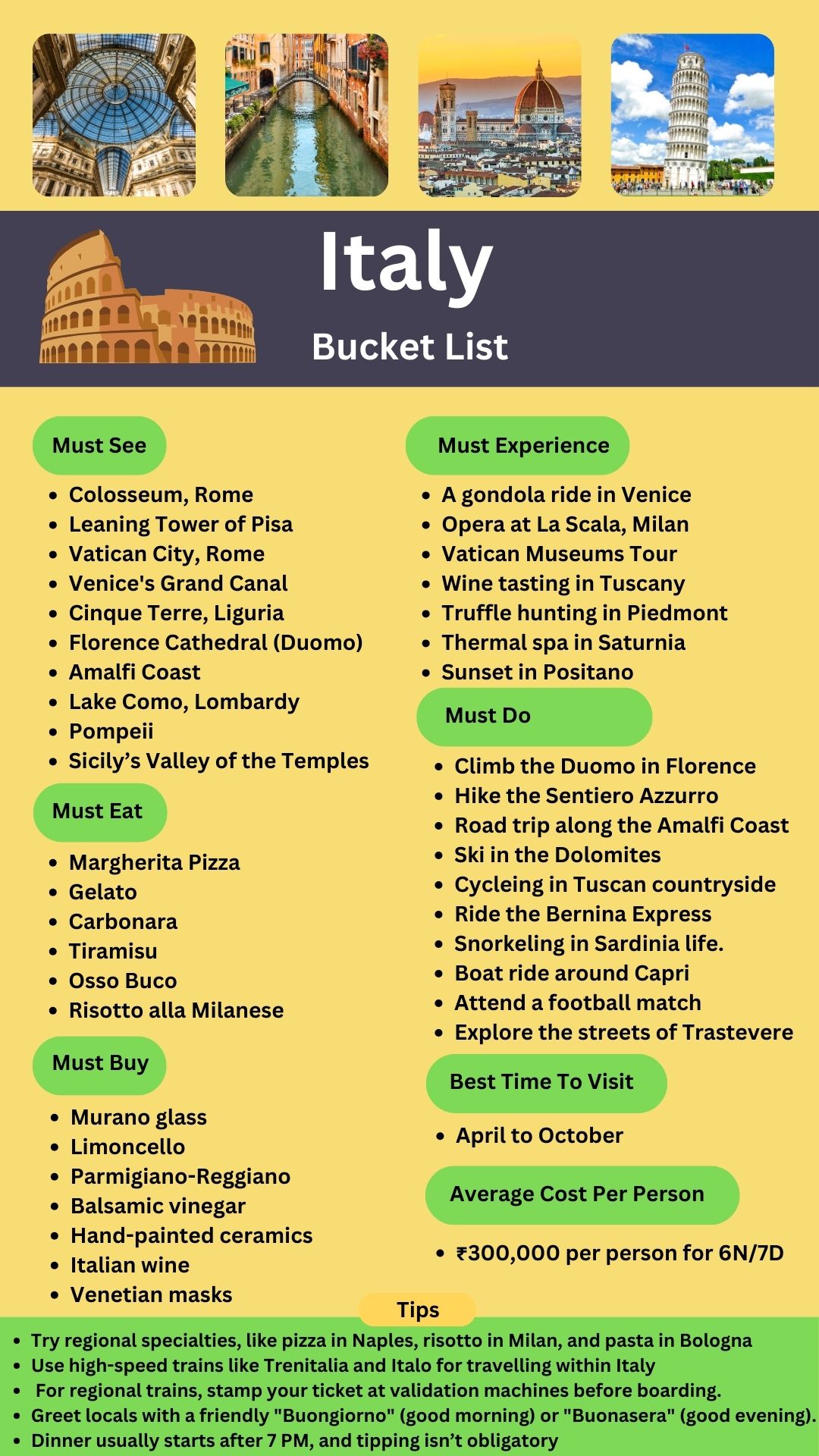
Italy offers an almost overwhelming amount of beauty in one country. Ancient ruins sit near Renaissance masterpieces, and coastal towns cling to cliffs above turquoise water. Add in world famous food, passionate culture, and centuries of art, and it becomes clear why Italy remains one of the most visited countries on earth.
This guide covers the top places to visit, food to try, experiences to book, and tips to help your trip run smoothly. Whether you have one week or three, use this as your planning foundation.
Ancient Ruins and Architectural Icons
Italy’s history spans thousands of years, and much of it remains visible today. Many of the country’s most famous landmarks sit in Rome and its surrounding regions.
The Colosseum in Rome is one of the most recognizable ancient structures in the world. This massive amphitheater once hosted gladiator contests for tens of thousands of spectators. Guided tours often include access to the underground chambers beneath the arena floor.
The Leaning Tower of Pisa is famous for its noticeable tilt, caused by unstable ground during construction. It sits within a larger complex known as the Piazza dei Miracoli. Climbing to the top rewards visitors with sweeping views over the city.
Vatican City in Rome is the world’s smallest independent state and home to St. Peter’s Basilica. Its museums house an extraordinary collection of art, including the Sistine Chapel. Advance booking is essential given the site’s popularity.
Venice’s Grand Canal winds through the heart of the city, lined with centuries old palazzos. Vaporetto water buses and gondolas both offer ways to travel along it. Sunset views from one of its many bridges are especially memorable.
Cinque Terre in Liguria consists of five colorful villages perched along a rugged coastline. Hiking trails connect the villages, offering dramatic sea views along the way. Each village has its own distinct character and charm.
The Florence Cathedral, or Duomo, dominates Florence’s skyline with its massive red dome. Brunelleschi’s engineering achievement remains one of architecture’s most studied feats. Climbing the dome offers panoramic views over the city’s terracotta rooftops.
The Amalfi Coast stretches along southern Italy, known for cliffside towns and dramatic coastal scenery. Positano and Amalfi town are among its most photographed stops. Narrow, winding roads make the drive itself part of the experience.
Lake Como in Lombardy has long attracted travelers with its dramatic mountain backdrop and elegant villas. Small towns dot the shoreline, connected by regular ferry service. It offers a more relaxed pace compared to Italy’s busier cities.
Pompeii preserves an entire Roman city frozen by volcanic ash nearly 2,000 years ago. Streets, homes, and public buildings remain remarkably intact. It offers a uniquely detailed look into daily life in the ancient world.
Sicily’s Valley of the Temples showcases some of the best preserved Greek temples outside of Greece itself. This archaeological park near Agrigento dates back over 2,500 years. Visiting at sunset adds dramatic lighting to the ancient ruins.
Insider Tips for Visiting Major Landmarks
- Book Colosseum tickets online in advance, ideally with a guided tour that includes the underground level. Skip the line options save significant time during peak season.
- Visit the Vatican Museums early in the morning to avoid the largest crowds. Afternoon visits often mean longer waits and busier galleries.
- Climb the Florence Duomo earlier in the day, since ticket slots are limited and often sell out. The dome climb also involves narrow stairways best tackled before crowds build.
- Explore Cinque Terre’s hiking trails in the morning for cooler temperatures and better light for photos.
Unforgettable Experiences Across the Country
Italy offers plenty of experiences that go beyond typical sightseeing. These moments connect travelers more directly with the country’s culture and daily rhythms.
A gondola ride in Venice remains one of the city’s most iconic experiences. Gondoliers navigate narrow canals that larger boats cannot reach. Early morning or evening rides tend to be quieter and more atmospheric.
Attending an opera at La Scala in Milan offers a taste of Italy’s deep musical heritage. This historic opera house has hosted premieres by some of the world’s most famous composers. Formal attire is generally expected for evening performances.
A Vatican Museums tour reveals an extraordinary collection spanning centuries of art and history. The path leads visitors through numerous galleries before reaching the Sistine Chapel. Guided tours help make sense of the museum’s vast scale.
Wine tasting in Tuscany introduces visitors to one of Italy’s most celebrated wine regions. Rolling hills of vineyards surround towns like Montalcino and Montepulciano. Many wineries offer tastings paired with regional food.
Truffle hunting in Piedmont gives visitors a hands on look at one of Italy’s most prized ingredients. Trained dogs help guides locate truffles hidden beneath forest soil. Many hunts end with a meal featuring the day’s findings.
A thermal spa visit in Saturnia offers natural hot springs cascading over limestone terraces. These free flowing pools sit in the Tuscan countryside. It provides a relaxing contrast to busier sightseeing days.
Watching the sunset in Positano captures one of the Amalfi Coast’s most beautiful moments. Pastel colored buildings glow warmly as the sun dips toward the sea. Rooftop bars and terraces offer some of the best vantage points.
Hidden Gems Beyond the Usual Tourist Trail
- Look for smaller, family run vineyards in Tuscany rather than the largest commercial wineries. These often provide more personal tastings and a genuine sense of place.
- Ask about lesser known truffle hunting guides in Piedmont outside the main tourist operators. Smaller groups often mean a more intimate experience.
- Explore quieter Cinque Terre villages like Corniglia, which sees fewer crowds than Vernazza or Manarola. The views remain just as dramatic.
- Visit Saturnia’s thermal pools early in the morning or on a weekday to enjoy them with fewer visitors.
Adventure Activities and Outdoor Escapes
Italy’s varied landscape supports everything from coastal hikes to alpine skiing. These activities pair well with the country’s cultural highlights.
Climbing the Duomo in Florence combines architectural history with sweeping city views. The narrow, winding staircase leads visitors close to Brunelleschi’s famous dome interior. It requires a reasonable level of fitness given the number of steps involved.
Hiking the Sentiero Azzurro connects the villages of Cinque Terre along dramatic coastal cliffs. This well known trail offers some of the best sea views in the region. Sturdy shoes are recommended, since sections can be steep and rocky.
A road trip along the Amalfi Coast ranks among Italy’s most scenic drives. Winding cliffside roads pass through colorful towns and hidden coves. Renting a car offers flexibility, though driving here requires confidence on narrow roads.
Skiing in the Dolomites gives winter travelers access to some of the most dramatic mountain scenery in Europe. This UNESCO World Heritage mountain range offers extensive ski terrain. Cortina d’Ampezzo is among its most famous resort towns.
Cycling in the Tuscan countryside offers a relaxed way to see rolling hills and historic hill towns. Quiet rural roads connect vineyards and small villages throughout the region. Many companies offer guided multi-day cycling tours.
Riding the Bernina Express connects Italy and Switzerland through dramatic alpine scenery. This scenic railway crosses high mountain passes and historic viaducts. Panoramic windows make it a popular choice for train enthusiasts and casual travelers alike.
Snorkeling in Sardinia reveals some of the clearest water in the Mediterranean. The island’s coastline includes hidden coves and marine reserves. Its beaches often rank among Europe’s best for water clarity.
A boat ride around Capri showcases dramatic sea cliffs and the famous Blue Grotto. This small island off the Amalfi Coast draws visitors for its natural beauty. Boat tours typically circle the entire island, stopping at notable sea caves along the way.
Attending a football match immerses visitors in Italy’s passionate sporting culture. Serie A matches draw intense, vocal crowds in cities across the country. Milan, Rome, and Naples all offer particularly electric match day atmospheres.
Exploring the streets of Trastevere reveals one of Rome’s most charming neighborhoods. Cobblestone streets, ivy covered buildings, and lively trattorias define the area. It offers a quieter, more local alternative to Rome’s busier tourist center.
Planning Tips for Adventure Activities
- Book Cinque Terre hiking permits in advance during peak season, since some trail sections require paid access. Checking trail conditions ahead of time also helps, since sections occasionally close due to weather damage.
- Reserve Bernina Express tickets early during summer months, since panoramic seats sell out quickly. Booking online typically secures better seat selection than last minute purchases.
- Rent a car for the Amalfi Coast only if comfortable with narrow, winding roads. Many travelers prefer hiring a driver or using local buses instead.
- Check snow conditions in the Dolomites before booking a ski trip, since conditions vary by elevation and season timing.
A Food Lover’s Guide to Italian Cuisine
Italian food varies significantly by region, though several dishes have become beloved staples nationwide.
Margherita pizza originated in Naples and remains one of Italy’s most iconic dishes. Simple ingredients, tomato, mozzarella, and basil, come together in a thin, wood fired crust. Naples is widely considered the birthplace of authentic Neapolitan pizza.
Gelato differs from regular ice cream through its denser texture and lower fat content. Artisanal gelaterias throughout Italy craft flavors using fresh, seasonal ingredients. Choosing a shop with natural looking colors often signals higher quality.
Carbonara is a Roman pasta dish made with eggs, cheese, pancetta, and black pepper. Despite common misconceptions, traditional recipes never include cream. Its rich, silky sauce comes purely from the egg and cheese emulsion.
Tiramisu is a beloved Italian dessert made from layers of coffee soaked ladyfingers and mascarpone cream. Cocoa powder typically finishes the top layer. Its name translates roughly to “pick me up,” referencing the coffee and cocoa.
Osso buco is a braised veal shank dish, traditionally from Milan. It is often served alongside risotto alla Milanese, creating a classic regional pairing. The dish’s marrow filled bone is considered a delicacy by many diners.
Risotto alla Milanese gets its distinctive golden color from saffron. This creamy rice dish requires slow, careful stirring to achieve the right texture. It remains one of Lombardy’s most recognized culinary contributions.
Local Etiquette Around Food and Dining
- Try regional specialties, like pizza in Naples, risotto in Milan, and pasta in Bologna. Each region takes deep pride in its own culinary traditions.
- Expect dinner to typically start after 7 p.m., later than many visitors initially assume. Restaurants often stay quiet earlier in the evening.
- Know that tipping isn’t obligatory in Italian restaurants, unlike in some other countries. Rounding up the bill is appreciated but not expected.
- Greet locals with a friendly “Buongiorno,” meaning good morning, or “Buonasera,” meaning good evening. Small greetings like these are appreciated throughout the country.
Souvenirs and Shopping Worth Your Suitcase Space
Shopping in Italy offers a mix of artisanal crafts and beloved culinary products.
Murano glass, produced on a small island near Venice, represents centuries of glassmaking tradition. Colorful, hand blown pieces range from jewelry to decorative sculptures. Buying directly from Murano workshops helps ensure authenticity.
Limoncello is a bright yellow lemon liqueur closely associated with the Amalfi Coast and Sorrento. It is traditionally made from Sfusato lemons grown along this stretch of coastline. Small bottles make an easy, flavorful souvenir.
Parmigiano-Reggiano is one of Italy’s most famous cheeses, produced under strict regional regulations. Aged wheels can take years to develop their signature flavor. Vacuum sealed portions travel well for those bringing it home.
Balsamic vinegar from Modena is prized for its rich, complex flavor developed through years of aging. Traditional versions differ significantly from mass produced supermarket varieties. Visiting a local acetaia offers insight into the aging process.
Hand-painted ceramics from regions like Tuscany and the Amalfi Coast showcase distinct regional styles. Bright colors and detailed patterns make them popular decorative items. Smaller workshops often create pieces not found in larger retail stores.
Italian wine remains one of the country’s most celebrated exports. Regions like Tuscany, Piedmont, and Veneto each offer distinct wine traditions. Buying directly from a vineyard often provides better value than retail shops.
Venetian masks reflect a centuries old craft tied to Venice’s famous Carnival celebrations. Elaborate designs range from simple to highly decorative. Workshops throughout Venice still handcraft masks using traditional techniques.
Budget Tips for Shopping Smart
- Buy Murano glass directly from island workshops rather than souvenir shops in central Venice. This often means better pricing and more authentic craftsmanship.
- Compare prices at a few ceramic workshops before purchasing larger, more detailed pieces. Handmade quality and pricing can vary significantly.
- Purchase Parmigiano-Reggiano and balsamic vinegar from regional producers rather than tourist focused shops. Prices are usually better closer to the source.
- Look for Venetian masks at smaller artisan workshops instead of mass market tourist stalls. This supports traditional craftsmanship directly.
When to Go and How Much to Budget
Timing your Italy trip well can make a significant difference in weather, crowds, and cost.
The best time to visit is from April to October. This period offers pleasant weather across most regions, though summer can bring intense heat and larger crowds. Shoulder months like April, May, September, and October often provide the best balance.
Average costs run around 300,000 rupees per person for a six night, seven day trip, though this varies by travel style. Budget travelers can reduce costs by choosing regional trains and simpler accommodations. Those seeking luxury coastal stays should budget considerably more.
Seasonal Advice for First-Time Visitors
- Visit popular cities like Rome and Florence in spring or fall to avoid the most intense summer heat and crowds. Comfortable walking weather makes sightseeing far more enjoyable.
- Plan Amalfi Coast trips for late spring or early fall, since summer brings heavy tourist traffic and higher prices. Roads can become especially congested during peak months.
- Book ski trips to the Dolomites during winter months for reliable snow conditions. December through March typically offers the most consistent skiing.
- Pack layers for lake regions like Como, since mountain weather can shift quickly compared to coastal areas.
Practical Tips Every Traveler Should Know
A few practical habits will make your Italy trip smoother from the moment you arrive.
Use high-speed trains like Trenitalia and Italo for traveling within Italy. These services connect major cities quickly and comfortably. Booking in advance often secures significantly better pricing than last minute tickets.
For regional trains, stamp your ticket at validation machines before boarding. Failing to validate can result in fines, even with a valid ticket. Machines are typically located near platform entrances.
Greet locals with a friendly “Buongiorno” or “Buonasera” depending on the time of day. This small gesture is appreciated and reflects local social customs.
Dinner usually starts after 7 p.m., and tipping isn’t obligatory. Adjusting your dining schedule and expectations around tipping helps you blend in more naturally with local customs.
Common Mistakes First-Timers Make
- Forgetting to validate regional train tickets before boarding. This simple step avoids unnecessary fines during your trip.
- Trying to eat dinner too early and finding restaurants not yet in full swing. Adjusting to the later Italian dining schedule takes some planning.
- Skipping advance tickets for major sites like the Colosseum and Vatican Museums. Walk up availability is often extremely limited or unavailable.
- Renting a car for cities like Venice or central Rome, where cars are impractical or restricted. Public transport and walking work far better in these areas.
Final Thoughts on Planning Your Italy Adventure
Italy rewards travelers who slow down and savor its layered history and rich culinary traditions. Ancient ruins, coastal cliffs, and rolling vineyards all sit within reach of a well connected rail network. Few countries offer this much depth and beauty in such a compact, unforgettable package.
Whether you come for the ruins of Pompeii, a gondola ride through Venice, or a plate of carbonara in Rome, Italy leaves a lasting impression. Start planning early, pack comfortable shoes, and get ready for one of the world’s most rewarding trips.