
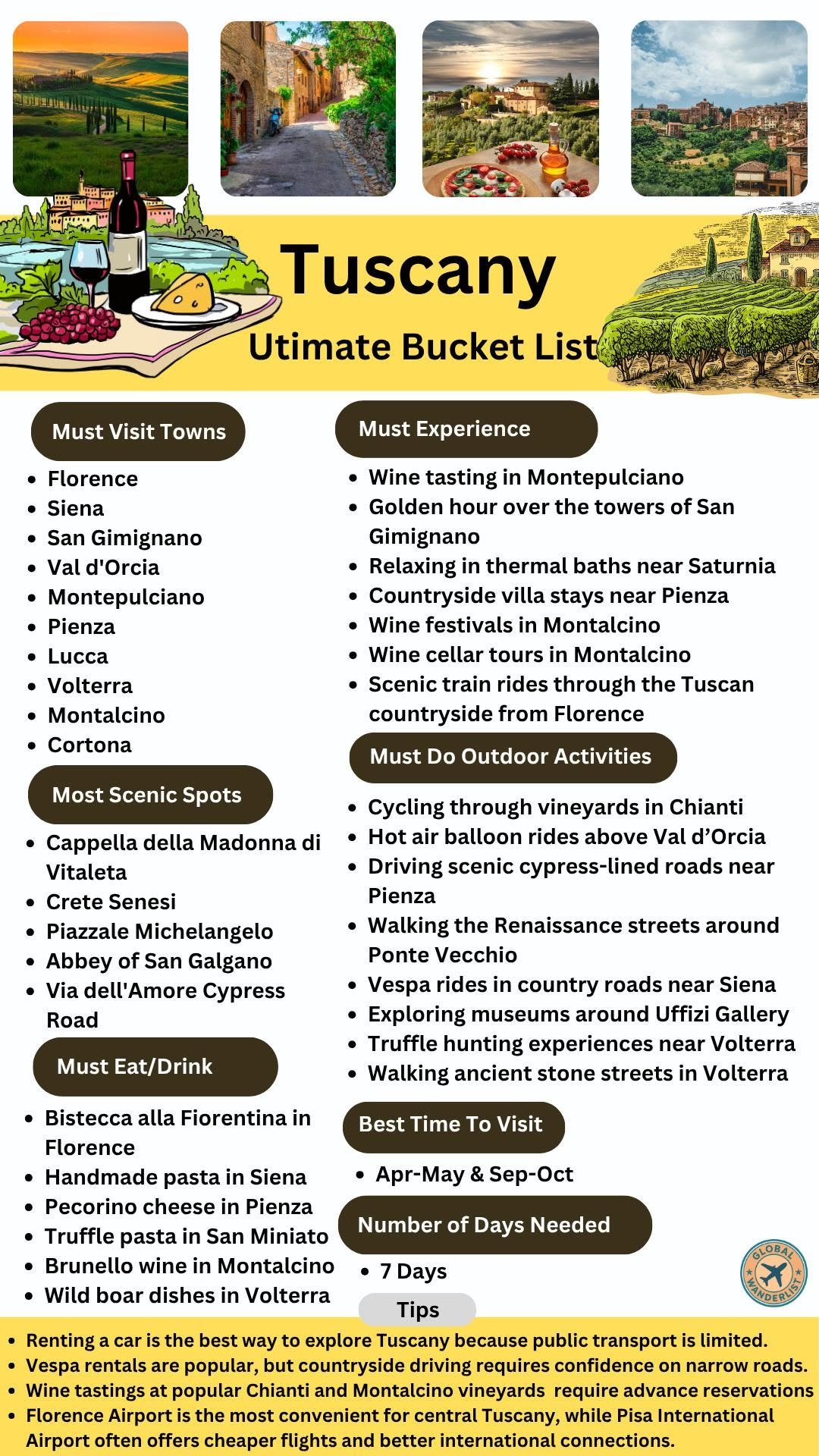
Tuscany delivers rolling hills, medieval towns, and world-class wine in one unforgettable region. Cypress-lined roads wind past vineyards, while hilltop towns have barely changed in centuries. Few destinations blend art, food, and landscape this seamlessly.
This region rewards slow travel more than quick checklists. A week here allows time for wine tastings, countryside drives, and long dinners without feeling rushed. Renaissance cities sit close enough to explore several in a single trip.
This guide breaks down everything worth prioritizing, from must-visit towns to the best time to plan your trip.
Tuscany Bucket List Summary Table
| Category | Top Recommendation | Best Time | Recommended Duration |
|---|---|---|---|
| Towns | Florence | Apr-May, Sep-Oct | 7 days total |
| Scenic Spots | Val d’Orcia cypress roads | Spring or fall | 1-2 hours per stop |
| Food and Drink | Bistecca alla Fiorentina | Year-round | 1 evening in Florence |
| Experiences | Wine tasting in Montepulciano | Apr-May, Sep-Oct | Half day |
| Outdoor Activities | Cycling through Chianti | Spring or fall | Half to full day |
Must Visit Towns
Tuscany’s towns each carry distinct character, shaped by centuries of independent city-state history. Some are grand and packed with world-famous art. Others remain small, quiet, and largely unchanged for generations.
Places You Shouldn’t Miss
- Florence: The birthplace of the Renaissance, Florence holds the Uffizi Gallery, Michelangelo’s David, and Brunelleschi’s iconic dome. Plan at least two full days to see the major sites without rushing. Spring and early fall offer the most comfortable sightseeing weather.
- Siena: Famous for its shell-shaped Piazza del Campo and the twice-yearly Palio horse race, Siena feels more medieval than Florence. Its Gothic cathedral features striking black and white marble stripes. A full day allows time to explore the historic center properly.
- San Gimignano: Known as the “Medieval Manhattan” for its dramatic stone towers, San Gimignano offers sweeping countryside views. The town’s remaining towers, once symbols of wealthy medieval families, still dominate the skyline. Arrive early morning or late afternoon to avoid the heaviest day-trip crowds.
- Val d’Orcia: This UNESCO-listed valley is defined by rolling golden hills and winding cypress roads. Photographers consider it one of the most iconic landscapes in all of Italy. A scenic drive through the valley pairs well with stops in nearby Pienza and Montalcino.
- Montepulciano: Perched on a hilltop, this town is best known for producing Vino Nobile, one of Tuscany’s most respected red wines. Wine cellars carved into the hillside offer tastings just steps from the main square. Plan a half day to explore the town and sample local vintages.
- Pienza: Redesigned in the 15th century as an idealized Renaissance town, Pienza remains remarkably intact today. It’s also the birthplace of Pecorino cheese, sold throughout the town’s small shops. A leisurely afternoon suits this compact, walkable destination.
- Lucca: Encircled by Renaissance-era walls now used as a public walking and cycling path, Lucca offers a relaxed alternative to busier cities. Its historic center holds an elliptical piazza built over a Roman amphitheater. Renting a bike here is a popular way to explore.
- Volterra: This hilltop town blends Etruscan, Roman, and medieval history within its stone walls. Alabaster carving has been a local craft here for centuries, and workshops still operate today. Volterra also serves as a base for regional truffle hunting experiences.
- Montalcino: Home to Brunello di Montalcino, one of Italy’s most celebrated wines, this town centers around a well-preserved medieval fortress. Wine cellars throughout town offer tastings paired with sweeping valley views. A half day allows time for both sightseeing and wine sampling.
- Cortona: Set high above the Val di Chiana, Cortona offers steep stone streets and panoramic countryside views. The town gained wider fame through its connection to popular travel literature. Its elevated position makes for excellent sunset photography.
Most Scenic Spots
Beyond its towns, Tuscany’s countryside offers some of Italy’s most photographed landscapes. These spots reward travelers willing to pull over for a slower look.
Views Worth the Detour
- Cappella della Madonna di Vitaleta: This small chapel sits alone amid rolling hills near San Quirico d’Orcia. It has become one of the most photographed structures in Tuscany, especially during golden hour. Visit early morning or sunset for the best light.
- Crete Senesi: These striking clay hills south of Siena create a stark, almost lunar landscape. The rolling terrain looks dramatically different depending on the season, from green in spring to golden in summer. A scenic drive through the area takes about an hour.
- Piazzale Michelangelo: This elevated viewpoint above Florence offers the city’s best panoramic skyline view. Sunset draws the biggest crowds, though early mornings offer a quieter alternative. The walk up takes about twenty minutes from the historic center.
- Abbey of San Galgano: This roofless Gothic abbey creates a dramatic, almost otherworldly atmosphere. Nearby, a sword embedded in stone connects the site to Arthurian legend. The ruins are especially striking under early morning or late afternoon light.
- Cypress-lined roads of Val d’Orcia: These winding roads, framed by tall cypress trees, appear in countless Tuscany photographs. The most famous stretches sit near Pienza and San Quirico d’Orcia. Visiting during golden hour delivers the most dramatic lighting.
What to Eat
Tuscan cuisine relies on simple, high-quality ingredients rather than complicated preparation. Regional specialties vary town by town, making food exploration part of the travel experience itself.
What to Eat
- Bistecca alla Fiorentina: This thick, bone-in T-bone steak is a Florence specialty, traditionally grilled rare over an open flame. Look for it at traditional trattorias in Florence’s historic center. Portions are often large enough to share.
- Handmade pasta in Siena: Siena’s pici, a thick, hand-rolled pasta, is typically served with garlicky tomato sauce or wild boar ragù. Family-run restaurants throughout the historic center serve the most authentic versions. It pairs well with a glass of local Chianti.
- Pecorino cheese in Pienza: Pienza has produced sheep’s milk pecorino for centuries, ranging from young and mild to aged and sharp. Local shops often offer tastings before purchase. It makes a portable, flavorful souvenir.
- Truffle pasta in San Miniato: This hill town is one of Tuscany’s top white truffle destinations, especially during autumn harvest season. Restaurants shave fresh truffle directly over pasta dishes. Visiting during the November truffle festival offers the freshest experience.
- Brunello wine in Montalcino: Made exclusively from Sangiovese grapes grown around Montalcino, Brunello is considered one of Italy’s finest reds. Cellar tours throughout town explain the aging process, which requires several years before release. Reservations are recommended at popular producers.
- Wild boar dishes in Volterra: Cinghiale, or wild boar, appears throughout Volterra’s menus in stews, sausages, and pasta sauces. The dish reflects the region’s long hunting tradition. Local trattorias typically serve the most authentic preparations.
Must Experience
Certain Tuscany experiences go beyond sightseeing, offering deeper immersion into the region’s food, wine, and pace of life.
Unforgettable Experiences
- Wine tasting in Montepulciano: Underground cellars throughout town offer tastings of Vino Nobile paired with local snacks. Many tastings include a short tour explaining the aging process. Booking ahead is wise during peak season.
- Golden hour over the towers of San Gimignano: Watching sunset light hit the town’s medieval towers is one of Tuscany’s most photogenic moments. Arrive at a hillside viewpoint outside town for the best angle. This works well as an evening activity after a day of sightseeing.
- Relaxing in thermal baths near Saturnia: These natural hot springs offer free, open-air bathing in cascading limestone pools. Visiting midweek helps avoid weekend crowds. Bring water shoes, since the limestone can be slippery.
- Countryside villa stays near Pienza: Renting a countryside villa offers a slower, more immersive Tuscany experience than hotel stays. Many properties include pools and views over the Val d’Orcia. This works especially well for longer stays of four nights or more.
- Wine festivals in Montalcino: Seasonal festivals celebrate the Brunello harvest with tastings, food stalls, and local music. Timing a visit around these events adds a festive, community atmosphere. Check local event calendars before planning your trip.
- Wine cellar tours in Montalcino: Beyond tastings, guided cellar tours explain the aging barrels and production methods behind Brunello. Many producers offer tours in English for international visitors. Plan for one to two hours per tour.
- Scenic train rides through the Tuscan countryside from Florence: Regional trains offer an easy, scenic way to reach smaller towns without driving. Routes toward Siena and Chianti pass through rolling hillside scenery. This suits travelers wanting to relax rather than navigate rural roads.
Outdoor Activities
Tuscany’s landscape invites active exploration, from vineyard cycling routes to countryside hikes. Most activities suit moderate fitness levels and reward slower, unhurried pacing.
Best Outdoor Adventures
- Cycling through vineyards in Chianti: Well-marked cycling routes wind through rolling vineyard hills between Florence and Siena. Rides typically take a half day, with stops at wineries along the way. Spring and fall offer the most comfortable temperatures.
- Hot air balloon rides above Val d’Orcia: Sunrise balloon flights offer sweeping views over the valley’s rolling hills. Flights typically last about an hour, with additional time for setup and landing. Book well in advance during peak travel months.
- Driving scenic cypress-lined roads near Pienza: Self-driving through this area allows flexibility to stop at photogenic viewpoints along the way. Narrow roads require cautious, attentive driving. A rental car offers the most freedom for this kind of exploration.
- Walking the Renaissance streets around Ponte Vecchio: Florence’s historic bridge and surrounding streets showcase centuries of architecture in a compact area. Early morning walks avoid the heaviest tourist crowds. The area is fully walkable, with no special fitness required.
- Vespa rides in country roads near Siena: Renting a Vespa adds a classic Italian touch to countryside exploration. Some comfort with manual scooters and narrow roads is recommended. Half-day rentals suit most first-time visitors.
- Exploring museums around Uffizi Gallery: Florence’s museum district holds some of the world’s most significant Renaissance art collections. Advance ticket booking is essential, especially during summer months. Plan at least half a day for the Uffizi alone.
- Truffle hunting experiences near Volterra: Guided outings with trained dogs offer a hands-on look at truffle foraging traditions. Most experiences run a few hours and include a tasting afterward. Fall offers the best chance of finding prized white truffles.
- Walking ancient stone streets in Volterra: Volterra’s compact historic center is easily explored on foot, with Etruscan and Roman ruins scattered throughout. The walk requires moderate fitness due to hilly terrain. Allow two to three hours for a thorough visit.
Best Time to Visit
Timing significantly shapes the Tuscany experience, affecting both weather and crowd levels throughout the region.
Seasonal Highlights
- April through May: Spring brings mild temperatures, blooming countryside, and manageable crowds. This period suits travelers prioritizing scenic drives and outdoor activities. Wildflowers add extra color to the rolling hillsides.
- September through October: Fall offers comfortable temperatures alongside the grape harvest season, known locally as vendemmia. Wine regions come alive with harvest activities during this window. Late October also brings the start of truffle season in areas like San Miniato.
- Planning around seven days: A full week allows time to combine major towns like Florence and Siena with slower countryside stops. This pacing avoids the rushed feeling of trying to see everything in three or four days. Splitting time between a base city and a countryside villa works well for this duration.
Travel Tips
A few practical decisions can significantly improve a Tuscany trip, especially around transportation and planning ahead.
Essential Travel Tips
- Renting a car is the best way to explore: Public transportation in Tuscany’s countryside is limited, making rural towns and vineyards difficult to reach without a vehicle. A rental car offers the flexibility needed for scenic detours. Book well in advance during peak summer months.
- Vespa rentals are popular, but require confidence on narrow roads: Scooter rentals add charm to countryside exploration, though rural roads can be winding and narrow. Some prior riding experience is recommended before attempting longer routes. Always wear the provided helmet.
- Wine tastings at popular Chianti and Montalcino vineyards require advance reservations: Many well-known producers book up quickly, especially during harvest season. Reserving tastings a few weeks ahead helps secure preferred time slots. Walk-in availability is far less reliable at top-rated wineries.
- Florence Airport offers the most convenient access, while Pisa often provides cheaper flights: Florence Airport sits closest to the city center, saving transfer time. Pisa International Airport frequently offers better international connections and lower fares, with a short train ride into the region. Comparing both options before booking can save both time and money.
Final Thoughts
Tuscany rewards travelers who slow down and explore beyond the biggest names. Use this list as a starting point, then build an itinerary that matches your own pace and interests. Whether you prioritize wine, art, or countryside drives, this region offers something worth returning for.