
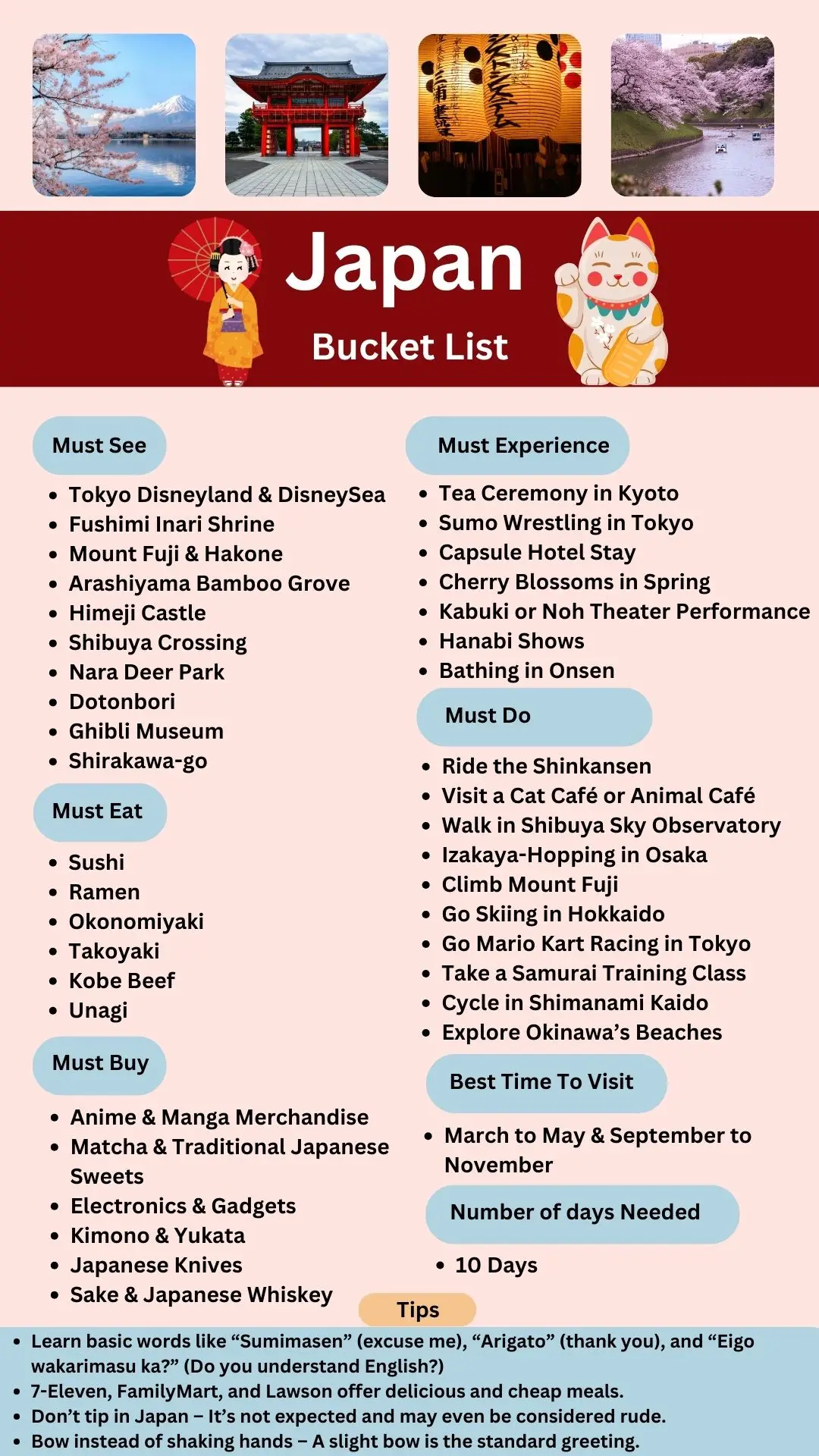
Japan has a way of making even ordinary moments memorable. A train ride can become part of the trip, a small noodle shop can turn into a favorite meal, and a quiet temple can stay with you long after you leave. The country also has plenty of famous sights, seasonal experiences, outdoor adventures, and foods worth trying. This bucket list brings them together in one place. You will find major attractions, cultural experiences, things to eat, souvenirs to shop for, and a few practical tips that can make traveling around Japan easier.
What to See in Japan?
- Tokyo Disneyland & DisneySea: Tokyo Disneyland is a great choice for families and Disney fans. DisneySea has a different atmosphere and attractions that you will not find at other Disney parks.
- Fushimi Inari Shrine: The shrine is famous for its thousands of bright orange torii gates. Walk farther up the forested mountain if you want to get away from the busiest section.
- Mount Fuji & Hakone: Mount Fuji is one of Japan’s most recognizable sights. Hakone adds hot springs, lake views, museums, and mountain scenery to the experience.
- Arashiyama Bamboo Grove: Tall bamboo surrounds the walking paths in this famous Kyoto attraction. Visit early in the morning for a more peaceful walk through the grove.
- Himeji Castle: Himeji Castle is one of Japan’s finest surviving castles. Its white exterior, wooden interiors, and defensive features make it a fascinating place to explore.
- Shibuya Crossing: Watch the famous crossing from one of the nearby viewpoints before walking through it yourself. The surrounding neighborhood is packed with shops, restaurants, and entertainment.
- Nara Deer Park: Hundreds of deer roam freely around the park and its surrounding temples. You can buy special crackers and feed them, but keep your hands clear once the food is gone.
- Dotonbori: Dotonbori is one of Osaka’s busiest food and entertainment districts. The bright signs, canal, restaurants, and street food make it especially lively after dark.
- Ghibli Museum: The Ghibli Museum in Mitaka celebrates the films and animation of Studio Ghibli. Tickets are limited, so plan this visit well before your trip.
- Shirakawa-go: This mountain village is known for its traditional thatched-roof houses. It looks particularly beautiful in winter when the roofs and surrounding mountains are covered in snow.
Must Experience in Japan
- Tea Ceremony in Kyoto: A traditional tea ceremony gives you a closer look at Japanese hospitality and customs. The experience focuses on careful preparation, presentation, and quiet attention to detail.
- Sumo Wrestling in Tokyo: Watching a sumo tournament lets you see one of Japan’s most distinctive sporting traditions. The rituals before each bout are almost as interesting as the matches themselves.
- Capsule Hotel Stay: Spend one night in a capsule hotel for a very different type of accommodation. The rooms are compact, but many modern capsule hotels are clean, comfortable, and well designed.
- Cherry Blossoms in Spring: Sakura season transforms parks, temple grounds, and riversides across Japan. The timing changes each year, so check local forecasts before planning your trip around the blossoms.
- Kabuki or Noh Theater Performance: These traditional theater styles offer a glimpse into Japan’s performing arts. Kabuki is colorful and dramatic, while Noh is slower and more restrained.
- Hanabi Shows: Japanese fireworks festivals are major summer events and often draw huge crowds. Arrive early, find a good viewing spot, and try some of the festival food while you wait.
- Bathing in an Onsen: Soaking in a Japanese hot spring is a relaxing way to experience a long-standing local tradition. Remember to wash before entering the bath and check the rules at your chosen onsen.
Must Do in Japan
- Ride the Shinkansen: Japan’s bullet trains are fast, comfortable, and remarkably punctual. Buy a bento at the station and enjoy watching the countryside pass outside the window.
- Visit a Cat Cafe or Animal Cafe: Animal cafes give visitors a chance to spend time around cats and other animals in a relaxed setting. Choose a reputable place that clearly puts the animals’ welfare first.
- Walk in Shibuya Sky Observatory: Shibuya Sky provides impressive views across Tokyo from its open-air observation area. Sunset is a popular time to visit, so booking ahead is a good idea.
- Izakaya-Hopping in Osaka: Spend an evening visiting a few small izakayas and ordering different dishes at each one. It is a fun way to explore Osaka’s food scene without sitting through one long dinner.
- Climb Mount Fuji: Climbing Mount Fuji is a serious hike that requires proper preparation. The official climbing season is limited, and you should check current trail conditions before setting out.
- Go Skiing in Hokkaido: Hokkaido is famous for its deep powder snow and excellent ski resorts. Niseko is the best-known option, but other areas offer great skiing with fewer international visitors.
- Go Mario Kart Racing in Tokyo: Street kart experiences offer a playful way to see parts of Tokyo. Choose a licensed operator and check the current driving, insurance, and licensing requirements before booking.
- Take a Samurai Training Class: A samurai experience gives you a hands-on introduction to traditional Japanese sword techniques and movement. Instructors usually explain the history and customs before the practical session begins.
- Cycle in Shimanami Kaido: The Shimanami Kaido connects several islands between Honshu and Shikoku. The route has beautiful sea views, bridges, small towns, and quieter roads that make it excellent for cycling.
- Explore Okinawa’s Beaches: Okinawa has clear water, sandy beaches, coral reefs, and a warmer climate than mainland Japan. Spend several days here if you want time for swimming, snorkeling, and exploring the islands.
What to Eat in Japan?
- Sushi: Japan has an enormous range of sushi, with everything from affordable conveyor-belt restaurants to high-end omakase. Try local specialties as you travel because different regions have their own seafood traditions.
- Ramen: Ramen comes in many regional styles, with different broths, noodles, and toppings. Try more than one variety during your trip, especially if you visit Tokyo, Osaka, or Hokkaido.
- Okonomiyaki: This savory pancake is made with ingredients such as cabbage, meat, seafood, and various toppings. Osaka and Hiroshima prepare it differently, so trying both styles is worthwhile.
- Takoyaki: These small batter balls are filled with octopus and cooked in a special molded pan. They are strongly associated with Osaka and are usually served with sauce, mayonnaise, seaweed, and bonito flakes.
- Kobe Beef: Kobe beef is known for its fine marbling and rich flavor. If you want to try it, choose a reputable restaurant that serves certified Kobe beef.
- Unagi: Unagi is freshwater eel that is usually grilled and served with a sweet-savory sauce. It is often served over rice and makes a good choice when you want something different from sushi.
Must Buy in Japan
- Anime & Manga Merchandise: Japan has an enormous selection of anime and manga merchandise. Tokyo’s Akihabara and Ikebukuro are good places to browse figures, books, clothing, and collectibles.
- Matcha & Traditional Japanese Sweets: Matcha products and Japanese sweets make easy souvenirs. Kyoto is especially well known for its tea culture, so it is a good place to shop for both.
- Electronics & Gadgets: Japan is known for electronics, cameras, gadgets, and clever household products. Compare prices before buying because Japanese stores do not always offer the cheapest deal.
- Kimono & Yukata: A kimono is formal and can be expensive, while a yukata is lighter and easier to wear. Secondhand shops can be a good place to find traditional clothing at lower prices.
- Japanese Knives: Japanese kitchen knives are popular with home cooks and professional chefs around the world. Different regions and makers specialize in different styles, so ask the shop for advice before choosing one.
- Sake & Japanese Whisky: Japan produces many styles of sake, while Japanese whisky has gained a strong international following. Check your airline and customs rules before packing bottles for the journey home.
Best Time to Visit Japan
- March to May: Spring brings comfortable temperatures and the famous cherry blossoms. April can be particularly busy in popular destinations, so book accommodation and major attractions early.
- September to November: Autumn brings cooler weather and colorful foliage across much of Japan. November is especially good for visiting Kyoto, Tokyo, and mountain areas when the leaves are at their best.
Number of Days Needed
- 10 Days: Ten days is a good starting point for a first trip to Japan. You can divide your time between Tokyo, Kyoto, Osaka, and nearby destinations such as Nara or Hakone without trying to cover too much ground.
Tips For Your Japan Trip
- Learn a Few Japanese Words: Simple words such as “Sumimasen” and “Arigato” are useful in everyday situations. “Eigo wakarimasu ka?” means “Do you understand English?” and can also come in handy.
- Use Convenience Stores: 7-Eleven, FamilyMart, and Lawson are useful for inexpensive meals, snacks, drinks, and basic travel supplies. You will find them throughout cities and even in many smaller towns.
- Do Not Tip: Tipping is not part of normal Japanese service culture. Simply paying the amount shown on the bill is usually all that is expected.
- Bow When Greeting: A slight bow is a common form of greeting and shows respect. You do not need to master formal Japanese etiquette, but returning a small bow is always a safe choice.
- Keep Your Voice Down on Trains: Japanese public transport is generally quiet, especially trains. Avoid loud conversations and keep your phone on silent while traveling.
- Follow Queueing Etiquette: Look for floor markings or lines at train stations, restaurants, and attractions. Joining the queue and waiting your turn is an important part of everyday life in Japan.
- Carry a Small Bag for Trash: Public trash cans can be surprisingly hard to find in some areas. Keep a small bag with you and dispose of your rubbish properly when you find a suitable bin.