
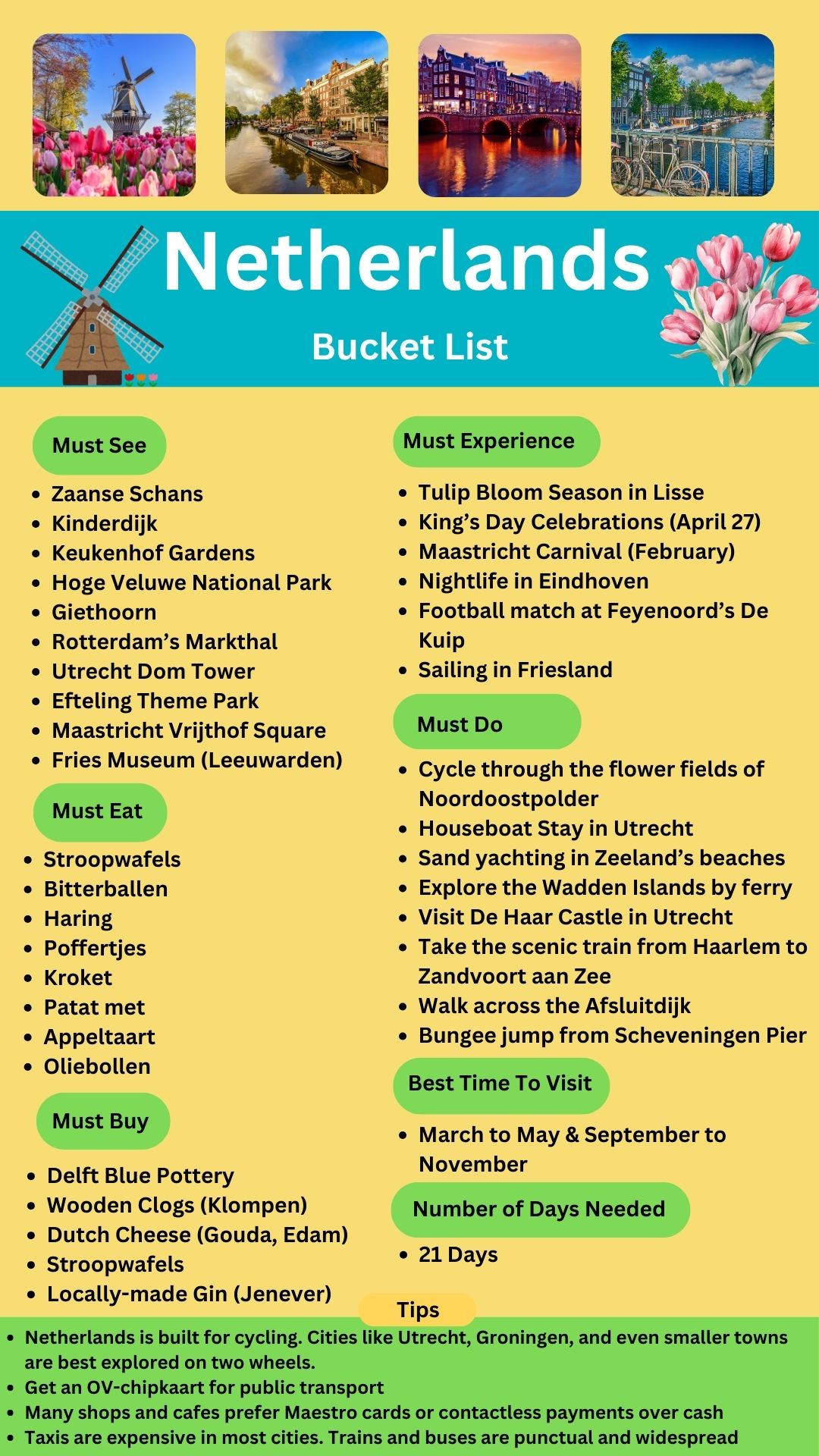
The Netherlands packs charm into every corner, from windmill dotted countryside to canal lined cities. Cyclists glide past centuries old buildings, and tulip fields stretch in bold color each spring. Add in cozy cafes, unique festivals, and flat terrain built for exploring, and it is easy to see why this small country draws so many travelers.
This guide covers the top places to visit, food to try, experiences to book, and tips to help your trip run smoothly. Whether you have a few days or a few weeks, use this as your planning foundation.
Iconic Landmarks and Scenic Villages
The Netherlands offers a mix of historic architecture, natural scenery, and classic Dutch village charm. Many of the country’s top sights sit within easy reach of each other.
Zaanse Schans is a working windmill village just outside Amsterdam. Historic windmills still operate here, producing everything from mustard to paint pigments. Traditional wooden houses along the river add to its postcard appeal.
Kinderdijk is home to Holland’s largest concentration of historic windmills. This UNESCO World Heritage site showcases the country’s centuries old water management system. A canal boat tour offers one of the best ways to see the windmills up close.
Keukenhof Gardens is one of the largest flower gardens in the world. Millions of tulips bloom here each spring, arranged in elaborate designs. It only opens for a few months a year, so timing your visit matters.
Hoge Veluwe National Park combines forest, heathland, and sand dunes in central Netherlands. Free white bicycles are available throughout the park for visitors to explore. The Kröller-Müller Museum inside the park houses an impressive art collection.
Giethoorn is often called the Venice of the Netherlands, with canals replacing many of its roads. Thatched roof houses line the waterways throughout this small village. Boat rentals let visitors explore the canals at their own pace.
Rotterdam’s Markthal is a striking modern market hall topped with a massive ceiling mural. Food stalls and shops line the ground floor, selling everything from cheese to fresh seafood. Apartments actually occupy the arch shaped structure above the market.
Utrecht’s Dom Tower is the tallest church tower in the Netherlands. Climbing to the top rewards visitors with sweeping views over the city. The tower sits at the heart of Utrecht’s historic canal district.
Efteling Theme Park blends classic fairy tale themes with modern rides and attractions. It ranks among the oldest and most beloved theme parks in Europe. Families often spend a full day exploring its various themed areas.
Maastricht’s Vrijthof Square anchors the historic center of this southern Dutch city. Cafes and restaurants surround the square, backed by impressive church architecture. It becomes especially lively during local festivals throughout the year.
The Fries Museum in Leeuwarden showcases the history and culture of the Friesland region. Exhibits cover everything from local art to regional traditions. It offers insight into a distinctly different side of Dutch culture.
Insider Tips for Visiting Major Landmarks
- Visit Keukenhof Gardens on a weekday morning to avoid the heaviest crowds. Blooming season typically runs from mid March through mid May, so check dates before booking.
- Combine Zaanse Schans and Kinderdijk into a single day trip if time is limited. Both offer classic windmill scenery, though each has a distinct atmosphere.
- Rent a boat in Giethoorn rather than relying only on walking paths. Many parts of the village are only accessible by water.
- Climb Utrecht’s Dom Tower earlier in the day, since tickets and tour slots can fill up by afternoon.
Cultural Experiences and Local Celebrations
Dutch culture comes alive through festivals, sports, and seasonal traditions. These experiences offer travelers a deeper connection beyond typical sightseeing.
Tulip bloom season in Lisse transforms the countryside into a sea of color each spring. Fields surrounding Keukenhof burst into bloom during this limited window. Renting a bike to ride through the flower fields is a popular way to experience it.
King’s Day celebrations on April 27 turn the entire country orange for a day of festivities. Street markets, live music, and orange clothing fill cities nationwide. Amsterdam in particular becomes an especially lively place to be during this holiday.
Maastricht Carnival in February brings costumes, parades, and music to the city’s streets. This southern Dutch celebration has a distinctly different character from carnivals elsewhere in Europe. It typically runs for several days leading up to Lent.
Nightlife in Eindhoven has grown alongside the city’s reputation as a tech and design hub. Bars and clubs cater to a younger, creative crowd. The city also hosts major design and light festivals throughout the year.
Attending a football match at Feyenoord’s De Kuip stadium immerses visitors in Dutch football culture. The atmosphere inside this historic Rotterdam stadium is intense, especially during rivalry matches. Booking tickets ahead of time is recommended for popular games.
Sailing in Friesland introduces visitors to the Netherlands’ strong maritime tradition. This northern province is dotted with lakes and canals ideal for sailing. Traditional wooden boats, called skûtsjes, are a distinctive sight on Frisian waters.
Hidden Gems Beyond the Usual Tourist Trail
- Explore smaller tulip fields around Noordoostpolder if Keukenhof feels too crowded during peak bloom season. These working farm fields offer a quieter, equally colorful alternative.
- Attend a local King’s Day celebration in a smaller Dutch town instead of Amsterdam. Smaller cities often have a more relaxed, community feel.
- Look for smaller design exhibits during Eindhoven’s design events rather than only the main showcases. Independent studios often display some of the most creative work.
- Consider a Frisian sailing trip with a smaller, local operator rather than a large tour company. It usually offers a more personal introduction to the region’s maritime culture.
Adventure Activities and Outdoor Escapes
The Netherlands’ flat terrain and extensive infrastructure make it ideal for active, outdoor focused travel.
Cycling through the flower fields of Noordoostpolder offers one of the country’s most scenic bike rides. Wide, well marked paths wind past working tulip and daffodil farms. Spring is by far the best season for this ride.
A houseboat stay in Utrecht gives travelers a distinctly Dutch way to experience the city. Many houseboats moor directly along the historic canals. It offers a quieter, more local alternative to standard hotel stays.
Sand yachting on Zeeland’s beaches takes advantage of the province’s wide, flat coastline. This wind powered activity resembles sailing on land rather than water. Strong coastal winds make Zeeland one of the best regions in Europe for the sport.
Exploring the Wadden Islands by ferry reveals a quieter, more rural side of the Netherlands. This chain of islands sits off the northern coast, each with its own distinct character. Texel and Terschelling are among the most popular for day trips or longer stays.
Visiting De Haar Castle in Utrecht showcases one of the country’s largest and most elaborate castles. Its surrounding gardens and moat add to the fairytale atmosphere. Interior tours reveal richly decorated rooms from its 19th century restoration.
Taking the scenic train from Haarlem to Zandvoort aan Zee connects a historic city with a popular beach town. The short journey makes it an easy half day trip from Amsterdam. Zandvoort’s beach and dunes offer a relaxed contrast to city sightseeing.
Walking across the Afsluitdijk lets visitors experience one of the Netherlands’ most impressive engineering feats. This massive dike separates the North Sea from a large inland lake. It stretches for over 20 miles, though most visitors explore a shorter section.
Bungee jumping from Scheveningen Pier appeals to visitors looking for a coastal adrenaline rush. This seaside pier near The Hague offers dramatic ocean views during the jump. It pairs well with a day spent exploring the surrounding beach town.
Planning Tips for Adventure Activities
- Book a houseboat stay in Utrecht well in advance during peak travel season, since availability is limited. Canal side locations tend to book up fastest.
- Check wind conditions before planning a sand yachting session in Zeeland. Stronger winds generally make for a more exciting experience.
- Reserve Wadden Islands ferry tickets ahead of time during summer months. Popular routes can sell out on busy weekends.
- Wear comfortable shoes for walking sections of the Afsluitdijk. The path is long, and proper footwear makes the experience more enjoyable.
A Food Lover’s Guide to Dutch Cuisine
Dutch food is hearty, simple, and full of comforting classics found throughout the country.
Stroopwafels are the Netherlands’ most iconic sweet treat. Two thin waffle layers sandwich a caramel syrup filling. They are often placed over a hot drink to soften slightly before eating.
Bitterballen are deep fried, breaded snacks filled with a savory meat ragout. They are a staple at Dutch bars and casual gatherings. Mustard is the traditional dipping sauce served alongside them.
Haring, or Dutch raw herring, is a beloved regional specialty, especially near the coast. It is traditionally eaten by holding it by the tail and tilting the head back for a bite. Chopped onions and pickles often accompany it as toppings.
Poffertjes are small, fluffy Dutch pancakes served with butter and powdered sugar. Their light, spongy texture comes from a batter made with buckwheat flour. Street stalls throughout the country sell them fresh and warm.
Kroket is a deep fried, breaded roll filled with a creamy meat ragout similar to bitterballen. It is often served on bread as a quick, filling snack. Vending machines selling kroketten are a common sight in Dutch train stations.
Patat met refers to Dutch style fries served with mayonnaise rather than ketchup. This combination is a defining feature of Dutch street food culture. Many stands offer additional toppings like peanut sauce and onions.
Appeltaart is a classic Dutch apple pie, often denser and spicier than American versions. Cinnamon and raisins are common additions to the filling. It is traditionally served with a dollop of whipped cream.
Oliebollen are deep fried dough balls, often studded with raisins and dusted with powdered sugar. They are especially popular around New Year’s celebrations. Street vendors sell them fresh from portable stands during winter months.
Local Etiquette Around Food and Dining
- Try haring the traditional way at least once, even if it feels unfamiliar at first. Locals consider it a genuine culinary experience rather than just a novelty.
- Expect smaller portions at Dutch restaurants compared to some other countries. Ordering an extra side or snack is common if you are still hungry.
- Tip modestly at restaurants, since service charges are typically already included. Rounding up the bill is standard practice rather than a larger percentage tip.
- Try street food from kroket and fries stands rather than skipping them for sit down restaurants only. These quick bites are a genuine part of Dutch daily life.
Souvenirs and Shopping Worth Your Suitcase Space
Shopping in the Netherlands offers a mix of traditional crafts and classic Dutch products.
Delft Blue pottery is one of the country’s most recognizable traditional crafts. Hand painted blue and white designs decorate plates, tiles, and decorative pieces. Authentic pieces often carry a mark certifying their origin from Delft.
Wooden clogs, known locally as klompen, remain a classic Dutch souvenir. Traditionally worn as practical farm footwear, they are now mostly decorative or novelty items. Some workshops still demonstrate the traditional carving process for visitors.
Dutch cheese, including Gouda and Edam, makes a flavorful and practical gift. Cheese markets in towns like Alkmaar offer a fun, hands on shopping experience. Vacuum sealed packaging helps cheese travel well internationally.
Stroopwafels also make an easy, packable souvenir beyond being a tasty snack. Fresh versions from local markets often taste better than mass produced supermarket packs. They hold up well for the trip home.
Locally made gin, known as jenever, is considered the precursor to modern gin. Its flavor profile differs noticeably from London dry style gins. Specialty liquor shops throughout the country offer a range of styles and ages.
Budget Tips for Shopping Smart
- Buy Delft Blue pottery from certified workshops rather than generic souvenir shops. This ensures you are getting authentic, handmade quality.
- Purchase cheese directly from regional markets instead of tourist focused shops in major cities. Prices and freshness are often better at the source.
- Look for stroopwafels at local bakeries rather than airport shops. Airport prices tend to run noticeably higher.
- Compare a few shops before buying jenever, since pricing and quality can vary between specialty liquor stores.
When to Go and How Long to Stay
Timing your Netherlands trip well can make a real difference in weather, blooms, and overall experience.
The best time to visit is from March to May or September to November. Spring brings tulip season, while both shoulder seasons offer milder weather and fewer crowds than summer. Each season offers a distinctly different look at the countryside.
Most travelers need around 21 days to properly explore the Netherlands beyond just Amsterdam. This allows time for regional towns, coastal areas, and countryside cycling routes. Shorter trips work well if focused mainly on major cities.
Seasonal Advice for First-Time Visitors
- Visit Keukenhof and the surrounding tulip fields specifically during their limited spring bloom window. Timing is essential, since the display only lasts a few months each year.
- Plan a King’s Day visit around April 27 if experiencing Dutch festival culture is a priority. Accommodations book up quickly around this date.
- Book Wadden Islands ferries and coastal activities during the summer months for the most reliable weather. Winter can bring stronger winds and rougher water.
- Pack layers regardless of season, since Dutch weather can shift quickly, even during milder months.
Practical Tips Every Traveler Should Know
A few practical habits will make your Netherlands trip smoother from the moment you arrive.
The Netherlands is built for cycling, and cities like Utrecht, Groningen, and even smaller towns are best explored on two wheels. Extensive bike paths make cycling safe and practical almost everywhere. Renting a bike is often the fastest way to get around.
Get an OV-chipkaart for public transport, which works across trains, trams, and buses nationwide. This card simplifies travel between cities and within them. It can be purchased at stations or loaded through a mobile app.
Many shops and cafes prefer Maestro cards or contactless payments over cash. Carrying a debit or credit card with contactless capability makes transactions easier. Some smaller vendors may not accept cash at all.
Taxis are expensive in most cities, while trains and buses remain punctual and widespread. Relying on public transport rather than taxis saves significant money throughout a Dutch trip. The rail network in particular connects most major destinations efficiently.
Common Mistakes First-Timers Make
- Underestimating how much of the country is best explored by bike rather than car or foot. Renting a bicycle early in your trip often improves the entire experience.
- Relying too heavily on cash for purchases. Carrying a contactless card avoids awkward moments at shops and cafes that prefer digital payment.
- Visiting Keukenhof outside its seasonal opening window without checking dates first. The gardens are only open for a few months each year.
- Booking taxis frequently instead of using the country’s efficient train and bus network. This can add unnecessary cost to a trip.
Final Thoughts on Planning Your Netherlands Adventure
The Netherlands delivers a charming mix of historic windmills, colorful tulip fields, and vibrant city culture. Canal side towns, coastal islands, and countryside bike paths all sit within easy reach of each other. Few countries offer this much scenic variety in such a compact, well connected space.
Whether you come for the blooms of Keukenhof, a canal ride through Giethoorn, or a plate of bitterballen in a cozy Amsterdam cafe, the Netherlands leaves a lasting impression. Start planning early, rent a bike, and get ready for one of Europe’s most charming and accessible trips.