
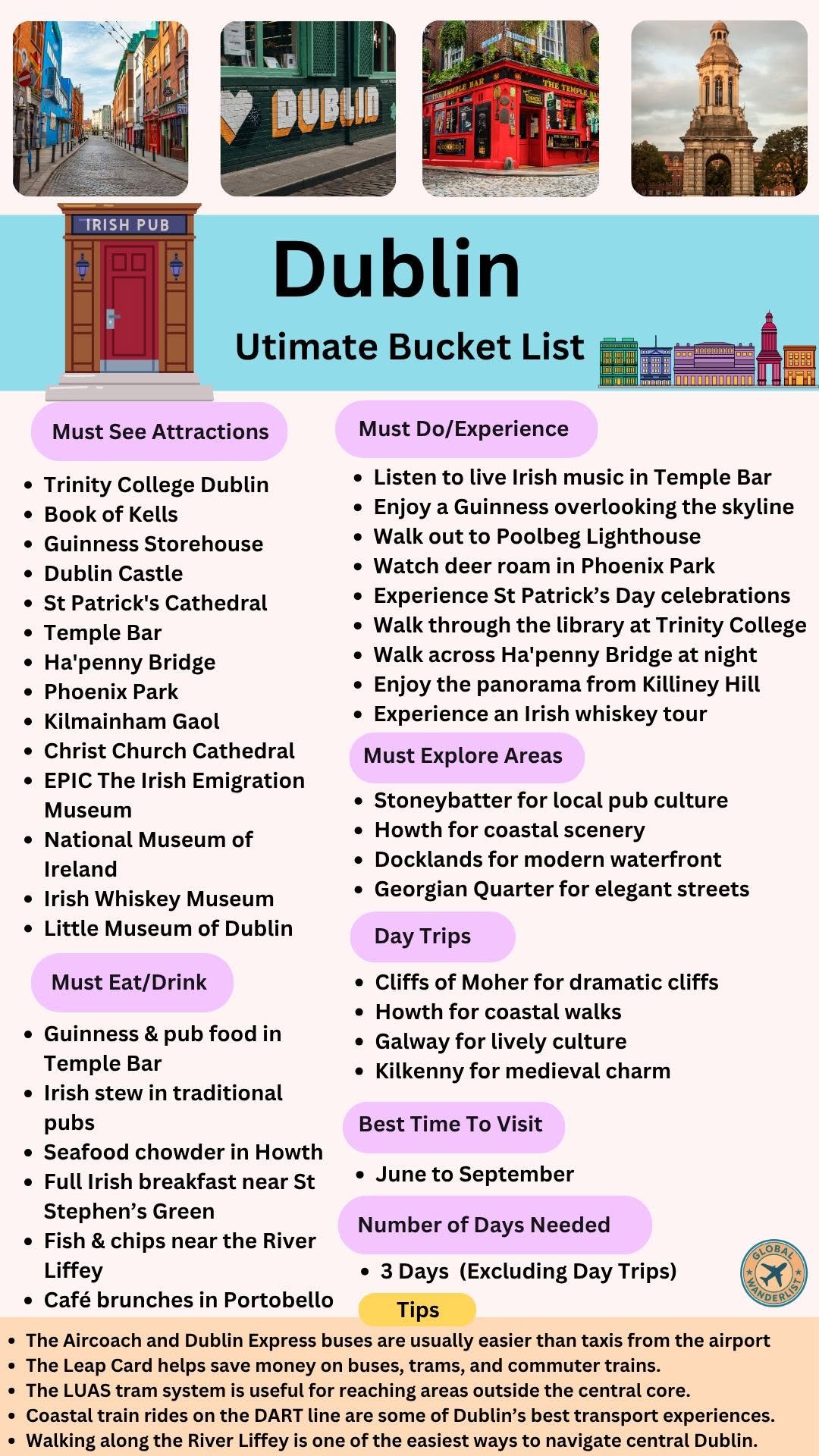
Dublin packs centuries of literature, rebellion, and pub culture into a city small enough to explore on foot. Cobblestone lanes sit minutes from Georgian squares and riverside walks that stretch straight out to the sea. Few European capitals offer this much history alongside such an easygoing, sociable atmosphere.
The city rewards visitors who mix famous landmarks with quieter neighborhood finds. A pint in a packed Temple Bar pub feels just as essential as a quiet morning walk through Phoenix Park. Whether visiting for three days or two weeks, Dublin’s bucket list only grows the longer travelers stay.
Trip Summary
| Category | Top Recommendation | Best Time | Recommended Duration |
|---|---|---|---|
| Must-See Attraction | Trinity College and the Book of Kells | Morning, before crowds | 1-2 hours |
| Must-Do Experience | Live music session in Temple Bar | Evening | 2-3 hours |
| Neighborhood | Stoneybatter | Anytime | Half day |
| Local Food | Irish stew at a traditional pub | Lunch or dinner | 1 hour |
| Day Trip | Cliffs of Moher or Howth | Full day | 4-8 hours |
| Best Season | Summer (June to September) | June to September | 3 days minimum |
Must-See Attractions in Dublin
Dublin’s landmarks span centuries, from medieval castles to modern emigration museums. Many sit close enough together to visit several in a single day. History here feels layered, with Viking, Georgian, and rebellion-era Dublin often standing on the same street.
Places You Shouldn’t Miss
- Trinity College Dublin: Founded in 1592, this university remains one of Ireland’s most prestigious institutions. Its cobbled squares and grand facades make it worth a slow wander even without a specific stop in mind.
- Book of Kells: This illuminated manuscript dates to around 800 AD and ranks among the world’s finest examples of medieval calligraphy. The adjoining Long Room library houses thousands of ancient books and photographs beautifully in soft natural light.
- Guinness Storehouse: This seven-story attraction traces the brewing process from grain to glass. The top-floor Gravity Bar rewards visitors with a 360-degree view over the city while sipping a freshly poured pint.
- Dublin Castle: Once the center of British administration in Ireland, this complex now hosts state ceremonies and public tours. Its state apartments reveal centuries of political history in ornate, well-preserved rooms.
- St. Patrick’s Cathedral: Ireland’s largest cathedral honors the country’s patron saint on the site of an ancient well. Jonathan Swift, author of Gulliver’s Travels, served as dean here for over 30 years.
- Temple Bar: This cobblestone district buzzes with galleries, buskers, and some of the city’s liveliest pubs. Visiting early on a weekday avoids the heaviest weekend crowds.
- Ha’penny Bridge: This cast-iron pedestrian bridge crosses the River Liffey and takes its name from the toll once charged to cross it. It remains one of Dublin’s most photographed spots, especially at sunset.
- Phoenix Park: One of Europe’s largest enclosed city parks, it spans over 1,700 acres of open grassland and woodland. Wild deer have roamed freely here since the 1660s.
- Kilmainham Gaol: This former prison held leaders of the 1916 Easter Rising before their execution. Guided tours walk through its stone corridors and offer a sobering look at Irish independence history.
- Christ Church Cathedral: Dating to 1030, this is Dublin’s oldest building still in daily use. Its atmospheric crypt holds centuries-old artifacts, including a mummified cat and rat found in the cathedral’s pipes.
- EPIC The Irish Emigration Museum: This interactive museum tells the story of Irish emigrants who shaped nations worldwide. Digital exhibits make it engaging for visitors of every age.
- National Museum of Ireland: This archaeology branch houses Bronze Age gold artifacts and preserved bog bodies. Admission is free, making it an easy addition to any itinerary.
- Irish Whiskey Museum: This guided tour walks through 1,000 years of Irish whiskey history. A tasting session at the end lets visitors compare several styles side by side.
- Little Museum of Dublin: Housed in a Georgian townhouse, this small museum covers twentieth-century Dublin through donated personal artifacts. Guided tours here run with genuine local storytelling flair.
Must-Do Experiences in Dublin
Beyond sightseeing, Dublin rewards travelers who join in its everyday rituals. Music, pubs, and green spaces shape daily life here as much as any landmark. These experiences turn a simple visit into something more memorable.
Unforgettable Experiences
- Live Irish music in Temple Bar: Traditional sessions happen nightly in several pubs throughout this district. Arriving before 7 p.m. usually secures a seat near the musicians.
- A pint with a skyline view: Rooftop bars and the Guinness Gravity Bar offer a fitting way to end a day of walking. Sunset timing adds extra drama to the view.
- Walking out to Poolbeg Lighthouse: This cherry-red lighthouse sits at the end of the Great South Wall, a nearly 5-kilometer sea wall completed in 1731. The round trip takes about two to three hours and rewards walkers with wide views over Dublin Bay.
- Watching deer roam in Phoenix Park: A herd of wild fallow deer has lived in the park for centuries. Early morning or evening offers the best chance of a close sighting.
- St. Patrick’s Day celebrations: Dublin’s parade and festival draw massive crowds every March 17th. Booking accommodation months ahead is essential for this period.
- Walking through Trinity’s library: The Long Room’s barrel-vaulted ceiling and towering bookshelves feel like stepping into another century. Photography is allowed, though flash photography is not.
- Crossing Ha’penny Bridge at night: Lit up after dark, the bridge offers one of the city’s best photo opportunities. The nearby riverside path stays lively well into the evening.
- The view from Killiney Hill: This coastal viewpoint south of the city looks out over Dublin Bay toward Bray Head. Locals often compare the scene to the Bay of Naples.
- An Irish whiskey tour: Several distilleries in and around Dublin offer tastings alongside their history tours. Comparing different styles helps visitors understand Ireland’s distinct whiskey traditions.
Neighborhoods Worth Exploring
Dublin’s character shifts noticeably from one neighborhood to the next. Wandering beyond the main tourist core reveals a more local, lived-in version of the city. Each area offers its own distinct pace and personality.
Places You Shouldn’t Miss
- Stoneybatter: This historic working-class neighborhood has become known for its independent pubs and relaxed local culture. It offers a quieter, more residential feel than the busier city center.
- Howth: This fishing village sits just a 30-minute DART ride from the city center. Its cliff walks, seafood restaurants, and harbor views make it a favorite half-day escape.
- Docklands: Dublin’s modern waterfront district contrasts sharply with the city’s older architecture. Glass office towers, art installations, and riverside dining define this rapidly developed area.
- Georgian Quarter: Elegant Georgian squares like Merrion and Fitzwilliam showcase Dublin’s eighteenth-century architectural boom. Brightly colored front doors here have become an iconic symbol of the city.
What to Eat in Dublin
Dublin’s food scene blends traditional comfort dishes with a growing modern dining reputation. Pubs remain the most reliable place to find hearty, classic Irish meals. Fresh seafood and quality baked goods round out the city’s culinary strengths.
What to Eat
- Guinness and pub food in Temple Bar: A pint of Guinness pairs naturally with classic pub fare like fish and chips or a toasted sandwich. Temple Bar’s pubs serve some of the most reliably tourist-friendly versions.
- Irish stew in traditional pubs: This slow-cooked dish typically combines lamb, potatoes, carrots, and onions. Older, family-run pubs across the city center tend to serve the most authentic versions.
- Seafood chowder in Howth: Made with a mix of local fish, this creamy chowder tastes best fresh from a harborside restaurant. Howth’s fishing boats supply much of the seafood served there daily.
- Full Irish breakfast near St. Stephen’s Green: This hearty plate includes eggs, sausage, bacon, black pudding, and grilled tomato. Cafes near the park serve generous portions perfect for a day of walking.
- Fish and chips near the River Liffey: This classic dish remains a Dublin staple, best enjoyed fresh and eaten outdoors. Several long-standing chippers near the river have served locals for generations.
- Café brunches in Portobello: This trendy neighborhood south of the canal has become known for its brunch spots and specialty coffee shops. Weekend mornings here draw a distinctly local crowd.
Day Trips from Dublin
Dublin’s central location makes it an easy base for exploring the rest of Ireland. Several major attractions sit within a few hours’ drive, allowing for a full day trip without changing hotels. Public transportation and organized tours both make these trips manageable without a rental car.
Best Day Trips from Dublin
- Cliffs of Moher: These dramatic sea cliffs rise 214 meters above the Atlantic on Ireland’s west coast. The drive takes around three hours each way, so an organized day tour or an overnight stay works better than a rushed round trip.
- Howth: This coastal village offers cliff walks, fresh seafood, and harbor views just a short DART ride away. It suits travelers wanting a scenic half-day escape without a long drive.
- Galway: This lively western city blends traditional music, colorful streets, and easy access to the Aran Islands. The train ride takes about two and a half hours from Dublin’s Heuston Station.
- Kilkenny: This medieval city features a well-preserved castle and a walkable historic core. It makes a manageable day trip by train, taking around 90 minutes each way.
Best Time to Visit Dublin
Dublin’s weather stays mild year-round, though rain remains a constant possibility in any season. Summer offers the longest daylight hours and the liveliest street atmosphere. Shoulder seasons bring fewer crowds and lower accommodation prices.
Seasonal Highlights
- June through September: This period offers the warmest temperatures and the fullest calendar of outdoor festivals. Expect higher hotel prices and larger crowds at major attractions during this stretch.
- March: St. Patrick’s Day transforms the city with parades and celebrations. Booking flights and hotels well in advance is essential for this narrow window.
- Spring and fall shoulder months: April, May, September, and October offer a good balance of decent weather and thinner crowds. These months often provide the best overall value for travelers.
- Winter visits: December brings festive markets and cozy pub evenings, though daylight hours shrink significantly. Packing warm, waterproof layers matters more during this season.
How Long to Stay in Dublin
Three days gives most visitors enough time to see Dublin’s core attractions without feeling rushed. This timeframe covers major landmarks, a few museums, and at least one evening exploring Temple Bar. Adding extra days allows for day trips to places like Howth, Galway, or the Cliffs of Moher.
Travelers with only a weekend can still hit the highlights by prioritizing Trinity College, the Guinness Storehouse, and a walk through the city center. Those extending beyond three days should consider spreading out day trips rather than rushing them all into one stretch.
Essential Travel Tips for Dublin
Getting around Dublin is straightforward once travelers understand the transportation options. A little planning around tickets and timing saves both money and hassle. These practical details make the difference between a smooth trip and a stressful one.
Essential Travel Tips
- Airport transportation: The Aircoach and Dublin Express bus services typically prove faster and cheaper than taxis from Dublin Airport. Both run frequently and drop passengers near the city center.
- Use a Leap Card: This reloadable transit card offers discounted fares across buses, trams, and commuter trains. Purchasing one at the airport or a city center shop saves money over single tickets.
- The LUAS tram system: This light rail network connects the city center to outer neighborhoods and suburbs. It works especially well for reaching areas beyond comfortable walking distance.
- DART coastal trains: This commuter rail line hugs the coast between destinations like Howth and Bray. Many travelers consider the ride itself one of Dublin’s best low-cost experiences.
- Walking along the River Liffey: The river serves as a natural, easy-to-follow guide through central Dublin. Following it on foot connects many major attractions without needing public transport at all.
Building Your Own Dublin Itinerary
Dublin offers enough variety to suit slow explorers and fast-paced sightseers alike. Mixing famous landmarks with neighborhood wandering usually creates the most memorable trip. There is no single right way to experience the city, only different paths through it.
Use this bucket list as a starting point rather than a strict itinerary. Pick the attractions, foods, and experiences that genuinely interest you, and let Dublin’s easygoing rhythm fill in the rest.