
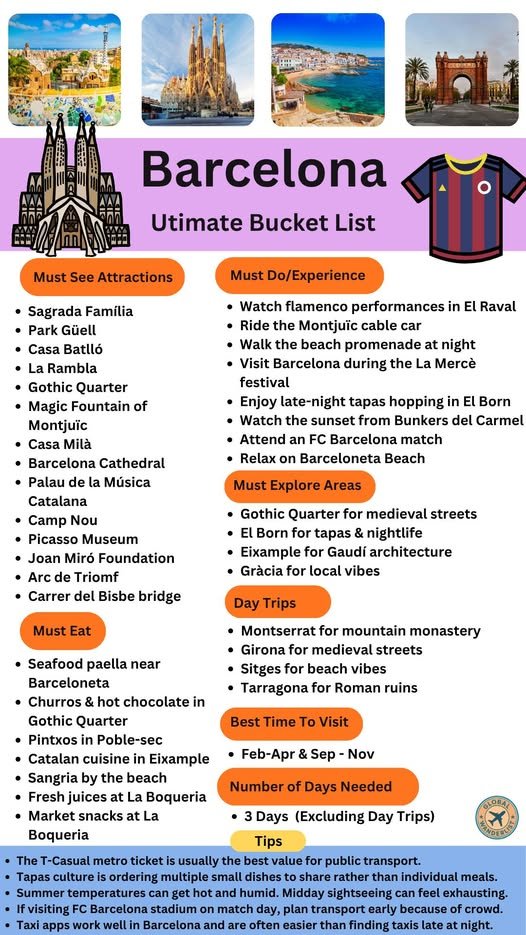
Barcelona blends Gaudí’s wild architecture with medieval streets, Mediterranean beaches, and a food scene that rewards wandering. Few cities let you walk through a fantasy park in the morning and dip into the sea by afternoon.
This mix of art, history, and coastline is exactly why Barcelona belongs on every serious travel list. Antoni Gaudí’s fingerprints are everywhere, from mosaic-covered parks to a cathedral still under construction after more than a century. Add in tapas culture, lively neighborhoods, and easy day trips into Catalonia, and it becomes clear why this city keeps pulling travelers back.
This guide covers the top attractions, unforgettable experiences, neighborhoods, day trips, local dishes, and practical tips for planning a trip to Barcelona.
Barcelona at a Glance
| Category | Top Recommendation | Best Time | Recommended Duration |
|---|---|---|---|
| Must See Attraction | Sagrada Família | Morning | 2-3 hours |
| Must Do Experience | Watch sunset from Bunkers del Carmel | Evening | 1-2 hours |
| Neighborhood | Gothic Quarter | Any time | 2-3 hours |
| Day Trip | Montserrat | Morning departure | Full day |
| Local Food | Seafood paella near Barceloneta | Lunch | 60-90 minutes |
| Best Time to Visit | February-April or September-November | Spring or fall | 3 days minimum |
Must See Attractions
Places You Shouldn’t Miss
- Sagrada Família. Antoni Gaudí’s unfinished masterpiece has been under construction since 1882 and remains Barcelona’s defining landmark. Its towering spires and intricate facades blend Gothic and Art Nouveau styles unlike anything else in the world. Booking tickets online in advance is essential, since walk-up lines can stretch for hours.
- Park Güell. This whimsical public park showcases Gaudí’s playful use of mosaic tile and organic, curving forms. Originally designed as a housing development, it never fully took off and became a park instead. Arrive early to catch the famous mosaic terrace before crowds build.
- Casa Batlló. This dreamlike building on Passeig de Gràcia features a facade covered in colorful broken tile and a roof resembling a dragon’s back. It ranks among Gaudí’s most imaginative residential designs. Interior tours typically take about an hour.
- La Rambla. This tree-lined pedestrian boulevard cuts through the heart of the city, lined with flower stalls, street performers, and cafes. It connects Plaça Catalunya to the waterfront in a lively, if touristy, stretch. Keep an eye on belongings, since pickpocketing is common along this busy corridor.
- Gothic Quarter. Barcelona’s oldest district holds narrow medieval streets, hidden plazas, and Roman ruins beneath its surface. Getting lost here is part of the experience, with surprises around nearly every corner. A slow walk through takes about two hours.
- Magic Fountain of Montjuïc. This grand fountain puts on a choreographed light and water show set to music on select evenings. It sits below the National Art Museum, creating a dramatic backdrop for photos. Shows typically run in the evening, so check the current schedule before visiting.
- Casa Milà. Also known as La Pedrera, this Gaudí building features an undulating stone facade and a rooftop covered in sculptural chimneys. Its unusual, almost quarry-like exterior gave the building its nickname. The rooftop terrace offers excellent photo opportunities at sunset.
- Barcelona Cathedral. This Gothic cathedral anchors the Gothic Quarter, with a cloister housing thirteen white geese, a tradition tied to the city’s patron saint. Its ornate facade and quiet interior offer a contrast to the busier streets outside. Entry is often free during specific visiting hours.
- Palau de la Música Catalana. This concert hall is a masterpiece of Catalan Art Nouveau, featuring a stunning stained glass skylight. Even a short guided tour reveals details easy to miss during a performance. Booking a concert ticket adds an extra layer to the experience.
- Camp Nou. As the home stadium of FC Barcelona, this is one of the largest football stadiums in Europe. Stadium tours take visitors through the museum, dressing rooms, and pitch-side areas. Match day visits offer an entirely different, high-energy atmosphere.
- Picasso Museum. This museum holds one of the most extensive collections of Picasso’s early work, tracing his development as an artist. It is housed across several medieval buildings in the Born district. Plan for about 90 minutes to see the collection properly.
- Joan Miró Foundation. Set on Montjuïc hill, this museum showcases the work of Catalan artist Joan Miró in a striking modernist building. The surrounding sculpture garden and city views add extra appeal. It pairs well with a Montjuïc cable car visit.
- Arc de Triomf. This red brick archway was built as the entrance to the 1888 Universal Exposition. It now serves as a popular meeting point and photo spot at the top of a wide promenade. Locals often gather here for picnics and skateboarding in the evenings.
- Carrer del Bisbe bridge. This ornate stone bridge connects two buildings in the Gothic Quarter and is one of the most photographed spots in the city. Despite its medieval appearance, it was actually built in the 1920s. Early morning visits help avoid the crowds that gather later in the day.
Must Do Experiences
Unforgettable Experiences
- Watch flamenco in El Raval. Though flamenco originated in Andalusia, Barcelona’s intimate venues offer passionate performances worth catching. El Raval’s smaller clubs provide a more authentic setting than larger tourist-oriented shows. Evening performances typically run about an hour.
- Ride the Montjuïc cable car. This cable car climbs from the port up to Montjuïc hill, offering sweeping views over the city and sea. It is a relaxing way to reach the castle and gardens at the top. Rides typically take around ten minutes each way.
- Walk the beach promenade at night. Barcelona’s waterfront comes alive after dark, with restaurants, bars, and street performers lining the boardwalk. The mix of warm air and sea breeze makes for a relaxed evening stroll. It pairs well with dinner at one of the beachfront restaurants.
- Visit during La Mercè festival. This citywide festival held each September honors Barcelona’s patron saint with fireworks, concerts, and giant parade figures. It transforms the entire city into a celebration for several days. Booking accommodations early is wise if visiting during this period.
- Go tapas hopping in El Born. This trendy neighborhood is packed with small bars serving inventive tapas late into the night. Moving between two or three spots captures the spirit of Catalan dining culture. Most locals eat dinner later, often after 9pm.
- Watch sunset from Bunkers del Carmel. This former anti-aircraft position now serves as one of the best sunset viewpoints in the city. Locals and travelers gather here in the evening for panoramic views over Barcelona. The climb up is worth the effort, especially on clear days.
- Attend an FC Barcelona match. Watching a match at Camp Nou offers an electric, unforgettable atmosphere for football fans. The stadium’s scale and passionate crowd make it a memorable night out. Tickets should be booked well ahead for major matches.
- Relax on Barceloneta Beach. This urban beach sits just steps from the Gothic Quarter, making it easy to combine sightseeing with sun. It gets busy in summer, so arriving early secures a better spot. Beachfront chiringuitos serve drinks and light bites throughout the day.
Neighborhoods Worth Exploring
Places You Shouldn’t Miss
- Gothic Quarter. Medieval streets, hidden squares, and centuries of history define this atmospheric district. It rewards slow, aimless wandering more than a strict checklist of sights. Evening visits bring a quieter, more romantic atmosphere.
- El Born. Known for tapas and nightlife, this neighborhood blends historic architecture with a youthful, energetic vibe. Boutique shops and wine bars line its narrow streets. It sits within easy walking distance of the Gothic Quarter.
- Eixample. This grid-patterned district holds the highest concentration of Gaudí’s architecture, including Casa Batlló and Casa Milà. Wide boulevards make it comfortable for a leisurely architectural walk. It also offers upscale shopping along Passeig de Gràcia.
- Gràcia. Once a separate village before being absorbed into the city, Gràcia retains a distinctly local feel. Small squares, independent shops, and a laid-back pace set it apart from the busier tourist districts. It is a favorite among residents for its neighborhood charm.
Easy Day Trips from Barcelona
Places You Shouldn’t Miss
- Montserrat. This dramatic mountain monastery sits about an hour from Barcelona and offers sweeping views along with a revered religious site. A cable car or rack railway carries visitors up the steep terrain. A half day allows time for both the monastery and short hiking trails.
- Girona. This medieval city is known for its colorful riverside houses and well-preserved Jewish quarter. It sits roughly 90 minutes from Barcelona by train. A full day allows time to explore its cathedral, city walls, and narrow streets.
- Sitges. This coastal town is famous for its beaches, relaxed atmosphere, and vibrant LGBTQ-friendly scene. It is about 40 minutes from Barcelona by train. A day trip here suits travelers wanting a beach escape without traveling far.
- Tarragona. This city holds some of the best-preserved Roman ruins in Spain, including a dramatic amphitheater overlooking the sea. It sits about 90 minutes from Barcelona by train. A full day covers the main archaeological sites comfortably.
Local Food to Try
What to Eat
- Seafood paella. This classic rice dish combines saffron-infused rice with shrimp, mussels, and other seafood. Restaurants near Barceloneta serve some of the freshest versions, given their proximity to the port. Sharing a large pan between two or more people is the traditional way to enjoy it.
- Churros and hot chocolate. This indulgent pairing features crispy fried dough dipped into thick, rich hot chocolate. Cafes in the Gothic Quarter are known for serving generous, satisfying portions. It makes a popular breakfast or late-night treat.
- Pintxos in Poble-sec. These small snacks, originally from the Basque Country, have become popular throughout Barcelona’s bar scene. Poble-sec’s pintxos bars let diners graze on skewered bites paired with local wine. It is a relaxed, informal way to sample several flavors in one sitting.
- Catalan cuisine in Eixample. This upscale district holds many of the city’s finest restaurants serving refined Catalan dishes. Local specialties like pa amb tomàquet and escalivada showcase the region’s produce-driven cooking style. Reservations are recommended at the more popular spots.
- Sangria by the beach. This fruity wine cocktail pairs naturally with a relaxed afternoon near the water. Beachfront bars along Barceloneta serve it chilled, often alongside light tapas. It captures the easygoing spirit of Barcelona’s coastal culture.
- Fresh juices at La Boqueria. This famous market near La Rambla is packed with stalls selling colorful, freshly squeezed juices. It makes a refreshing stop while exploring the market’s produce and seafood stands. Mornings tend to offer the freshest selection before crowds build.
- Market snacks at La Boqueria. Beyond juices, the market offers everything from cured meats to fresh oysters at small counters. Grabbing a few bites here makes for a casual, flavorful lunch. It is one of the best places in the city to sample a wide range of Catalan ingredients in one stop.
Best Time to Visit Barcelona
Seasonal Highlights
- February to April. Spring brings mild temperatures and blooming parks without the peak summer crowds. It is a comfortable window for walking tours and outdoor sightseeing. Hotel rates also tend to be lower than summer months.
- September to November. Fall offers warm but manageable weather along with the excitement of the La Mercè festival in September. Crowds thin out noticeably after summer ends. It is a favorite season for travelers wanting good weather without the heat.
- Summer months. June through August bring the warmest weather and busiest beaches, along with long daylight hours. Humidity can make midday sightseeing uncomfortable during this period. Booking major attractions in advance is essential during peak season.
- Winter months. December through January stay mild compared to much of Europe, with fewer tourists at major sites. Christmas markets add a festive touch to the city center. Pack light layers, since temperatures rarely drop too low.
Trip Length
Three days is enough time to cover Barcelona’s major sights without rushing, not including day trips outside the city. Travelers with more time can easily add Montserrat, Girona, or Sitges onto the schedule. Extending the stay allows for a more relaxed pace between neighborhoods and attractions.
Travel Tips for Visiting Barcelona
Essential Travel Tips
- Buy a T-Casual metro ticket. This multi-ride ticket offers far better value than single fares for public transport. It covers the metro, bus, and local trains within the city. Picking one up at any metro station saves both time and money over the course of a trip.
- Understand tapas culture. Tapas are meant to be ordered in small plates and shared among the table, rather than as individual meals. Ordering several dishes to split captures the spirit of Catalan dining. It also makes for a more social, relaxed meal.
- Plan around summer heat. Midday sightseeing can feel exhausting during Barcelona’s hot, humid summer months. Scheduling major walking tours for morning or evening helps avoid the worst of the heat. Staying hydrated and seeking shade matters most between noon and 4pm.
- Plan ahead for match days. If visiting Camp Nou during an FC Barcelona game, expect heavier traffic and crowded public transport near the stadium. Arriving early helps secure a smoother journey to the match. Public transport is generally the most reliable option on game days.
- Use taxi apps when needed. Ride-hailing and taxi apps work reliably throughout Barcelona and are often easier than flagging a cab late at night. They also provide clearer pricing than negotiating in person. This is especially useful after a late dinner or night out.
- Book major attractions in advance. Sites like Sagrada Família and Park Güell often sell out during peak season. Booking online ahead of time avoids long queues and guarantees entry at a specific time. It also occasionally comes with better pricing than walk-up tickets.
- Watch belongings in crowded areas. Like many major tourist cities, Barcelona has pickpocketing in busy spots like La Rambla and the metro. Keeping bags zipped and secured in front of you reduces the risk considerably. Staying alert in crowded areas is usually enough to avoid trouble.
Final Thoughts
Barcelona rewards travelers who mix its famous landmarks with quieter neighborhood wandering. Gaudí’s architecture, medieval streets, and Mediterranean beaches all sit within easy reach of each other. Pairing the city’s major sights with a day trip or two into Catalonia rounds out a well-balanced visit.
Use this guide as a starting point rather than a strict checklist. Save room for spontaneous tapas stops, a sunset viewpoint, and a lazy afternoon on the beach. Barcelona tends to reward travelers who leave space to wander and discover something unplanned.