
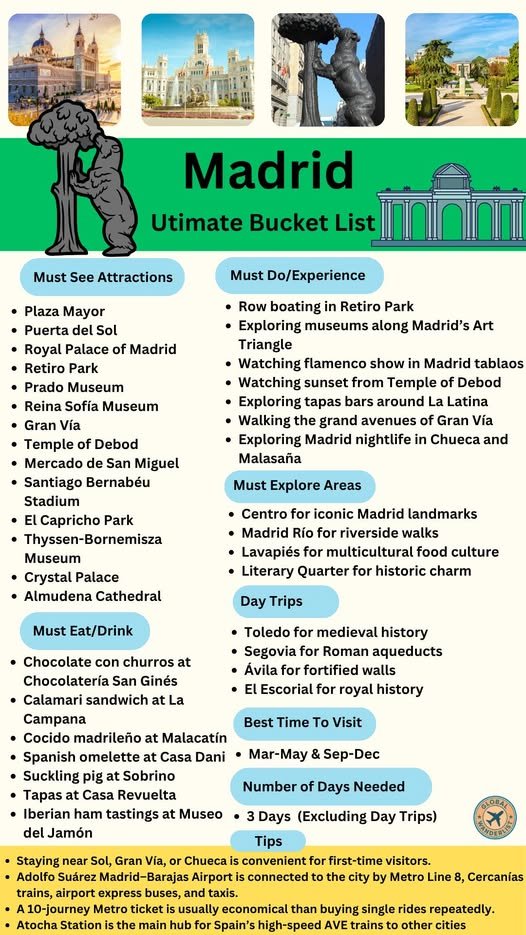
Madrid moves at its own rhythm, blending grand royal history with a food and nightlife scene that rarely slows down. Few European capitals let you tour a royal palace by day and dance until sunrise the same night.
Spain’s capital sits at the crossroads of art, history, and modern city life. World-class museums line the so-called Golden Triangle of Art, while centuries-old plazas anchor a city that still feels lived-in rather than staged for tourists. Add in easy day trips to medieval towns and Roman ruins, and it is clear why Madrid deserves a spot on every serious travel list.
This guide covers the top attractions, unforgettable experiences, neighborhoods, day trips, local dishes, and practical tips for planning a trip to Madrid.
Madrid at a Glance
| Category | Top Recommendation | Best Time | Recommended Duration |
|---|---|---|---|
| Must See Attraction | Royal Palace of Madrid | Morning | 2-3 hours |
| Must Do Experience | Sunset at Temple of Debod | Evening | 1 hour |
| Neighborhood | Centro | Any time | 2-3 hours |
| Day Trip | Toledo | Morning departure | Full day |
| Local Food | Cocido madrileño at Malacatín | Lunch | 60-90 minutes |
| Best Time to Visit | March-May or September-December | Spring or fall | 3 days minimum |
Must See Attractions
Places You Shouldn’t Miss
- Plaza Mayor. This grand 17th century square has served as a marketplace, bullring, and public gathering space throughout Madrid’s history. Its arcaded buildings and central statue of King Philip III make it a natural starting point for exploring the city. Cafes line the perimeter, though prices run higher than elsewhere.
- Puerta del Sol. Considered the symbolic center of Spain, this bustling square holds the famous Kilometer Zero marker and the iconic bear and strawberry tree statue. It also anchors Madrid’s New Year’s Eve celebrations, when thousands gather to eat grapes at midnight. Expect crowds here at nearly any hour.
- Royal Palace of Madrid. This is the official residence of the Spanish royal family, though it is used mainly for state ceremonies today. With over 3,000 rooms, it ranks among the largest royal palaces in Europe. Budget at least two hours to see the lavish state rooms and armory.
- Retiro Park. This sprawling green space once served as royal grounds before opening to the public in the late 19th century. Its Crystal Palace and boating lake make it one of the most beloved escapes in the city. A relaxed walk through takes about an hour, longer with a boat ride.
- Prado Museum. Home to masterpieces by Velázquez, Goya, and Bosch, this museum ranks among the finest art collections in the world. Its extensive Spanish and European holdings reward a slow, unhurried visit. Plan for at least two to three hours to see the major highlights.
- Reina Sofía Museum. This modern art museum houses Picasso’s Guernica alongside works by Dalí and Miró. It forms part of Madrid’s celebrated Art Triangle alongside the Prado and Thyssen-Bornemisza. Free entry hours are available in the evenings, drawing larger crowds during those windows.
- Gran Vía. Madrid’s grand central avenue is lined with early 20th century architecture, theaters, and flagship shops. It has earned comparisons to Broadway for its concentration of shows and bright lights. Walking the full stretch takes about 30 to 40 minutes.
- Temple of Debod. This authentic ancient Egyptian temple was gifted to Spain in 1968 and now sits atop a hill overlooking the city. Its surrounding park offers one of the best sunset views in Madrid. Evening visits are especially popular for photography.
- Mercado de San Miguel. This elegant iron and glass market near Plaza Mayor is packed with gourmet tapas stalls and wine bars. It gets crowded quickly, so an early or late visit helps avoid the biggest rush. It makes an easy stop for sampling a wide range of Spanish flavors in one place.
- Santiago Bernabéu Stadium. Home to Real Madrid, this is one of the most famous football stadiums in the world. Stadium tours take visitors through the trophy room, dressing rooms, and pitch-side areas. Match day visits offer an entirely different, high-energy atmosphere.
- El Capricho Park. This lesser-known romantic garden in eastern Madrid offers a quieter alternative to the busier Retiro Park. Its winding paths, follies, and sculpted hedges reflect 18th century landscape design. Visits are limited on weekdays, so checking opening hours in advance helps.
- Thyssen-Bornemisza Museum. This museum completes Madrid’s Art Triangle with an extensive private collection spanning centuries of European painting. Its range, from medieval works to 20th century pieces, offers a broader survey than the Prado alone. Two hours is generally enough to see the highlights.
- Crystal Palace. Set within Retiro Park, this stunning glass and iron structure was built in the 1880s to showcase exotic plants. It now hosts rotating contemporary art exhibitions. The reflective pond in front makes for a striking photo opportunity.
- Almudena Cathedral. Standing beside the Royal Palace, this cathedral was completed in 1993 after more than a century of construction. Its neo-Gothic exterior and colorful modern ceiling create an interesting architectural contrast. Climbing the dome rewards visitors with sweeping views over the city.
Must Do Experiences
Unforgettable Experiences
- Row boating in Retiro Park. Renting a rowboat on the park’s central lake is a classic, relaxed Madrid activity. It offers a different perspective on the surrounding monument and gardens. Weekend afternoons tend to be the busiest time for boat rentals.
- Exploring museums along Madrid’s Art Triangle. The Prado, Reina Sofía, and Thyssen-Bornemisza sit within walking distance of each other, forming one of the richest concentrations of art in the world. Dedicating a full day to all three rewards serious art lovers. A combined ticket can help reduce costs across the three museums.
- Watching a flamenco show in Madrid tablaos. Though flamenco originated in Andalusia, Madrid’s intimate tablaos offer passionate, high-quality performances. These small venues create a more personal experience than larger tourist shows. Evening performances typically run about an hour and often pair with dinner.
- Watching sunset from Temple of Debod. This hilltop park offers one of the most photographed sunset views in the city. The ancient temple silhouette against the evening sky draws both locals and visitors. Arriving a bit early secures a good spot along the surrounding wall.
- Exploring tapas bars around La Latina. This historic neighborhood is packed with traditional tapas bars, especially lively on Sunday afternoons after the nearby El Rastro flea market. Hopping between two or three spots captures the spirit of Madrid’s food culture. Cava de San Miguel is a popular street for bar hopping here.
- Walking the grand avenues of Gran Vía. This central avenue offers a lively mix of shopping, theater, and architecture. Evening walks reveal the street’s illuminated signage and Art Deco buildings at their best. It connects easily to both Puerta del Sol and Plaza España.
- Exploring Madrid nightlife in Chueca and Malasaña. These neighboring districts anchor much of the city’s nightlife, known for their bars, LGBTQ-friendly scene, and creative energy. Madrid’s nightlife famously runs late, with many venues not filling up until well after midnight. Both areas offer a mix of low-key bars and livelier clubs.
Neighborhoods Worth Exploring
Places You Shouldn’t Miss
- Centro. This central district holds many of Madrid’s most iconic landmarks, including Puerta del Sol and Plaza Mayor. It serves as the natural hub for first-time visitors due to its walkability. Streets here stay busy well into the evening.
- Madrid Río. This riverside park along the Manzanares River offers a relaxed break from the busier city center. Walking and cycling paths stretch for miles, popular with both locals and visitors. It is especially pleasant during warmer months.
- Lavapiés. Known for its multicultural food scene, this neighborhood reflects Madrid’s diverse immigrant communities through its restaurants and shops. It has a distinctly bohemian, artistic character compared to more polished districts. Street art and small galleries add to its creative energy.
- Literary Quarter. This historic district, known in Spanish as Barrio de las Letras, was once home to writers like Cervantes and Lope de Vega. Its streets are embedded with literary quotes set into the pavement. It blends easily with a Prado Museum visit given the close proximity.
Easy Day Trips from Madrid
Places You Shouldn’t Miss
- Toledo. This medieval hilltop city was once Spain’s capital and remains packed with Gothic, Moorish, and Jewish heritage sites. It sits about 30 minutes from Madrid by high-speed train. A full day allows time to explore its cathedral, alcázar, and winding streets.
- Segovia. This city is famous for its remarkably preserved Roman aqueduct, still standing after roughly 2,000 years. It sits around 30 minutes from Madrid by high-speed train. A day trip here also allows time for its fairy-tale Alcázar castle.
- Ávila. Known for its complete medieval city walls, Ávila offers one of the best-preserved fortified towns in Europe. It sits about 90 minutes from Madrid by train. Walking sections of the walls offers sweeping views over the surrounding countryside.
- El Escorial. This vast royal monastery and palace complex was built by King Philip II in the 16th century. It sits about an hour from Madrid by train. A half day covers the basilica, royal apartments, and library comfortably.
Local Food to Try
What to Eat
- Chocolate con churros. This beloved combination pairs crispy fried dough with thick, rich hot chocolate for dipping. Chocolatería San Ginés, open since 1894, is considered the definitive spot for this classic treat. It is popular both as a breakfast and a late-night snack after a night out.
- Calamari sandwich. This simple, beloved sandwich features fried squid rings tucked into a crusty baguette roll. La Campana, near Plaza Mayor, is one of the most famous spots for this Madrid specialty. It makes for an affordable, satisfying quick bite.
- Cocido madrileño. This hearty chickpea stew combines meat, vegetables, and broth, traditionally served in multiple courses. Malacatín is a longstanding, well-loved spot known for its traditional preparation of this Madrid classic. It is especially popular during the colder months.
- Spanish omelette. This thick, comforting dish combines eggs and potatoes, sometimes with onion, cooked into a dense round cake. Casa Dani, located inside Mercado de la Paz, has built a strong reputation for its version. It works well as a tapa or a full meal.
- Suckling pig. This traditional roasted dish features tender, crispy-skinned pork, a specialty of Castilian cuisine. Sobrino de Botín, recognized as one of the world’s oldest restaurants, is famous for this dish. Reservations are recommended given its enduring popularity.
- Tapas at Casa Revuelta. This small, no-frills spot near Plaza Mayor is known for its cod tapas and old-school Madrid atmosphere. It offers a genuine, unpretentious contrast to more polished tapas bars. Expect a lively, standing-room crowd during peak hours.
- Iberian ham tastings. Museo del Jamón offers an accessible introduction to Spain’s prized cured ham tradition. Despite its museum name, it functions as a casual bar and shop for tasting different ham varieties. It is a good stop for understanding the range of quality and flavor in Iberian ham.
Best Time to Visit Madrid
Seasonal Highlights
- March to May. Spring brings mild temperatures and blooming parks without the peak summer crowds. It is a comfortable window for walking tours and outdoor sightseeing. Retiro Park is especially pleasant during this period.
- September to December. Fall offers warm but manageable weather along with a return to the city’s cultural calendar after summer. Crowds thin out noticeably compared to peak season. December also brings festive holiday lighting throughout the city center.
- Summer months. June through August bring intense heat, with temperatures often climbing into the 90s. Many locals leave the city during August, which can mean quieter streets but also some closed businesses. Early morning and evening sightseeing helps avoid the worst of the heat.
- Winter months. January and February stay relatively mild compared to much of Europe, with fewer tourists at major sites. Museums and indoor attractions make a comfortable focus during this season. Pack layers, since evenings can turn chilly.
Trip Length
Three days is enough time to cover Madrid’s major sights without rushing, not including day trips outside the city. Travelers with more time can easily add Toledo, Segovia, or Ávila onto the schedule. Extending the stay allows for a more relaxed pace between museums, parks, and neighborhoods.
Travel Tips for Visiting Madrid
Essential Travel Tips
- Stay near Sol, Gran Vía, or Chueca. These central areas offer easy walking access to major sights, restaurants, and nightlife. Staying here cuts down on transit time for first-time visitors. Prices tend to run higher than in outer neighborhoods, though the convenience often outweighs the cost.
- Use the airport’s Metro connection. Adolfo Suárez Madrid-Barajas Airport connects to the city via Metro Line 8, offering a straightforward and affordable route into town. Cercanías trains, airport express buses, and taxis provide additional options depending on your final destination. Metro Line 8 tends to be the most budget-friendly choice for most travelers.
- Buy a 10-journey Metro ticket. This multi-ride ticket offers better value than purchasing single tickets repeatedly throughout a trip. It covers travel across Madrid’s extensive metro network. Tickets are available at station vending machines and are simple to use.
- Use Atocha Station for onward travel. This station serves as the main hub for Spain’s high-speed AVE trains to cities like Toledo, Segovia, and Barcelona. Its striking indoor tropical garden also makes it worth a quick look even if you are not catching a train. Arriving with some buffer time helps navigate its large layout.
- Adjust to a later dining schedule. Spanish dinner customs typically start much later than in many other countries, often after 9pm. Restaurants may seem quiet earlier in the evening before filling up as the night goes on. Planning meals around this rhythm helps avoid confusion with restaurant hours.
- Book major attractions in advance. Sites like the Royal Palace and Prado Museum can involve long lines during peak season. Booking online ahead of time saves significant waiting and guarantees entry at a specific time. It also occasionally comes with better pricing than walk-up tickets.
- Stay alert in crowded tourist areas. Like many major cities, Madrid experiences pickpocketing in busy spots like Puerta del Sol and on public transport. Keeping bags secured and being mindful in crowds reduces the risk considerably. Staying aware in high-traffic areas is usually enough to avoid trouble.
Final Thoughts
Madrid rewards travelers who mix its grand landmarks with quieter neighborhood exploring. Royal palaces, world-class museums, and lively tapas bars all sit within easy reach of each other in this walkable city. Pairing the capital’s major sights with a day trip or two into Castile rounds out a well-balanced visit.
Use this guide as a starting point rather than a strict checklist. Save room for a lazy afternoon in Retiro Park, a late tapas dinner, and a sunset at Temple of Debod. Madrid tends to reward travelers who embrace its late-night rhythm and slow down to enjoy it.