
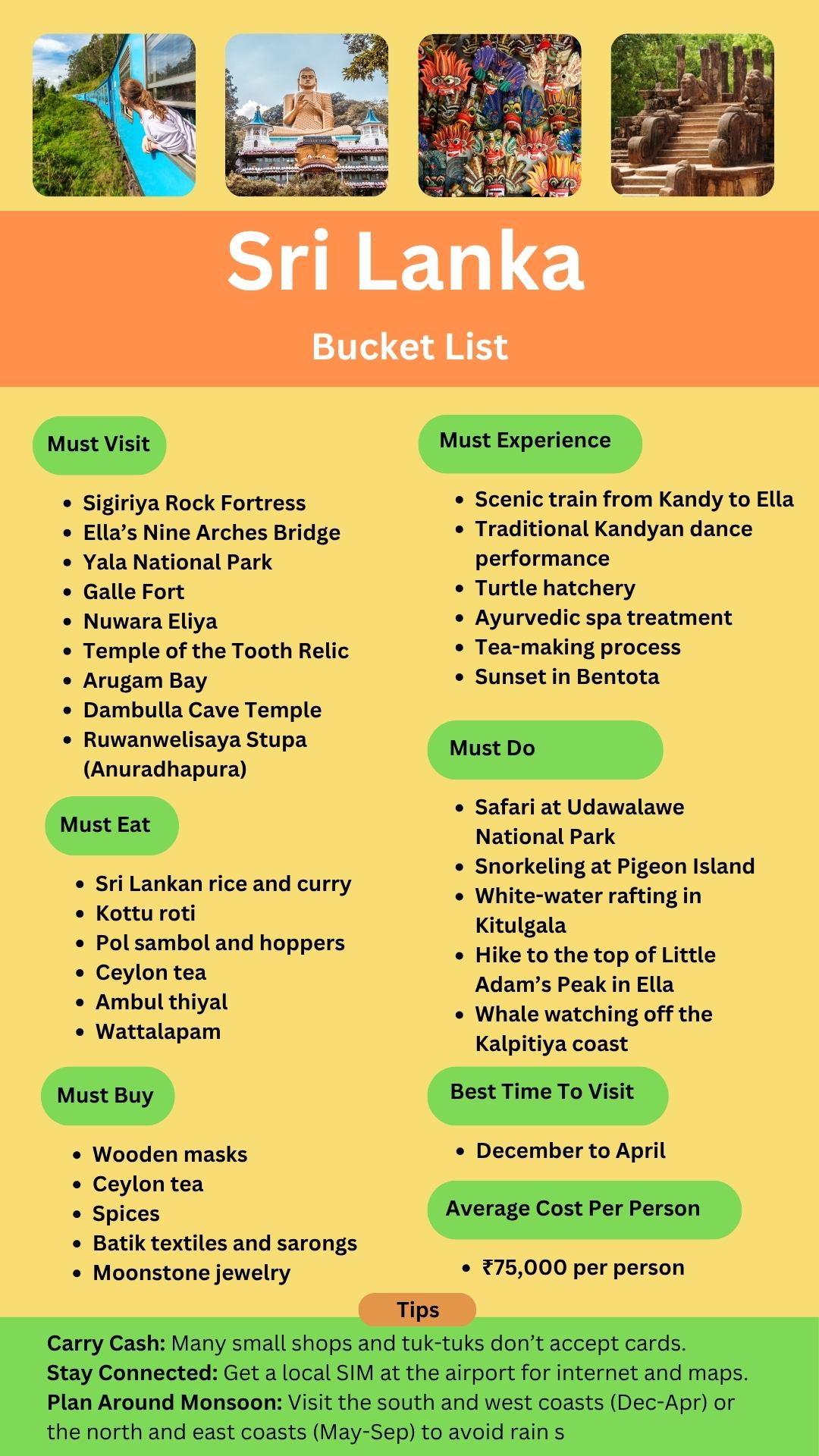
Sri Lanka packs an incredible amount into a small island. You get ancient temples, wild elephants, tea-covered hills, and beaches with warm turquoise water. Add in a food scene built on coconut and spice, and it is easy to see why so many travelers fall in love with this country.
This guide walks through the top places to visit, things to do, food to try, and tips that will help your trip go smoothly. Whether you have ten days or a full month, use this as your starting point for planning.
Ancient Wonders and Sacred Sites Worth Visiting
Sri Lanka’s cultural triangle holds some of the most impressive ruins in South Asia. These sites date back over a thousand years and still draw pilgrims and history lovers alike.
Sigiriya Rock Fortress rises nearly 200 meters above the jungle floor. Climbing to the top rewards you with frescoes, lion paw carvings, and sweeping views. Set aside at least half a day, since the climb takes time and the heat builds fast.
The Temple of the Tooth Relic in Kandy holds one of Buddhism’s most sacred objects. Thousands of devotees visit each year to pay respects. Evening ceremonies, called pujas, are especially moving to witness.
Dambulla Cave Temple features five caves filled with statues and murals. Monks have used this site for worship for over 2,000 years. It pairs well with a Sigiriya day trip since the two sites sit close together.
The Ruwanwelisaya Stupa in Anuradhapura is one of the tallest ancient stupas in the world. Its white dome glows at sunset and draws quiet crowds of worshippers. Anuradhapura itself was once a royal capital, so plan extra time to explore nearby ruins.
Galle Fort offers a different kind of history. Dutch colonial buildings line cobblestone streets near the coast. Boutique shops, cafes, and a lighthouse make it a relaxed stop after busier archaeological sites.
Insider Tips for Visiting Historic Sites
- Arrive at Sigiriya before 7 a.m. to beat both the heat and the tour groups. Early light also makes for better photos on the climb.
- Cover your shoulders and knees at all religious sites, including the Temple of the Tooth and Dambulla. Sarongs are sold cheaply near most entrances if you forget.
- Hire a local guide at Anuradhapura. The ruins are spread out, and a guide will help you understand what you are actually looking at.
- Buy a Cultural Triangle ticket if you plan to see several sites. It saves money compared to paying individual entrance fees.
Scenic Landscapes and Natural Escapes
Beyond the ruins, Sri Lanka’s hill country and coastline offer some of the best scenery in Asia. Cooler air and rolling tea estates make the highlands a welcome break from the heat.
Nuwara Eliya sits high in the hills and still carries a colonial, almost English feel. Tea plantations blanket the hillsides here. Many visitors tour a working tea factory and sample fresh brews on site.
Ella’s Nine Arches Bridge has become one of the most photographed spots on the island. Trains still cross it daily, weaving through green valleys below. Time your visit around the train schedule for the best shots.
Yala National Park offers some of the best leopard spotting in the world. Elephants, crocodiles, and hundreds of bird species also call the park home. Morning safaris tend to bring better sightings than afternoon ones.
Arugam Bay draws surfers from around the globe. Its laid back beach town vibe makes it a great place to slow down. Even non-surfers enjoy the relaxed cafes and sunset views.
Best Photo Spots in the Highlands and Coast
- Stand at the far end of the Nine Arches Bridge when a train approaches. This angle captures both the bridge curve and the surrounding jungle.
- Photograph Nuwara Eliya’s tea fields in early morning light. Mist often lingers over the hills, adding depth to the shot.
- Head to Little Adam’s Peak in Ella for a wide panoramic view. It requires far less effort than the famous Adam’s Peak pilgrimage climb.
- Capture Arugam Bay at golden hour, when fishing boats return and the light turns soft gold across the water.
Unforgettable Experiences to Add to Your Itinerary
Some of the best memories from Sri Lanka come from things you do, not just places you see. These experiences connect you directly with local culture and nature.
The scenic train ride from Kandy to Ella is often called one of the most beautiful train journeys on earth. Rice paddies, waterfalls, and tea estates roll past your window for hours. Book second class with an open window for the best airflow and views.
Traditional Kandyan dance performances combine drumming, fire, and elaborate costumes. Evening shows run regularly in Kandy and offer a quick, vivid introduction to local culture. They typically last about an hour, making them easy to fit into an evening.
Visiting a turtle hatchery along the southern coast supports conservation efforts. Many hatcheries release baby turtles at sunset, which is a memorable sight for families. Choose a hatchery with transparent, ethical practices rather than ones that overhandle the animals.
An Ayurvedic spa treatment offers deep relaxation rooted in centuries of tradition. Sri Lanka is known for high quality Ayurvedic centers, especially near the southern beaches. Even a single massage session can ease the fatigue of long travel days.
Learning the tea-making process firsthand deepens your appreciation for that cup you drink each morning. Factory tours in the hill country walk you through picking, withering, and rolling leaves. Most tours end with a tasting session.
Watching the sunset in Bentota is a simple pleasure that never gets old. The beach here faces west, giving unobstructed views over the water. Pair it with a riverside dinner for a full evening out.
Hidden Gems Beyond the Usual Tourist Trail
- Ask locals about smaller tea estates away from the main tourist routes. These often give more personal, less rehearsed tours than the big commercial factories.
- Look for smaller, community run turtle conservation projects. They tend to prioritize animal welfare over tourist entertainment.
- Try a sunset boat ride along the Bentota River instead of just the beach. Mangroves and birdlife make it a quieter, different kind of scenery.
- Seek out village-based Kandyan dance shows rather than large hotel performances. They often feel more intimate and less commercialized.
Thrilling Activities for Adventure Seekers
Sri Lanka is not just about temples and tea. Adventure travelers will find plenty to keep their adrenaline up.
A safari at Udawalawe National Park is one of the most reliable places to see wild elephants. Herds gather near the reservoir, especially during dry months. Unlike Yala, sightings here are almost guaranteed.
Snorkeling at Pigeon Island near Trincomalee reveals colorful reefs and reef sharks in shallow water. It is one of the few places where snorkelers, not just divers, can see reef sharks up close. Visibility is best between May and September.
White-water rafting in Kitulgala runs through class two and three rapids. The town gained fame as a filming location for The Bridge on the River Kwai. Half-day trips suit beginners well.
Hiking Little Adam’s Peak in Ella takes about ninety minutes round trip. It offers big views without the pre-dawn climb required by the famous Adam’s Peak. Sunrise is popular, but sunset works just as well and draws smaller crowds.
Whale watching off the Kalpitiya coast puts you in the path of blue whales and sperm whales. Trips typically run from November to April. Bring motion sickness tablets if you get seasick easily, since open water crossings can get choppy.
Planning Tips for Adventure Activities
- Book Udawalawe safaris for early morning slots. Animals are more active before the midday heat sets in.
- Pack reef-safe sunscreen before snorkeling at Pigeon Island. Regular sunscreen can damage the coral reefs there.
- Choose a rafting operator in Kitulgala with certified guides and proper safety gear. Not all operators maintain the same safety standards.
- Check whale watching tour reviews before booking. Boat quality and crowd size vary a lot between operators along this coast.
A Food Lover’s Guide to Sri Lankan Cuisine
Sri Lankan food deserves its own dedicated trip. Rich curries, fresh seafood, and bold spice blends define the local cuisine.
Sri Lankan rice and curry is the backbone of daily meals here. A single plate often includes several small curries, from lentils to vegetables to fish. Each region adds its own spin, so the dish never tastes quite the same twice.
Kottu roti is a satisfying street food classic. Chopped flatbread gets stir-fried with vegetables, egg, and your choice of meat. You will often hear it before you see it, thanks to the rhythmic chopping sound cooks make on the griddle.
Pol sambol and hoppers make a classic breakfast pairing. Hoppers are bowl-shaped rice pancakes with crispy edges. Pol sambol, a spicy coconut relish, adds punch to the mild pancake base.
Ceylon tea remains one of Sri Lanka’s most famous exports. Grown in the hill country, it ranges from light and floral to bold and malty. Buying it fresh from the source costs far less than buying it back home.
Ambul thiyal is a sour fish curry from the southern coast. Goraka, a sour fruit, gives the dish its distinct tang. It pairs beautifully with plain steamed rice.
Wattalapam is a rich, spiced coconut custard dessert. Influences from the island’s Malay community show up clearly in this dish. Look for it at Sri Lankan sweet shops or as a dessert option at local restaurants.
Local Etiquette Around Food and Dining
- Eat with your right hand when dining traditionally, especially with rice and curry. The left hand is considered unclean in many local customs.
- Ask about spice levels before ordering if you have a low tolerance. Sri Lankan curries can run much hotter than many visitors expect.
- Tip modestly at local restaurants, since service charges are sometimes already included. A small extra tip is appreciated but not always required.
- Try street food from stalls with high local foot traffic. Busy stalls usually mean fresher ingredients and quicker turnover.
Souvenirs and Shopping Worth Your Suitcase Space
Shopping in Sri Lanka gives you a chance to bring home pieces of its culture, craftsmanship, and flavor.
Wooden masks are a well known Sri Lankan craft, especially from the southern coastal towns. Traditionally used in ritual dances, they now make striking wall decorations. Ambalangoda is considered the best place to buy authentic, handmade versions.
Ceylon tea makes a practical and lightweight gift. Buying loose leaf tea directly from plantations often gets you better quality than boxed tourist blends. Vacuum-sealed packs travel well and keep the tea fresh.
Spices like cinnamon, cardamom, and pepper are grown right on the island. Sri Lankan cinnamon, known as true cinnamon, is considered superior to the cassia variety sold in many countries. Spice gardens near Kandy and Matale offer tastings and demonstrations.
Batik textiles and sarongs showcase a wax-resist dyeing technique brought centuries ago. Colorful patterns make them popular as clothing or wall hangings. Look for shops that show you the actual dyeing process, which usually signals authentic work.
Moonstone jewelry uses a gemstone mined locally in Sri Lanka. The stone has a soft, glowing shimmer that shifts with the light. Ratnapura, known as the city of gems, is a reliable place to buy from trusted dealers.
Budget Tips for Shopping Smart
- Bargain gently at markets, but avoid aggressive haggling at fixed-price craft cooperatives. Many of these support local artisans directly.
- Buy spices in smaller quantities unless you cook often, since flavor fades over time. Whole spices last longer than pre-ground versions.
- Compare prices at a few gem shops in Ratnapura before buying moonstone jewelry. Prices can vary more than first-time buyers expect.
- Skip souvenir shops right outside major tourist sites. Prices are usually higher there than in nearby towns.
When to Go and How Much to Budget
Timing your trip well can make a big difference in weather, crowds, and overall enjoyment.
The best time to visit Sri Lanka overall runs from December to April. This period offers the driest weather across most of the island. It also lines up with peak tourist season, so book accommodations early.
Average costs run around 75,000 rupees per person for a full trip, though this varies with travel style. Budget travelers can spend less by staying in guesthouses and eating at local spots. Those wanting luxury resorts and private drivers should budget considerably more.
Seasonal Advice for First-Time Visitors
- Visit the south and west coasts between December and April to avoid monsoon rains. This includes popular areas like Galle, Bentota, and Yala.
- Visit the north and east coasts between May and September instead. Monsoon patterns hit these regions at different times of year.
- Book domestic flights or trains early during December and January. This period overlaps with holidays and sees the highest demand.
- Pack for both heat and rain regardless of season, since sudden showers happen even outside monsoon months.
Practical Tips Every Traveler Should Know
A few practical habits will make your trip smoother from the moment you land.
Carry cash whenever possible. Many small shops and tuk-tuks do not accept cards, especially outside major cities. Keep smaller bills on hand for everyday purchases.
Stay connected by getting a local SIM card at the airport. It gives you reliable internet access for maps, translation apps, and staying in touch. Several providers offer affordable tourist packages right at arrival terminals.
Plan around the monsoon by choosing the right coast for the right season. This single decision affects your entire trip more than almost anything else. Checking regional forecasts before booking accommodations can save you from unexpected rainy days.
Common Mistakes First-Timers Make
- Trying to see too much in too little time. Sri Lanka’s roads are winding and travel between regions takes longer than distances suggest on a map.
- Skipping travel insurance to save money. Adventure activities like rafting and safaris carry real risk, and insurance covers unexpected medical costs.
- Not confirming tuk-tuk fares before the ride starts. Agreeing on a price upfront avoids confusion and overcharging at the destination.
- Underestimating the sun in the hill country. Cooler temperatures can mask strong UV exposure, so sunscreen still matters even in Nuwara Eliya.
Final Thoughts on Planning Your Sri Lanka Adventure
Sri Lanka rewards travelers who slow down and explore beyond the highlights. Ancient temples, wildlife safaris, and quiet beach towns all sit within a few hours of each other. Few destinations pack this much variety into such a compact space.
Whether you come for the leopards of Yala, the tea fields of Nuwara Eliya, or the curry-filled plates of the south coast, this island delivers something memorable at every turn. Start planning early, pack light, and get ready for one of the most rewarding trips in Asia.