England packs an extraordinary range of experiences into a country small enough to cross by train in a single day. Ancient stone circles sit near university towns steeped in centuries of scholarship, while dramatic coastlines and rolling countryside connect it all through an efficient rail network. Few countries offer this much historical depth and regional variety within such a manageable, well connected footprint.
This guide covers the top attractions, experiences, activities, food, and travel tips to help you plan your England adventure. Whether you have two weeks or a full month, use this as your starting point.
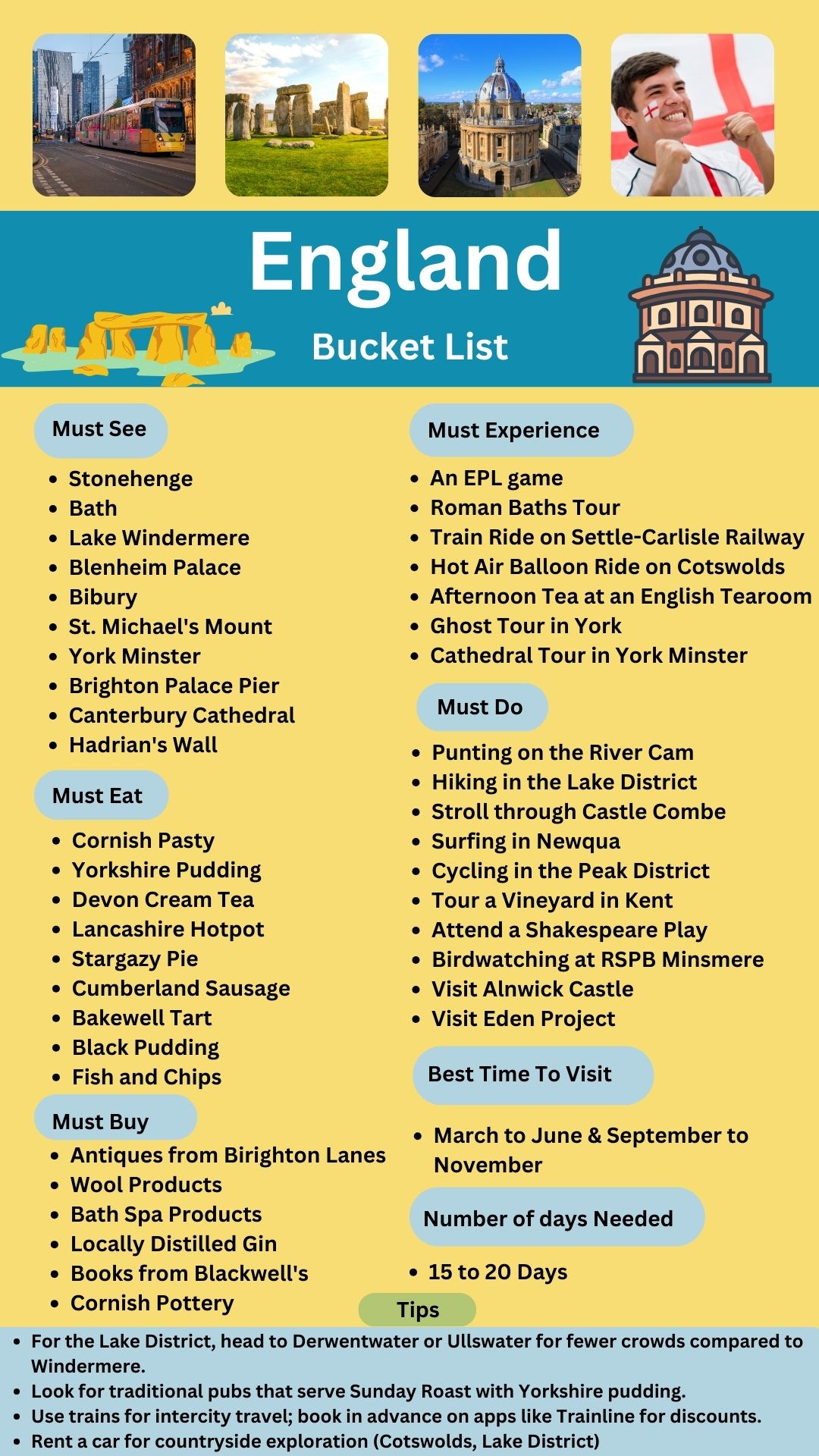
| Category | Top Recommendation | Best Time | Recommended Duration |
|---|---|---|---|
| Attractions | Stonehenge | March to June, September to November | Half day |
| Experiences | Roman Baths tour | Year round | 2-3 hours |
| Outdoor Activities | Hiking in the Lake District | April to October | Full day |
| Local Food | Fish and chips | Year round | One meal |
| Souvenirs | Bath spa products | Year round | Shopping stop |
| Overall Trip | Full country exploration | March-June & Sep-Nov | 15 to 20 days |
Must See Attractions
England’s landmarks span thousands of years, from prehistoric monuments to Gothic cathedrals and Victorian seaside piers. These sights form the backbone of any thorough first time visit.
Places You Shouldn’t Miss
- Stonehenge stands as one of the world’s most recognizable prehistoric monuments, its massive stone circle dating back roughly 5,000 years. The site’s exact purpose remains debated among archaeologists, adding to its enduring mystery.
- Bath preserves an extraordinarily well kept Georgian cityscape built atop Roman thermal baths first developed nearly 2,000 years ago. Its honey colored limestone buildings earned the city UNESCO World Heritage status.
- Lake Windermere, England’s largest lake, anchors the Lake District with scenic steamer cruises and a lively lakeside town at Bowness. Its surrounding fells drew William Wordsworth and remain deeply tied to Romantic era poetry.
- Blenheim Palace, birthplace of Winston Churchill, offers one of England’s grandest stately homes, surrounded by expansive landscaped gardens.
- Bibury charms visitors with its honey colored Cotswold cottages along Arlington Row, often called one of the most picturesque villages in England.
- St. Michael’s Mount, a castle topped tidal island near Marazion in Cornwall, offers a scenic and unusual day trip reachable by causeway at low tide.
- York Minster ranks among the largest Gothic cathedrals in northern Europe, its medieval stained glass and climbable tower drawing visitors from around the world.
- Brighton Palace Pier offers classic seaside amusements and fairground rides right over the water, a beloved symbol of the English seaside holiday.
- Canterbury Cathedral holds deep significance as the mother church of the worldwide Anglican Communion, with architecture spanning nearly a thousand years.
- Hadrian’s Wall stretches across northern England as a UNESCO World Heritage Roman frontier fortification, with walkable sections and forts along its length.
Must Experience
Beyond sightseeing, England offers experiences that connect travelers directly to its history, culture, and passionate local traditions. These moments often become the highlight of a trip.
Unforgettable Experiences
- Attending an EPL game immerses visitors in England’s deep football culture, with stadium tours available even outside match days for those who cannot secure tickets.
- Taking a Roman Baths tour in Bath offers remarkably preserved ancient bathing complexes, with an audio guide explaining nearly 2,000 years of history.
- Riding the Settle-Carlisle Railway crosses some of England’s most dramatic countryside, including the iconic Ribblehead Viaduct in the Yorkshire Dales.
- A hot air balloon ride over the Cotswolds offers sweeping views of honey colored villages and rolling farmland, best experienced at sunrise or sunset.
- Afternoon tea at an English tearoom remains a quintessential English tradition, typically featuring finger sandwiches, scones, and a proper pot of tea.
- A ghost tour in York explores the city’s reputation as one of the most haunted in Europe, winding through medieval streets and underground passages.
- A cathedral tour at York Minster offers deeper access to the building’s architecture and history than a casual visit alone provides.
Must Do
England’s countryside and coastline support a wide range of outdoor and cultural activities, from cycling through national parks to touring vineyards. Most activities suit a range of fitness levels and interests.
Best Outdoor Adventures
- Punting on the River Cam offers a classic university town experience in Cambridge, gliding past historic colleges and under ancient bridges. No prior experience is needed, since punts can be hired with a guide.
- Hiking in the Lake District ranges from gentle valley walks to serious fell climbs, with Scafell Pike challenging experienced hikers and gentler trails suiting casual walkers. Spring through early autumn offers the most reliable weather.
- Strolling through Castle Combe reveals one of England’s best preserved medieval villages, its stone cottages and packhorse bridge largely unchanged for centuries.
- Surfing in Newquay takes advantage of Cornwall’s reliable Atlantic swells, with surf schools catering well to beginners throughout the summer season.
- Cycling in the Peak District offers scenic routes through Britain’s first national park, with trails suited to both casual riders and serious cyclists.
- Touring a vineyard in Kent introduces visitors to England’s growing wine industry, particularly known for sparkling wines grown on similar chalk soil to Champagne.
- Attending a Shakespeare play in Stratford-upon-Avon connects visitors directly to England’s greatest literary legacy, performed by the Royal Shakespeare Company on the River Avon.
- Birdwatching at RSPB Minsmere offers one of England’s premier nature reserves, home to rare species including bitterns and avocets.
- Visiting Alnwick Castle combines medieval history with Harry Potter filming locations, plus expansive gardens featuring a poison garden.
- Visiting the Eden Project in Cornwall showcases global plant ecosystems within striking biome domes built inside a former china clay pit.
Must Eat
English cuisine reflects centuries of regional tradition, with hearty pub classics sitting alongside coastal specialties and rich, buttery bakes.
What to Eat
- Cornish pasty originated among Cornwall’s tin miners, a pastry filled with beef, potato, and swede designed to be eaten by hand underground. Bakeries throughout Cornwall still follow traditional recipes protected by regional certification.
- Yorkshire pudding, a savory batter baked until puffed and golden, traditionally accompanies a Sunday roast dinner. Look for it at traditional pubs throughout Yorkshire and beyond.
- Devon cream tea pairs warm scones with clotted cream and jam, though locals debate fiercely whether cream or jam belongs on top first. Devon and neighboring Cornwall both claim the tradition as their own.
- Lancashire hotpot combines lamb or mutton with potatoes in a slow cooked stew, a comforting dish rooted in the industrial north’s working class kitchens.
- Stargazy pie, a Cornish specialty, features whole fish baked into the crust with their heads poking out, traditionally associated with the fishing village of Mousehole.
- Cumberland sausage, a long coiled pork sausage seasoned with herbs and spices, remains a specialty of the Lake District region.
- Bakewell tart, originating from the Peak District town of the same name, layers almond frangipane and jam within a shortcrust pastry base.
- Black pudding, a savory sausage made from pork blood and oats, appears frequently on traditional English breakfast plates, particularly in the north.
- Fish and chips remains England’s most iconic dish, best enjoyed fresh from a coastal chippy with a squeeze of vinegar.
Souvenirs Worth Bringing Home
Shopping across England offers a mix of regional crafts, historic products, and literary treasures worth packing for the trip home.
Souvenirs Worth Bringing Home
- Antiques from Brighton’s Lanes reflect this seaside town’s bohemian character, with narrow alleyways packed full of vintage jewelry, furniture, and curiosities.
- Wool products remain a classic English purchase, particularly from regions with a long history of sheep farming like the Yorkshire Dales and Cotswolds.
- Bath spa products draw on the city’s centuries old thermal spring heritage, with several shops offering mineral rich soaps and skincare items.
- Locally distilled gin has surged in popularity across England, with small batch distilleries throughout the countryside offering distinctive regional botanicals.
- Books from Blackwell’s, the renowned Oxford bookshop, make a fitting souvenir for a country so deeply tied to literary history.
- Cornish pottery reflects the region’s long ceramic tradition, with distinctive glazes inspired by the surrounding coastal landscape.
Best Time to Visit
England’s weather varies significantly by season, and timing your trip well can shape both comfort and cost throughout your journey.
Seasonal Highlights
- March through June brings blooming gardens and milder temperatures, ideal for exploring the Cotswolds and Lake District without peak summer crowds.
- September through November offers similarly comfortable conditions, with autumn foliage adding extra color to countryside drives and national park hikes.
- Summer brings the longest daylight hours and liveliest atmosphere, though popular attractions require advance booking to avoid the heaviest crowds.
- Winter offers a quieter, more atmospheric version of England, particularly appealing for cathedral visits and cozy pub meals, though shorter days suit indoor sightseeing better than long countryside walks.
Travel Tips
A few practical habits will help your England trip run smoothly, especially given the country’s mix of cities, countryside, and coastline.
Essential Travel Tips
- For the Lake District, head to Derwentwater or Ullswater for fewer crowds compared to Windermere. Both offer equally stunning scenery with a more relaxed pace, especially during peak summer months.
- Look for traditional pubs that serve Sunday roast with Yorkshire pudding, a weekly tradition worth timing your visit around. Many pubs require reservations for Sunday lunch given its popularity with locals.
- Use trains for intercity travel, and book in advance on apps like Trainline for significant discounts. Last minute tickets can cost several times more than advance bookings on popular routes.
- Rent a car for countryside exploration, particularly in regions like the Cotswolds and Lake District where public transport options are more limited. A car offers far more flexibility for reaching smaller villages and remote trailheads.
Building Your Own England Adventure
England delivers an extraordinary mix of ancient history, literary heritage, and dramatic natural beauty within a country remarkably easy to navigate. Prehistoric stone circles, Gothic cathedrals, and rolling countryside all sit within reach of a well connected rail network. Few countries offer this much regional depth in such a manageable, accessible package.
Whether you come for the mystery of Stonehenge, a hike through the Lake District, or a proper fish and chips supper by the sea, England rewards travelers willing to explore beyond its most famous postcard images. Use this bucket list as a starting point, then build an itinerary around the destinations and experiences that speak to you most. The country has plenty to offer, however you choose to experience it.