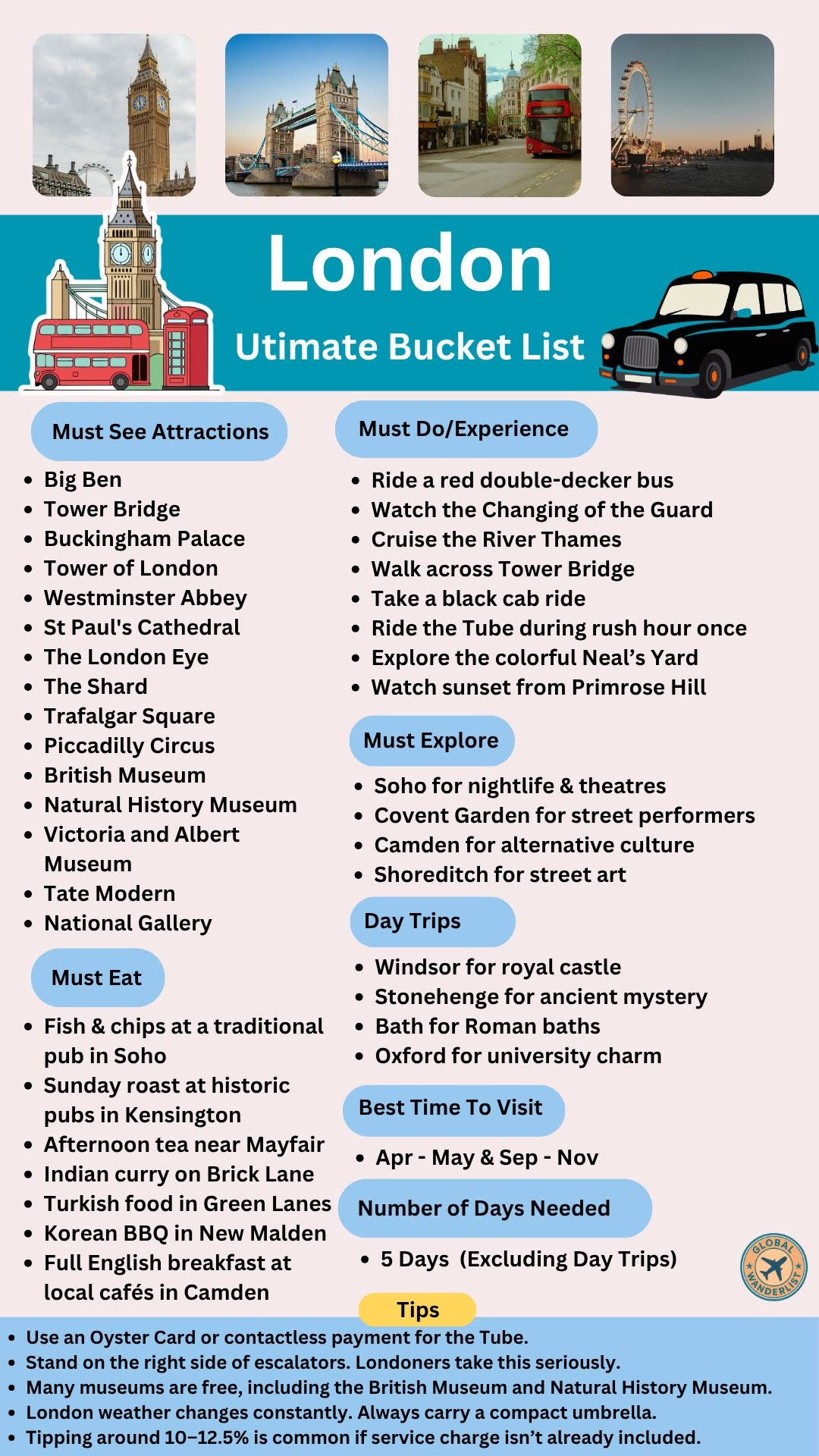
London rewards travelers who mix icons with hidden corners. It has royal palaces, ancient bridges, and world-class museums. It also has curry houses, street art alleys, and quiet parks made for lazy afternoons.
Few cities pack this much history into a walkable footprint. You can stand where kings were crowned, then ride a red bus past Georgian townhouses within minutes. Add in free museums, a legendary food scene, and easy day trips to castles and Roman ruins, and it is clear why London belongs on every serious travel list.
This guide breaks the city down into must-see attractions, unforgettable experiences, food worth chasing, and practical tips for getting around like a local.
London at a Glance
| Category | Top Recommendation | Best Time | Recommended Duration |
|---|---|---|---|
| Must See Attraction | Big Ben and the Houses of Parliament | Early morning | 1-2 hours |
| Must Do Experience | Cruise the River Thames | Late afternoon | 1-2 hours |
| Neighborhood to Explore | Covent Garden | Weekday afternoons | 2-3 hours |
| Local Food | Fish and chips in Soho | Lunch or dinner | 45-60 minutes |
| Day Trip | Windsor Castle | Morning departure | Full day |
| Best Time to Visit | April-May or September-November | Spring or fall | 5 days minimum |
Must Visit Attractions
Places You Shouldn’t Miss
- Big Ben and the Houses of Parliament. This clock tower is the most photographed symbol of London. The current bell dates back to 1859 and still rings out over Westminster today. Visit early morning for fewer crowds and softer light for photos.
- Tower Bridge. Often confused with London Bridge, this Victorian structure is one of the most recognizable bridges in the world. Walkers can cross the glass floor walkway for sweeping views of the Thames. Plan for about an hour if you want to visit the exhibition inside.
- Buckingham Palace. The official residence of the British monarch has stood at the heart of royal life since 1837. Even without a tour, the gates and gardens make a striking backdrop. Time your visit around the Changing of the Guard for extra spectacle.
- Tower of London. This nearly thousand-year-old fortress has served as a royal palace, prison, and treasury. Today it holds the Crown Jewels, guarded around the clock. Budget at least two hours to see the grounds properly.
- Westminster Abbey. Nearly every English monarch since 1066 has been crowned inside this Gothic church. It also holds the graves of poets, scientists, and statesmen. Arrive early since lines build quickly by midmorning.
- St Paul’s Cathedral. Sir Christopher Wren designed this dome after the Great Fire of London destroyed the original church in 1666. Climbing to the Whispering Gallery rewards visitors with panoramic city views. The climb involves over 500 steps, so wear comfortable shoes.
- The London Eye. This giant observation wheel offers some of the best skyline views in the city. A full rotation takes about 30 minutes, giving riders time to spot landmarks below. Sunset slots tend to sell out first, so book ahead.
- The Shard. Standing over 1,000 feet tall, this glass skyscraper is western Europe’s tallest building. The viewing platform gives a completely different perspective from ground-level landmarks. Clear days offer visibility for miles in every direction.
- Trafalgar Square. This grand public square commemorates the 1805 Battle of Trafalgar. Bronze lions, fountains, and street performers make it a lively stop any time of day. It also connects easily to nearby galleries on foot.
- Piccadilly Circus. Famous for its glowing billboards, this junction sits at the edge of London’s theatre district. It gets busy at night, which actually adds to its energy and appeal. Use it as a starting point for exploring Soho.
- British Museum. Home to millions of artifacts, this museum covers human history across every continent. The Rosetta Stone and Egyptian mummies draw the biggest crowds. Entry is free, so it is worth returning more than once.
- Natural History Museum. Dinosaur skeletons and a blue whale model greet visitors in the main hall. The building itself is a Romanesque masterpiece worth admiring from outside. Families often spend a half day exploring the exhibits here.
- Victoria and Albert Museum. This design and applied arts museum spans fashion, ceramics, jewelry, and sculpture. It is one of the largest museums of its kind anywhere. Free entry makes it an easy add to any itinerary.
- Tate Modern. Housed in a former power station, this gallery showcases modern and contemporary art. The industrial architecture is almost as striking as the collection inside. The riverside terrace offers great views of St Paul’s across the water.
- National Gallery. Overlooking Trafalgar Square, this gallery holds masterpieces from Van Gogh, Turner, and Da Vinci. Entry is free, and the rotating special exhibits are worth checking in advance. Two hours is enough for a solid overview.
Must Do Experiences
Unforgettable Experiences
- Ride a red double-decker bus. Hopping on a classic London bus is an easy, affordable way to sightsee. Sit upstairs at the front for the best views. Route 15 passes several major landmarks along the way.
- Watch the Changing of the Guard. This ceremonial handover happens at Buckingham Palace with music and precision marching. It typically runs on select days, so check the schedule beforehand. Arrive at least 30 minutes early to get a good spot.
- Cruise the River Thames. A boat ride offers a completely different view of the city’s landmarks. Evening cruises add dramatic lighting across bridges and buildings. Most trips run between 45 minutes and two hours.
- Walk across Tower Bridge. Beyond the views, the bridge’s engine rooms reveal the Victorian machinery that once raised its bascules. It is a short but memorable stop between the City and Bermondsey. Photographers should aim for golden hour.
- Take a black cab ride. London’s iconic black taxis are driven by cabbies who train for years to master the city’s streets. It is a quintessential way to experience local transport. Rides are pricier than the Tube but worth it once.
- Ride the Tube during rush hour. It sounds unusual, but riding the Underground at peak time offers a genuine slice of daily London life. The system dates back to 1863, making it the oldest metro network in the world. Just be ready for a crowded carriage.
- Explore the colorful Neal’s Yard. Tucked behind Covent Garden, this pastel-painted courtyard is a favorite photo stop. It is small, so a quick fifteen-minute visit is usually enough. Morning light works best for photos.
- Watch sunset from Primrose Hill. This grassy hill offers one of London’s best skyline views, especially at dusk. Locals often bring picnics on clear evenings. It is a short walk from Camden Market.
Neighborhoods Worth Exploring
Places You Shouldn’t Miss
- Soho. Known for nightlife, theatres, and independent restaurants, Soho buzzes well into the night. Its narrow streets are packed with character and history. It is also a central base for exploring the West End.
- Covent Garden. Street performers, boutique shops, and a historic covered market define this district. The old market hall dates back to the 1830s. Plan for a couple of hours to browse and watch performances.
- Camden. This neighborhood is known for alternative culture, vintage shops, and its sprawling market by the canal. It has a completely different energy from central London. Weekend visits bring the biggest crowds and street food stalls.
- Shoreditch. East London’s creative hub is covered in ever-changing street art and murals. It is also home to independent galleries and trendy cafes. A guided walking tour helps spot the best pieces.
Easy Day Trips from London
Places You Shouldn’t Miss
- Windsor. Home to Windsor Castle, the oldest occupied castle in the world, this royal town sits about an hour from central London by train. The State Apartments and St George’s Chapel are highlights. A half day is usually enough to see the main sights.
- Stonehenge. This prehistoric stone circle in Wiltshire dates back over 4,000 years and still puzzles historians. It sits roughly two hours from London by car or organized tour. Visiting takes about two to three hours including the visitor center.
- Bath. Famous for its Roman-built baths and Georgian architecture, Bath is about 90 minutes from London by train. The Roman Baths museum is the main draw. A full day allows time for the baths and a stroll through the city center.
- Oxford. This historic university town blends centuries-old colleges with a lively student atmosphere. It is around an hour from London by train. Walking tours through the colleges and Bodleian Library are popular options.
Local Food to Try
What to Eat
- Fish and chips. This classic dish of battered fish and thick-cut fries is a British staple. Traditional pubs in Soho serve some of the most satisfying versions. Pair it with mushy peas for the full experience.
- Sunday roast. A hearty plate of roasted meat, potatoes, and Yorkshire pudding is a weekly tradition across the country. Historic pubs in Kensington are known for excellent versions. It is best enjoyed slowly with a pint on the side.
- Afternoon tea. This refined ritual includes tea, scones, and finger sandwiches served on tiered trays. Elegant tearooms near Mayfair offer some of the most polished settings. Reservations are recommended, especially on weekends.
- Indian curry. London has one of the best Indian food scenes outside South Asia. Brick Lane is famous for its dense stretch of curry houses. Expect bold spices and generous portions.
- Turkish food. Green Lanes is known for authentic Turkish grills, mezze, and fresh bread. It is a great spot for a casual, flavorful meal. Family-run spots often serve the most traditional dishes.
- Korean BBQ. New Malden has one of Europe’s largest Korean communities, and the food reflects it. Tabletop grills and banchan side dishes make for an interactive meal. It is a great option for groups.
- Full English breakfast. This filling plate includes eggs, bacon, sausage, beans, and toast. Local cafes in Camden serve generous, no-frills versions. It is the perfect fuel before a long day of sightseeing.
Best Time to Visit London
Seasonal Highlights
- April to May. Spring brings mild temperatures and blooming parks across the city. Crowds are lighter than peak summer months. It is a great window for outdoor sightseeing.
- September to November. Fall offers crisp weather and fewer tourists than summer. Parks turn golden, adding extra charm to walks through the city. Hotel rates also tend to dip slightly compared to peak season.
- Summer months. June through August bring the warmest weather but also the biggest crowds. Outdoor festivals and long daylight hours are a draw. Booking major attractions in advance is essential during this period.
- Winter months. December brings festive lights, markets, and a magical atmosphere despite the cold. It is quieter at major sites outside the holiday rush. Pack layers, since temperatures often hover near freezing.
Trip Length
Five days is a comfortable amount of time to cover London’s major sights without rushing. This does not include day trips outside the city. Travelers with more time can easily add Windsor, Bath, or Oxford onto the schedule.
Travel Tips for Visiting London
Essential Travel Tips
- Use an Oyster Card or contactless payment. Both options work across buses, the Underground, and most trains within the city. They are far cheaper than single paper tickets. Tap in and out at every station to avoid extra charges.
- Stand on the right side of escalators. Londoners take this rule seriously, especially in busy Tube stations. Standing on the left blocks people trying to walk past. Following this small rule goes a long way with locals.
- Take advantage of free museums. Many major museums, including the British Museum and Natural History Museum, offer free general admission. Donations are welcome but not required. This makes it easy to fit several museums into a tight budget.
- Pack a compact umbrella. London weather shifts quickly, even within the same day. A small, foldable umbrella takes up little space in a daypack. Layered clothing also helps handle sudden temperature changes.
- Budget for tipping. A service charge of around 10 to 12.5 percent is common at restaurants. Check your bill before adding an extra tip, since it may already be included. Tipping is less expected at pubs and casual counters.
- Book major attractions ahead of time. Popular sites like the Tower of London and London Eye often sell out during peak season. Booking online in advance saves time and avoids long queue waits. It also sometimes comes with a small discount.
- Watch your bags on public transport. Like any major city, London has pickpocketing in crowded tourist areas. Keep bags zipped and in front of you on busy Tube lines. Staying alert around major stations is generally enough to avoid trouble.
Final Thoughts
London is a city built for slow exploration and repeat visits. Every neighborhood offers something different, from royal history to modern art. Pair the major landmarks with time in local markets, pubs, and side streets for a fuller picture of the city.
Use this guide as a starting point rather than a strict checklist. Mix in a day trip or two, save room for spontaneous wandering, and build an itinerary that fits your own pace. London tends to reward travelers who leave a little space for surprises.