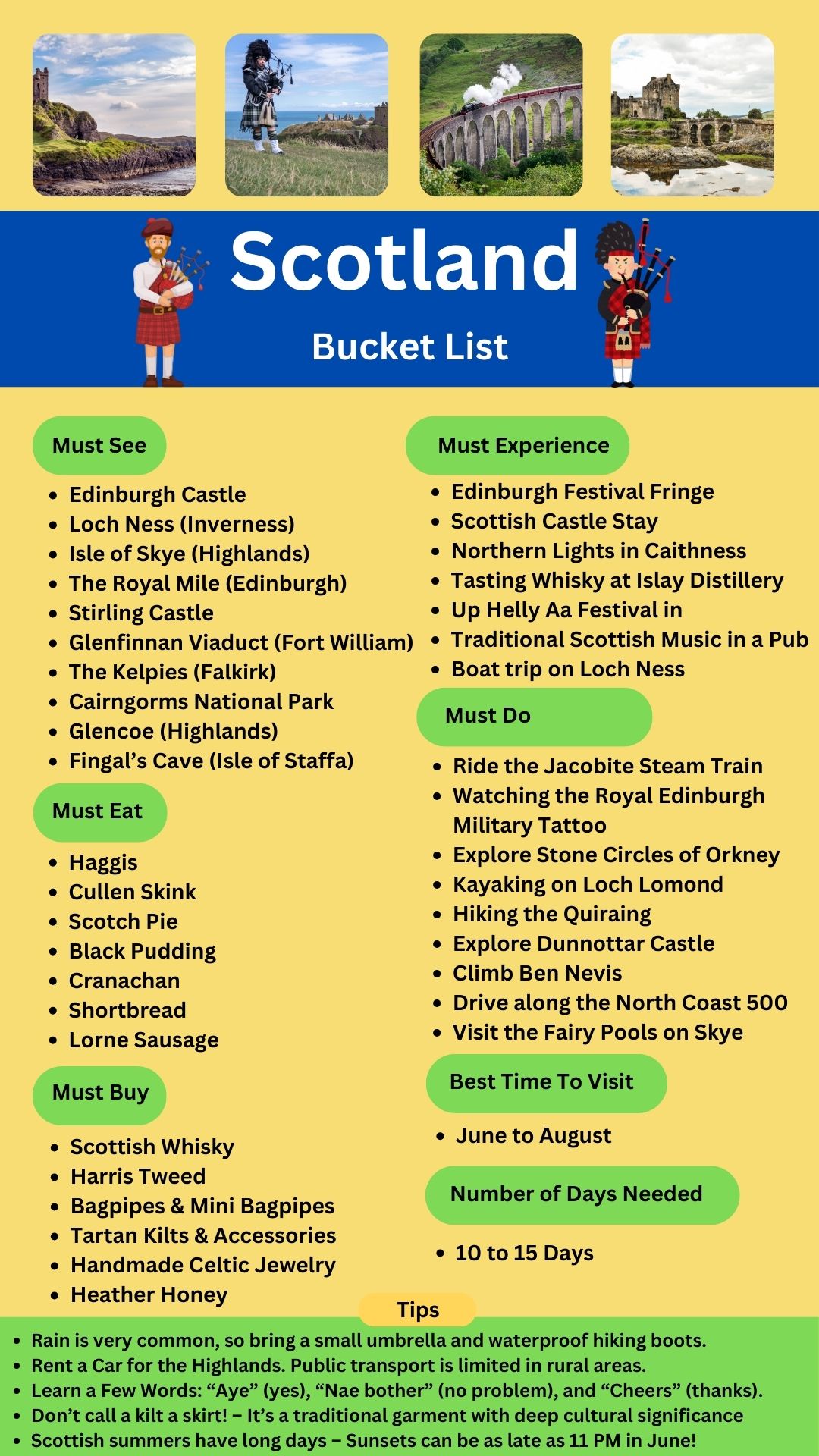
Scotland Bucket List

Scotland feels like a country pulled straight from folklore. Misty lochs, ruined castles, and rolling highlands sit alongside lively cities full of music and history.

Few destinations blend dramatic scenery with rich culture the way Scotland does. One day you might explore a medieval castle, and the next you could be hiking past waterfalls on the Isle of Skye. Add in world-famous whisky, hearty food, and warm local hospitality, and it becomes clear why Scotland deserves a spot on every bucket list.

This guide covers the top attractions, unforgettable experiences, outdoor adventures, local dishes, and practical tips for planning a trip across Scotland.

Scotland at a Glance

CategoryTop RecommendationBest TimeRecommended Duration
Must See AttractionEdinburgh CastleMorning2-3 hours
Must Do ExperienceRide the Jacobite Steam TrainSummerHalf day
Outdoor AdventureHike the Quiraing on SkyeMay to September3-4 hours
Local FoodHaggis in EdinburghAny season45-60 minutes
SouvenirScottish WhiskyYear round1-2 hours tasting
Best Time to VisitJune to AugustSummer10 to 15 days

Must Visit Attractions

Places You Shouldn’t Miss

  • Edinburgh Castle. Perched on an extinct volcano, this fortress has watched over Edinburgh for centuries. It holds the Scottish Crown Jewels and the ancient Stone of Destiny. Plan for at least two hours to see the grounds and exhibits properly.
  • Loch Ness. This deep freshwater loch near Inverness is famous for its legendary monster and stunning scenery. Boat cruises let visitors scan the water while learning about local folklore. Morning trips often offer the calmest water for photos.
  • Isle of Skye. Known for dramatic cliffs and otherworldly rock formations, Skye is one of Scotland’s most photographed regions. The Highlands here feel remote and untouched. Plan at least two full days to explore the island properly.
  • The Royal Mile. This historic street connects Edinburgh Castle to the Palace of Holyroodhouse. Cobblestone lanes, old tenement buildings, and street performers line the route. Walking the full length takes about an hour without stops.
  • Stirling Castle. Perched above the city of Stirling, this castle played a major role in Scotland’s wars of independence. Its Renaissance architecture is some of the best preserved in the country. The Great Hall and royal apartments are highlights of any visit.
  • Glenfinnan Viaduct. This curved railway bridge near Fort William gained fame from film appearances, but its real draw is the engineering itself. Built in 1901, it remains an impressive feat of Victorian construction. Viewing platforms above the track offer excellent photo spots.
  • The Kelpies. These towering horse head sculptures in Falkirk represent Scotland’s strong industrial and equine heritage. Standing 100 feet tall, they are especially striking when lit up at night. A visit typically takes about 30 to 45 minutes.
  • Cairngorms National Park. This vast wilderness area is the largest national park in the United Kingdom. It offers everything from gentle walking trails to serious mountain hikes. Wildlife spotting, including red deer, is common throughout the park.
  • Glencoe. Surrounded by steep mountains, this Highland valley is known for its brooding, dramatic scenery. It is also historically significant as the site of the 1692 massacre of Clan MacDonald. Photographers favor early morning light here.
  • Fingal’s Cave. Located on the Isle of Staffa, this sea cave is famous for its natural hexagonal basalt columns. Boat tours from Mull or Iona bring visitors close to its dramatic entrance. Calm summer weather offers the best chance for a smooth crossing.

Must Experience in Scotland

Unforgettable Experiences

  • Edinburgh Festival Fringe. Held every August, this is the largest arts festival in the world. Streets fill with comedians, musicians, and performers of every kind. Booking accommodation months ahead is essential during this period.
  • A Scottish castle stay. Several historic castles across the country now operate as hotels. Spending a night in one offers a genuine taste of Scottish heritage. Rooms often book out quickly during summer, so reserve early.
  • Northern lights in Caithness. This remote northern region occasionally offers views of the aurora borealis on clear winter nights. Dark skies and minimal light pollution improve the odds of a sighting. Late autumn through early spring is the best window.
  • Whisky tasting at an Islay distillery. Islay is renowned for producing some of Scotland’s smokiest, most distinctive whiskies. Guided tastings explain the peat-drying process behind the flavor. Most tours last around 90 minutes.
  • Up Helly Aa festival. This fire festival in Shetland celebrates Viking heritage with torchlit processions. It culminates in the ceremonial burning of a longship replica. It takes place annually in late January.
  • Traditional Scottish music in a pub. Live folk sessions featuring fiddles and accordions are common in pubs across the country. Edinburgh and Glasgow have particularly strong live music scenes. Evenings tend to bring the best atmosphere.
  • A boat trip on Loch Ness. Beyond monster hunting, these cruises reveal the loch’s dramatic surrounding scenery. Many tours include commentary on local history and geology. Trips generally run between one and two hours.

Outdoor Adventures

Best Outdoor Adventures

  • Ride the Jacobite Steam Train. This historic train crosses the Glenfinnan Viaduct on its scenic route between Fort William and Mallaig. The journey takes roughly two hours each way. Book well in advance, especially during summer months.
  • Watch the Royal Edinburgh Military Tattoo. This military performance combines music, drama, and precision marching at Edinburgh Castle. It runs each August alongside the Festival Fringe. Tickets sell out fast, so book several months ahead.
  • Explore the stone circles of Orkney. These Neolithic sites predate Stonehenge and offer a fascinating look at ancient Scotland. The Ring of Brodgar is one of the most complete surviving circles. A rental car makes exploring the islands much easier.
  • Kayak on Loch Lomond. Scotland’s largest loch by surface area offers calm waters ideal for beginner paddlers. Surrounding mountains provide a scenic backdrop throughout the trip. Summer afternoons typically offer the calmest conditions.
  • Hike the Quiraing. This dramatic landslip on Skye features jagged pinnacles and rolling green terrain. The full loop takes three to four hours and requires moderate fitness. Sturdy footwear is essential due to uneven terrain.
  • Explore Dunnottar Castle. Perched on a cliff near Stonehaven, this ruined fortress offers striking coastal views. The walk down to the entrance involves steep steps. Early morning visits help avoid the biggest crowds.
  • Climb Ben Nevis. As the highest peak in the United Kingdom, Ben Nevis draws hikers from around the world. The main route takes six to eight hours round trip for reasonably fit hikers. Weather can change quickly, so proper gear is essential.
  • Drive the North Coast 500. This scenic road trip loops around the northern Highlands, covering roughly 500 miles. It typically takes five to seven days to complete comfortably. Renting a car is necessary since public transport is limited along the route.
  • Visit the Fairy Pools on Skye. These clear blue pools and small waterfalls sit at the base of the Black Cuillin mountains. The walk to reach them takes about 20 minutes each way. Swimming is possible, though the water stays cold year round.

Local Food to Try

What to Eat

  • Haggis. This traditional dish combines minced sheep offal with oats, onion, and spices, all encased in natural casing. It has deep roots in Scottish culinary history. Restaurants in Edinburgh often serve it with neeps and tatties.
  • Cullen Skink. This creamy soup features smoked haddock, potatoes, and onions. It originated in the fishing town of Cullen on the northeast coast. Coastal restaurants throughout Scotland serve excellent versions.
  • Scotch pie. This small, double-crust pastry is filled with seasoned minced meat. It is a popular grab-and-go snack found at bakeries nationwide. Football matches and local fairs often feature them as a quick bite.
  • Black pudding. Made from pork blood, fat, and oatmeal, this sausage is a staple of the traditional Scottish breakfast. It has a rich, savory flavor that pairs well with eggs. Cafes across the country serve it as part of a full breakfast plate.
  • Cranachan. This dessert layers whipped cream, toasted oatmeal, honey, and raspberries. It highlights simple, high-quality Scottish ingredients. Many restaurants serve it as a lighter alternative to heavier desserts.
  • Shortbread. This buttery, crumbly biscuit has been a Scottish favorite for centuries. It makes a popular souvenir since it travels well. Look for versions made with local butter for the richest flavor.
  • Lorne sausage. This square-shaped sausage is a breakfast staple across Scotland. Its shape makes it easy to fit neatly onto bread or a breakfast plate. Local butchers often have their own seasoning blends.

Best Souvenirs to Bring Home

Best Souvenirs to Bring Home

  • Scottish whisky. Bringing home a bottle from a distillery visited in person adds a personal touch. Regions like Speyside and Islay each produce distinctive styles. Duty-free shops at airports also offer a wide selection.
  • Harris Tweed. This handwoven fabric comes from the Outer Hebrides and carries a protected designation. Items range from jackets to bags and accessories. Genuine pieces carry an official orb stamp of authenticity.
  • Bagpipes and mini bagpipes. Full-size bagpipes make a striking, if impractical, souvenir for musicians. Smaller decorative versions are popular for casual travelers. Both are widely available in Edinburgh’s shops.
  • Tartan kilts and accessories. Each tartan pattern traditionally represents a specific clan or region. Many shops offer custom fittings for visitors interested in a proper kilt. Smaller accessories like scarves make for easier packing.
  • Handmade Celtic jewelry. Intricate knotwork designs reflect centuries of Celtic artistic tradition. Local artisan shops often sell handcrafted pieces in silver or pewter. These make meaningful, lightweight gifts.
  • Heather honey. Made from bees that forage on Scottish heather moorland, this honey has a distinct, robust flavor. It is often sold at farmers markets and specialty shops. It makes a flavorful, easy-to-pack gift.

Best Time to Visit Scotland

Seasonal Highlights

  • June to August. Summer offers the warmest weather and longest daylight hours, with sunsets sometimes lasting until 11 p.m. This is peak season, so expect larger crowds at major sites. Booking accommodations early is strongly recommended.
  • April and May. Spring brings blooming landscapes and fewer tourists than summer. Temperatures stay mild, making it comfortable for hiking. It is a great balance between good weather and manageable crowds.
  • September and October. Fall offers crisp air and colorful foliage across the Highlands. Crowds thin out significantly after the summer festival season ends. It is a favorite time for photographers chasing autumn colors.
  • Winter months. December through February bring cold temperatures and shorter days, but also a chance to see the northern lights in the far north. Christmas markets add festive charm to cities like Edinburgh. Pack heavily for wind and rain during this season.

Trip Length

Ten to fifteen days gives travelers enough time to combine cities, castles, and the Highlands without rushing. Shorter trips can still cover Edinburgh and one or two nearby regions. Longer stays allow for a full North Coast 500 road trip alongside island visits.

Travel Tips for Visiting Scotland

Essential Travel Tips

  • Pack for rain. Scottish weather changes quickly throughout the day. A small umbrella and waterproof hiking boots go a long way toward staying comfortable. Layering clothing also helps handle sudden temperature shifts.
  • Rent a car for the Highlands. Public transport becomes limited once you leave major cities. A rental car gives far more flexibility for exploring rural areas and scenic routes. Roads can be narrow, so drivers should stay alert on single-track sections.
  • Learn a few local words. Simple phrases like aye for yes and cheers for thanks help travelers connect with locals. Nae bother, meaning no problem, is another common phrase. Locals generally appreciate the effort, even if pronunciation is off.
  • Respect the kilt as traditional dress. Referring to a kilt as a skirt can come across as dismissive. It carries deep cultural and clan significance for many Scots. Treating it with respect helps travelers avoid an easy cultural misstep.
  • Plan around long summer days. Scottish summers bring unusually late sunsets, sometimes near 11 p.m. in June. This extends the window for sightseeing and outdoor activities. It also means darkness comes later than many visitors expect.
  • Book festival accommodations early. Events like the Fringe Festival and Military Tattoo draw massive crowds each August. Hotels in Edinburgh fill up months in advance during this period. Early booking also tends to secure better rates.
  • Budget for whisky tastings and tours. Distillery visits vary widely in price depending on the region and tour length. Setting aside a specific budget helps avoid overspending across multiple stops. Many distilleries offer package deals for multiple tastings.

Final Thoughts

Scotland rewards travelers willing to slow down and soak in its landscapes. Ancient castles, dramatic coastlines, and warm local culture create an experience unlike anywhere else. Pair the cities with time in the Highlands and islands for a complete picture of the country.

Use this guide as a starting point for your own journey. Mix castles with hikes, whisky tastings with festivals, and city streets with quiet lochs. Scotland has a way of rewarding travelers who leave room for a little adventure.