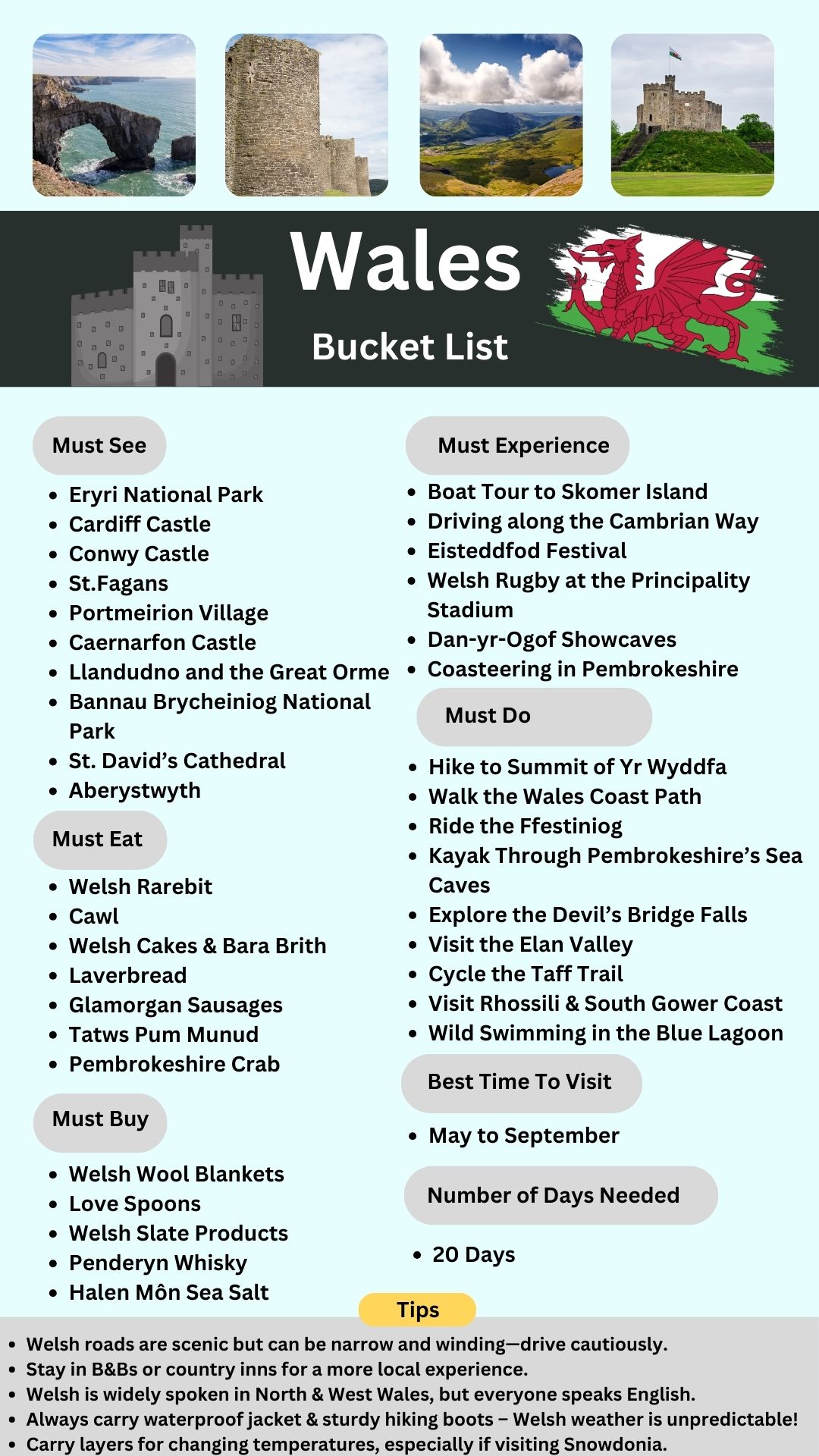
Wales packs rugged mountains, dramatic coastlines, and medieval castles into a small, walkable country. It moves at a slower pace than its neighbors, which makes it perfect for a deeper kind of travel.
Few places let you hike a national mountain in the morning and explore a centuries-old castle by afternoon. Wales also holds a distinct language, culture, and cuisine that feels different from the rest of the United Kingdom. Between its coastline, mountains, and castles, it is easy to see why Wales belongs on every serious travel list.
This guide walks through the top attractions, unforgettable experiences, outdoor adventures, local dishes, and practical tips for exploring Wales.
Wales at a Glance
| Category | Top Recommendation | Best Time | Recommended Duration |
|---|---|---|---|
| Must See Attraction | Eryri National Park | May to September | 2-3 days |
| Must Do Experience | Boat tour to Skomer Island | May to July | Half day |
| Outdoor Adventure | Hike to the summit of Yr Wyddfa | Summer | 6-7 hours |
| Local Food | Welsh rarebit in Cardiff | Any season | 45-60 minutes |
| Souvenir | Welsh wool blankets | Year round | 30-60 minutes |
| Best Time to Visit | May to September | Late spring to early fall | 20 days |
Must Visit Attractions
Places You Shouldn’t Miss
- Eryri National Park. Formerly known as Snowdonia, this park covers rugged mountains, glacial lakes, and dense forest. It is home to Yr Wyddfa, the highest peak in Wales. Plan at least two to three days to explore its trails properly.
- Cardiff Castle. Sitting right in the Welsh capital, this castle blends Roman ruins with a Victorian Gothic mansion. Its layered history spans nearly 2,000 years. A visit typically takes around two hours to see both the grounds and interior.
- Conwy Castle. Built by King Edward I in the 1280s, this fortress is one of the best preserved medieval castles in Europe. Its eight towers offer sweeping views over the walled town below. UNESCO recognizes it as a World Heritage Site.
- St Fagans. This open air museum near Cardiff relocated historic Welsh buildings to one site. Visitors can walk through centuries of everyday Welsh life. Entry is free, making it an easy addition to any Cardiff itinerary.
- Portmeirion Village. This colorful Italian-style village on the North Wales coast was designed in the early 1900s. Its pastel buildings and gardens feel unlike anywhere else in Wales. It is a favorite spot for photographers chasing unique architecture.
- Caernarfon Castle. Another Edward I fortress, this castle hosted the investiture of the Prince of Wales in 1969. Its imposing polygonal towers set it apart from other Welsh castles. The surrounding walled town is also worth a slow walk.
- Llandudno and the Great Orme. This Victorian seaside resort sits beneath a large limestone headland called the Great Orme. A cable car or tram ride to the top rewards visitors with coastal views. The pier and promenade retain a classic seaside charm.
- Bannau Brycheiniog National Park. Formerly called the Brecon Beacons, this park features rolling hills, waterfalls, and dark night skies. It holds International Dark Sky Reserve status. Stargazing here is exceptional on clear nights.
- St David’s Cathedral. Tucked into Britain’s smallest city, this cathedral dates back to the 12th century. Its peaceful setting and historic stonework draw visitors year round. The surrounding town makes a good base for exploring the Pembrokeshire coast.
- Aberystwyth. This university town on the west coast blends a lively student atmosphere with classic seaside charm. Its Victorian pier and cliff railway are popular attractions. Sunset views over Cardigan Bay are especially memorable.
Must Experience in Wales
Unforgettable Experiences
- A boat tour to Skomer Island. This island off the Pembrokeshire coast hosts one of the largest puffin colonies in Britain. Boat trips run seasonally, mainly between April and July. Booking ahead is recommended since spots fill quickly during peak nesting season.
- Driving the Cambrian Way. This scenic route winds through the mountains of mid Wales. It offers sweeping views without the crowds found in more famous parks. A rental car is essential since public transport is limited along the route.
- The Eisteddfod Festival. This celebration of Welsh language, music, and poetry has roots stretching back centuries. It moves to a different location each year during the summer. Attending offers a genuine look at Welsh cultural identity.
- Welsh rugby at the Principality Stadium. Rugby holds a near sacred place in Welsh culture. Watching a match at this Cardiff stadium comes with an electric atmosphere. Match days often include singing that fills the entire city center.
- Dan yr Ogof Showcaves. These caves in the Brecon Beacons area rank among the largest cave systems in Britain. Guided paths lead visitors through dramatic underground chambers. The site also includes a dinosaur park for families.
- Coasteering in Pembrokeshire. This activity combines cliff jumping, swimming, and scrambling along the coastline. It actually originated in this region during the 1980s. Guided sessions are recommended for safety, especially for first timers.
Outdoor Adventures
Best Outdoor Adventures
- Hike to the summit of Yr Wyddfa. Known in English as Snowdon, this is the highest peak in Wales at 3,560 feet. Several routes lead to the top, ranging from moderate to challenging. Most hikers need six to seven hours for the round trip.
- Walk the Wales Coast Path. This trail runs the entire length of the Welsh coastline, covering roughly 870 miles. Travelers can walk short sections or attempt longer multi-day stretches. Coastal views make it one of the best long-distance trails in Europe.
- Ride the Ffestiniog Railway. This narrow gauge steam railway winds through the mountains of North Wales. It has operated since the 1830s, originally to transport slate. The scenic journey takes about an hour each way.
- Kayak through Pembrokeshire’s sea caves. Paddling along this coastline reveals hidden caves and rock arches. Calm summer conditions make it accessible for paddlers with basic experience. Guided tours provide equipment and local knowledge of tides.
- Explore Devil’s Bridge Falls. This dramatic waterfall near Aberystwyth features three bridges stacked on top of each other. Walking trails let visitors view the falls from multiple angles. The full loop trail takes about an hour to complete.
- Visit the Elan Valley. Known for its Victorian reservoirs and dams, this valley offers peaceful walking and cycling routes. The dramatic dam spillways are especially striking after heavy rain. It is also part of a designated dark sky park.
- Cycle the Taff Trail. This trail connects Cardiff to Brecon, covering around 55 miles of mixed terrain. Cyclists can ride short stretches near Cardiff or attempt the full route. It passes through forests, parks, and small Welsh towns.
- Visit Rhossili and the South Gower Coast. This beach regularly ranks among the best in the United Kingdom. Sweeping sands and dramatic cliffs make it a favorite for walkers and surfers. Sunset here is considered one of the best in Wales.
- Wild swim in the Blue Lagoon. This flooded former slate quarry near Abereiddy has striking turquoise water. Swimmers should expect cold temperatures even in summer. It is also a popular spot for cliff diving among experienced swimmers.
Local Food to Try
What to Eat
- Welsh rarebit. This dish features a rich cheese sauce served over toasted bread. It is heartier than simple cheese on toast, often spiked with mustard or ale. Cardiff pubs and cafes serve some of the best versions.
- Cawl. This traditional soup combines lamb or beef with root vegetables like leeks and potatoes. It is considered a national dish, especially popular in winter months. Rural pubs across Wales often serve homemade versions.
- Welsh cakes and bara brith. Welsh cakes are small griddle cooked cakes studded with currants. Bara brith is a dense fruit loaf soaked in tea before baking. Bakeries throughout Wales sell both as everyday treats.
- Laverbread. Made from boiled and pureed seaweed, this dish is a Welsh coastal specialty. It is often served with bacon and cockles as part of a traditional breakfast. Swansea markets are known for high quality laverbread.
- Glamorgan sausages. Despite the name, these sausages are meat free, made from cheese, leeks, and breadcrumbs. They originated in the Vale of Glamorgan region. Many restaurants serve them as a vegetarian main course.
- Tatws pum munud. This comforting dish translates to five minute potatoes, though it actually takes longer to cook. It combines potatoes, onions, and bacon in a savory broth. Home cooking traditions keep this dish alive in Welsh households.
- Pembrokeshire crab. The waters off Pembrokeshire produce some of the freshest crab in Britain. Coastal towns like Tenby serve it simply, often with just bread and butter. Early summer tends to bring the best catch.
Best Souvenirs to Bring Home
- Welsh wool blankets. Wales has a long history of wool production, especially in rural farming regions. Traditional patterns often reflect local weaving traditions passed through generations. These blankets make a lasting, practical souvenir.
- Love spoons. These carved wooden spoons date back centuries as a traditional token of affection. Each carved symbol carries its own meaning, from hearts to horseshoes. They are widely available in craft shops across Wales.
- Welsh slate products. Wales once supplied much of the world’s roofing slate, especially from North Wales quarries. Coasters, clocks, and small decor items made from local slate make unique gifts. Many pieces are handcrafted by small regional makers.
- Penderyn whisky. Produced at Wales’ first whisky distillery in over a century, Penderyn has earned international recognition. Distillery tours in the Brecon Beacons area include tastings. Bottles are also available at shops throughout the country.
- Halen Mon sea salt. Harvested from the waters around Anglesey, this sea salt has gained a strong reputation among chefs. It comes in several flavored varieties, including smoked. It is a lightweight, flavorful gift for food lovers.
Best Time to Visit Wales
Seasonal Highlights
- May to September. This stretch offers the warmest weather and longest daylight hours for hiking and coastal activities. It is also peak tourist season, so popular sites can get busy. Booking accommodations early is a smart move during summer.
- Spring months. April and May bring blooming countryside and comfortable hiking temperatures. Crowds remain lighter than peak summer months. Lambing season also adds charm to rural areas during this time.
- Fall months. September and October offer crisp air and fewer tourists after the summer rush. Coastal walks feel quieter, and fall colors add extra beauty to mountain trails. It is a favorite season among photographers.
- Winter months. December through February bring cold, wet weather but also dramatic waterfalls and quiet castles. Indoor attractions like St Fagans stay comfortable year round. Pack heavily for wind and rain during this period.
Trip Length
Twenty days allows travelers to properly explore both North and South Wales without feeling rushed. This gives enough time for coastal towns, national parks, and cultural stops. Shorter trips can still cover key highlights like Cardiff, Snowdonia, and the Pembrokeshire coast.
Travel Tips for Visiting Wales
Essential Travel Tips
- Drive cautiously on rural roads. Welsh country roads are scenic but often narrow and winding. Some stretches include single lane sections with passing points. Slowing down helps avoid close calls with oncoming traffic.
- Stay in local B&Bs or country inns. These accommodations often provide a more personal, local experience than large hotels. Hosts frequently share helpful tips about nearby attractions. Rural inns also tend to serve excellent home cooked breakfasts.
- Expect Welsh language in the north and west. Welsh remains widely spoken in these regions, appearing on signs and in daily conversation. Everyone also speaks English, so communication is never an issue. Learning a few Welsh words is a nice cultural gesture.
- Pack a waterproof jacket and sturdy boots. Welsh weather changes quickly and rain is common throughout the year. Proper footwear matters most when hiking in mountainous regions. A packable rain jacket takes up little space in a daypack.
- Bring layers for changing temperatures. Mountain regions like Eryri can feel significantly colder than coastal towns. Temperatures can shift quickly even within a single day. Dressing in layers makes it easy to adjust as conditions change.
- Book major attractions during peak season. Popular spots like Skomer Island boat tours and festival events fill up fast in summer. Reserving ahead avoids missing out on limited capacity experiences. It also helps with planning a smoother daily itinerary.
- Use public transport where possible in cities. Cardiff and Swansea have decent bus and train connections within city limits. Rural areas, however, are best explored by car. Combining both methods often works best for a full Wales itinerary.
Final Thoughts
Wales offers a rare mix of mountains, coastline, castles, and culture in a compact, easy to explore country. Every region brings something different, from Snowdonia’s peaks to Pembrokeshire’s cliffs. Pairing outdoor adventures with historic towns creates a well rounded trip.
Use this guide as a starting point for building your own Wales itinerary. Mix castle visits with coastal hikes, local food with quiet countryside drives. Wales rewards travelers who take their time and explore beyond the main cities.