
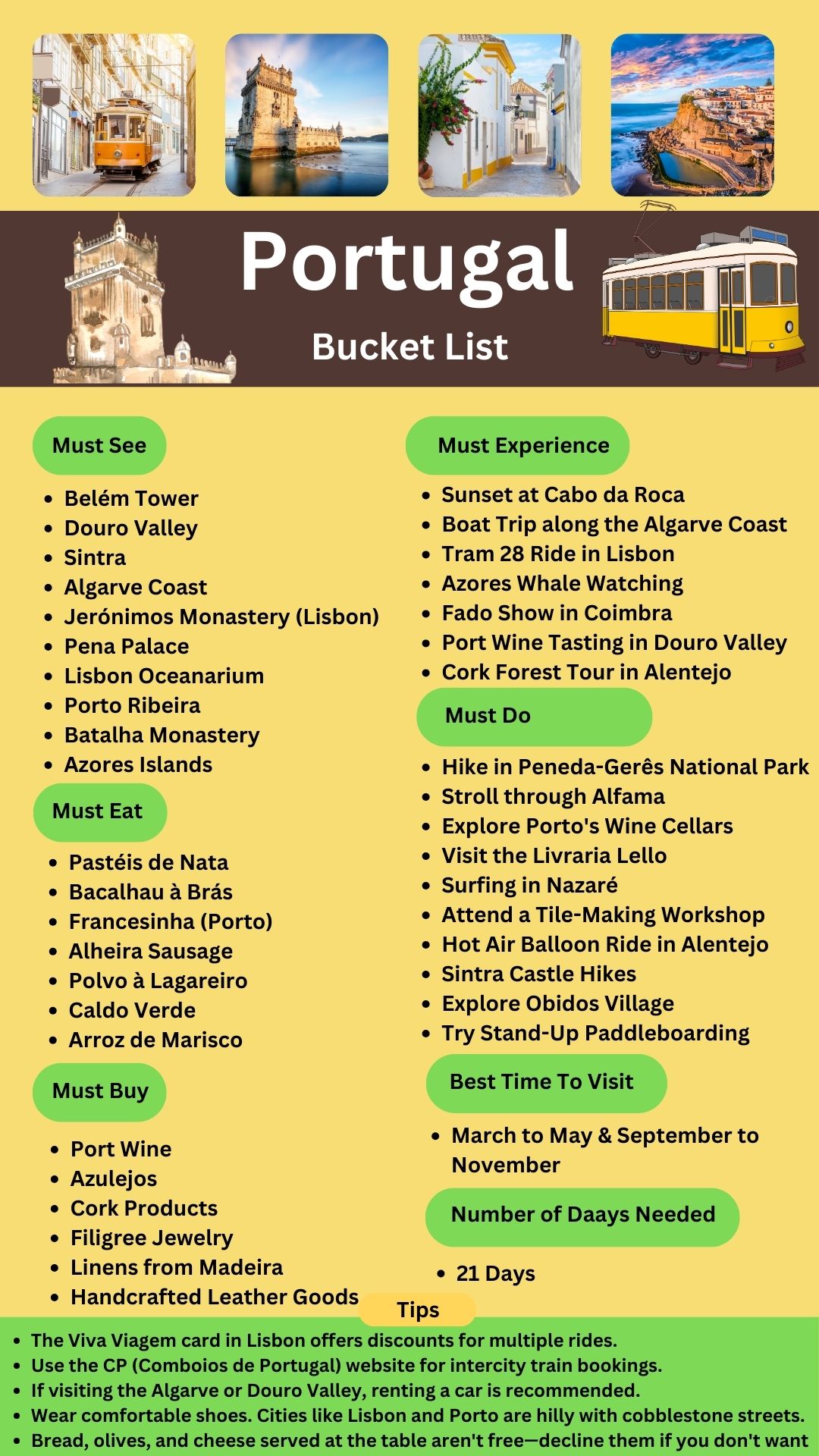
Portugal blends historic charm with dramatic coastline and warm hospitality. Lisbon’s tram lines wind through pastel neighborhoods, while Porto’s riverside cellars store centuries of wine tradition. Add in the cliffs of Sintra and the beaches of the Algarve, and it is easy to see why this country keeps climbing travel wish lists.
This guide covers the top places to visit, food to try, experiences to book, and tips to help your trip run smoothly. Whether you have a week or several, use this as your planning foundation.
Historic Landmarks and Architectural Treasures
Portugal’s landmarks reflect centuries of maritime history and architectural ambition. Many of the country’s most iconic sites sit in and around Lisbon and Porto.
Belém Tower stands guard along the Tagus River in Lisbon. This fortified tower dates back to the early 16th century, built during Portugal’s Age of Discovery. Its intricate stonework makes it one of the most photographed landmarks in the city.
The Douro Valley is home to Portugal’s most famous wine growing region. Terraced vineyards line steep hillsides along the winding river. It ranks among the oldest demarcated wine regions in the world.
Sintra feels like a fairytale brought to life, with colorful palaces scattered across forested hills. Its cooler microclimate made it a favorite retreat for Portuguese royalty. The town sits close enough to Lisbon for an easy day trip.
The Algarve Coast stretches along southern Portugal, known for dramatic cliffs and golden beaches. Hidden coves and sea caves define much of the coastline. It remains one of Europe’s most popular beach destinations.
Jerónimos Monastery in Lisbon is a UNESCO World Heritage site built to commemorate Vasco da Gama’s voyage. Its elaborate Manueline architecture features intricate carvings throughout the cloisters. It sits within walking distance of Belém Tower.
Pena Palace in Sintra is one of Portugal’s most colorful landmarks. Bold red and yellow walls stand out dramatically against the surrounding forest. It ranks among the best examples of Romanticist architecture in Europe.
The Lisbon Oceanarium is one of the largest aquariums in Europe. A massive central tank houses sharks, rays, and countless fish species. It makes an engaging stop for both families and marine life enthusiasts.
Porto Ribeira is the historic riverside district of Porto, known for its colorful buildings and narrow streets. Cafes and restaurants line the waterfront, overlooking the Douro River. It offers some of the best views of the city’s famous bridges.
Batalha Monastery is a Gothic masterpiece built to commemorate a 14th century Portuguese military victory. Its unfinished chapels and detailed stonework draw architecture enthusiasts. It holds UNESCO World Heritage status alongside several other Portuguese landmarks.
The Azores Islands offer a completely different side of Portugal, with volcanic landscapes and lush green scenery. This remote archipelago sits far out in the Atlantic Ocean. It appeals strongly to nature lovers and outdoor adventurers.
Insider Tips for Visiting Major Landmarks
- Book Pena Palace tickets online in advance to skip long entry lines. Morning visits also help you avoid the largest tour groups.
- Visit Belém Tower and Jerónimos Monastery together, since they sit close to each other. Combined tickets often save money compared to separate entries.
- Wear comfortable shoes when exploring Porto Ribeira, since the streets are steep and cobblestoned. Flat shoes make navigating the district much easier.
- Allow extra time in the Douro Valley, since winding roads make travel between vineyards slower than distances suggest.
Unforgettable Experiences Across the Country
Portugal offers plenty of experiences that go beyond simple sightseeing. These moments connect travelers more directly with local culture and coastal life.
Watching the sunset at Cabo da Roca is a memorable way to end a day near Lisbon. This dramatic cliff marks the westernmost point of mainland Europe. Strong winds and sweeping ocean views make it a striking spot for photos.
A boat trip along the Algarve coast reveals hidden caves and rock formations from the water. Many tours depart from Lagos, a popular base for coastal exploration. Morning departures often bring calmer water and better visibility.
Riding Tram 28 in Lisbon takes visitors through some of the city’s oldest neighborhoods. The vintage yellow tram winds through narrow, hilly streets. It offers an easy, affordable way to see multiple districts in one trip.
Azores whale watching gives visitors a chance to see several whale species in their natural habitat. The islands sit along a major migratory route in the Atlantic. Local guides often have deep knowledge of seasonal sighting patterns.
A fado show in Coimbra introduces visitors to Portugal’s soulful traditional music. Coimbra fado differs slightly from the Lisbon style, often performed by university students. The melancholic melodies reflect themes of longing and nostalgia.
Port wine tasting in the Douro Valley pairs naturally with the region’s stunning scenery. Many quintas, or wine estates, offer tastings paired with valley views. Learning about the fortification process adds depth to the tasting experience.
A cork forest tour in Alentejo highlights one of Portugal’s most important industries. Portugal produces more cork than any other country in the world. Guides often explain the sustainable harvesting process used on centuries old trees.
Hidden Gems Beyond the Usual Tourist Trail
- Look for smaller, family run quintas in the Douro Valley instead of the largest commercial wine estates. These often offer more personal tastings and better value.
- Explore Coimbra’s fado scene through smaller, student run venues rather than tourist focused shows. The atmosphere here often feels more authentic.
- Ask about lesser known viewpoints near Cabo da Roca if the main lookout feels crowded. Nearby trails often offer similarly dramatic views with fewer visitors.
- Consider a multi-day Azores itinerary rather than a quick day trip. The islands reward slower exploration, especially for hiking and whale watching.
Adventure Activities and Outdoor Escapes
Portugal’s varied landscape supports everything from mountain hikes to Atlantic surf breaks. These activities pair well with the country’s historic sightseeing.
Hiking in Peneda-Gerês National Park offers Portugal’s best mountain scenery. This is the country’s only national park, filled with waterfalls, granite peaks, and wild horses. Trails range from easy walks to demanding multi-day routes.
Strolling through Alfama, Lisbon’s oldest neighborhood, feels like stepping back in time. Narrow alleys wind past traditional tile facades and small local restaurants. Getting lost here is part of the experience.
Exploring Porto’s wine cellars introduces visitors to the production process behind port wine. Many cellars sit just across the river in Vila Nova de Gaia. Guided tours typically end with a tasting session overlooking the water.
Visiting Livraria Lello, one of the world’s most beautiful bookstores, is a must for design and literature lovers. Its ornate wooden staircase and stained glass ceiling draw large crowds. Advance tickets are required due to high demand.
Surfing in Nazaré attracts both professional big wave surfers and curious beginners. This town holds records for some of the largest waves ever surfed. Calmer beaches nearby suit those looking to learn rather than watch giant swells.
Attending a tile-making workshop offers hands on insight into Portugal’s azulejo tradition. Local artisans teach visitors the basics of painting traditional ceramic tiles. It makes for a memorable, creative afternoon activity.
A hot air balloon ride in Alentejo showcases the region’s rolling plains and cork forests from above. Flights typically launch early in the morning for calmer wind conditions. Sweeping views make it one of the most scenic ways to see the countryside.
Sintra castle hikes connect several of the town’s palaces through forested trails. Walking between sites adds exercise and scenery to a day of sightseeing. Comfortable shoes are essential given the steep, uneven terrain.
Exploring Óbidos Village introduces visitors to a walled medieval town north of Lisbon. Narrow streets lined with whitewashed houses make it easy to explore on foot. A local cherry liqueur called ginjinha is a popular treat here.
Trying stand-up paddleboarding is a relaxed way to enjoy Portugal’s calm coastal waters. Several beach towns along the Algarve offer rentals and beginner lessons. Early morning sessions typically have the calmest conditions.
Planning Tips for Adventure Activities
- Book Livraria Lello tickets online in advance, since walk up access is often unavailable. Tickets can be applied toward a book purchase inside.
- Check surf conditions in Nazaré before planning a visit, since the biggest waves occur during specific winter swells. Beginner friendly beaches operate differently from the famous big wave breaks.
- Reserve hot air balloon flights in Alentejo ahead of time, since weather can affect scheduling. Morning flights offer the most consistent conditions.
- Wear sturdy footwear for Peneda-Gerês hikes, since trail conditions vary widely across the park. Bringing a map or GPS app helps on longer routes.
A Food Lover’s Guide to Portuguese Cuisine
Portuguese food reflects the country’s coastal geography, with seafood playing a central role in many regional dishes.
Pastéis de nata are Portugal’s most famous pastry. These custard tarts feature a flaky crust and caramelized top. Lisbon’s Belém neighborhood is considered the birthplace of the original recipe.
Bacalhau à Brás combines shredded salt cod with eggs, onions, and thin fried potatoes. Salt cod appears in countless Portuguese dishes, with some claiming there are hundreds of ways to prepare it. This version remains one of the most popular.
Francesinha, a specialty from Porto, is a hearty sandwich layered with meat and covered in melted cheese and a rich sauce. It is often considered one of Portugal’s most indulgent dishes. Locals typically pair it with a cold beer.
Alheira sausage has an unusual history, originally created by Jewish communities to appear as pork sausage while containing other meats. Today it remains a popular regional specialty. It is often served grilled with fried eggs and potatoes.
Polvo à lagareiro features roasted octopus drizzled generously with olive oil and served alongside potatoes. It is a beloved dish throughout coastal Portugal. The octopus is typically slow cooked until tender before roasting.
Caldo verde is a comforting soup made from potatoes, kale, and slices of chouriço. It is considered one of Portugal’s national dishes. Many families serve it as a starter for celebrations and holidays.
Arroz de marisco is a rich seafood rice dish similar in spirit to Spanish paella. It typically includes shrimp, clams, and other shellfish in a flavorful tomato based broth. Coastal restaurants often serve it as a shareable main course.
Local Etiquette Around Food and Dining
- Know that bread, olives, and cheese served at the table are not free, and you can decline them if you do not want to pay. This is standard practice throughout Portugal.
- Try regional specialties rather than sticking only to familiar dishes. Portuguese cuisine varies significantly between the north and south.
- Tip modestly at restaurants, since service charges are typically included already. Rounding up the bill is common practice.
- Ask locals for restaurant recommendations away from major tourist streets. Neighborhood spots often serve more authentic, better value meals.
Souvenirs and Shopping Worth Your Suitcase Space
Shopping in Portugal offers a mix of traditional crafts and regional products worth bringing home.
Port wine is one of Portugal’s most famous exports. Produced exclusively in the Douro Valley, it ranges from sweet to dry styles. Buying directly from a quinta often means better pricing and selection than retail shops.
Azulejos, Portugal’s traditional painted tiles, make a distinctive and lasting souvenir. These ceramic tiles decorate buildings throughout the country. Smaller decorative pieces are easier to pack than full sized panels.
Cork products showcase Portugal’s leading role in sustainable cork production. Wallets, bags, and accessories made from cork are lightweight and durable. They also make a unique, eco-friendly gift option.
Filigree jewelry represents a delicate Portuguese metalworking tradition. Intricate wire designs often form hearts, birds, or floral patterns. Northern Portugal is especially known for this style of craftsmanship.
Linens from Madeira reflect a centuries old embroidery tradition from the island. Hand embroidered tablecloths and napkins are prized for their detailed needlework. Authentic pieces often carry a certification tag confirming their origin.
Handcrafted leather goods round out Portugal’s shopping highlights. Shoes, bags, and belts benefit from the country’s strong leatherworking tradition. Buying from smaller workshops often means better quality than mass produced alternatives.
Budget Tips for Shopping Smart
- Buy port wine directly from Douro Valley quintas rather than tourist shops in major cities. Prices and selection are often better at the source.
- Compare prices at a few filigree jewelry shops before making a larger purchase. Quality and craftsmanship can vary significantly.
- Look for azulejo tiles at smaller workshops instead of large souvenir stores. This often supports independent artisans directly.
- Save cork product purchases for shops outside the busiest tourist zones. Prices near major landmarks tend to run higher.
When to Go and How Long to Stay
Timing your Portugal trip well can make a real difference in weather, crowds, and overall enjoyment.
The best time to visit is from March to May or September to November. These shoulder seasons offer mild temperatures and fewer crowds than peak summer. Coastal areas remain pleasant well into early autumn.
Most travelers need around 21 days to properly explore Portugal’s major regions. This allows time for cities, coastline, and countryside without feeling rushed. Shorter trips work well if focused on just Lisbon and Porto.
Seasonal Advice for First-Time Visitors
- Visit the Algarve in late spring or early autumn to avoid the most intense summer crowds. Water temperatures remain comfortable during these months.
- Plan Azores trips with flexible dates, since weather can shift quickly on the islands. Whale watching conditions tend to be more reliable in spring and early summer.
- Book accommodations early if traveling during July and August, Portugal’s busiest tourist months. Prices also tend to rise significantly during peak season.
- Pack layers for Sintra, since its cooler microclimate can feel noticeably different from nearby Lisbon.
Practical Tips Every Traveler Should Know
A few practical habits will make your Portugal trip smoother from the moment you arrive.
The Viva Viagem card in Lisbon offers discounts for multiple rides on trams, buses, and metro. It is a convenient, cost-effective way to get around the city. Cards can be topped up easily at station kiosks.
Use the CP, or Comboios de Portugal, website for intercity train bookings. Booking ahead often secures better pricing on popular routes. Trains offer a comfortable, scenic way to travel between major cities.
If visiting the Algarve or Douro Valley, renting a car is recommended. Public transport options are more limited outside major cities. A car gives far more flexibility for exploring smaller towns and vineyards.
Wear comfortable shoes, since cities like Lisbon and Porto are hilly with cobblestone streets. Sturdy, flat shoes make sightseeing far more manageable throughout the day.
Common Mistakes First-Timers Make
- Assuming table snacks like bread and olives are complimentary. Politely declining them upfront avoids surprise charges later.
- Underestimating how hilly and cobblestoned Lisbon and Porto can be. Comfortable footwear matters more here than in many other European cities.
- Skipping advance tickets for popular sites like Pena Palace and Livraria Lello. Walk up access can be extremely limited during peak season.
- Relying only on public transport for the Algarve or Douro Valley. A rental car often makes exploring these regions far easier.
Final Thoughts on Planning Your Portugal Adventure
Portugal delivers a rich mix of historic architecture, dramatic coastline, and warm culinary tradition. Hilltop palaces, riverside wine cellars, and Atlantic surf breaks all sit within reach of a well connected rail network. Few countries offer this much variety in such a compact, welcoming space.
Whether you come for the tiled streets of Alfama, a glass of port in the Douro Valley, or the cliffs of Cabo da Roca, Portugal leaves a lasting impression. Start planning early, pack comfortable shoes, and get ready for one of Europe’s most rewarding trips.