
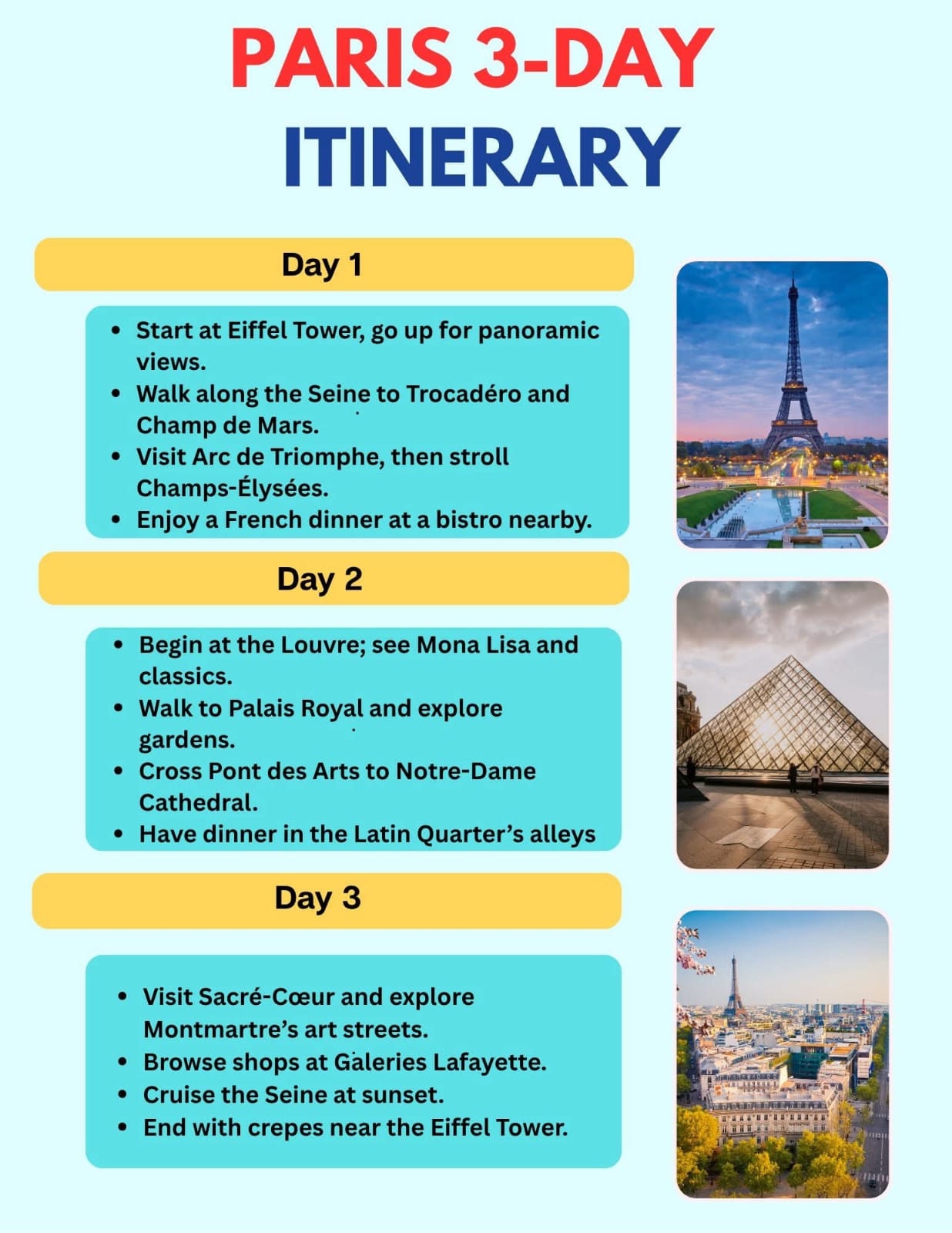
Paris rewards even a short visit with an extraordinary concentration of world famous landmarks. Three days is enough time to see the Eiffel Tower, the Louvre, and Montmartre without feeling rushed, provided you plan your route wisely. This itinerary suits first time visitors who want to hit the major highlights while still leaving room to slow down for a proper French meal.
Paris is also a remarkably compact city, with most major sights connected by an extensive metro system or a comfortable walk. That density is what makes a three day trip realistic in the first place, since travelers rarely lose significant time getting between neighborhoods. Comfortable shoes and a bit of flexibility with timing go a long way toward making this itinerary feel relaxed rather than rushed.
The route below groups nearby attractions together each day, minimizing backtracking and long metro rides. Each day is built around a different part of the city, so mornings and afternoons flow naturally from one sight to the next. Below is a quick overview, followed by a full day by day guide with hotel recommendations to help you plan the rest of your trip.
| Stop | Recommended Stay | Main Highlights | Driving Time to Next Stop | Best For |
|---|---|---|---|---|
| Day 1: Eiffel Tower & Champs-Élysées | Paris | Eiffel Tower, Trocadéro, Arc de Triomphe | Walking or metro within city | First time visitors, iconic landmarks |
| Day 2: Louvre & Notre-Dame | Paris | Louvre Museum, Palais Royal, Notre-Dame Cathedral | Walking or metro within city | Art and history lovers |
| Day 3: Montmartre & Seine | Paris | Sacré-Cœur, Galeries Lafayette, sunset river cruise | N/A, final day | Shoppers, romantics, sunset chasers |
Day 1: Eiffel Tower and Champs-Élysées
The first day builds around Paris’s most iconic landmark and the grand boulevards surrounding it. This route keeps everything within a compact, walkable area on the city’s west side.
Things to Do on Day 1
- Start at the Eiffel Tower, going up for panoramic views over the entire city. Booking timed tickets in advance saves significant waiting, especially during peak season. Allow at least two hours for the visit, longer if climbing to the very top.
- Walk along the Seine toward Trocadéro, one of the best spots for a classic photo of the tower across the river. The gardens here offer a good resting point before continuing.
- Continue to Champ de Mars, the long park stretching out from the base of the tower. It is a popular spot for a picnic if you want to slow down before the afternoon.
- Visit the Arc de Triomphe, honoring French military history at the center of twelve radiating avenues. Climbing to the top offers one of the best panoramic views in the city, rivaling the Eiffel Tower itself.
- Stroll the Champs-Élysées, Paris’s famous boulevard lined with flagship stores and cafes. Walking its full length gives a strong sense of the city’s grand, formal architecture.
- Enjoy a French dinner at a bistro near the Champs-Élysées or Trocadéro, capping off a day focused on the city’s most photographed landmarks. Classic dishes like steak frites or French onion soup make a satisfying end to the day.
The Eiffel Tower lights up on the hour after dark, so timing dinner to end around sunset lets you catch this sparkling display on the walk back. Metro Line 6 or Line 9 both connect this area efficiently to central Paris, making it easy to reach your hotel afterward regardless of neighborhood.
Where to Stay in Paris
- Le Meurice, Luxury. A historic palace hotel opposite the Tuileries Garden, offering an unbeatable central location for exploring both the Louvre and the western landmarks covered on this day.
- Hotel Regina Louvre, Luxury. Known for attentive service and views toward the Louvre, well positioned for reaching both the Eiffel Tower area and central Paris.
- Hôtel Lutetia, Luxury. A Left Bank landmark with Art Nouveau design, offering a slightly quieter base within walking distance of the Eiffel Tower.
- Maison Saintonge, Mid-range. A boutique hotel in the Marais with distinctive design, a short metro ride from the day’s main sights.
- The Hoxton Paris, Mid-range. A stylish, affordably priced option popular with younger travelers, offering easy metro access across the city.
Day 2: Louvre and Notre-Dame
The second day moves into the heart of historic Paris, connecting the Louvre with the Île de la Cité and the Latin Quarter. This route follows the Seine through some of the city’s oldest and most architecturally significant neighborhoods.
Things to Do on Day 2
- Begin at the Louvre, seeing the Mona Lisa and other classics from its extraordinary collection. Focusing on just a few wings makes the visit far more manageable than attempting to see everything in one trip. Plan on at least three hours for a satisfying visit.
- Walk to the Palais Royal and explore its gardens, a quieter, more intimate green space surrounded by elegant arcades and boutiques. It offers a peaceful contrast to the busier Louvre courtyard just steps away.
- Cross the Pont des Arts, one of the Seine’s most scenic pedestrian bridges, on your way toward Notre-Dame Cathedral. The bridge offers lovely views up and down the river in both directions.
- Visit Notre-Dame Cathedral, which reopened to visitors in December 2024 following extensive restoration after the 2019 fire. Seeing the restored interior firsthand adds real meaning to a stop here, even for repeat visitors to Paris.
- Explore the Île de la Cité, the historic island at the heart of Paris and home to both Notre-Dame and Sainte-Chapelle. Walking its streets offers a tangible connection to the city’s medieval origins.
- Have dinner in the Latin Quarter’s alleys, a neighborhood known for its narrow streets, bookshops, and casual bistros. It offers a livelier, more student driven atmosphere than the areas covered earlier in the day.
Purchasing Louvre tickets online in advance is highly recommended, since lines at the entrance can stretch well over an hour during busy periods. The museum is closed on Tuesdays, so double check your day of the week before building this stop into your schedule. Sainte-Chapelle, just a short walk from Notre-Dame, is also worth adding if you have extra time, since its stained glass windows rank among the finest examples of Gothic architecture in France.
Where to Stay in Paris
- If your day centers on the Louvre and Île de la Cité, staying near the 1st or 4th arrondissement cuts down significantly on walking. Le Meurice and Hotel Regina Louvre both offer easy access to this day’s entire route.
- For a base closer to the Latin Quarter’s evening energy, Hôtel Lutetia on the Left Bank places you within easy walking distance of dinner options after visiting Notre-Dame.
- Budget conscious travelers can consider The Hoxton Paris, which connects easily to this day’s route via a short metro ride from most central stations.
Day 3: Montmartre and the Seine
The final day shifts to Paris’s artistic hilltop neighborhood before winding down with shopping and a sunset cruise along the river. This route offers a nice contrast in pace, moving from a quieter, village like atmosphere to the city’s more polished shopping districts.
Things to Do on Day 3
- Visit Sacré-Cœur and explore Montmartre’s art streets, starting with the basilica’s white domes and sweeping city views from its steps. Place du Tertre nearby remains filled with street artists offering portraits and quick sketches, capturing the neighborhood’s long standing artistic legacy.
- Browse shops at Galeries Lafayette, the city’s famous department store known for its stunning stained glass dome. Even without buying anything, the rooftop terrace offers another excellent viewpoint over the city.
- Take a Seine cruise at sunset, offering a relaxed way to see many of Paris’s illuminated landmarks from the water. Evening cruises typically run about an hour and provide a memorable close to the trip.
- End with crepes near the Eiffel Tower, bringing the itinerary full circle back to where it began. A sweet crepe with a view of the illuminated tower makes for a fitting final Paris meal.
Montmartre’s steep, cobblestone streets are best tackled in the morning before the day heats up and crowds thicken around Sacré-Cœur. The funicular near the base of the hill offers a quick, low effort alternative to climbing the stairs if you want to save your energy for exploring the surrounding streets. Sunset river cruises typically depart from docks near the Eiffel Tower or Notre-Dame, so check the departure point in advance to avoid a last minute scramble across the city.
Where to Stay in Paris
- For easy access to Montmartre’s steep streets, a hotel in the 9th or 18th arrondissement reduces the climb required each day. Maison Saintonge remains well connected by metro if you prefer staying centrally throughout your trip.
- Travelers who booked accommodations near the Eiffel Tower on Day 1 will find this day’s final stop conveniently close to where they started, making it easy to end the trip near your hotel.
- Whichever neighborhood you choose, confirm your hotel offers good metro access, since this final day covers considerable ground between Montmartre, the department stores, and the river.
Making the Most of Your Paris Trip
This three day route captures Paris at its most iconic, from the Eiffel Tower’s panoramic views to Montmartre’s artistic streets and the historic heart of the Île de la Cité. Grand boulevards, world class museums, and centuries old neighborhoods all sit within a compact, walkable footprint connected by an efficient metro system.
Book timed tickets for major attractions like the Eiffel Tower and Louvre well in advance, especially during peak season, to avoid long waits eating into your sightseeing time. Comfortable shoes matter more than almost any other packing decision, given how much ground this itinerary covers on foot. Follow this route as written, or adjust the pacing to match your own interests. Either way, it offers a genuinely complete introduction to the City of Light.