
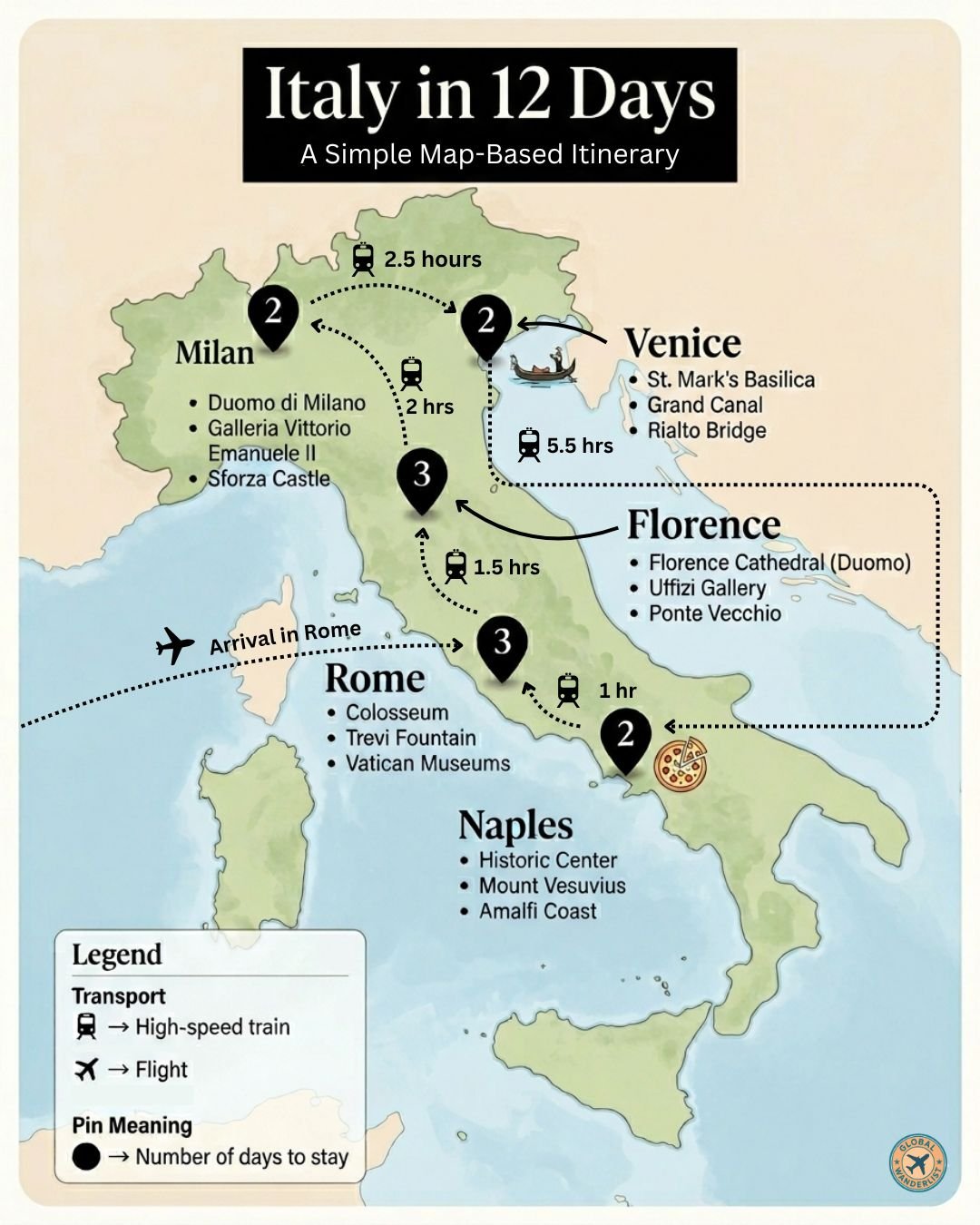
Italy rewards travelers who move through it slowly, giving each region room to make its own impression. This route covers Rome’s ancient ruins, Florence’s Renaissance art, Milan’s fashion and design scene, Venice’s canals, and Naples’ street food and coastal access. Few countries pack this much contrast into less than two weeks.
This itinerary suits first-time visitors wanting a broad, well-paced introduction to Italy’s major regions. High-speed trains connect every stop, making it manageable without a rental car for most of the trip. The pacing allows real time in each city rather than rushed overnight stops.
Below is a full breakdown of each destination, along with where to stay and what to prioritize along the way.
Itinerary Summary Table
| Stop | Recommended Stay | Main Highlights | Driving Time to Next Stop | Best For |
|---|---|---|---|---|
| Rome | 3 nights | Colosseum, Trevi Fountain, Vatican Museums | 1.5 hours by high-speed train | History and art lovers |
| Florence | 3 nights | Florence Cathedral, Uffizi Gallery, Ponte Vecchio | 2 hours by high-speed train | Renaissance art enthusiasts |
| Milan | 2 nights | Duomo di Milano, Galleria Vittorio Emanuele II, Sforza Castle | 2.5 hours by high-speed train | Fashion and design fans |
| Venice | 2 nights | St. Mark’s Basilica, Grand Canal, Rialto Bridge | 5.5 hours by high-speed train | Romantic getaways |
| Naples | 2 nights | Historic center, Mount Vesuvius, Amalfi Coast | 1 hour by high-speed train | Food lovers and coastal day trips |
Rome
Rome opens this itinerary with nearly three thousand years of layered history packed into a single walkable city. Ancient ruins sit beside Baroque fountains and Renaissance churches, often within the same block. Three full days here allows time to properly cover both the historic center and Vatican City.
Most international flights land at Fiumicino Airport, with a direct train reaching the city center in about 30 minutes.
Things to Do in Rome
- Colosseum and Roman Forum: These ancient sites anchor the first day, best explored with a combined ticket booked well in advance. Allow at least three hours to see both properly.
- Vatican Museums and Sistine Chapel: Reserve timed entry tickets ahead of time, especially during peak season. Plan a full morning to cover the museums, Sistine Chapel, and St. Peter’s Basilica together.
- Trevi Fountain: Visiting in the evening offers a quieter, more atmospheric experience than the daytime crowds. Tradition holds that tossing a coin over your shoulder guarantees a return trip to Rome.
- Piazza Navona and the Pantheon: This elegant square, built over an ancient stadium, stays lively with street performers into the evening. It sits within easy walking distance of the remarkably preserved Pantheon.
- Trastevere for dinner: This cobblestone neighborhood across the Tiber holds some of the city’s best traditional Roman trattorias. The area comes alive after dark with a genuinely local atmosphere.
- Roman food tasting: Sample carbonara, cacio e pepe, and thin-crust Roman pizza at neighborhood spots rather than restaurants clustered around major landmarks.
Where to Stay in Rome
- J.K. Place Roma – Luxury
- Hotel Artemide – Mid-range
- Albergo del Senato – Mid-range
- Domus Giordano – Budget
Florence
A high-speed train connects Rome to Florence in about two hours, delivering travelers straight into the heart of the Renaissance. Florence holds some of the most significant art and architecture in Western history within a remarkably compact center. Three days allows time to see the major sites without feeling rushed.
The historic center is fully walkable, so a car is unnecessary once you arrive.
Things to Do in Florence
- Florence Cathedral (Duomo): Brunelleschi’s dome remains an engineering marvel, and climbing it rewards visitors with sweeping city views. Book tickets ahead, since same-day entry often sells out.
- Uffizi Gallery: Home to masterpieces by Botticelli and da Vinci, advance booking is essential to avoid long lines. Plan at least two hours for a proper visit.
- Ponte Vecchio: This medieval bridge, lined with jewelry shops, spans the Arno River at the heart of the city. Early morning offers the best light for photos before crowds gather.
- Piazza della Signoria: This open-air sculpture gallery sits beside the Uffizi, worth a slow walk to take in the surrounding statues. It’s a natural gathering point before or after museum visits.
- Oltrarno neighborhood: This quieter district across the river holds artisan workshops and a more local, unhurried atmosphere. It’s a good spot for an evening walk away from the busiest streets.
- Piazzale Michelangelo at sunset: This elevated viewpoint delivers the city’s best panoramic skyline view. The walk up takes about twenty minutes from the historic center.
Where to Stay in Florence
- Hotel Savoy – Luxury
- Brunelleschi Hotel – Mid-range
- Hotel Calimala – Mid-range
- Hotel Davanzati – Budget
Milan
Florence to Milan takes about two hours by high-speed train, shifting the trip’s focus from Renaissance art to Italy’s modern fashion and design capital. Milan blends historic architecture with a sleek, contemporary energy unlike anywhere else on this route. Two days covers the essential sights at a comfortable pace.
Milan’s metro system makes getting around simple, so walking and public transit cover most needs.
Things to Do in Milan
- Duomo di Milano: This vast Gothic cathedral took nearly six centuries to complete, and rooftop access offers close-up views of its spires and statues. Book tickets ahead for rooftop entry during peak season.
- Galleria Vittorio Emanuele II: This stunning glass-domed shopping arcade ranks among the world’s oldest shopping malls. It connects directly to the Duomo, making it an easy add-on stop.
- Sforza Castle: This massive Renaissance fortress houses several of the city’s best museums, including works by Michelangelo. Allow at least two hours to explore the grounds and galleries.
- Santa Maria delle Grazie: Home to Leonardo da Vinci’s Last Supper, this site requires advance reservations, often booked weeks ahead. Entry is limited to short, timed viewing slots.
- Navigli district: Milan’s canal district comes alive at night with bars, restaurants, and street art. It’s a good choice for an evening away from the more formal city center.
- Brera district: This charming, artsy neighborhood offers galleries, boutiques, and quiet cobblestone streets. It suits a slower afternoon of wandering between sights.
Where to Stay in Milan
- Hotel Principe di Savoia – Luxury
- Château Monfort – Luxury
- The Yard Milano – Mid-range
- Hotel Da Vinci – Budget
Venice
Milan to Venice takes roughly two and a half hours by high-speed train, arriving in one of the most unusual cities in the world. Venice sits entirely on a lagoon, with canals replacing streets and centuries-old palaces lining the waterways. Two nights allows time to explore beyond the busiest tourist path.
Cars cannot enter central Venice, so plan to arrive directly by train into the city center.
Things to Do in Venice
- St. Mark’s Basilica: This ornate Byzantine-influenced cathedral anchors the city’s grandest square, best visited early morning before crowds build. It remains one of Venice’s most recognizable landmarks.
- Grand Canal: Venice’s main waterway is best experienced by vaporetto, the city’s public water bus, offering an affordable alternative to a private gondola. A full ride end to end takes about 45 minutes.
- Rialto Bridge: The oldest bridge crossing the Grand Canal is lined with shops and morning market stalls. It’s a natural midday stop between major sights.
- Doge’s Palace: This Gothic palace once housed Venice’s ruling government and offers insight into the city’s powerful maritime history. Combined tickets with St. Mark’s Basilica save both time and money.
- Murano and Burano islands: A short boat ride reaches these nearby islands, one known for glassblowing, the other for brightly colored houses. Half a day covers both comfortably.
- Cicchetti crawl in Cannaregio: This local neighborhood offers small bacari serving cicchetti, Venice’s answer to tapas, paired with local wine. It’s a favorite way to experience the city like a resident.
Where to Stay in Venice
- Hotel Danieli – Luxury
- Corte di Gabriela – Mid-range
- Dimora Marciana – Mid-range
- Hotel Serenissima – Budget
Naples
Reaching Naples from Venice takes about five and a half hours by high-speed train, marking the biggest shift in pace and atmosphere on this route. Naples brings raw, unfiltered energy, layered with Greek, Roman, and Spanish influence throughout its historic center. Two days here covers the city itself, with easy access to Mount Vesuvius and the Amalfi Coast.
Naples’ historic center is dense and walkable, though comfortable shoes matter given the uneven streets.
Things to Do in Naples
- Naples historic center: This UNESCO-listed district holds churches, markets, and narrow medieval streets packed with everyday local life. A few hours of unhurried wandering reveals far more than a checklist approach.
- Naples pizza: As the birthplace of pizza, the city takes it seriously, with historic pizzerias serving some of the best in the world. Expect a wait at the most famous spots, especially during dinner hours.
- Mount Vesuvius day trip: This active volcano looms over the city and offers a challenging but rewarding hike to the crater rim. Guided tours typically include transportation and take about half a day.
- Amalfi Coast day trip: A scenic train and bus combination or private driver reaches Positano and the dramatic coastal towns in about two hours. This works well as a full-day excursion given the driving distance involved.
- National Archaeological Museum: Home to artifacts recovered from Pompeii and Herculaneum, this museum offers essential context before or after visiting the ruins themselves. Plan at least two hours to see the main collections.
- Castel dell’Ovo: This seaside castle offers excellent views over the Bay of Naples, especially at sunset. It’s a relaxed, low-effort stop near the city’s waterfront.
Where to Stay in Naples
- La Ciliegina Lifestyle Hotel – Luxury
- Palazzo Alabardieri – Luxury
- Hotel Martini – Mid-range
Practical Travel Advice
Booking major attractions like the Colosseum, Uffizi Gallery, Vatican Museums, and Last Supper viewing well in advance saves significant time and stress. High-speed trains connect every stop on this route efficiently, making a rental car unnecessary for the core itinerary. Reserve train tickets ahead during peak summer travel for the best fares and seat availability.
Comfortable walking shoes matter more than any other packing item, given the amount of cobblestone streets and hill walking throughout this route. Many churches, including St. Peter’s Basilica and St. Mark’s Basilica, require covered shoulders and knees. Spring and early fall offer the most comfortable weather across all five stops on this itinerary.
A one-hour train ride connects Naples back to Rome, making it a practical final leg for travelers departing from Rome’s airport. Building in a relaxed final morning before that transfer helps close out the trip without feeling rushed.
Final Thoughts
This twelve-day route balances major cities with distinct regional character, giving travelers a genuine sense of Italy’s range. Follow it as outlined, or adjust the pacing to match your own interests and travel style. Either way, this itinerary delivers a thorough, memorable introduction to the country’s history, art, and food.