
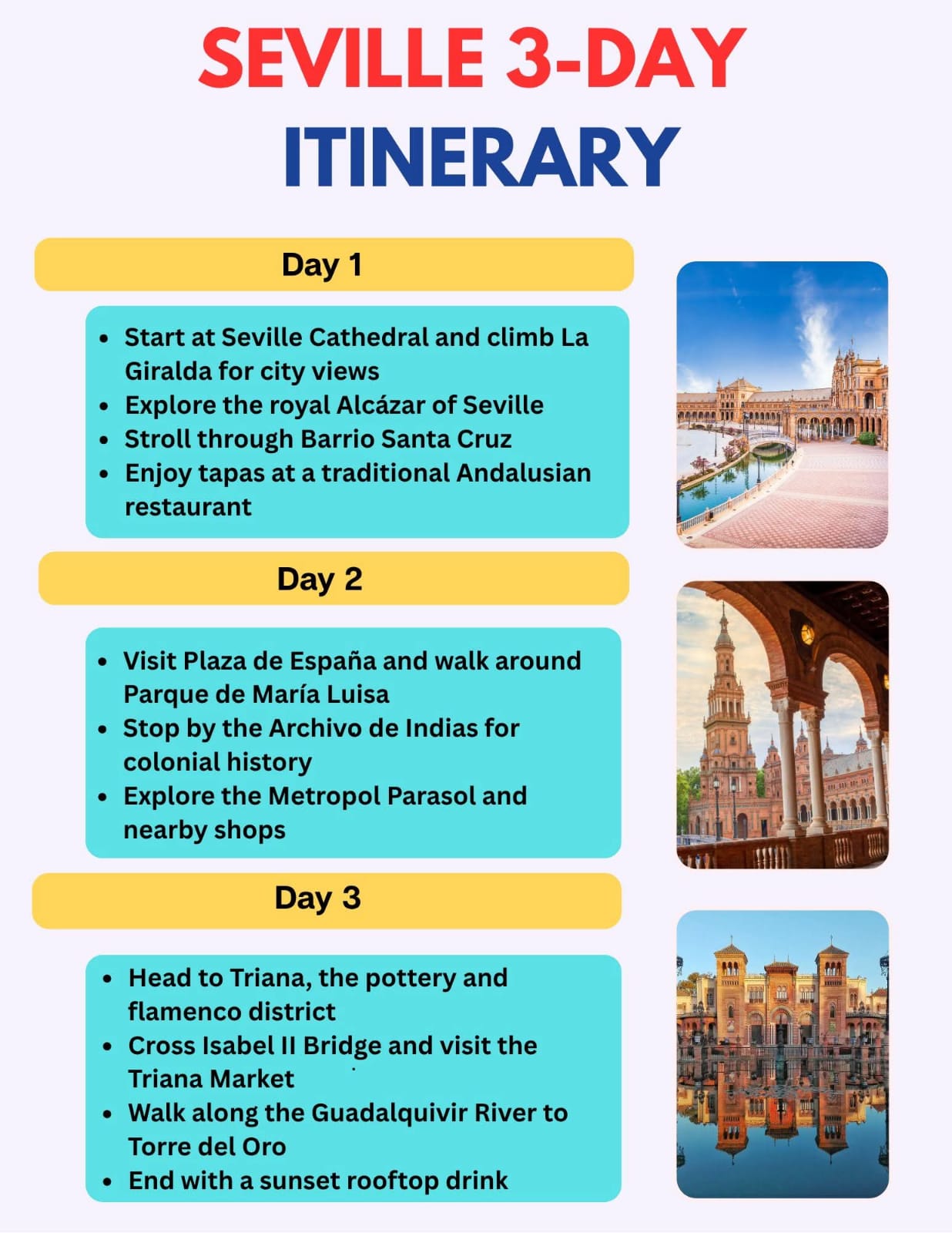
Seville captures the heart of Andalusia in one walkable, sun-drenched city. Few places let you climb a Moorish minaret in the morning and watch flamenco in a centuries-old neighborhood by night.
This itinerary suits first-time visitors who want a genuine taste of Andalusian culture without rushing. History lovers, architecture fans, and food enthusiasts will all find plenty here. The pace balances major landmarks with riverside walks and quieter local neighborhoods.
Seville’s historic center is compact and best explored on foot, with most major sights within a comfortable walking distance of each other. Below is a full breakdown of what to see, eat, and where to stay across three days in the city.
Itinerary at a Glance
| Stop | Recommended Stay | Main Highlights | Driving Time to Next Stop | Best For |
|---|---|---|---|---|
| Seville | 3 days | Seville Cathedral, Alcázar, Plaza de España, Triana | N/A, single city stay | History lovers, architecture fans, flamenco enthusiasts |
Seville
Things to Do in Seville
- Seville Cathedral and La Giralda. This is the largest Gothic cathedral in the world, built atop a former mosque and holding the tomb of Christopher Columbus. Climbing La Giralda, the cathedral’s bell tower, rewards visitors with sweeping views over the city. The ramp-style climb makes it easier than a typical staircase, though the top can get crowded by midmorning.
- The Alcázar of Seville. This stunning royal palace showcases intricate Mudéjar architecture and lush garden courtyards. It remains a working royal residence, still used by the Spanish royal family today. Booking tickets online in advance is essential, since entry times are limited and lines build quickly.
- Barrio Santa Cruz. This former Jewish quarter holds narrow, flower-lined streets that reward slow, aimless wandering. Its whitewashed buildings and hidden courtyards sit within easy walking distance of the cathedral. Getting lost here for an hour is part of the experience.
- Tapas at a traditional Andalusian restaurant. Seville’s tapas culture centers on small, shareable plates enjoyed with a relaxed pace. Restaurants throughout the historic center serve classics like salmorejo and fried fish. Ordering several dishes to share captures the spirit of local dining customs.
- Plaza de España and Parque de María Luisa. This grand semicircular plaza was built for the 1929 Ibero-American Exposition and features colorful tiled alcoves representing Spanish provinces. The surrounding park offers shaded paths and quiet fountains, a pleasant escape from the midday sun. A slow walk through both takes about two hours.
- The Archivo de Indias. This historic archive building houses documents chronicling Spain’s colonial history in the Americas, including papers connected to Columbus and Magellan. Its elegant Renaissance architecture makes it worth a stop even for those less interested in the archives themselves. Entry is often free, and a visit takes about 30 to 45 minutes.
- The Metropol Parasol. Known locally as Las Setas for its mushroom-like shape, this striking modern structure offers a rooftop walkway with panoramic city views. It stands in sharp contrast to Seville’s older architecture nearby. The surrounding area holds shops and casual dining options.
- Triana district. Known as the historic pottery and flamenco district, Triana sits just across the river from the main tourist center. Its colorful ceramic workshops and lively bars give it a distinctly local feel. Crossing into Triana offers a genuine break from the busier sights on the other side of the water.
- Isabel II Bridge and Triana Market. This 19th century bridge connects Triana to the historic center, offering classic river views. The adjoining Triana Market sits atop the ruins of a former Moorish castle, blending fresh produce stalls with a layer of hidden history. A morning visit here pairs well with exploring the surrounding streets.
- A walk along the Guadalquivir River to Torre del Oro. This riverside walk leads past cafes and parks toward Torre del Oro, a 13th century watchtower that once helped guard the city’s port. The tower now houses a small maritime museum. Sunset light along this stretch of river makes for excellent photography.
- A sunset rooftop drink. Several rooftop bars near the cathedral and city center offer sweeping views as the sun sets over Seville’s skyline. It is a fitting way to close out a day of sightseeing. Arriving before sunset helps secure a good table, since these spots fill quickly in the evening.
Seville gets extremely hot in summer, so spring and fall offer the most comfortable conditions for walking between sights. Public transport is available, though most of the historic center is walkable enough that a car is unnecessary and parking can be difficult to find.
Where to Stay in Seville
- Hotel Alfonso XIII, A Luxury Collection Hotel (Luxury). This landmark hotel near the cathedral has hosted royalty and dignitaries since 1928. It remains Seville’s most celebrated luxury address.
- Hotel Casa 1800 Sevilla (Mid-range). Set in a converted 19th century mansion in Santa Cruz, this hotel offers a rooftop terrace with cathedral views. It consistently earns strong reviews for its central location and character.
- Hostal Goya (Budget). This well-reviewed guesthouse sits in the heart of Santa Cruz, offering simple, comfortable rooms close to the major sights. It is a practical, centrally located choice for budget travelers.
Final Thoughts
Three days in Seville gives travelers a genuine feel for the city’s Moorish architecture, riverside charm, and flamenco spirit. Each day offers enough to fill from morning to evening without feeling rushed. Mixing grand landmarks with quieter neighborhoods like Triana captures the city at its best.
Use this itinerary as a solid framework for your own Seville trip. Adjust the pace based on how much walking or sightseeing fits your travel style. Seville rewards visitors who take the time to explore both its famous landmarks and its quieter riverside corners.