
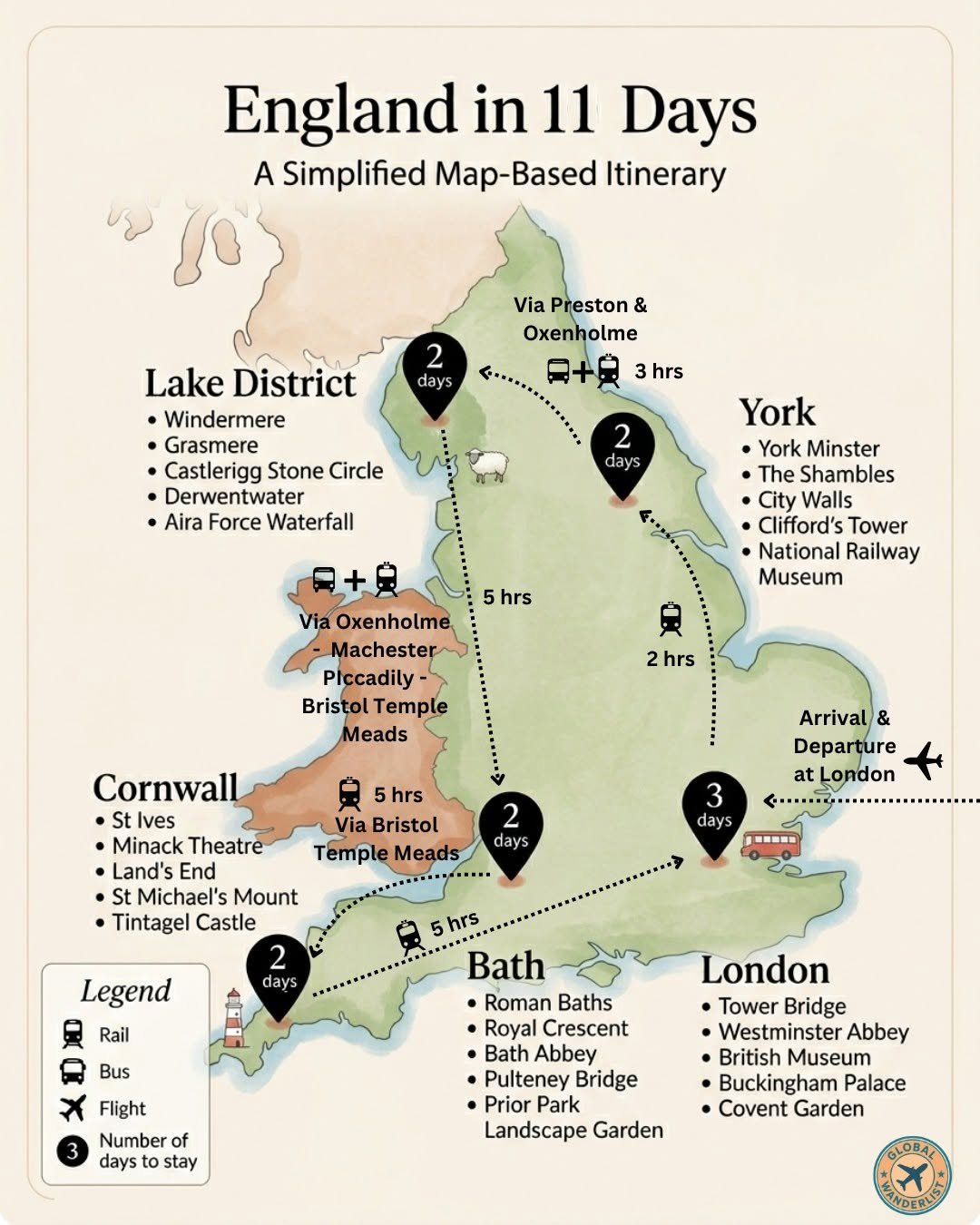
England packs an astonishing range of scenery into a country you can cross by rail. This route links the capital, a Georgian spa town, a rugged coastline, a mountain national park, and a medieval city into one complete loop.
It suits travelers who want variety without renting a car for the whole trip. History lovers, hikers, coastal wanderers, and first-time visitors will all find a rhythm that works. The pace balances city time with slower, scenic days in the countryside.
Public transport carries this entire route, mixing trains and the occasional bus connection. Some legs run long, so treating travel days as part of the adventure rather than dead time helps. Below is a full breakdown of what to see, where to stay, and how to move smoothly between stops.
Itinerary at a Glance
| Stop | Recommended Stay | Main Highlights | Driving Time to Next Stop | Best For |
|---|---|---|---|---|
| London | 3 days | Tower Bridge, Westminster Abbey, British Museum | About 1.5 hours by train to Bath | First-timers, history lovers |
| Bath | 2 days | Roman Baths, Royal Crescent, Bath Abbey | 5 hours by bus and rail to Cornwall | Georgian architecture, spa culture |
| Cornwall | 2 days | St Ives, Land’s End, Tintagel Castle | 5 hours by bus and rail to the Lake District | Coastal walks, dramatic cliffs |
| Lake District | 2 days | Windermere, Castlerigg Stone Circle | 3 hours by bus and train to York | Hikers, nature lovers |
| York | 2 days | York Minster, The Shambles, city walls | 2 hours by rail back to London | Medieval history |
London
Things to Do in London
- Tower Bridge. This Victorian landmark remains one of the most recognizable bridges in the world. Walkers can cross the glass floor walkway for sweeping views over the Thames. Plan for about an hour if you want to visit the exhibition inside.
- Westminster Abbey. Nearly every English monarch since 1066 has been crowned inside this Gothic church. It also holds the graves of poets, scientists, and statesmen. Arrive early since lines build quickly by midmorning.
- British Museum. Home to millions of artifacts, this museum covers human history across every continent. The Rosetta Stone and Egyptian mummies draw the biggest crowds. Entry is free, so it is worth returning more than once.
- Buckingham Palace. The monarch’s official residence has anchored royal life in London since 1837. Even without a tour, the gates and gardens make an impressive stop. Time your visit around the Changing of the Guard for extra spectacle.
- Covent Garden. Street performers, boutique shops, and a historic covered market define this district. The old market hall dates back to the 1830s. Plan for a couple of hours to browse and watch performances.
Three days gives enough time to see London’s major landmarks without feeling rushed. The Underground connects every sight efficiently, so a car is unnecessary for this stop.
Where to Stay in London
- Claridge’s (Luxury). This landmark Mayfair hotel blends art deco elegance with impeccable service. It remains one of the most consistently well reviewed luxury hotels in the city.
- citizenM Tower of London (Mid-range). This design-forward hotel sits close to the Tower and offers compact, tech-friendly rooms. It earns strong reviews for value and location.
- Z Hotel Soho (Budget). Centrally located in Soho, this hotel keeps rooms simple and efficient. It is a smart budget pick that still puts guests within walking distance of major sights.
Bath
Things to Do in Bath
- The Roman Baths. These remarkably preserved ancient baths date back nearly 2,000 years. Interactive displays explain how Romans used the site for bathing and worship. Visiting at opening time helps avoid the busiest midmorning crowds.
- The Royal Crescent. This sweeping row of Georgian townhouses is one of the finest examples of 18th century architecture in Britain. A walk along the crescent offers a glimpse into Bath’s fashionable past. Photos work best in the soft light of early morning.
- Bath Abbey. This Gothic church has stood at the heart of the city since the 1500s, though a place of worship existed here far earlier. Its fan vaulted ceiling is a highlight for visitors. A visit typically takes about 30 to 45 minutes.
- Pulteney Bridge. This 18th century bridge is lined with shops on both sides, a rare architectural feature shared by only a handful of bridges worldwide. It offers a classic photo spot over the River Avon. The surrounding weir adds a scenic backdrop.
- Prior Park Landscape Garden. This 18th century garden features a Palladian bridge and sweeping views over the city. Walking trails wind through parkland designed to frame views of Bath below. It makes a peaceful break from the busier city center.
Two days allows time to see the major sights and enjoy the city’s spa culture at a relaxed pace. Bath’s compact center is highly walkable, so most sights sit within easy reach of each other.
Where to Stay in Bath
- The Gainsborough Bath Spa (Luxury). This hotel is one of the only in Britain with direct access to the city’s natural thermal spring water. It consistently ranks among the top luxury stays in Bath.
- Hotel Indigo Bath (Mid-range). Set in a converted Georgian terrace near the train station, this hotel blends boutique style with reliable comfort. It offers strong value close to the main sights.
- Z Hotel Bath (Budget). This compact, modern hotel sits in a highly central location at an accessible price. It is a smart choice for travelers prioritizing location over space.
Cornwall
Things to Do in Cornwall
- St Ives. This coastal town is known for its sandy beaches, art galleries, and narrow cobbled streets. Tate St Ives showcases modern art with a striking sea view. The town makes an ideal base for exploring the surrounding coastline.
- Minack Theatre. This open air theater is carved into cliffs above the Atlantic, offering a dramatic setting for live performances. Even without a show, the site is worth visiting for its views alone. Sunset visits are especially memorable.
- Land’s End. This dramatic headland marks the westernmost point of mainland England. Rugged cliffs and crashing waves make it a popular photo stop. Coastal walking trails extend in both directions from the main viewpoint.
- St Michael’s Mount. This tidal island holds a medieval castle and can be reached on foot at low tide via a stone causeway. At high tide, a small boat ferries visitors across instead. Checking tide times in advance makes for smoother planning.
- Tintagel Castle. These dramatic ruins sit on a rugged headland linked to the legends of King Arthur. A dramatic footbridge connects the mainland to the castle’s island section. The site takes about two hours to explore fully.
A car is genuinely useful for reaching Cornwall’s more remote attractions, since bus connections between smaller villages can be infrequent. Coastal roads are narrow, so allowing extra time for driving pays off.
Where to Stay in Cornwall
- St Ives Harbour Hotel & Spa (Luxury). This hotel sits right on the harbor front with sweeping sea views and a full spa. It consistently earns strong reviews for its location and service.
- Pedn Olva Hotel (Mid-range). Perched above the harbor, this hotel offers comfortable rooms and a well-regarded restaurant. Regular guests praise its relaxed atmosphere and scenic position.
- Treloyhan Manor (Budget). This stately manor house offers Cornish cuisine and views over Carbis Bay at a lower price point. It is a practical, well-reviewed choice for budget travelers.
Lake District
Things to Do in the Lake District
- Windermere. England’s largest natural lake anchors this scenic region, with boat cruises revealing surrounding hills and small islands. Bowness-on-Windermere offers a pleasant base for wandering. Most cruises run between 45 minutes and an hour.
- Grasmere. This small village was once home to poet William Wordsworth, whose cottage remains open to visitors. The village is also known for its traditional gingerbread, sold from a historic shop near the church. A short walk through takes about 30 minutes.
- Castlerigg Stone Circle. This Neolithic stone circle sits dramatically among the surrounding fells, predating Stonehenge by centuries. It offers one of the most photogenic viewpoints in the entire national park. Sunrise and sunset bring especially striking light.
- Derwentwater. This lake near Keswick offers peaceful walking paths and boat trips around its wooded shoreline. It is quieter than Windermere, making it a favorite for a slower pace. A full loop walk takes around three hours.
- Aira Force Waterfall. This dramatic waterfall near Ullswater cascades through a wooded gorge. Walking trails lead visitors to several viewpoints along the falls. The main loop takes about 45 minutes to an hour.
Roads in the Lake District are scenic but often narrow and winding. Traveling by train and bus works well for the main towns, though a car offers more flexibility for reaching quieter corners.
Where to Stay in the Lake District
- Gilpin Hotel & Lake House (Luxury). Set on the edge of the national park, this hotel offers refined rooms and a Michelin-starred restaurant. It consistently ranks among the top luxury stays in the region.
- Applegarth Villa Hotel & Apple Restaurant (Mid-range). This Windermere hotel earns strong reviews for its comfortable rooms and well-regarded restaurant. It offers a good balance of comfort and value.
- Broadview Guest House (Budget). This well-reviewed guest house offers a warm, personal alternative to larger hotels. It suits travelers who want a comfortable, affordable base near Windermere.
York
Things to Do in York
- York Minster. This Gothic cathedral is one of the largest of its kind in northern Europe. Its stained glass windows and central tower are highlights of any visit. Climbing the tower rewards visitors with sweeping views over the city.
- The Shambles. This narrow, timber-framed street has stood since medieval times. Its overhanging buildings and small shops make it one of the most photographed corners of the city. A slow walk through takes about 20 to 30 minutes.
- The city walls. York’s medieval walls remain largely intact and offer a walkable loop around the old city. Walking the full circuit takes around two hours. Sections near Bootham Bar offer particularly good photo opportunities.
- Clifford’s Tower. This 13th century tower stands on a mound overlooking the city, offering panoramic views from its rooftop platform. It carries a complex and difficult history worth learning before visiting. A stop here takes about 30 to 45 minutes.
- The National Railway Museum. This free museum holds an impressive collection of historic locomotives. It appeals to both train enthusiasts and casual visitors. A visit typically takes one to two hours.
Two days allows enough time to see York’s major sights at a relaxed pace. The city center is compact and very walkable, with the train station sitting close to most attractions.
Where to Stay in York
- The Grand, York (Luxury). Set in a former railway headquarters beside the city walls, this five-star hotel combines historic architecture with modern comfort. It consistently earns some of the strongest reviews in the city.
- Hotel Indigo York (Mid-range). This centrally located hotel offers a modern, art-inspired take on York’s history. It provides reliable comfort within easy walking distance of the main sights.
- Astor York Hostel (Budget). This central hostel is known for cleanliness and a convenient location near the city walls. It is a practical, well-reviewed choice for budget travelers.
Returning to London
The final leg carries travelers back to London by rail, closing the loop after eleven days on the road. This return trip takes about two hours, making it easy to fit in a relaxed final morning in York before departure. Since most international flights leave from London, this stop naturally serves as both the starting and ending point of the journey.
Booking rail tickets in advance, especially for the longer legs between Cornwall and the Lake District, helps secure better fares. Off-peak trains also tend to be less crowded and more affordable than weekend departures.
Final Thoughts
This route captures England at its most varied, blending royal history, Georgian elegance, dramatic coastline, mountain scenery, and medieval charm into one complete journey. Each stop offers enough to fill two or three days without feeling rushed. Mixing trains with the occasional bus connection makes the trip manageable without a car for most of the route.
Use this itinerary as a solid framework for planning your own England trip. Adjust the pace based on how much time you want to spend in each region. England rewards travelers who leave room to slow down and take in each stop along the way.