
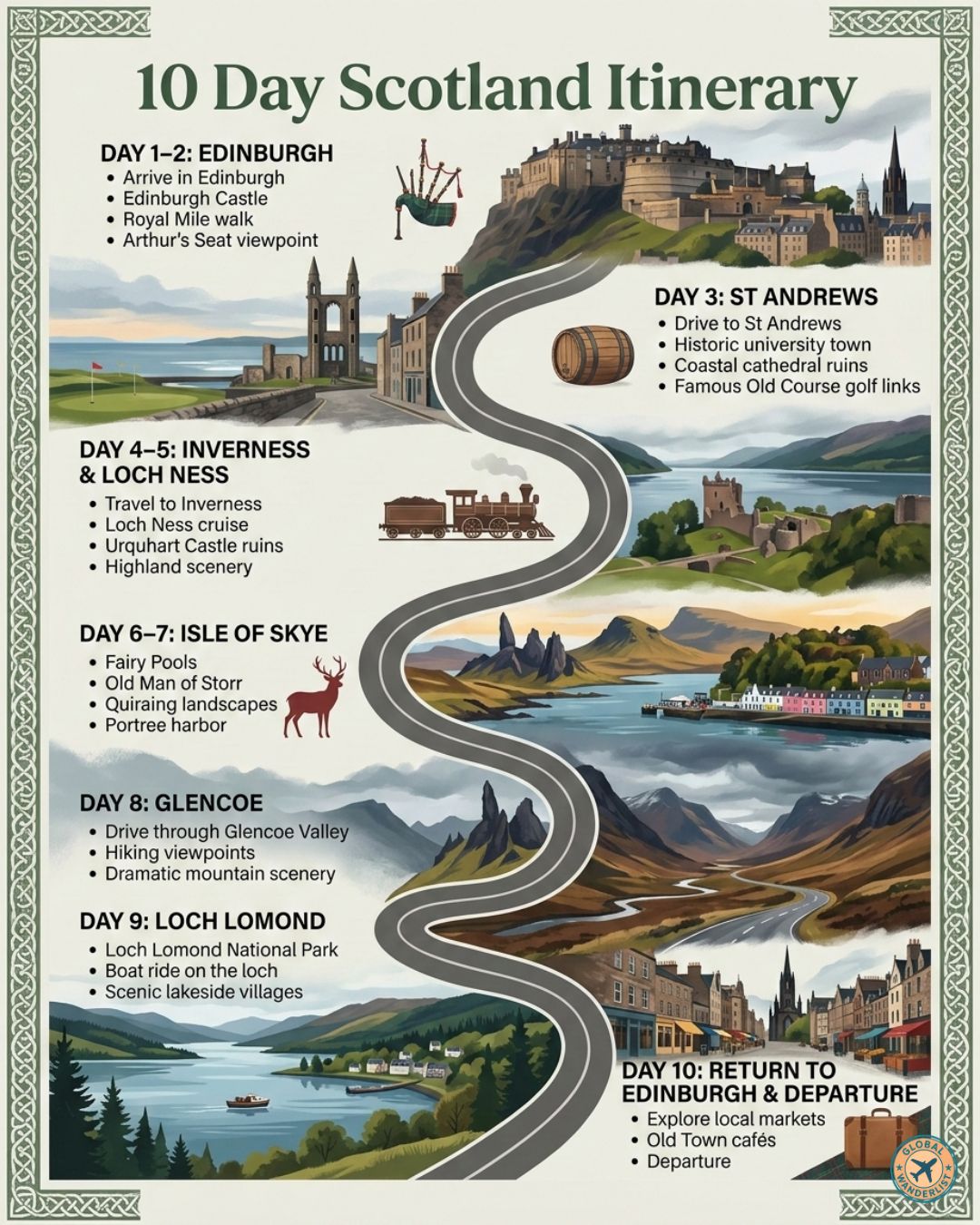
Scotland rewards travelers who take the slow road. This route links medieval cities, ancient lochs, and dramatic Highland scenery into one flowing journey.
It suits first-time visitors who want a taste of everything Scotland offers. History lovers, hikers, photographers, and road trip fans will all find something here. The route balances driving time with real time spent exploring each stop.
Renting a car matters for this trip. Public transport thins out fast once you leave the cities, and the best scenery sits along quiet rural roads. Below is a full breakdown of what to see, where to stay, and how to move smoothly from one stop to the next.
Itinerary at a Glance
| Stop | Recommended Stay | Main Highlights | Driving Time to Next Stop | Best For |
|---|---|---|---|---|
| Edinburgh | 2 nights | Edinburgh Castle, Royal Mile, Arthur’s Seat | 1 hour to St Andrews | First-timers, history lovers |
| St Andrews | 1 night | University town, cathedral ruins, Old Course | 2.5 hours to Inverness | Golf fans, coastal walks |
| Inverness & Loch Ness | 2 nights | Loch Ness cruise, Urquhart Castle | 2 hours to Portree | Legend chasers, scenery |
| Isle of Skye | 2 nights | Fairy Pools, Old Man of Storr, Quiraing | 3 hours to Glencoe | Hikers, photographers |
| Glencoe | 1 night | Glencoe Valley, mountain viewpoints | 1 hour to Loch Lomond | Dramatic landscapes |
| Loch Lomond | 1 night | National park, loch boat ride | 1 hour back to Edinburgh | Relaxing scenery, wildlife |
| Edinburgh | 1 night | Local markets, Old Town cafes | Departure | Wrapping up the trip |
Edinburgh
Things to Do in Edinburgh
- Edinburgh Castle. This fortress sits above the city on an extinct volcano and has stood guard for centuries. It houses the Scottish Crown Jewels and the Stone of Destiny. Give yourself at least two hours to explore the grounds and exhibits.
- The Royal Mile. This cobblestone street connects the castle to the Palace of Holyroodhouse. Street performers, historic pubs, and small shops line the entire route. Walking it end to end takes about an hour without stops.
- Arthur’s Seat. This extinct volcano rises above the city and offers sweeping views of Edinburgh and the Firth of Forth. The main trail takes roughly two hours round trip. Morning hikes offer softer light and fewer crowds.
- Old Town wandering. Beyond the main sights, the narrow closes and hidden courtyards reveal centuries of layered history. Victoria Street’s curved, colorful shopfronts are especially photogenic. Set aside an afternoon for slow, unplanned exploring.
- Local food stops. Traditional pubs throughout the Old Town serve haggis, neeps, and tatties. Cafes near Grassmarket are popular for a relaxed lunch between sights. Booking dinner ahead is wise during peak summer months.
Parking in central Edinburgh is limited and expensive, often £20 to £40 per day. Many travelers skip driving in the city and pick up their rental car on departure day instead.
Where to Stay in Edinburgh
- The Witchery by the Castle (Luxury). This atmospheric hotel sits steps from the castle gates. Its theatrical, candlelit rooms make it one of the most memorable stays in the Old Town.
- Virgin Hotels Edinburgh (Luxury). Set in the landmark India Buildings on Victoria Street, this hotel blends historic architecture with modern design. It consistently earns strong guest reviews for comfort and service.
- Apex Grassmarket Hotel (Mid-range). Centrally located near the castle, this hotel offers reliable comfort at a more moderate price. Its rooftop views over the Old Town are a highlight for guests.
- Motel One Edinburgh Royal (Budget). This stylish, design-forward hotel sits a short walk from the train station and castle. Rooms run small but stay clean and well kept, making it a smart budget pick.
St Andrews
Things to Do in St Andrews
- St Andrews Cathedral ruins. Once the largest cathedral in Scotland, this coastal ruin dates back to the 1100s. Walking through the grounds offers striking views of the North Sea. A visit takes about 45 minutes to an hour.
- The Old Course. Known as the Home of Golf, this legendary course has hosted the sport since the 1400s. Even non-golfers enjoy walking near the iconic Swilcan Bridge. Advance booking is required for anyone hoping to play.
- University of St Andrews. Scotland’s oldest university dates back to 1413 and shapes much of the town’s atmosphere. Its historic quads and cobbled streets are worth a slow walk. The campus blends seamlessly into the town center.
- West Sands Beach. This wide, sandy beach stretches along the coast just outside town. It offers a peaceful contrast to the historic streets nearby. Early evening walks here are especially scenic.
- St Andrews Castle. Perched on a cliff above the sea, this ruined castle adds another layer of medieval history. It pairs naturally with a cathedral visit on the same walk. The site is compact, needing about 30 to 45 minutes.
St Andrews works well as a relaxed overnight stop between Edinburgh and the Highlands. One night is usually enough to see the main sights without rushing.
Where to Stay in St Andrews
- Old Course Hotel (Luxury). Overlooking the famous golf links, this hotel combines upscale comfort with a renowned spa. It remains one of the most highly rated luxury stays in town.
- Rusacks St Andrews (Luxury). This historic hotel dates back to the 1800s and sits right beside the Old Course. Sea views and classic charm make it a strong choice for a special stay.
- Hotel du Vin St Andrews (Mid-range). This boutique property offers sea views and a French bistro atmosphere. It consistently earns strong reviews for comfort and character.
- Balhousie Farm (Budget). This highly rated bed and breakfast offers a warm, personal alternative to hotel chains. Guests praise the breakfast and quiet countryside setting.
Inverness and Loch Ness
Things to Do in Inverness and Loch Ness
- Loch Ness cruise. Boat tours reveal the loch’s dramatic scenery while sharing the legend behind its famous resident. Most cruises run between one and two hours. Morning departures often offer the calmest water.
- Urquhart Castle. These ruins sit right on the shore of Loch Ness, making them one of the most photographed spots in the Highlands. The site includes a visitor center with historical context. Plan for about an hour to explore fully.
- Inverness city center. Scotland’s Highland capital sits along the River Ness, with pleasant riverside walking paths. Victorian Market offers a covered space for shopping and casual food. It is an easy, walkable base for the surrounding area.
- Highland scenery drives. The roads around Loch Ness pass through classic Highland landscapes of hills, glens, and forest. Stopping at small viewpoints along the way adds little time but big payoff. A slow pace suits this kind of driving best.
- Culloden Battlefield. Just outside Inverness, this site marks the location of the final Jacobite uprising in 1746. Interactive displays explain the battle’s lasting impact on Highland history. It makes a meaningful half day addition to this stop.
Two nights allow enough time to properly explore both the city and the loch without feeling rushed. Roads here are well maintained, though rural stretches can be narrow.
Where to Stay in Inverness
- Rocpool Reserve (Luxury). This boutique hotel is known for bold design and attentive service. It regularly ranks among the top-rated luxury stays in the city.
- Ness Walk (Luxury). Set along the River Ness, this hotel offers refined rooms and strong reviews for comfort and location. Its riverside setting makes it easy to reach the city center on foot.
- Kingsmills Hotel (Mid-range). This hotel offers an indoor pool and spa alongside comfortable, well-kept rooms. It provides a good balance of comfort and value for the price.
- Bazpackers Hostel (Budget). Located across from Inverness Castle, this hostel earns strong reviews for its clean rooms and central location. It suits budget travelers who still want a walkable base.
Isle of Skye
Things to Do on the Isle of Skye
- The Fairy Pools. These clear blue pools sit at the base of the Black Cuillin mountains. The walk to reach them takes about 20 minutes each way. Swimming is possible, though the water stays cold even in summer.
- The Old Man of Storr. This rock pinnacle is one of the most photographed formations in Scotland. The hike to the viewpoint takes about two hours round trip and involves a steady climb. Early morning visits help avoid both crowds and wind.
- The Quiraing. This dramatic landslip features jagged peaks and rolling green terrain. The full loop trail takes three to four hours and requires moderate fitness. Sturdy hiking boots are essential due to uneven ground.
- Portree harbor. Skye’s main town features a row of colorful buildings overlooking a working harbor. It makes a relaxed base for exploring the island’s northern half. Seafood restaurants near the harbor are a local highlight.
- Talisker Distillery. Located on the island’s western coast, this distillery produces one of Scotland’s most recognizable single malts. Guided tours explain the whisky making process in detail. Tastings typically run about an hour.
Two nights give travelers enough time to see Skye’s major sights without constant rushing. Roads on the island are often single lane, so drivers should use passing places courteously.
Where to Stay in Isle of Skye
- Cuillin Hills Hotel (Luxury). This hotel overlooks Portree Bay with views toward the Cuillin mountains. It consistently earns strong reviews for its restaurant and scenic setting.
- Bosville Hotel (Mid-range). Centrally located in Portree, this hotel offers comfortable rooms within walking distance of the harbor. It is a reliable, well-reviewed option for exploring the town on foot.
- Tongadale Hotel (Budget). This pet-friendly hotel sits in the heart of Portree and offers straightforward, comfortable rooms. Guests consistently note its convenient location and hearty breakfast.
Glencoe
Things to Do in Glencoe
- Drive through Glencoe Valley. This dramatic glen is framed by steep, brooding mountains on both sides. The A82 road through the valley is one of Scotland’s most scenic drives. Pull-offs along the route offer easy photo stops.
- Glencoe hiking viewpoints. Several short trails lead to elevated views over the valley without requiring technical climbing skills. The Glencoe Lochan trail is an easy, family-friendly option. Longer routes suit more experienced hikers seeking bigger views.
- Glencoe Visitor Centre. This center explains the area’s dramatic geology along with its difficult history, including the 1692 massacre of Clan MacDonald. It offers helpful context before heading out on trails. A stop here takes about 30 to 45 minutes.
- Photography at sunrise or sunset. Glencoe’s mountains take on dramatic color during golden hour. Early morning light tends to be calmer and less crowded than sunset. Weather can shift quickly, so flexibility helps.
- Clachaig Inn. This traditional Highland pub is a popular stop for hikers and climbers passing through the valley. It serves hearty meals alongside a strong selection of Scottish beer. The atmosphere feels authentically local.
One night is enough time to soak in Glencoe’s scenery, especially paired with a scenic drive in and out. Weather here can change fast, so pack layers regardless of season.
Where to Stay in Glencoe
- Glencoe House (Luxury). This historic mansion offers spacious suites with views of Loch Leven and the surrounding peaks. It consistently ranks among the top luxury stays in the Highlands.
- Ballachulish Hotel (Mid-range). Set near the village of Ballachulish, this hotel offers comfortable rooms with loch views. It is a solid, well-reviewed mid-range choice close to the valley.
- Clachaig Inn (Mid-range). Beyond its popular pub, this inn offers straightforward, comfortable rooms for hikers and travelers passing through. Its location deep in the valley suits early trailhead starts.
- Glencoe Youth Hostel (Budget). This hostel offers a clean, affordable base with easy access to nearby trails. It is a practical choice for budget-minded travelers exploring the valley.
Loch Lomond
Things to Do at Loch Lomond
- Loch Lomond and The Trossachs National Park. As Scotland’s first national park, this area combines loch, forest, and mountain scenery. Walking trails range from easy lakeside paths to more demanding hill climbs. It makes a peaceful final stop before returning to city life.
- Boat rides on the loch. Cruises reveal the loch’s many small islands and surrounding mountains. Trips typically run between 45 minutes and an hour. Calm mornings often provide the clearest views.
- Scenic lakeside villages. Small villages like Luss offer traditional stone cottages and quiet waterfront walks. These towns feel like a step back in time compared to busier cities. A short stroll through Luss takes about 30 minutes.
- Wildlife spotting. The park is home to red deer, ospreys, and a wide range of birdlife. Quiet trails away from the main tourist areas offer the best chances for sightings. Early morning tends to bring more wildlife activity.
- Conic Hill. This moderate hike offers rewarding views over the loch and its scattered islands. The round trip takes about two to three hours. It is a good option for travelers wanting one last Highland hike before departure.
This stop works well as a relaxing transition back toward Edinburgh. It also puts travelers within easy reach of Glasgow if extending the trip.
Where to Stay at Loch Lomond
- Cameron House on Loch Lomond (Luxury). This five-star resort sits directly on the loch’s shore with extensive spa and dining facilities. It remains one of the most highly rated luxury stays in the region.
- Loch Lomond Arms Hotel (Mid-range). Located in the village of Luss, this hotel offers a cozy, traditional atmosphere close to the water. It earns strong reviews for its restaurant and welcoming service.
- Arrochar Hotel (Budget). Set near the loch’s northern end, this hotel offers straightforward, comfortable rooms at a lower price point. Its lochside location adds scenic value for budget travelers.
Returning to Edinburgh
The final stretch loops back to Edinburgh, wrapping up the trip with a slower pace. Spend the last day exploring local markets and Old Town cafes before heading to the airport. It is a fitting bookend to a route that begins and ends in the same historic city.
Grassmarket and the Grassmarket Market are good spots for last-minute souvenirs. Coffee shops tucked into the closes off the Royal Mile offer a relaxed final morning. Since departure day often includes a flight, staying near the airport or city center simplifies logistics.
Final Thoughts
This route captures Scotland at its best, mixing historic cities with dramatic Highland and island scenery. Each stop offers enough to fill a day or two without feeling rushed. Renting a car and allowing flexibility for weather makes the biggest difference in enjoying it fully.
Use this itinerary as a solid framework for your own Scotland trip. Adjust the pace based on how much hiking or driving you want each day. Scotland’s landscapes reward travelers who leave room to stop, look around, and take it all in.