
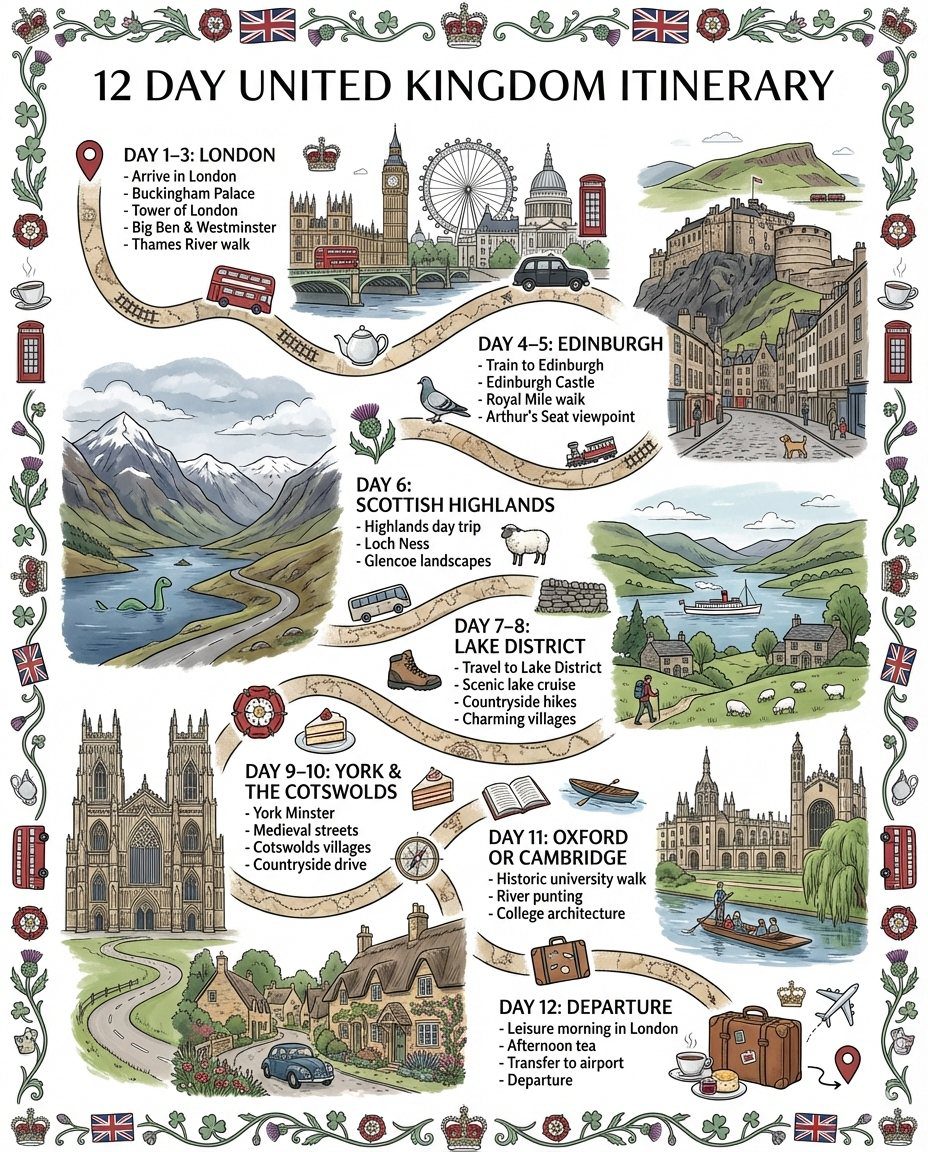
The United Kingdom packs royal history, dramatic Highlands, and storybook villages into a surprisingly compact route. This journey links London, Edinburgh, the Lake District, York, the Cotswolds, and a university town into one complete trip.
It suits first-time visitors who want the full range of British travel in under two weeks. History lovers, hikers, photographers, and food fans all find something worth the stop. The pace balances iconic cities with quieter countryside days.
A mix of train travel and rental car works best for this route. Cities like London, Edinburgh, and York are easy by train, while the Lake District and Cotswolds reward having a car. Below is a full breakdown of what to see, where to stay, and how to move smoothly between stops.
Itinerary at a Glance
| Stop | Recommended Stay | Main Highlights | Driving Time to Next Stop | Best For |
|---|---|---|---|---|
| London | 2 nights | Buckingham Palace, Tower of London, Big Ben | 4.5 hours to Edinburgh | First-timers, history lovers |
| Edinburgh | 2 nights | Edinburgh Castle, Royal Mile, Arthur’s Seat | Day trip to Highlands | History, walking cities |
| Scottish Highlands | Day trip | Loch Ness, Glencoe | 5 hours to Lake District | Scenery, legend chasers |
| Lake District | 2 nights | Lake cruise, countryside hikes | 3 hours to York | Hikers, nature lovers |
| York | 1-2 nights | York Minster, medieval streets | 1.5 hours to Cotswolds | Medieval history |
| Cotswolds | 1 night | Villages, countryside drives | 1.5 hours to Oxford | Scenic drives, charm |
| Oxford or Cambridge | 1 night | University walks, river punting | 1.5 hours to London | Academic history, architecture |
| London | 1 night | Afternoon tea, departure | Departure | Wrapping up the trip |
London
Things to Do in London
- Buckingham Palace. The monarch’s official residence has anchored royal life in London since 1837. Even without a tour, the gates and gardens make an impressive stop. Time your visit around the Changing of the Guard for extra spectacle.
- Tower of London. This nearly thousand-year-old fortress has served as palace, prison, and treasury. It now holds the Crown Jewels under constant guard. Budget at least two hours to see the grounds properly.
- Big Ben and Westminster. This clock tower is the most photographed symbol of the city. The surrounding Houses of Parliament date back to the 1800s after fire destroyed the original building. Early morning visits bring softer light and thinner crowds.
- A Thames River walk. Strolling along the river reveals a rotating cast of landmarks, bridges, and street performers. The South Bank stretch between Westminster and Tower Bridge is especially scenic. Plan for about two hours if you stop along the way.
- Historic pubs and markets. Traditional pubs throughout the city serve classic British fare like fish and chips. Borough Market is a favorite for fresh, casual lunches between sights. Both add an easy, local layer to a packed sightseeing day.
Parking in central London is expensive and largely unnecessary. The Underground and buses cover the entire route between major sights efficiently.
Where to Stay in London
- Claridge’s (Luxury). This landmark Mayfair hotel blends art deco elegance with impeccable service. It remains one of the most consistently well reviewed luxury hotels in the city.
- citizenM Tower of London (Mid-range). This design-forward hotel sits close to the Tower and offers compact, tech-friendly rooms. It earns strong reviews for value and location.
- Z Hotel Soho (Budget). Centrally located in Soho, this hotel keeps rooms simple and efficient. It is a smart budget pick that still puts guests within walking distance of major sights.
Edinburgh
Things to Do in Edinburgh
- Edinburgh Castle. Perched on an extinct volcano, this fortress has watched over the city for centuries. It holds the Scottish Crown Jewels and the Stone of Destiny. Plan for at least two hours to see the grounds and exhibits.
- The Royal Mile. This cobblestone street connects the castle to the Palace of Holyroodhouse. Street performers, historic pubs, and small shops line the entire route. Walking it end to end takes about an hour without stops.
- Arthur’s Seat. This extinct volcano rises above the city and offers sweeping views over Edinburgh and the Firth of Forth. The main trail takes roughly two hours round trip. Morning hikes bring softer light and quieter paths.
- Old Town wandering. The narrow closes and hidden courtyards of Edinburgh’s Old Town reveal centuries of layered history. Victoria Street’s curved, colorful shopfronts are especially photogenic. Set aside an afternoon for slow, unplanned exploring.
- Local food stops. Traditional pubs throughout the Old Town serve haggis, neeps, and tatties. Cafes near Grassmarket are popular for a relaxed lunch between sights. Booking dinner ahead is wise during peak summer months.
Trains between London and Edinburgh take around four and a half hours, making rail a comfortable alternative to driving.
Where to Stay in Edinburgh
- The Witchery by the Castle (Luxury). This atmospheric hotel sits steps from the castle gates. Its theatrical, candlelit rooms make it one of the most memorable stays in the Old Town.
- Apex Grassmarket Hotel (Mid-range). Centrally located near the castle, this hotel offers reliable comfort at a more moderate price. Its rooftop views over the Old Town are a highlight for guests.
- Motel One Edinburgh Royal (Budget). This stylish, design-forward hotel sits a short walk from the train station and castle. Rooms run small but stay clean and well kept, making it a smart budget pick.
Scottish Highlands
Things to Do in the Scottish Highlands
- Loch Ness. This deep freshwater loch near Inverness is famous for its legendary monster and dramatic scenery. Boat cruises let visitors scan the water while learning local folklore. A round trip from Edinburgh takes most of a full day.
- Glencoe. Surrounded by steep, brooding mountains, this Highland valley is known for its dramatic scenery. It is also historically significant as the site of the 1692 massacre of Clan MacDonald. Photographers favor early morning light here.
- Highland scenery drives. The roads through the Highlands pass through classic landscapes of hills, glens, and forest. Stopping at small viewpoints along the way adds little time but big payoff. A slow pace suits this kind of driving best.
- Urquhart Castle. These ruins sit right on the shore of Loch Ness, making them one of the most photographed spots in the Highlands. The site includes a visitor center with historical context. Plan for about an hour to explore fully.
This stop works well as a guided day trip from Edinburgh rather than an overnight destination. Most tours combine Loch Ness and Glencoe into a single long day, departing early and returning by evening.
Where to Stay for the Scottish Highlands Day Trip
Most travelers base themselves in Edinburgh for this stop and return to the same hotel each night. The hotels listed under Edinburgh above work well for this purpose, since the Highlands trip runs as a single long day rather than an overnight stay. Travelers wanting to linger longer can extend the trip into a full Highlands loop with an overnight near Loch Ness or Glencoe instead.
Lake District
Things to Do in the Lake District
- A scenic lake cruise. Boat rides across Windermere reveal the surrounding hills and small islands from the water. Most cruises run between 45 minutes and an hour. Calm mornings often provide the clearest views.
- Countryside hikes. Trails around Windermere and Ambleside range from easy lakeside walks to more demanding fell climbs. Orrest Head is a popular short hike with rewarding views. Longer routes suit travelers wanting a fuller day outdoors.
- Charming villages. Bowness-on-Windermere and Ambleside offer stone cottages, small shops, and lakeside cafes. Both make pleasant bases for wandering without a strict plan. An afternoon in either village feels unhurried and relaxing.
- Beatrix Potter connections. The Lake District inspired much of Potter’s work, and several sites celebrate that legacy. The World of Beatrix Potter Attraction is a popular family stop. It adds a literary layer to the region’s natural beauty.
- Local food. Cumberland sausage and hearty pub meals are regional staples throughout the area. Traditional inns near the lake serve generous portions after a day of hiking. Sticky toffee pudding, believed to have Cumbrian roots, is a fitting dessert stop.
Roads in the Lake District are scenic but often narrow and winding. Driving slowly and allowing extra time between stops makes for a smoother visit.
Where to Stay in the Lake District
- Gilpin Hotel & Lake House (Luxury). Set on the edge of the national park, this hotel offers refined rooms and a Michelin-starred restaurant. It consistently ranks among the top luxury stays in the region.
- Applegarth Villa Hotel & Apple Restaurant (Mid-range). This Windermere hotel earns strong reviews for its comfortable rooms and well-regarded restaurant. It offers a good balance of comfort and value.
- Broadview Guest House (Budget). This well-reviewed guest house offers a warm, personal alternative to larger hotels. It suits travelers who want a comfortable, affordable base near Windermere.
York
Things to Do in York
- York Minster. This Gothic cathedral is one of the largest of its kind in northern Europe. Its stained glass windows and central tower are highlights of any visit. Climbing the tower rewards visitors with sweeping views over the city.
- Medieval streets. The Shambles is a narrow, timber-framed street that has stood since medieval times. Its overhanging buildings and small shops make it one of the most photographed corners of the city. A slow walk through takes about 20 to 30 minutes.
- City walls walk. York’s medieval walls remain largely intact and offer a walkable loop around the old city. Walking the full circuit takes around two hours. Sections near Bootham Bar offer particularly good photo opportunities.
- The National Railway Museum. This free museum holds an impressive collection of historic locomotives. It appeals to both train enthusiasts and casual visitors. A visit typically takes one to two hours.
- Local food. York is known for its tearooms, with afternoon tea a popular tradition throughout the city. Traditional pubs near the city walls serve hearty British classics. Yorkshire pudding, though found nationwide, feels especially fitting here.
One to two nights allows enough time to see York’s major sights without rushing. The city center is compact and very walkable.
Where to Stay in York
- The Grand, York (Luxury). Set in a former railway headquarters beside the city walls, this five-star hotel combines historic architecture with modern comfort. It consistently earns some of the strongest reviews in the city.
- Hotel Indigo York (Mid-range). This centrally located hotel offers a modern, art-inspired take on York’s history. It provides reliable comfort within easy walking distance of the main sights.
- Astor York Hostel (Budget). This central hostel is known for cleanliness and a convenient location near the city walls. It is a practical, well-reviewed choice for budget travelers.
The Cotswolds
Things to Do in the Cotswolds
- Cotswolds villages. Towns like Bourton-on-the-Water, Bibury, and Stow-on-the-Wold showcase classic honey-colored stone architecture. Each village has its own character, from riverside charm to quiet market squares. Visiting early in the morning helps avoid the biggest crowds.
- Countryside drives. The winding roads connecting Cotswolds villages pass through rolling hills and quiet farmland. Stopping at small viewpoints along the way adds little time but real scenic value. A car is essential, since public transport between villages is limited.
- Bibury and the River Coln. Often called one of England’s most beautiful villages, Bibury features Arlington Row’s iconic weavers’ cottages. A short walk along the River Coln adds a peaceful, photogenic stop. Thirty minutes is enough for a proper look around.
- Local food. Traditional pubs throughout the Cotswolds serve hearty, farm-to-table British fare. Cream teas are a popular afternoon stop in most villages. Look for restaurants using regional lamb and seasonal produce for the most authentic meals.
A car is strongly recommended for this stop, since most of the prettiest villages sit off the main rail lines. One night is enough for a highlights tour, though the region rewards a slower pace if time allows.
Where to Stay in the Cotswolds
- The Lygon Arms Hotel (Luxury). Located in the village of Broadway, this historic hotel offers elegant rooms and classic Cotswolds character. It remains one of the most highly rated luxury stays in the region.
- The Porch House (Mid-range). Set in Stow-on-the-Wold, this historic inn combines old-world charm with comfortable, well-kept rooms. It earns consistently strong reviews for atmosphere and service.
- Chester House Hotel (Budget). Located in Bourton-on-the-Water, this hotel offers straightforward comfort in one of the region’s most picturesque villages. It is a practical, well-reviewed choice for budget travelers.
Oxford or Cambridge
Things to Do in Oxford or Cambridge
- Historic university walks. Both Oxford and Cambridge feature centuries-old colleges with striking architecture. Oxford’s Christ Church and Cambridge’s King’s College are especially popular stops. Guided walking tours help explain the history behind each campus.
- River punting. Punting along the River Cherwell in Oxford or the River Cam in Cambridge is a classic, relaxing activity. Trips typically run about 45 minutes to an hour. Hiring a chauffeured punt is an easy option for first-timers.
- College architecture. Both cities are known for dramatic quads, chapels, and libraries dating back centuries. The Bodleian Library in Oxford and King’s College Chapel in Cambridge are standout stops. Some colleges charge a small entry fee, so checking hours in advance helps.
- Local food and cafes. Both cities have a strong cafe culture built around centuries of academic life. Covered Market in Oxford and Cambridge’s Market Square both offer casual, local food options. A relaxed lunch here makes a nice break between sightseeing.
One night is enough to see the highlights of either city. Oxford tends to suit travelers continuing toward London, while Cambridge appeals to those wanting a slightly quieter college town feel.
Where to Stay in Oxford or Cambridge
- The Randolph Hotel, Oxford (Luxury). This five-star hotel sits in the heart of the city, close to major colleges and museums. It consistently earns strong reviews for its classic elegance and central location.
- Malmaison Oxford Castle (Mid-range). Set within a converted historic building, this hotel offers stylish rooms with a distinctive atmosphere. It provides a comfortable, well-reviewed base for exploring the city.
- Bocardo Hotel (Budget). This centrally located hotel offers straightforward comfort at a lower price point. It is a practical choice for travelers wanting to stay close to the main sights.
Returning to London
The final stretch loops back to London for a relaxed departure day. Spend the morning at leisure before enjoying a classic afternoon tea. It is a fitting close to a trip that begins and ends in the same iconic city.
Traditional tearooms throughout central London offer scones, finger sandwiches, and tiered trays of pastries. Booking ahead is recommended, especially for well-known spots. Since departure day often includes a flight, staying near the airport or a major train station simplifies the transfer.
Final Thoughts
This route captures the best of the United Kingdom, blending royal history, dramatic scenery, and storybook villages into one complete journey. Each stop offers enough to fill a day or two without feeling rushed. Mixing train travel with a rental car for the countryside stretches makes the trip far easier to manage.
Use this itinerary as a solid framework for planning your own UK trip. Adjust the pace based on how much walking or driving fits your travel style. The United Kingdom rewards travelers who leave room to slow down and take in each stop along the way.