
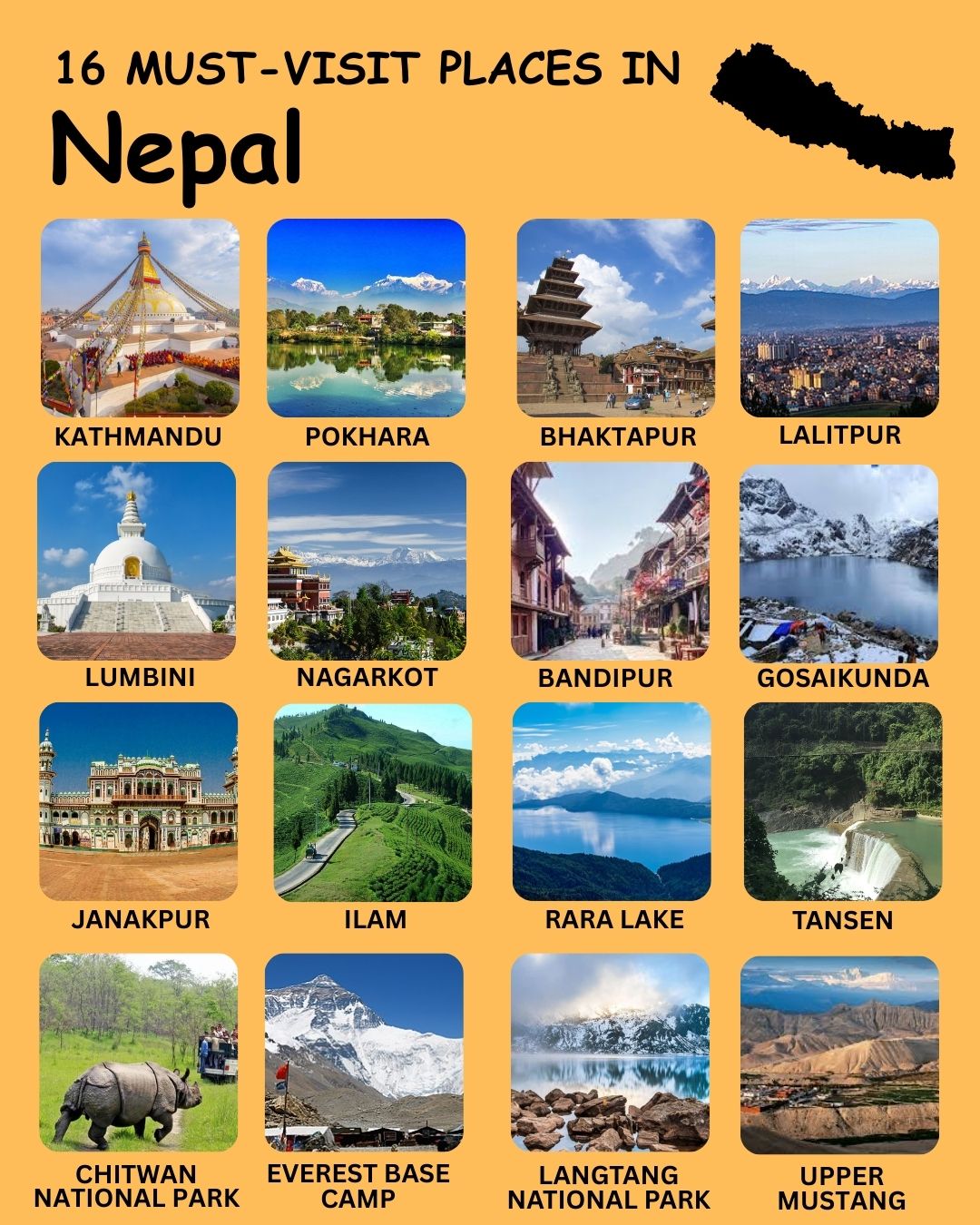
Nepal packs an extraordinary range of landscapes into a relatively small country, from the world’s highest peaks to dense lowland jungle. Ancient temple cities, alpine lakes, and remote trekking regions all sit within a single, compact nation wedged between India and Tibet. Deciding where to prioritize can be genuinely difficult given how much ground there is to cover.
This guide breaks down sixteen of Nepal’s most important destinations, each offering something genuinely different from the rest. Whether you are planning a short cultural trip or a longer trekking-focused journey, this list should help you prioritize. Below is a closer look at each destination, along with what makes it worth visiting and one practical tip for making the most of your time there.
1) Kathmandu
Nepal’s capital anchors most itineraries, a dense, temple-filled city built around the historic Kathmandu Valley. Durbar Square, Pashupatinath Temple, and Boudhanath Stupa all sit within the city, reflecting centuries of layered Hindu and Buddhist history.
Things To Do
- Explore Kathmandu Durbar Square, a UNESCO World Heritage Site with palaces and temples dating back centuries.
- Visit Pashupatinath Temple, one of the holiest Hindu sites in the world, situated along the sacred Bagmati River
- Hire a licensed local guide for Durbar Square, since the site’s earthquake-related restoration history adds important context not covered by signage.
2) Pokhara
Pokhara sits beside Phewa Lake with the Annapurna range rising dramatically behind it, offering some of the most accessible mountain views in Nepal. It serves as the main gateway for trekking in the Annapurna region.
Things To Do
- Take a boat ride on Phewa Lake, with the World Peace Pagoda visible on the opposite shore.
- Watch sunrise from Sarangkot, one of Nepal’s most celebrated Himalayan viewpoints.
- Set an early alarm for Sarangkot, since clear morning skies typically offer the best chance of an unobstructed mountain view.
3) Bhaktapur
Bhaktapur is a beautifully preserved medieval city within the Kathmandu Valley, known for its Durbar Square and towering Nyatapola Temple. Ancient brick streets and traditional craft workshops give it a distinctly different atmosphere from Kathmandu.
Things To Do
- Explore Bhaktapur Durbar Square, home to some of the finest surviving examples of Newari architecture in Nepal.
- Watch traditional pottery being made at Pottery Square, one of the city’s most photogenic corners.
- Visit Bhaktapur in the morning before tour groups arrive, when the square feels far more authentic and local vendors are still setting up.
4) Lalitpur
Lalitpur, also known as Patan, sits just across the Bagmati River from Kathmandu and is known for its own richly decorated Durbar Square. The city has long been a center for metalwork and traditional craftsmanship.
Things To Do
- Visit Patan Durbar Square, considered by many to have the finest concentration of temple architecture in the valley.
- Explore the Patan Museum, housed within the former royal palace, for context on Newari art and history.
- Combine a Lalitpur visit with Kathmandu, since the two cities sit close enough together to cover in a single day.
5) Lumbini
Lumbini is recognized as the birthplace of Siddhartha Gautama, the historical Buddha, making it one of the most significant pilgrimage sites in the Buddhist world. The Sacred Garden and Maya Devi Temple anchor the site.
Things To Do
- Visit the Maya Devi Temple, marking the exact spot traditionally believed to be the Buddha’s birthplace.
- Explore the Monastic Zone, where countries from around the world have built temples reflecting their own Buddhist traditions.
- Rent a bicycle to explore Lumbini’s spread-out monastic zone, since walking between all the temples can take considerable time.
6) Nagarkot
Nagarkot sits on a ridge above the Kathmandu Valley, known as one of the best easily accessible spots for Himalayan sunrise views. It offers a quick mountain escape without committing to a multi-day trek.
Things To Do
- Watch sunrise over the Himalayan range, including distant views of Everest on clear days.
- Hike the ridge trails connecting Nagarkot to nearby villages for a low-effort taste of Nepali countryside.
- Stay overnight in Nagarkot rather than day-tripping from Kathmandu, since the best views come at sunrise before day-trippers arrive.
7) Bandipur
Bandipur is a well-preserved hilltop trading town between Kathmandu and Pokhara, known for its car-free main street and Newari architecture. It offers a quieter, more traditional alternative to the busier tourist hubs.
Things To Do
- Walk the town’s pedestrian main street, lined with restored 18th and 19th-century buildings.
- Take a short hike to nearby viewpoints for panoramic views over the surrounding valleys.
- Break your Kathmandu to Pokhara journey with an overnight stop in Bandipur, since it sits conveniently along the route.
8) Gosaikunda
Gosaikunda is a sacred alpine lake high in the Langtang region, considered one of Nepal’s most important Hindu pilgrimage destinations. Thousands of pilgrims visit during the annual Janai Purnima festival.
Things To Do
- Trek to Gosaikunda Lake, set dramatically among high-altitude peaks.
- Visit during the Janai Purnima festival if your timing allows, when the lake draws significant pilgrim crowds.
- Acclimatize properly before attempting the trek, since the lake sits at over 4,300 meters elevation.
9) Janakpur
Janakpur is a significant Hindu pilgrimage city in the Terai region, believed to be the birthplace of Sita from the Ramayana. The Janaki Mandir, a striking white marble temple, anchors the city’s religious significance.
Things To Do
- Visit the Janaki Mandir, an elaborate marble temple built in a distinctly different architectural style from Kathmandu Valley temples.
- Explore the city’s sacred ponds, each tied to specific stories from Hindu mythology.
- Visit during a major Hindu festival if possible, since Janakpur becomes particularly vibrant during Vivaha Panchami.
10) Ilam
Ilam sits in eastern Nepal, known for its rolling tea plantations and cooler hill climate. It offers a quieter, less touristed alternative to the more famous trekking regions further west.
Things To Do
- Walk through Ilam’s tea gardens, among the most scenic agricultural landscapes in Nepal.
- Visit a local tea factory to see how Ilam’s distinctive tea is processed.
- Combine an Ilam visit with eastern Nepal’s Kangchenjunga region if you have extra time for a more remote trekking extension.
11) Rara Lake
Rara Lake, Nepal’s largest lake, sits in the remote far western region within Rara National Park. Its isolation means far fewer visitors than the more accessible lakes near Pokhara.
Things To Do
- Trek or fly to Rara Lake, rewarded with some of the clearest, most untouched alpine scenery in Nepal.
- Look for wildlife within Rara National Park, including Himalayan black bears and a range of high-altitude bird species.
- Fly into the nearby airstrip if time is limited, since reaching Rara Lake overland requires a significant multi-day trek.
12) Tansen
Tansen is a hill town in western Nepal known for its Newari architecture and sweeping views over the Kali Gandaki valley. It remains far less visited than the Kathmandu Valley’s better-known historic towns.
Things To Do
- Walk through Tansen’s old town, known for its narrow streets and traditional Newari buildings.
- Visit Shreenagar Hill for panoramic views over the surrounding valley and, on clear days, the Annapurna range.
- Break a journey between Pokhara and Lumbini with a stop in Tansen, since it sits conveniently along this route.
13) Chitwan National Park
Chitwan National Park protects a significant stretch of lowland jungle in Nepal’s Terai region, known for one-horned rhinos, Bengal tigers, and a strong population of birdlife. It offers a complete change of pace from the mountain-focused regions further north.
Things To Do
- Take a jeep or elephant-back safari for strong chances of spotting one-horned rhinos in their natural habitat.
- Canoe along the Rapti River, often spotting crocodiles and a wide range of waterfowl along the banks.
- Book your safari in advance during peak season between October and March, since availability can be limited.
14) Everest Base Camp
The trek to Everest Base Camp remains one of the most sought-after trekking experiences in the world, passing through Sherpa villages and dramatic high-altitude scenery en route to the base of the world’s tallest mountain.
Things To Do
- Trek through Namche Bazaar, the main Sherpa trading hub and a key acclimatization stop along the route.
- Reach Everest Base Camp itself, a genuine milestone for serious trekkers.
- Budget at least twelve to fourteen days for the full round trip, allowing proper acclimatization days to reduce altitude sickness risk.
15) Langtang National Park
Langtang National Park sits closer to Kathmandu than the more famous Everest and Annapurna regions, making it a popular choice for shorter but still genuinely high-altitude treks. The region was significantly affected by the 2015 earthquake but has since rebuilt much of its trekking infrastructure.
Things To Do
- Trek through Langtang Valley, known for dramatic mountain scenery within a shorter overall route than Everest or Annapurna.
- Visit the Kyanjin Gompa monastery near the trek’s endpoint, along with nearby glacier viewpoints.
- Choose Langtang if you want a genuine high-altitude trekking experience but have limited time compared to the longer Everest or Annapurna routes.
16) Upper Mustang
Upper Mustang is a remote, high-altitude desert region bordering Tibet, historically an independent kingdom until relatively recently. Its landscape and culture feel distinctly different from the rest of Nepal, more closely resembling the Tibetan plateau.
Things To Do
- Trek through Upper Mustang’s dramatic desert canyons and ancient cave dwellings.
- Visit Lo Manthang, the walled former capital of the Mustang kingdom, still home to centuries-old monasteries.
- Note that Upper Mustang requires a special restricted area permit, so arrange this well in advance through a registered trekking agency.
Final Thoughts
These sixteen destinations capture Nepal’s full range, from ancient temple squares to remote Himalayan trekking regions to lowland jungle safaris. No single trip needs to cover all of them, but understanding what each offers makes it far easier to build an itinerary that matches your interests and available time. Prioritize two or three regions rather than trying to rush through the whole list, and Nepal will reward the slower, more deliberate pace.