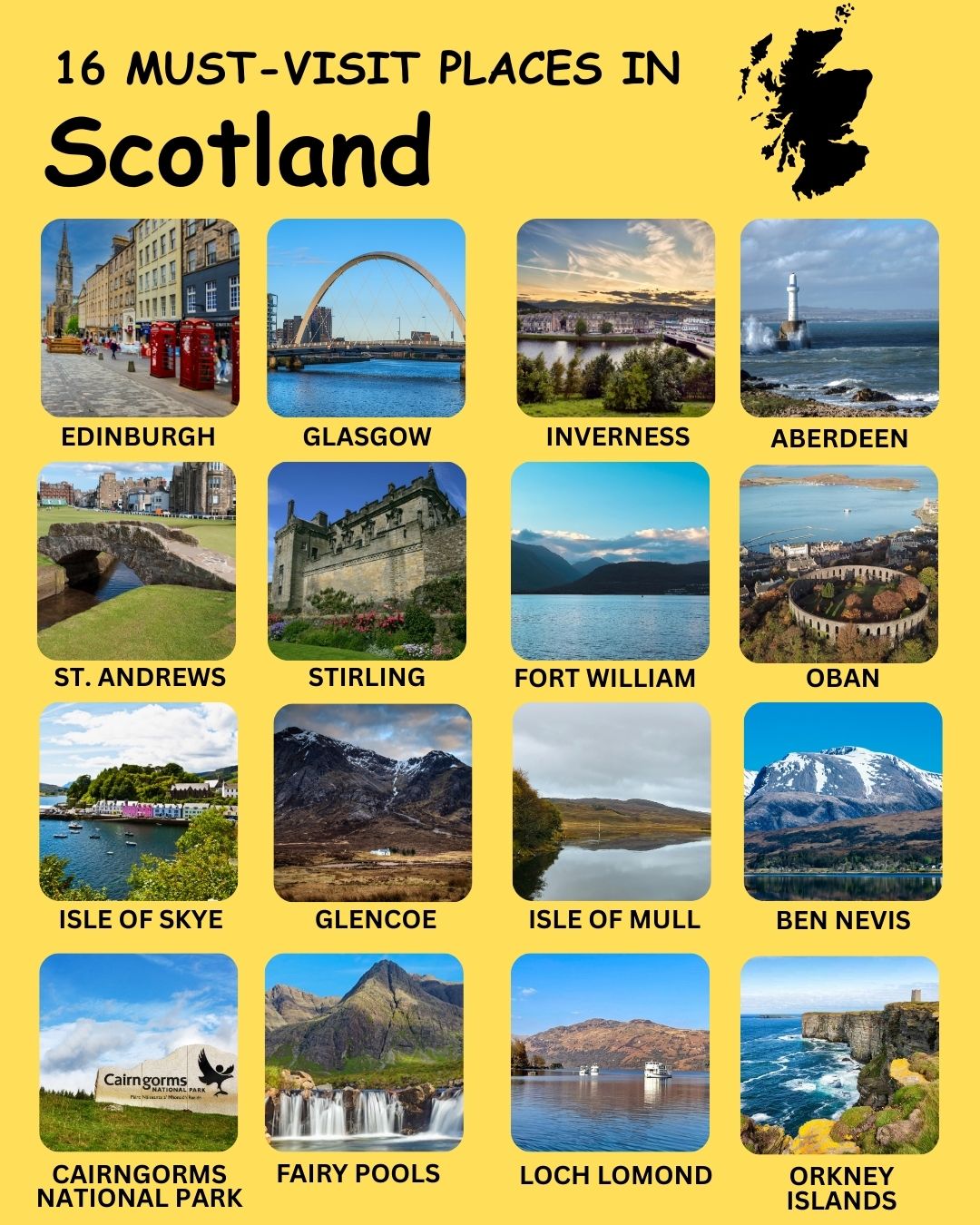
Scotland – 16 Must Visit Places

Scotland packs centuries of history and dramatic natural beauty into a country you can cross in a day. Medieval cities, remote islands, and towering mountains all sit within a few hours of each other.

Few countries offer this range of experience in such a compact footprint. Travelers can explore royal history in the morning and stand beneath snow-capped peaks by afternoon. These sixteen destinations capture Scotland at its most memorable, from bustling cities to windswept coastlines.

Scotland at a Glance

DestinationRegionBest Known ForBest Time to Visit
EdinburghLothianHistoric Old Town, castle, festivalsMay to September
GlasgowStrathclydeVictorian architecture, music sceneMay to September
InvernessHighlandsGateway to Loch NessJune to August
AberdeenAberdeenshireGranite architecture, coastlineJune to August
St AndrewsFifeGolf, university historyApril to September
StirlingCentral ScotlandMedieval castle, battle sitesMay to September
Fort WilliamHighlandsBen Nevis, outdoor sportsMay to September
ObanArgyllSeafood, ferry gatewayJune to August
Isle of SkyeInner HebridesDramatic landscapesMay to September
GlencoeHighlandsMountain scenery, historyMay to September
Isle of MullInner HebridesWildlife, coastal beautyMay to September
Ben NevisHighlandsHighest peak in BritainJune to August
Cairngorms National ParkHighlandsWilderness, wildlifeMay to September
Fairy PoolsIsle of SkyeWaterfalls, wild swimmingMay to September
Loch LomondCentral ScotlandScenic loch, national parkMay to September
Orkney IslandsNorthern IslesNeolithic historyMay to September

Edinburgh

Scotland’s capital blends medieval architecture with a lively modern culture. Its Old Town, a UNESCO World Heritage Site, has stood largely unchanged for centuries. Edinburgh hosts the world’s largest arts festival every August, drawing performers and visitors from across the globe.

What to See in Edinburgh

  • Edinburgh Castle. Perched on an extinct volcano, this fortress holds the Scottish Crown Jewels and centuries of royal history.
  • The Royal Mile. This cobblestone street connects the castle to the Palace of Holyroodhouse, lined with shops and historic closes.
  • Arthur’s Seat. This extinct volcano offers sweeping views over the city after a moderate two-hour hike.
  • The National Museum of Scotland. Free entry and wide-ranging exhibits make this a rewarding stop for any interest.
  • Victoria Street. This curved, colorful street is one of the most photographed corners of the Old Town.

Glasgow

Glasgow carries a different energy than Edinburgh, shaped by its industrial past and thriving arts scene. Victorian architecture lines many of its streets, a legacy of the city’s shipbuilding wealth. Today it stands as Scotland’s cultural and musical capital, known for live venues and creative neighborhoods.

What to See in Glasgow

  • Kelvingrove Art Gallery and Museum. This grand building houses an extensive collection spanning fine art to natural history, with free entry.
  • The Riverside Museum. This striking building along the Clyde traces Glasgow’s transport and industrial heritage.
  • The Clutha Bridge and Squinty Bridge. These distinctive modern bridges reflect the city’s ongoing waterfront redevelopment.
  • The West End. This neighborhood offers independent shops, cafes, and a lively university atmosphere.
  • Live music venues. Glasgow’s music scene has produced major acts, and small venues still host regular performances.

Inverness

Inverness serves as the unofficial capital of the Scottish Highlands. Its compact city center sits along the River Ness, making it an easy base for exploring the surrounding region. The city’s Highland character comes through in its architecture, festivals, and proximity to legendary landscapes.

What to See in Inverness

  • Inverness Castle. This red sandstone castle overlooks the river and city center from an elevated position.
  • Loch Ness. Just outside the city, this famous loch draws visitors hoping to spot its legendary resident.
  • Urquhart Castle. These ruins sit dramatically on the loch’s shore, making them one of the most photographed spots in the Highlands.
  • Victorian Market. This covered market offers a mix of local shops and casual food options.
  • Culloden Battlefield. This historic site marks the final Jacobite uprising in 1746 and offers deep historical context.

Aberdeen

Known as the Granite City, Aberdeen earned its nickname from the distinctive gray stone used throughout its architecture. Once a major fishing port, it later became the center of Scotland’s North Sea oil industry. The city pairs an industrial legacy with a rugged coastline and historic university district.

What to See in Aberdeen

  • Old Aberdeen. This historic district features cobbled streets and the University of Aberdeen’s medieval buildings.
  • Aberdeen Maritime Museum. This museum explores the city’s fishing and oil industry history along the harbor.
  • Aberdeen Beach. This long sandy beach offers a surprising coastal escape within city limits.
  • Duthie Park. This Victorian park features a large winter garden and peaceful walking paths.
  • Union Street. This main thoroughfare showcases the city’s signature granite architecture.

St Andrews

St Andrews holds a legendary place in golf history as the sport’s birthplace. Its university, founded in 1413, remains one of the oldest in the English speaking world. The town blends academic tradition with coastal charm along Scotland’s eastern shore.

What to See in St Andrews

  • The Old Course. Known as the Home of Golf, this course has hosted the sport since the 1400s.
  • St Andrews Cathedral ruins. Once the largest cathedral in Scotland, these ruins offer striking coastal views.
  • St Andrews Castle. These cliffside ruins add another layer of medieval history to the town.
  • University of St Andrews. Historic quads and cobbled streets shape much of the town’s character.
  • West Sands Beach. This wide, sandy beach stretches along the coast just outside the town center.

Stirling

Stirling played a pivotal role in Scotland’s wars of independence, sitting at a strategic crossing point between the Highlands and Lowlands. Its castle rivals Edinburgh’s in historical significance. The surrounding battlefields tell the story of key moments in Scottish history.

What to See in Stirling

  • Stirling Castle. This Renaissance castle offers some of the best preserved royal architecture in the country.
  • The Wallace Monument. This tower commemorates William Wallace and offers panoramic views from its summit.
  • Bannockburn. This nearby battlefield marks the site of Robert the Bruce’s decisive 1314 victory.
  • The Old Town. Stirling’s historic core features narrow closes and well preserved period buildings.
  • The Church of the Holy Rude. This medieval church hosted the coronation of James VI.

Fort William

Fort William sits at the base of Ben Nevis, earning its reputation as the outdoor capital of the United Kingdom. The town serves as a hub for hikers, cyclists, and travelers exploring the surrounding Highlands. Its location also makes it a natural stop along the scenic route to Skye.

What to See in Fort William

  • Ben Nevis. Britain’s highest peak draws hikers from around the world for its challenging summit trail.
  • The Jacobite Steam Train. This historic train crosses the famous Glenfinnan Viaduct on its scenic route.
  • Glen Nevis. This valley offers accessible walking trails with dramatic mountain scenery.
  • Neptune’s Staircase. This series of canal locks showcases impressive 19th century engineering.
  • The West Highland Way. This long-distance trail begins near Fort William, drawing serious hikers each season.

Oban

Known as the seafood capital of Scotland, Oban serves as the main ferry gateway to the Hebridean islands. Its curved harbor front is lined with restaurants serving the day’s catch. The town’s compact size makes it an easy, walkable base for a coastal stop.

What to See in Oban

  • Oban Distillery. This historic distillery has operated in the town center since 1794.
  • McCaig’s Tower. This unfinished Colosseum-style structure overlooks the town from a hilltop.
  • The harbor front. Fresh seafood stalls and restaurants line the water, especially popular for scallops and oysters.
  • Dunollie Castle. These ruins sit just outside town, offering coastal views and clan history.
  • Ferry connections. Oban serves as the main departure point for ferries to Mull and other islands.

Isle of Skye

Skye stands as one of Scotland’s most photographed regions, known for its dramatic cliffs and otherworldly rock formations. The island’s Highland scenery feels remote and largely untouched. Its landscapes have become iconic through both film and travel photography.

What to See on the Isle of Skye

  • The Old Man of Storr. This rock pinnacle is one of the most recognizable formations in Scotland.
  • The Quiraing. This dramatic landslip features jagged peaks and rolling green terrain.
  • Portree. Skye’s main town features a colorful harbor and serves as a convenient base.
  • Talisker Distillery. This coastal distillery produces one of Scotland’s most recognizable single malts.
  • Neist Point. This lighthouse sits on a dramatic headland, especially striking at sunset.

Glencoe

Glencoe carries both natural drama and historical weight. Steep, brooding mountains frame this Highland valley on both sides. It is also remembered as the site of the 1692 massacre of Clan MacDonald, adding depth to its rugged beauty.

What to See in Glencoe

  • The Glencoe Valley drive. The A82 road through the valley ranks among Scotland’s most scenic drives.
  • Glencoe Lochan. This easy, family-friendly trail circles a peaceful woodland loch.
  • The Glencoe Visitor Centre. This center explains both the valley’s geology and its difficult history.
  • Hidden Valley. This moderate hike leads to a secluded glen once used to hide stolen cattle.
  • The Clachaig Inn. This traditional Highland pub is a favorite stop for hikers passing through.

Isle of Mull

Mull offers a quieter alternative to Skye, known for its wildlife and colorful harbor town of Tobermory. The island’s varied coastline ranges from sandy beaches to dramatic cliffs. It also serves as a gateway to smaller islands like Iona and Staffa.

What to See on the Isle of Mull

  • Tobermory. This colorful harbor town is one of the most photographed spots in the Hebrides.
  • Duart Castle. This ancient stronghold has overlooked the Sound of Mull for centuries.
  • Wildlife spotting. Mull is known for sea eagles, otters, and regular whale sightings offshore.
  • Fingal’s Cave. Boat tours from Mull reach this dramatic sea cave on the nearby Isle of Staffa.
  • Calgary Beach. This white sand beach offers a striking contrast to the island’s rugged coastline.

Ben Nevis

As the highest peak in the United Kingdom, Ben Nevis draws serious hikers and casual visitors alike. Its summit sits over 4,400 feet above sea level, often shrouded in cloud even on clear days below. The mountain has become a symbol of Highland adventure.

What to See at Ben Nevis

  • The summit trail. The main route takes six to eight hours round trip for reasonably fit hikers.
  • Glen Nevis. This valley offers easier walking options for those not attempting the full summit.
  • The CIC Hut area. This spot beneath the north face appeals to experienced climbers and mountaineers.
  • Weather considerations. Conditions change quickly, so proper gear and planning matter regardless of season.
  • Views from the base. Even without summiting, the mountain’s scale is impressive from surrounding trails.

Cairngorms National Park

The largest national park in the United Kingdom, the Cairngorms cover a vast stretch of Highland wilderness. The park ranges from gentle walking trails to serious mountain terrain. Wildlife including red deer roam freely throughout its varied landscape.

What to See in Cairngorms National Park

  • Loch Morlich. This scenic loch offers water sports and sandy beaches framed by pine forest.
  • The Cairngorm Mountain Railway. This railway carries visitors partway up the mountain without a full hike.
  • Rothiemurchus Forest. This ancient Caledonian pine forest offers peaceful, well-marked walking trails.
  • Wildlife spotting. Red deer, ospreys, and red squirrels are commonly seen throughout the park.
  • Aviemore. This town serves as the main gateway for exploring the surrounding wilderness.

Fairy Pools

Located on the Isle of Skye, the Fairy Pools have become one of Scotland’s most visited natural attractions. Clear blue pools and small waterfalls sit at the base of the Black Cuillin mountains. Despite their popularity, the site retains a genuinely magical atmosphere.

What to See at the Fairy Pools

  • The main pools trail. The walk to reach the pools takes about 20 minutes each way over moderate terrain.
  • Wild swimming. Swimming is possible here, though the water stays cold even in summer.
  • The Black Cuillin backdrop. These jagged peaks frame the pools, creating dramatic photo opportunities.
  • Early morning visits. Arriving early helps avoid the crowds that build steadily through the day.
  • Sturdy footwear. The trail crosses uneven, often wet terrain, making proper shoes essential.

Loch Lomond

As Scotland’s largest loch by surface area, Loch Lomond anchors the country’s first national park. Its calm waters and surrounding mountains offer some of the most accessible Highland scenery near Glasgow. The loch has inspired Scottish folk music and remains a favorite escape for city dwellers.

What to See at Loch Lomond

  • Luss. This lakeside village offers traditional stone cottages and a quiet waterfront stroll.
  • Boat cruises. These reveal the loch’s many small islands and surrounding peaks from the water.
  • Conic Hill. This moderate hike rewards visitors with sweeping views over the loch below.
  • Balloch Castle Country Park. This park offers gardens and walking trails near the loch’s southern tip.
  • Water sports. Kayaking and paddleboarding are popular on calm summer days.

Orkney Islands

The Orkney Islands hold some of the best preserved Neolithic sites in Europe, predating Stonehenge by centuries. This remote archipelago off Scotland’s northern coast blends ancient history with dramatic sea cliffs. Its relative isolation has helped preserve both its heritage and its natural beauty.

What to See in the Orkney Islands

  • The Ring of Brodgar. This nearly complete stone circle is one of the most striking Neolithic sites in Britain.
  • Skara Brae. This remarkably preserved Neolithic village offers a rare window into ancient daily life.
  • St Magnus Cathedral. This red sandstone cathedral has stood in Kirkwall since the 12th century.
  • The cliffs of Yesnaby. These dramatic sea cliffs offer some of the most rugged coastal scenery in Scotland.
  • A rental car. Exploring the islands’ scattered sites is far easier with a car than public transport.

Final Thoughts

Scotland’s sixteen must-visit destinations capture a country defined by contrast. Ancient castles sit near remote wilderness, and lively cities give way to windswept islands within a short drive. Each stop offers its own layer of history, landscape, or culture worth experiencing firsthand.

Use this guide as a starting point for building your own Scotland itinerary. Mix cities with islands, castles with mountains, and give yourself room to slow down along the way. Scotland rewards travelers who take the time to explore beyond the obvious highlights.